


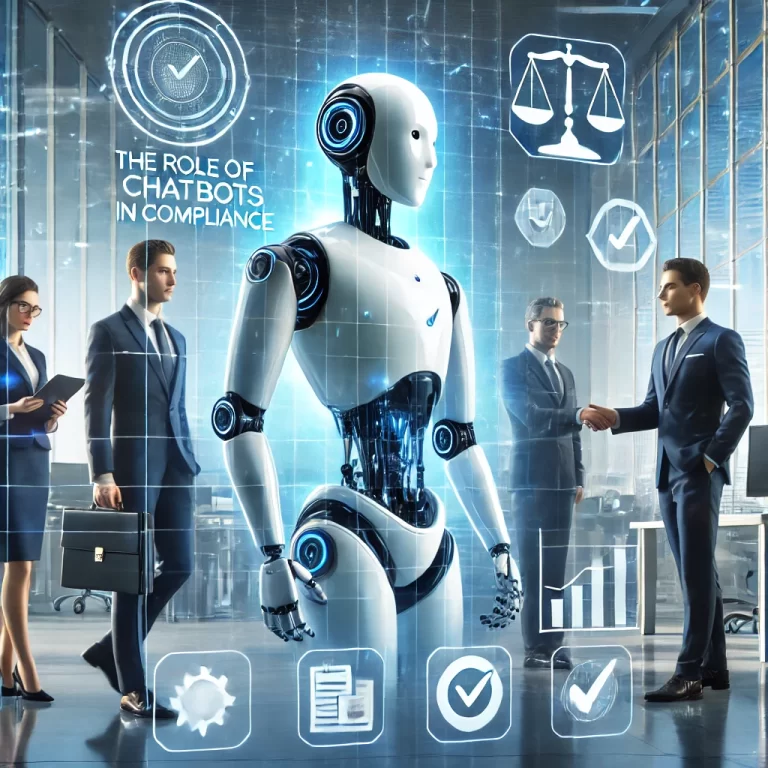
Today, most compliance professionals deal with a dynamic environment where questions and potential issues do not wait conveniently for office hours. Whether you oversee a global team operating in multiple time zones or are responsible for a fast-paced organization where rapid decision-making is crucial, you know compliance guidance can’t afford to lag. Enter AI-driven chatbots, your newest and perhaps most valuable partner in corporate compliance.
In today’s interconnected and highly scrutinized business world, employees frequently face challenging ethical questions and policy conundrums that demand immediate answers. Gone are the days when a compliance inquiry could sit in an inbox for days before receiving attention. Moreover, employees don’t always have time to sift through thick manuals or dense codes of conduct. There is genuine excitement about the potential of AI-driven chatbots to streamline compliance processes.
How AI-Driven Chatbots Work in Corporate Compliance
Think of these AI chatbots as your tireless policy librarians and advisors, available round-the-clock to dispense instant, accurate answers. They harness advanced natural language processing (NLP) and machine learning (ML) to parse employee questions, interpret the intent behind the inquiry, and pull tailored responses directly from your organization’s policies, procedures, and regulatory guidelines. These tools can be embedded into familiar platforms like Microsoft Teams, Slack, or corporate intranets, making compliance support conveniently accessible in the same digital spaces employees frequent for daily work interactions.
One of the most compelling advantages of these chatbots is their precision and consistency. Unlike human counterparts, who may inadvertently provide varied interpretations or answers to similar queries, a well-trained AI-driven chatbot consistently references a single source of truth: your organization’s policies and procedures. This substantially mitigates the risk of inconsistent guidance or misinformation.
Further enhancing their utility, AI chatbots “learn” from interactions, gradually improving their accuracy and understanding. Companies like HSBC have adopted solutions leveraging Google’s cloud technology, allowing their internal compliance chatbots to retrieve and serve precise policy excerpts dynamically. Consequently, employees receive prompt answers and understand the underlying rationale, reinforcing their comprehension of the compliance landscape.
Strategic Insights for Leveraging Compliance Chatbots Effectively
Deploying AI chatbots in compliance programs is not merely about technological integration; rather, it is about strategically embedding these tools to enrich your organization’s compliance culture. What key strategic considerations do you need to consider when starting such a project?
1. Define Clear Use Cases and Boundaries
2. Begin with specificity. Determine precisely which compliance areas your chatbot will handle effectively: HR FAQs, gift and hospitality policies, or conflict-of-interest disclosures. Establishing clear boundaries on the bot’s capabilities prevents confusion and ensures alignment with regulatory guidelines. The chatbot should offer practical advice within its designated sphere while deferring more complex matters or nuanced interpretations to human compliance professionals.
3. Ensure a Human Escalation Path
4. It is crucial to maintain a clearly defined point at which AI steps aside for human intervention. If an inquiry hints at significant risks, such as harassment, fraud, or serious ethical violations, the chatbot should automatically flag the issue and escalate it to human compliance officers. Implementing an intelligent and seamless hand-off preserves both regulatory integrity and employee trust.
5. Rigorous Real-Life Testing
6. Before full deployment, pilot your chatbot using authentic scenarios from past employee questions, hotline inquiries, or email communications. This rigorous, scenario-based testing helps identify gaps in the chatbot’s knowledge base or its linguistic comprehension capabilities. Testing should also encompass how employees phrase similar questions, ensuring robust NLP adaptability.
6. Integrate Chatbots Seamlessly into Workflows
7. Ease of access and ubiquity are key. Integrate your compliance chatbot within platforms employees regularly use. Whether via Teams, Slack, your intranet, or even mobile texting, embedding compliance support into daily workflows reinforces that compliance isn’t a separate responsibility but integral to everyone’s daily duties. With Gen Z’s growing presence in the workforce, familiarity and ease with chatbot interfaces make them a natural fit for employee communication.
8. Harness Chatbot Analytics for Compliance Insights
9. Your chatbot isn’t just an answering service; it’s a goldmine of compliance intelligence. Monitor chatbot usage analytics to discern compliance knowledge gaps and identify areas where employee uncertainty or confusion is prevalent. By analyzing the volume, type, and frequency of queries, compliance teams can proactively adjust training materials, simplify complicated policies, or spotlight emerging risk areas requiring deeper intervention.
Practical Challenges to Keep in Mind
While the benefits are substantial, implementing AI-driven chatbots also involves careful management of certain challenges. Accuracy and privacy concerns remain paramount. Compliance professionals must constantly validate and verify chatbot responses against evolving regulations and internal policy updates. Organizations must also ensure robust cybersecurity measures, keeping data shared through chatbots confidential and protected.
Additionally, fostering employee confidence and trust in using chatbots as compliance resources is vital. Staff must perceive chatbots as reliable advisors rather than surveillance tools. Transparent communication about the chatbot’s purpose, limitations, and data privacy policies can go a long way in cultivating trust and widespread adoption.
The Future Is Here: Chatbots in Best Practices Compliance Programs
AI chatbots’ transformation to corporate compliance programs can’t be overstated. What was once a passive, reactive role for compliance departments has evolved into a proactive, integral presence in daily business activities. AI chatbots do not merely react to compliance inquiries; they actively guide ethical decision-making in real-time, reinforcing a compliance-conscious organizational culture.
Moreover, beyond answering straightforward questions, sophisticated chatbots can engage in context-rich dialogues, prompting employees for additional information to provide tailored, nuanced guidance. Chatbots are increasingly capable of recognizing compliance red flags and potential conflicts of interest, immediately providing appropriate guidance or escalating issues to compliance professionals as necessary.
AI-driven compliance chatbots also serve as vital first-line intake mechanisms, lowering barriers to reporting ethical concerns or policy violations. By providing approachable and conversational interfaces, they encourage more candid, detailed reporting than traditional methods, thus strengthening your overall compliance ecosystem.
The introduction of AI-driven chatbots signifies a pivotal advancement for corporate compliance functions. Offering instantaneous, tailored guidance at critical moments significantly enhances employees’ understanding and adherence to compliance requirements. Furthermore, by automating routine inquiries, these intelligent virtual assistants liberate compliance professionals to concentrate on high-risk areas, strategic oversight, and program enhancement.
As we stand at the intersection of technology and compliance, AI chatbots represent both a convenience and an essential compliance asset. For compliance professionals committed to building ethical, responsive, and resilient organizations, integrating these smart assistants thoughtfully into their compliance toolkit is a step not merely toward efficiency but toward compliance excellence.
Further, as Carten Tams continually reminds us, it is all about the UX. Employees want to have access to the answers to their questions when they need the information. Using chatbots can enhance the UX for your employees. If you can improve the UX and provide the information needed more timely, what is holding you back?