


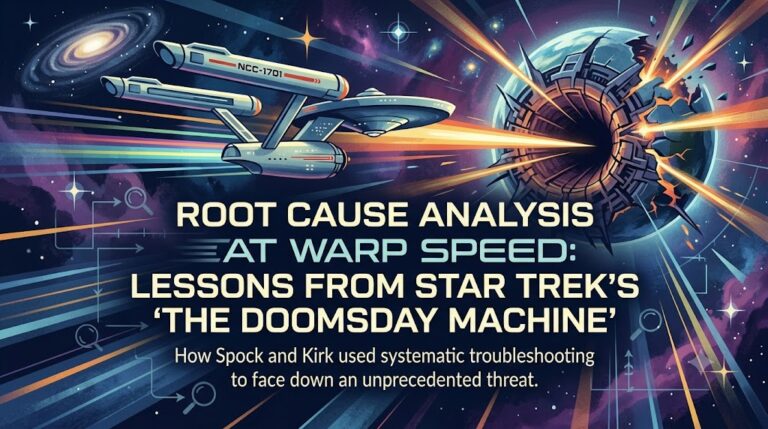
Compliance professionals are forever tasked with pinpointing the root causes behind organizational failures, missteps, or breaches. This deep dive is critical, not only for remediating issues but also for ensuring they do not recur. In this compliance exploration, let’s boldly go where few compliance bloggers have gone before, into the riveting episode “The Doomsday Machine.”
As a refresher, in “The Doomsday Machine,” the crew of the USS Enterprise encounters a planet-killing automated weapon of mass destruction from another galaxy. This relentless machine obliterates entire worlds to fuel itself. The Enterprise finds Commodore Matt Decker, captain of the now-destroyed USS Constellation, driven to obsession and near madness by his failure to protect his ship and crew from the Doomsday Machine. Commodore Decker’s flawed decisions and the ultimate resolution led by Captain Kirk provide rich material to glean essential lessons in root cause analysis for today’s compliance professionals.
Here are five lessons, each anchored directly in the narrative of this classic Star Trek episode, emphasizing how thorough root cause analyses can strengthen your compliance function and safeguard your organization.
Lesson 1: Identify the Problem to Solve the Correct Issue
Illustrated by: Commodore Decker incorrectly identifies the primary issue—he treats the Doomsday Machine as a conventional threat rather than an unfeeling, mechanical entity beyond traditional warfare. Driven by guilt and obsession, he assumes the machine can be fought head-on without thoroughly analyzing its origins or functions.
Compliance Lesson. In terms of compliance, this parallels the imperative first step in any root cause analysis: defining the correct problem. Misidentifying the fundamental issue can lead to misguided corrective actions that fail to prevent recurrence. Compliance teams must focus clearly and objectively, free from bias, emotion, or hurried assumptions, on identifying the core compliance problem before proposing solutions.
Lesson 2: Gather Complete Data Before Making Decisions
Illustrated by: Commodore Decker’s hasty decisions are predicated upon incomplete and inadequate data. Driven by trauma from losing his crew, he commandeers the Enterprise in a futile, direct assault without fully understanding the nature of his adversary. His rushed judgment puts the entire Enterprise crew at risk.
Compliance Lesson. Compliance professionals must always gather comprehensive, factual, and relevant data before making decisions in a root cause analysis. Premature conclusions without thorough data collection can lead to incomplete analyses, resulting in ineffective solutions and recurring issues. Data completeness and accuracy must guide your investigative processes to ensure the development of appropriate and practical action plans.
Lesson 3: Recognize and Address Human Factors
Illustrated by: The human element, including stress, fatigue, and emotional response, significantly impacts decision-making. The psychological trauma of his losses compromises Decker’s mental state. Yet, no one initially intervenes to assess his emotional fitness for command. This omission exacerbates the crisis.
Compliance Lesson. In your root cause analyses, it is essential to rigorously consider human factors. Compliance issues rarely occur in a vacuum of policies and systems; they usually involve human decision-making under various pressures and emotions. Addressing these human factors explicitly helps devise better support, more transparent communication, and stronger leadership accountability.
Lesson 4: Establish and Follow Clear Protocols
Illustrated by: Captain Kirk, once back in command, establishes a disciplined approach to address the crisis. Kirk carefully follows clearly defined Starfleet procedures to formulate a rational, effective response to neutralize the Doomsday Machine. He remains calm, clear-headed, and systematic.
Compliance Lesson. Root cause analyses similarly benefit immensely from disciplined adherence to clearly established investigative protocols. Proper frameworks, such as the “Five Whys,” Ishikawa Fishbone Diagrams, and other standardized methods, help teams structure their analyses logically, ensuring a thorough exploration of contributing factors and root causes. Such discipline and rigor prevent shortcuts and superficial solutions.
Lesson 5: Develop Sustainable Preventive Solutions, Not Temporary Fixes
Illustrated by: The Enterprise crew devises an effective solution by leveraging detailed knowledge of the Doomsday Machine’s design and vulnerabilities, destroying it by detonating the crippled USS Constellation from within. Their method isn’t simply a reprieve but a durable solution that permanently eliminates the threat.
Compliance Lesson. In compliance with this, root cause analyses aim to create permanent, preventive solutions. Short-term patches that treat symptoms rather than underlying causes merely set organizations up for future compliance breakdowns. Invest your efforts in sustainable solutions that incorporate procedural changes, enhanced training, strengthened oversight, or technological adjustments to effectively prevent recurrence.
Final ComplianceLog Reflections
As corporate compliance professionals, our role parallels that of Starfleet officers tasked with safeguarding our organizations against compliance risks that can threaten their very existence. The Star Trek episode “The Doomsday Machine” highlights the crucial importance of practical root cause analysis, which involves proper issue identification, comprehensive data collection, understanding human factors, adherence to disciplined investigative procedures, and the implementation of sustainable solutions.
By absorbing these vital lessons, compliance leaders can ensure they are fully equipped to navigate their organizations safely through even the most daunting compliance challenges. Indeed, conducting effective root cause analyses is more than just solving problems; it is essential to preserving integrity, sustainability, and corporate resilience.
In a universe fraught with unknown risks, it’s reassuring to know that diligent compliance practices and structured root-cause analyses can turn a potential disaster into confident, controlled responses. Star Trek may have entertained us, but it also offers enduring, pragmatic lessons in compliance. So, compliance professionals, let us boldly analyze previously unexamined areas and leverage these lessons to fortify our organizations against whatever “doomsday machines” might arise next.
Resources:
Excruciatingly Detailed Plot Summary by Eric W. Weisstein