


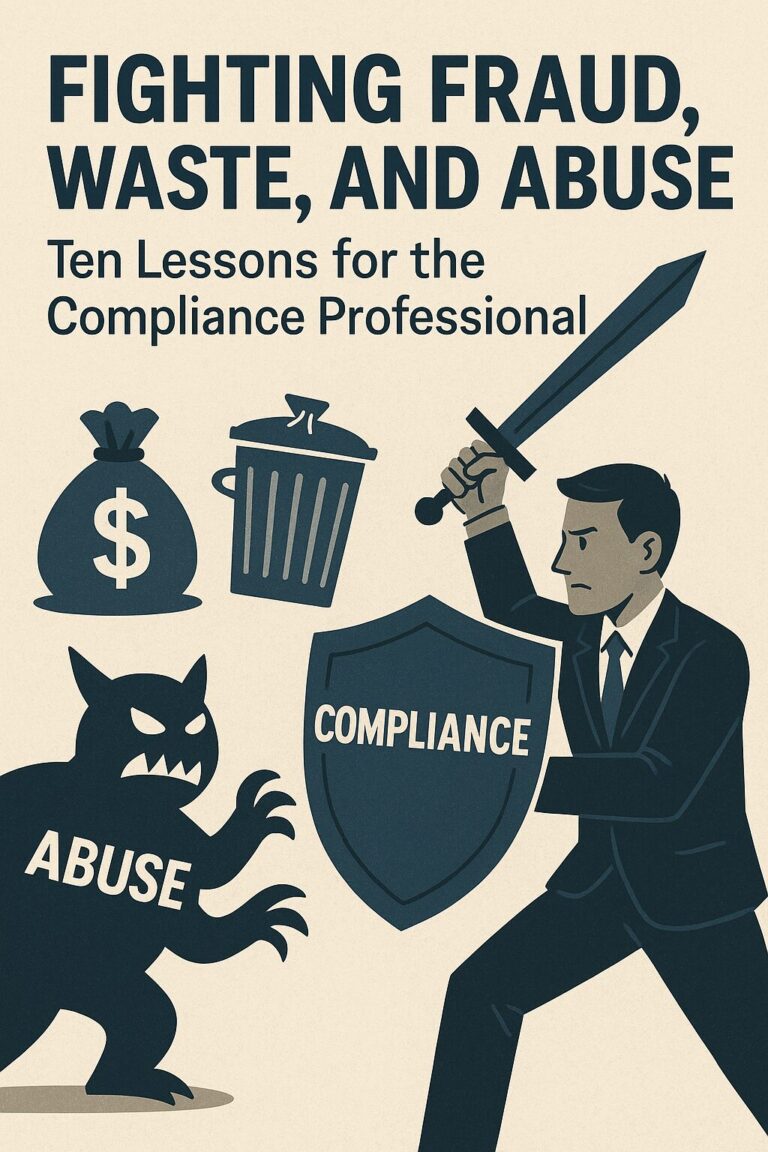
Fraud, waste, and abuse are often bundled together in compliance conversations, but they are not interchangeable. Fraud is intentional deception, waste is the careless misuse of resources, and abuse is the opportunistic exploitation of gray areas. Each carries unique risks. Each erodes value. And each, if left unchecked, creates fertile ground for corruption and regulatory exposure.
Throughout this series, we have examined each element in depth. Fraud remains the most familiar, often linked directly to corruption. Waste, though usually unintentional, drains millions from corporate coffers each year. Abuse occupies the murky middle ground where rationalizations and loopholes open the door to larger misconduct. Finally, we examined how an integrated framework, spanning from controls to culture, can help compliance professionals address fraud, waste, and abuse in a holistic manner.
What emerges is clear: fighting fraud, waste, and abuse is not an optional add-on to anti-corruption programs. It is central to them. Fraud cannot thrive without weak controls. Waste creates the conditions that foster corruption. Abuse normalizes rule-bending until bribery becomes a natural extension of it.
For compliance professionals, the question is not whether to address fraud, waste, and abuse but how. Here are ten key lessons that stand out.
1. Know the Difference
The first lesson is definitional clarity. Fraud, waste, and abuse often overlap, but they are distinct categories of risk. Fraud is intentional and prosecutable. Waste is careless and costly. Abuse is opportunistic and corrosive. Treating them as one dulls your controls. Compliance programs must tailor messaging, policies, and monitoring to each risk. For example, fraud requires forensic controls, waste requires efficiency metrics, and abuse demands cultural reinforcement. Clarity sharpens strategy and ensures that prevention is precise, not blunt.
2. Fraud Prevention Requires Strong Controls
Fraud rarely occurs in isolation. Bribery schemes rely on falsified invoices, manipulated expenses, or deceptive contracts. Preventing fraud means embedding strong controls: segregation of duties, third-party due diligence, mandatory job rotations, and robust hotlines. Data analytics adds another critical layer, identifying anomalies in billing, procurement, or expenses before they metastasize. Fraud prevention is not just about legal risk; it is about stopping corruption before it takes root.
3. Waste Is More Than Inefficiency
Waste may lack intent, but its impact is devastating. It drains profits, frustrates shareholders, and weakens culture. Waste in corporate travel, maintenance, or software licenses often reflects poor oversight and sends the wrong cultural message: accountability is optional. Compliance cannot dismiss waste as “just operations.” Regulators and boards increasingly demand stewardship. Waste that goes unchecked creates cover for fraud and abuse, turning inefficiency into risk. Compliance leaders must treat waste as a core governance issue, not an afterthought.
4. Predictive Analytics Is a Compliance Tool
Our review of Shell’s predictive maintenance program offers a powerful analogy for compliance. By embedding sensors and utilizing predictive analytics, Shell reduced waste, minimized downtime, and enhanced safety. Compliance can achieve the same results. Predictive analytics enables compliance officers to move from reactive investigations to proactive risk detection. Expense anomalies, hotline spikes, or vendor irregularities can be flagged in real time, preventing issues before they escalate. Predictive analytics is no longer a “nice to have.” It is the future of compliance risk management.
5. Abuse Is the Gateway to Fraud
Abuse thrives in gray areas, exploiting loopholes, stretching policies, or rationalizing questionable conduct. It often starts small, such as recreating a lost taxi receipt, but escalates when unchecked. AI-generated fake receipts illustrate how easily abuse morphs into fraud. Abuse corrodes culture by teaching employees that rules can be bent without consequence. Compliance must treat abuse as seriously as fraud, because, in practice, abuse is often a precursor to fraud. Ignoring it is an invitation to systemic misconduct.
6. Technology Must Match the Threat
Employees are already using AI to generate fake receipts. Compliance must use AI to detect them. Modern expense-auditing platforms now flag anomalies in fonts, metadata, or behavior patterns. Similar tools analyze procurement, payroll, and travel data for red flags. The lesson is clear: compliance cannot fight tomorrow’s threats with yesterday’s tools. Technology must evolve as quickly as the risks do. Matching technology to the danger is no longer optional; it is essential for credibility and effectiveness.
7. Culture Is the Ultimate Control
Policies and tools matter, but culture determines outcomes. Fraud, waste, and abuse thrive where accountability is negotiable, where entitlement is tolerated, and where corner-cutting is excused. Conversely, a culture of transparency and stewardship closes the space in which misconduct thrives. Compliance officers must partner with leadership to model integrity, reinforce accountability, and celebrate stewardship. Culture sends the clearest message: fraud, waste, and abuse are not tolerated here. Without cultural reinforcement, even the strongest controls will eventually fail.
8. Empower Whistleblowers as Early Warning Systems
Whistleblowers are often the first to spot fraud, waste, or abuse. Yet too many organizations undercut their own defenses by failing to protect or empower employees who speak up. Robust reporting channels, anti-retaliation policies, and timely follow-up are essential. In the fight against fraud, waste, and abuse, whistleblowers are not just informants; they are strategic allies. Empowering them demonstrates that the company values integrity, deters misconduct, and surfaces risks before regulators do.
9. Build Cross-Functional Coalitions
Fraud, waste, and abuse cut across silos. Fraud may surface in finance, waste may occur in operations, and abuse may be present in HR. Compliance cannot fight these battles alone. Cross-functional coalitions with audit, procurement, IT, and HR ensure risks do not slip through the cracks. Coalitions also strengthen messaging: stewardship is everyone’s responsibility. When functions share data, align incentives, and coordinate responses, blind spots shrink and resilience grows. Compliance professionals must position themselves as connectors across the enterprise.
10. Continuous Improvement Is Non-Negotiable
Fraud, waste, and abuse risks are not static; they are dynamic. Predictive models require recalibration. Fraud schemes evolve. Waste emerges in new technologies and processes. Abuse shifts as policies and cultures change. Compliance programs must continually improve by reviewing data, updating controls, and reassessing cultural vulnerabilities to ensure ongoing effectiveness. Static programs become obsolete, leaving gaps for misconduct to exploit. Dynamic, evolving compliance programs, by contrast, remain credible, resilient, and aligned with regulatory expectations.
Conclusion
Fraud, waste, and abuse represent a continuum of risks that, if left unchecked, will erode profitability, corrode culture, and undermine trust. Fraud is the most visible, but waste and abuse are equally insidious. Together, they form the ecosystem in which corruption thrives.
For compliance professionals, the fight against fraud, waste, and abuse is both a mandate and an opportunity for growth. By understanding the differences, strengthening controls, leveraging predictive analytics, addressing abuse early, deploying technology, fostering a culture of compliance, empowering whistleblowers, forming coalitions, and committing to continuous improvement, compliance can lead the fight.
The message is simple: fraud, waste, and abuse are not just a financial issue; it is also a compliance issue. When compliance professionals treat it as such, they not only protect their organizations from regulatory exposure but also create cultures of stewardship, accountability, and integrity. That is the true mandate of modern compliance to ensure that fraud, waste, and abuse cannot take root and that corporate integrity remains strong.
Resources:
Untangling Fraud, Waste, and Abuse: A Primer for the Compliance Professional
From Controls to Culture: Building Anti-Corruption Programs that Address Fraud, Waste, and Abuse
Culture, Costs, and Compliance: Tackling Corporate Waste with Data-Driven Solutions
Culture, Controls, and Consequences: Why Compliance Should Address Abuse Before It Escalates