


Show Summary
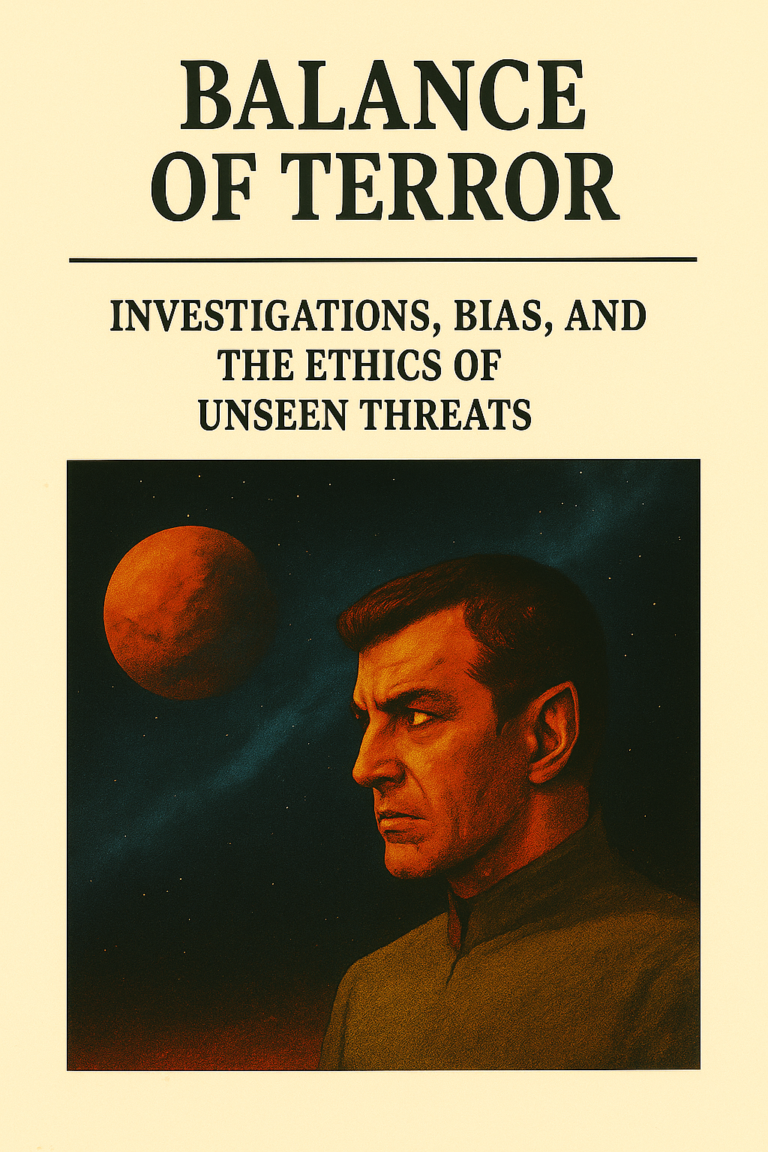
Today, we analyze Balance of Terror, the tense, submarine-style showdown between the Enterprise and a Romulan Bird-of-Prey that introduces one of Star Trek’s most enduring adversaries. The story unfolds as a mystery: Who attacked the Earth outposts? What is this new weapon? Who are the Romulans? And what do their sudden appearances mean for the Federation?
We consider the critical investigative lessons this episode offers for compliance professionals: the importance of situational analysis, managing internal bias, respecting operational security, and knowing when to act and when to wait. In this cat-and-mouse episode, we find the foundations of modern investigative best practices.
1. Situational Awareness and Evidence Gathering—Don’t Jump to Conclusions
Illustrated by: The destruction of Outposts 2 and 3 and the cryptic communication from Outpost 4.
When Captain Kirk is alerted to the destruction of Outposts 2 and 3, followed by a garbled and desperate message from Outpost 4, he does not leap to conclusions. Instead, he begins assembling a coherent picture from incomplete data. It is an approach every compliance professional should emulate. Kirk listens carefully to the fading transmissions, asks questions, and refrains from concluding until the evidence is strong enough to warrant a course of action. In the compliance context, this underscores the importance of establishing a clear and objective fact pattern before initiating formal charges or drawing public conclusions. Whether it is a whistleblower tip, financial irregularity, or cyber breach, investigators must resist the urge to confirm pre-existing assumptions and instead allow the data to guide the inquiry. Rushed investigations lead to false positives, reputational damage, and a loss of credibility. Thorough evidence gathering is not a luxury, and it is the cornerstone of practical and ethical investigations.
2. Managing Internal Bias—Appearance Is Not Proof
Illustrated by: Lieutenant Stiles’ suspicion of Mr. Spock based on the physical resemblance between Romulans and Vulcans.
Lieutenant Stiles immediately casts suspicion on Spock when it is revealed that Romulans resemble Vulcans despite Spock’s long and honorable service aboard the Enterprise. This reflexive distrust, based solely on appearance and ancestry, is a prime example of how bias can derail an investigation and a team. For compliance professionals, this moment serves as a powerful reminder of the damage unconscious bias can cause in investigative settings. Bias leads to tunnel vision, selective interpretation of evidence, and the marginalization of innocent individuals. Investigators must be trained to recognize and eliminate personal biases from their assessments, ensuring that findings are based on behavior and facts rather than on factors such as ethnicity, appearance, age, or background.
Additionally, leaders must protect team dynamics and morale by correcting discriminatory behavior when it arises. Stiles’s conduct not only risked undermining the investigation, but it also threatened the cohesion of the entire bridge crew. In compliance work, fairness is not only a good idea but also a foundational principle.
3. Strategic Surveillance—Investigate Without Provoking Retaliation
Illustrated by: Kirk shadowing the Romulan ship to determine intent and capabilities before engaging.
Captain Kirk chooses patience over aggression. Faced with a technologically advanced Romulan vessel capable of cloaking itself, Kirk adopts a strategy of stealth and surveillance, carefully observing enemy behavior before taking action. This restraint allows him to gather intelligence on the Romulans’ capabilities, decision-making process, and command philosophy. For compliance professionals, this offers a tactical lesson: not every investigation requires immediate confrontation. Especially in matters of internal fraud, harassment, or collusion, premature escalation can trigger retaliation, cover-ups, or destruction of evidence. Surveillance, whether through data audits, transaction monitoring, or employee behavior analytics, can provide valuable insights into patterns of misconduct while maintaining the element of surprise. However, it must be done ethically and lawfully, with careful control over access to sensitive information. Kirk’s calm, measured approach reflects the same principle: watch closely, document thoroughly, and only engage once you fully understand the scope and severity of the issue.
4. Chain of Custody and Documentation—Recording and Communicating the Facts
Illustrated by: The tactical logs Kirk reviews and Spock’s technical input during the confrontation.
Throughout the high-stakes engagement with the Romulans, Captain Kirk and his crew rely not on instinct but on a steady stream of data: tactical logs, sensor readouts, and crew input, particularly from Spock, who filters and interprets technical signals. These layers of documentation provide a clear, defensible foundation for Kirk’s strategic decisions. The lesson for compliance professionals is crystal clear: thorough, contemporaneous documentation is the bedrock of a defensible investigation. Every interview, transaction, policy exception, and timeline must be accurately recorded and stored securely to preserve integrity and facilitate external review. Furthermore, clear communication, especially among multidisciplinary stakeholders, is vital. Just as Kirk integrates science, operations, and command insights to build a complete picture, compliance teams must synthesize data across HR, IT, legal, and finance. Without this coordinated recordkeeping, investigations become vulnerable to challenge or dismissal. Proper documentation not only protects your findings but also protects your credibility.
5. Ethical Leadership During Investigations—Calm in the Face of Conflict
Illustrated by: Kirk’s balance between decisiveness and restraint, even when provoked by Romulan attacks.
Despite being under extreme pressure and facing an adversary with unknown technology and intentions, Kirk maintains emotional control. He neither rushes to attack nor lets fear override strategic thinking. This poise under fire reflects the ideal ethical leadership model during an investigation. Compliance professionals frequently face high-stakes scenarios involving reputational risk, scrutiny from senior executives, or regulatory exposure. The temptation to react emotionally, whether defensively, aggressively, or politically, can compromise both the integrity and objectivity of the investigation. Like Kirk, compliance leaders must demonstrate restraint, transparency, and ethical consistency, even in moments of heightened tension. Your tone will shape how the team responds, how witnesses perceive the process, and how leadership views the investigation’s validity. Emotional discipline is not detachment, and it is the deliberate choice to anchor every step in principle rather than pressure. In times of uncertainty, ethical leadership is not loud but steady. And that steadiness defines whether your investigation is respected or rejected.
Final ComplianceLog Reflections
Balance of Terror is a masterclass in investigative poise, procedural discipline, and ethical clarity under pressure. As the Enterprise crew faces a new adversary cloaked in invisibility, we see what authentic leadership looks like when facts are scarce and risks are high.
For compliance professionals, this episode is a reminder that investigations require patience, vigilance, and integrity. Bias must be checked, facts must be verified, and trust must be earned. The threat may be hidden, but your investigative principles must always remain visible.
