


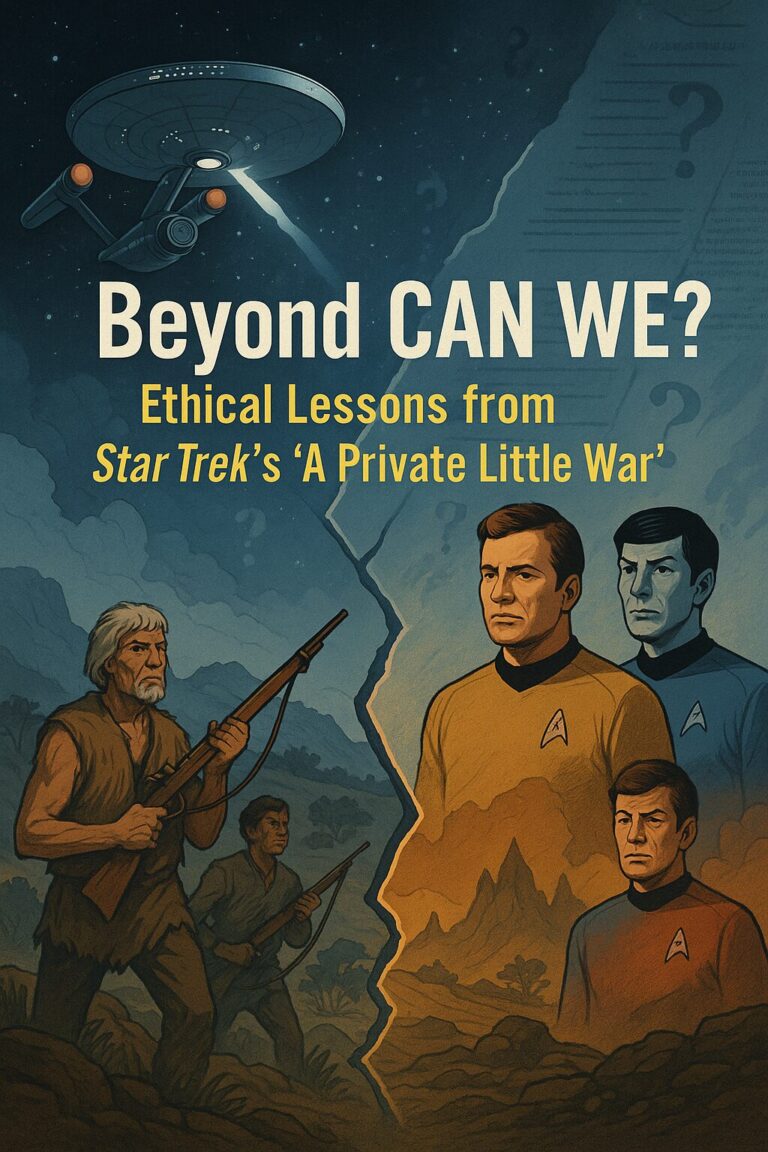
There comes a time in every compliance professional’s journey when the rules and the regulations alone cannot answer the central ethical question at hand. In the fast-moving, high-stakes world of business, it’s easy to focus on what is permissible and whether we can do something. But the actual test of leadership, integrity, and organizational culture is found in those moments when we pause and ask, “Should we? ”
No episode of Star Trek: The Original Series better dramatizes this ethical crossroads than “A Private Little War.” Here, Captain Kirk is confronted with a situation that blurs the boundaries between what is allowed and what is right, between the technicalities of Federation policy and the broader demands of moral responsibility.
For compliance professionals facing similar dilemmas, whether in the boardroom, emerging markets, or product development, “A Private Little War” offers powerful and relevant lessons. Today, we journey back to the planet Neural and see what Kirk’s struggle can teach us about the central ethical challenge of our time.
Lesson 1: When External Pressures Push, Ethics Must Anchor Us
Illustrated By: Kirk discovers that the Klingons are arming one side of Neural’s primitive society with flintlock rifles, violating the natural development of the culture. Dr. McCoy and Spock debate whether the Enterprise should intervene by arming the opposing side, thus escalating the arms race.
Compliance Lesson: Business pressures, from competition, regulatory ambiguity, or market demands, often tempt us to respond in kind, rationalizing that “everyone else is doing it.” But ethics demand a different calculus. Just because you can match or outdo a competitor’s questionable practice doesn’t mean you should.
Remember to pause before mirroring bad behavior. The fact that a competitor is bending the rules is not justification for lowering your standards. Ethical anchoring, knowing your organization’s “North Star,” matters most when external pressure mounts. Kirk listens to Spock’s cold logic and McCoy’s moral pleas. True compliance leadership means allowing for dissent and critical ethical discussion.
Lesson 2: Slippery Slopes Begin with Small Steps
Illustrated By: Despite his misgivings, Kirk ultimately agrees to supply flintlocks to the peaceful villagers so that they can defend themselves, justifying it as a necessary evil to preserve balance, yet he is visibly haunted by the decision’s potential consequences.
Compliance Lesson:
Ethical lapses rarely begin with headline-grabbing misconduct. More often, they start with small, “necessary” exceptions just this once, just for now. But these exceptions lay the groundwork for systemic problems. Beware the “just this once” rationale. Any deviation from ethical standards needs to be scrutinized, debated, and justified with transparency. Document decisions and rationales. If you must make an exception, create a record that can withstand later review and scrutiny. Finally, assess long-term impact. Kirk’s haunted expression signals what every compliance pro knows: today’s “necessary evil” is tomorrow’s policy norm.
Lesson 3: The Limits of Policy—When Rules Don’t Fit the Situation
Illustrated By: The Prime Directive prohibits interference in the natural development of alien societies. Yet Kirk faces a no-win scenario: intervene and escalate violence or do nothing and watch an entire people be conquered.
Compliance Lesson: Regulations and policies are essential, but they cannot anticipate every situation that may arise. Sometimes, doing the right thing means going beyond the letter of the law, considering the broader impact on people and communities. Understand the spirit behind the rule. The Prime Directive’s intent is non-interference, but its strict application could enable greater harm. Promote a culture of ethical escalation. Encourage employees to seek guidance rather than relying solely on a policy manual. Empower ethical decision-making. Equip teams with frameworks and training to evaluate ambiguous situations, rather than relying exclusively on clear-cut rules.
Lesson 4: Leaders Bear the Burden of Ethical Choices
Illustrated By: In the episode’s climax, Kirk must make the final call: whether to arm the villagers, risking an escalation he cannot control, or refuse, likely dooming them to subjugation. The choice weighs heavily, and Kirk’s solitary decision reflects the isolation that often comes with leadership.
Compliance Lesson: Ethical dilemmas often land on the shoulders of compliance leaders, general counsel, or executive management. These moments are defined not by easy answers, but by courage, humility, and accountability. Acknowledge the weight of ethical decisions. Let your teams see the seriousness with which you consider the “should we” question. Seek collective wisdom but accept ultimate responsibility. Like Kirk, gather perspectives, but be prepared to make a decision. Communicate your reasoning. Explain not just what was decided, but why and what values guided your decision.
Lesson 5: Every Ethical Decision Has Ripple Effects
Illustrated By: As Kirk arms the villagers, Dr. McCoy questions the long-term consequences: “Do you know what you’re doing? ”Kirk can only reply, “No. But if the Klingons give their side even one more gun…” The episode closes with an uneasy truce and the awareness that the future is uncertain.
Compliance Lesson:
No ethical decision occurs in a vacuum. Actions taken under pressure today set precedents, influence culture, and shape stakeholder expectations for years to come. Think beyond the immediate outcome. Consider the secondary and tertiary effects of major ethical choices. Review and revisit as appropriate. Monitor the results of tough calls and be willing to make adjustments as needed. Foster a culture of reflection. Make it safe for your organization to revisit, debate, and learn from past ethical crossroads.
Final ComplianceLog Reflections
“A Private Little War” reminds us that the most consequential decisions in compliance and ethics aren’t about whether something is allowed but whether it is right. Kirk’s journey is ours: to grapple with ambiguity, resist the seduction of expediency, and own the responsibility for the choices we make.
For today’s compliance professionals, the lesson is clear. The real work begins where the rulebook ends, in those gray areas where business, culture, and humanity intersect. Lead with integrity. Question not just what is possible, but what is just. Because in compliance, as in the universe of Star Trek, our future depends not only on what we can do but on the courage to do what we should do.
Resources:
