


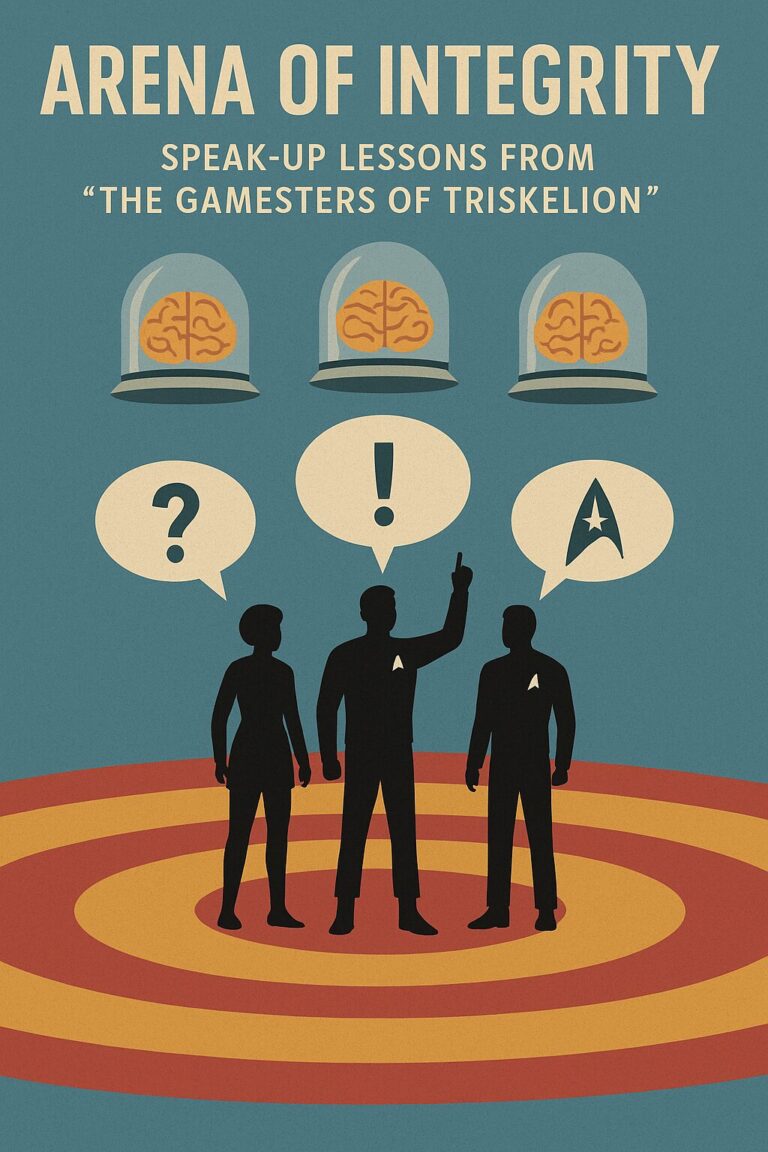
For compliance professionals, building a culture where employees feel empowered to speak up, whether as victims or as bystanders, is both an ethical imperative and a business necessity. Yet, fostering this environment goes far beyond simply installing a hotline or posting policies on the intranet. It requires trust, accessibility, and leadership that encourages all voices, especially those witnessing misconduct, not just those experiencing it firsthand.
No episode of Star Trek: The Original Series illustrates the importance of courage, communication, and the role of bystanders quite like “The Gamesters of Triskelion.” In this memorable installment, Captain Kirk, Lieutenant Uhura, and Chekov are kidnapped and forced to fight as gladiators for the amusement of alien “Providers.” While the spectacle is one of brute force, the true victory comes not from physical strength but from challenging the system, refusing to remain silent, and advocating for oneself and others.
Today, we beam down and explore the key compliance lessons, literally scene by scene, from this classic episode, and see how it can help us reimagine our approach to hotlines, internal reporting, and speak-up culture in today’s organizations.
“The Gamesters of Triskelion” places our heroes in an alien arena, stripped of their autonomy and pitted against each other. Their every move is watched, wagered upon, and manipulated by unseen masters. It’s an allegory that resonates in the modern workplace, where power imbalances, fear, and bystander inaction can allow harassment and misconduct to flourish in the shadows.
But just as Kirk and his crew refuse to be mere pawns, so too must organizations encourage employees to break free from silence, whether as victims or witnesses, to foster a truly ethical and accountable culture.
Lesson 1: Accessibility and Trust—The Foundation of Any Hotline Program
Illustrated By: Kirk’s first attempts to communicate with the Providers, demanding answers and voicing his protest against the system. When Captain Kirk is abducted, his first instinct is to seek information, challenge authority, and demand a platform for his concerns. But the providers initially deny him any means to voice his objections. Reflecting a system where grievances are suppressed and channels for reporting are inaccessible.
Compliance Lesson: A hotline or internal reporting system is only as effective as its accessibility and the trust employees have in it. Too often, organizations install a hotline as a check-the-box exercise, but if employees don’t trust the process or fear retaliation, it becomes as useless as shouting into the void. Build trust by ensuring anonymity, robust anti-retaliation protections, and transparent processes for follow-up. Empower all employees, not just those harmed directly but also those who witness wrongdoing, to report concerns with confidence.
Lesson 2: Bystander Empowerment—Everyone Has a Role in Speaking Up
Illustrated By: Uhura witnesses Chekov being attacked by another thrall and later supports Shahna when she faces abuse from the Providers. Uhura’s actions exemplify the power of the bystander. Though she is a victim of abduction, she does not remain passive when she witnesses Chekov in danger or Shahna being mistreated. She steps forward, speaks up, and supports those around her, even putting herself at risk.
Compliance Lesson: An authentic speak-up culture extends beyond encouraging direct victims to report. It actively enlists bystanders, colleagues, supervisors, and contractors who observe misconduct or questionable behavior. Compliance professionals should provide training on bystander intervention, communicate that speaking up is a shared responsibility, and recognize those who do. This not only prevents harm but also signals to all employees that silence is not neutrality; it is complicity.
Lesson 3: Remove Barriers to Reporting—Simplify and Normalize the Process
Illustrated By: Kirk negotiates with the providers, insisting on open communication, transparency, and fair treatment for himself and the others. Throughout the episode, Kirk persistently challenges the opaque rules of the Triskelion arena. He demands not just a voice, but a fair and understandable process—something the providers grudgingly grant after repeated confrontation.
Compliance Lesson: Internal reporting mechanisms should be straightforward and widely communicated. Complicated processes or unclear outcomes deter people from coming forward. Normalize reporting by making it a routine, non-threatening part of workplace culture, much like regular safety drills or team meetings. Remind employees frequently, in plain language, of how and why to report concerns, and ensure that doing so is free from bureaucratic or emotional hurdles.
Lesson 4: Leadership Sets the Tone—Champion Speak-Up Behavior at the Top
Illustrated By: Kirk rallies Uhura, Chekov, and Shahna, modeling courage and vocal opposition even under surveillance. Kirk’s leadership in the arena is marked by his refusal to comply quietly with unjust commands. He models courage and vocal opposition, inspiring those around him, especially Shahna, a bystander-turned-ally, to question the status quo and ultimately join his cause.
Compliance Lesson: Tone at the top matters. Leaders who demonstrate, support, and reward speaking up create an environment where others feel safe to do the same. Encourage managers and executives to share stories of when they reported concerns or acted as ethical bystanders. Celebrate transparency and moral courage, not just technical compliance. When leaders set the example, the entire organization takes notice.
Lesson 5: Close the Loop—Respond, Resolve, and Communicate Outcomes
Illustrated By: After Kirk’s defiance and challenge, the Providers agree to his terms, ultimately restoring freedom and dignity to the captives. The climax of the episode comes when the Providers, confronted with Kirk’s unwavering demands and the support of his crew, capitulate. They not only allow complaints to be aired, but they also listen, act, and restore justice.
Compliance Lesson: Effective reporting systems require not only intake but meaningful response. Employees must see that their concerns are taken seriously and addressed appropriately. This includes timely investigation, resolution, and, where possible, communication back to the reporter (even if only in general terms). When employees see real action and outcomes, trust grows and participation in the system increases. Closing the loop is essential to sustaining a robust speak-up culture.
Final ComplianceLog Reflections
“The Gamesters of Triskelion” demonstrates that courage, solidarity, and a voice can challenge even the most entrenched power structures. For compliance professionals, the episode serves as a poignant reminder that hotlines and policies are only the starting point. The real work is building an environment where every employee, victim, or bystander knows they have the right, the tools, and the support to speak up, and that their concerns will be heard and acted upon.
As you assess your organization’s internal reporting and speak-up culture, ask yourself:
- Are your hotlines and reporting channels truly accessible and trusted?
- Have you equipped and empowered bystanders, not just victims, to act?
- Are you constantly removing barriers to speaking up and normalizing the process?
- Does your leadership model champion the values you expect from everyone?
- Do you always close the loop by providing feedback and taking visible action?
True compliance is not measured by silence, but by the willingness of all to speak, intervene, and challenge injustice. Like Kirk and his crew, our mission is not just to survive the arena but to change it for the better.
Live long, prosper, and always encourage your crew to speak up.
Resources
