


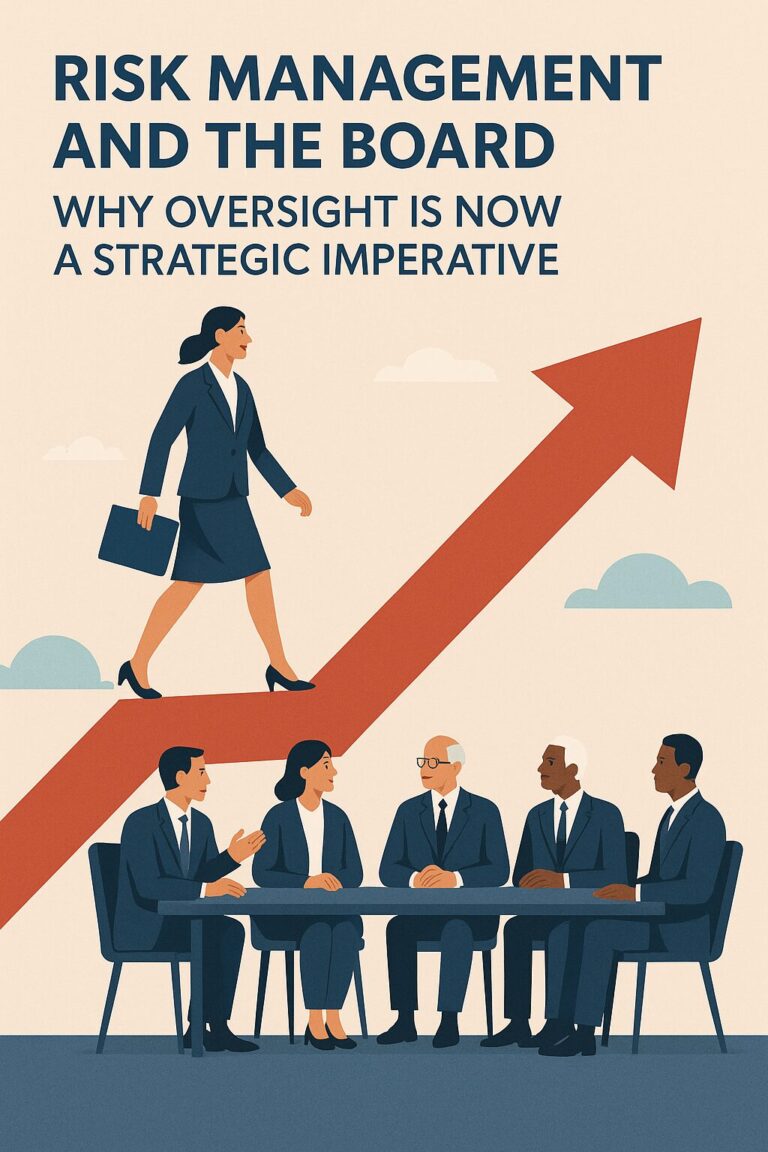
In today’s business landscape, boards of directors are navigating a storm of risks that would test even the most resilient organizations. This topic was explored in a recent article titled “Risk Management and the Board of Directors.” Geopolitical uncertainty, economic volatility, cybersecurity threats, climate change, and the uncharted waters of generative AI are no longer background noise. They have moved to the front and center in boardrooms. Against this backdrop, risk management has emerged not just as an operational necessity but as a governance and strategic imperative. For compliance professionals, this raises a critical question: what role should the board play in risk management, and how can compliance officers support them in fulfilling that role effectively?
Oversight, Not Management
A crucial distinction must be made: boards are not responsible for managing risk on a day-to-day basis. That responsibility belongs to management. But boards do carry the weight of oversight. This oversight includes monitoring the most significant corporate risk factors, ensuring that appropriate risk systems are in place, and verifying that those systems function in practice.
Think about the Boeing case. Regulators and auditors identified multiple failures in Boeing’s manufacturing controls and safety processes, resulting in devastating reputational and financial consequences that continue to unfold. The lesson is clear. It is not enough for a board to approve a risk framework and then step away. Boards must oversee, probe, and confirm that those frameworks are embedded in operations across the enterprise.
Compliance officers can support this by providing boards with accurate, timely, and actionable reporting. Minutes, board packets, and oversight documentation are not administrative afterthoughts. They are evidence of diligence that courts, regulators, and investors increasingly scrutinize.
Tone at the Top: Culture as the Foundation
If oversight is the board’s mandate, then culture is the foundation that determines whether risk management succeeds or fails. Boards set the “tone at the top,” and that tone resonates throughout the organization.
Transparency, consistency, and communication are essential. A board that prioritizes ethics, compliance, and stakeholder safety sends a clear message: compliance failures and corner-cutting will not be tolerated. Conversely, when boards tolerate delay or indecision in addressing risks, such as safety lapses, misconduct, or harassment, they erode employee trust, tarnish their reputation, and invite regulatory scrutiny.
Board Readiness in a Dynamic Environment
Boards must prepare not only for the risks they know but for those that are emerging. This means ongoing director training, scenario planning, and recruitment strategies that close knowledge gaps. While no board can house every kind of subject matter expertise, they must know when to bring in advisors, leverage external resources, and engage with stakeholders directly.
A readiness mindset also means anticipating the unexpected. Crisis response plans, covering a range of scenarios from cyberattacks to workplace misconduct, should be in place and regularly tested to ensure their effectiveness. Compliance leaders should be part of these conversations, ensuring that prevention, detection, and remediation are embedded into strategy, not bolted on as afterthoughts.
Investors, regulators, and even the courts of Delaware are sharpening their focus on board-level risk oversight. The Caremark line of cases continues to set a high bar, but boards that fail to engage in good faith with core risks run the risk of liability. Compliance officers can help directors demonstrate that their oversight is active, engaged, and documented.
Practical Recommendations for Compliance Professionals
What does this mean for compliance officers working with boards? Here are four takeaways:
1. Provide Clear, Actionable Risk Reporting
Boards cannot oversee what they cannot see, and too often, directors are presented with overwhelming data that obscures the real risks. Compliance should deliver reporting that distills information into clear, concise insights, showing not just what happened but why it matters. The most effective reports highlight trends, identify root causes, and directly connect risks to business strategy, enabling the board to act with confidence.
2. Integrate Oversight into Strategy
Compliance risk management should never be treated as an afterthought, bolted onto the business after decisions are made. Instead, compliance officers must help boards see how compliance oversight is deeply intertwined with growth, innovation, and operational resilience. By linking compliance considerations to strategy, compliance becomes a driver of sustainable success rather than a box-checking obligation.
3. Focus on Emerging Risks
Generative AI, biodiversity loss, and geopolitical fragmentation are no longer distant or theoretical; instead, they are reshaping risk landscapes as we speak. Boards need compliance officers to translate these complex issues into practical implications before they escalate into crises that erode value and reputation. A forward-looking compliance function enables directors to anticipate threats, allocate resources effectively, and avoid being blindsided.
4. Reinforce Culture and Ethics
Tone at the top must resonate throughout the organization, and compliance is the bridge that connects board-level values to everyday business practices. Compliance officers can help embed cultural expectations by weaving red flags, lessons learned, and behavioral standards into training, communications, and accountability structures. When done well, this alignment ensures that ethical behavior is not aspirational but operational, lived out across all levels of the enterprise.
Why It Matters Now
The expectations for board-level risk oversight are higher than ever. Regulators want evidence that boards are engaged. Courts are scrutinizing oversight failures with fresh vigor. Investors are pressing for transparency on ESG, cyber, and DEI risks. And employees, your most important stakeholders, expect boards to prioritize safety, inclusion, and integrity.
For compliance professionals, this creates both a challenge and an opportunity. The challenge is to help boards stay ahead of complex risks in an environment of constant change. The opportunity is to elevate the compliance function as a strategic partner in governance, resilience, and corporate integrity.
Final Thoughts
Risk management is no longer just an operational function; it has become a strategic imperative. It is a governance issue that sits squarely in the boardroom. Boards do not need to manage risk, but they must actively oversee it, document their oversight, and ensure that culture and strategy align with risk management systems.
As compliance professionals, we are uniquely positioned to support this mandate. We provide the frameworks, reporting, and insights that help boards meet their obligations and protect the enterprise. In doing so, we not only maintain compliance but also enhance resilience, protect reputation, and foster trust with stakeholders.
The message is clear: oversight is not optional, culture is not cosmetic, and preparation is not a luxury. For today’s boards and for the compliance professionals who advise them, risk management is a strategic imperative that can no longer be ignored.
