


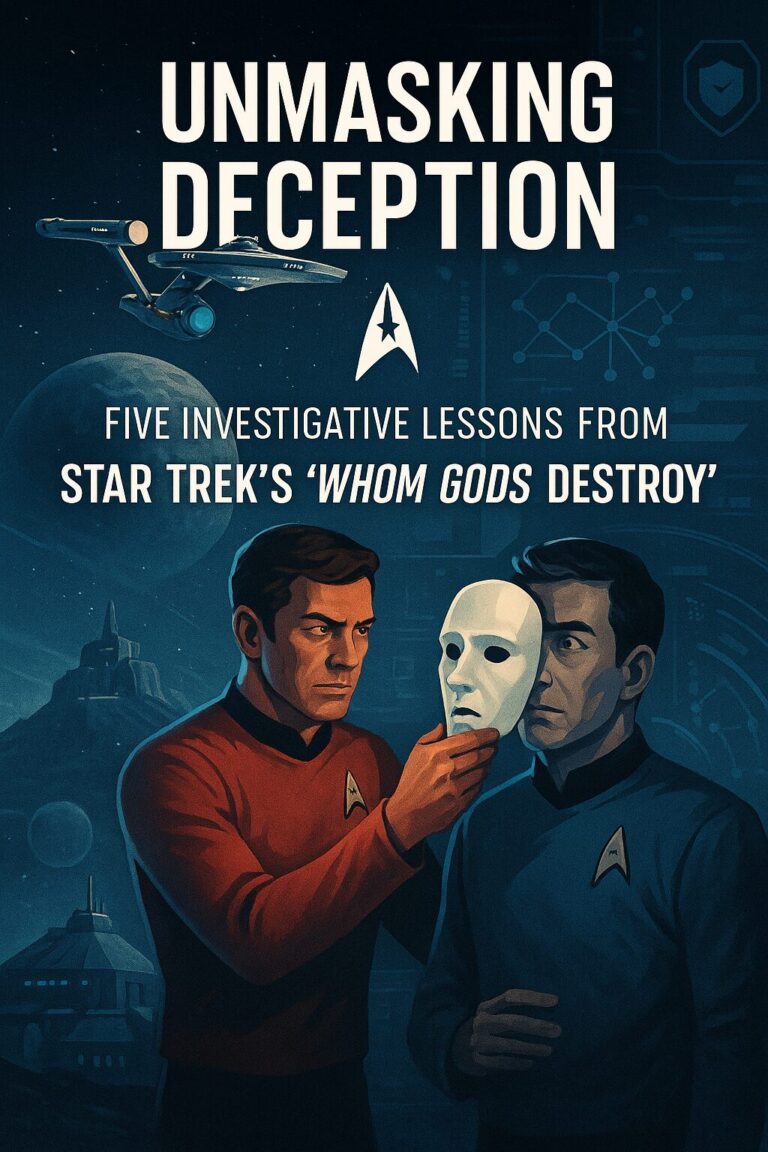
Today, let’s take a journey to one of Star Trek: The Original Series’ most intense psychological dramas: “Whom Gods Destroy.” On its surface, this episode is a tale of madness, manipulation, and peril. But for the vigilant compliance professional, it’s a trove of investigative lessons on dealing with deception, managing risk, and safeguarding your organization in an unpredictable world.
In “Whom Gods Destroy,” Captain Kirk and Mr. Spock arrive at the maximum-security facility on Elba II to deliver a new medicine. They quickly fall prey to the cunning Garth of Izar, a former starship fleet captain now criminally insane. Garth seizes control of the asylum using his shapeshifting ability and manipulates everyone around him with a series of deceptions, impersonations, and psychological games. For Kirk and Spock, survival means uncovering the truth in a maze of misdirection.
Let’s beam down to Elba II, a remote asylum for the galaxy’s most dangerous criminally insane, to examine what this wild ride can teach us about effective corporate investigations.
1. Never Accept Surface Appearances—Verify, Then Trust
Illustrated By: Kirk and Spock are greeted by what appears to be the asylum’s director, Governor Cory. He acts normally and reassures them that all is well. Only later do they discover that Garth, using his ability to alter his appearance, is impersonating Cory and is, in fact, in control of the facility.
Compliance Lesson. In investigations, never accept things at face value. Documents can be forged, credentials fabricated, and even trusted individuals may act under duress or with hidden motives. Just as Garth’s impersonation deceived Kirk, compliance investigators must independently verify facts, corroborate stories, and challenge what seems obvious. Assume nothing—always test the evidence.
What should you do now? Establish robust protocols for evidence verification. Don’t simply trust, but verify, using multiple sources, forensic tools, and independent witness interviews. Always be alert to the possibility that someone may be playing a role.
2. Psychological Manipulation: Beware the Power of Charisma
Illustrated By: Garth, in his guise as both himself and others, uses his charisma and manipulation to sow confusion and loyalty among the other inmates. He persuades them to join his rebellion through promises, threats, and appeals to their egos.
Compliance Lesson. In many investigations, the most dangerous individuals are those who wield psychological influence. Charismatic leaders, managers, or employees can persuade others to cover up wrongdoing, falsify records, or sabotage investigative efforts. Investigators must be wary of undue influence and remember that even the most likable or persuasive people may have something to hide.
What should you do now? Train your investigative team to recognize and resist psychological manipulation. Always seek independent corroboration and never let charm or status cloud your objectivity.
3. The Importance of Access Controls and Segregation of Duties
Illustrated By: Garth gains control over the asylum’s security systems, disabling communications and trapping Kirk and Spock. By centralizing control, he can manipulate everyone in the facility and thwart any rescue attempt.
Compliance Lesson: A key safeguard against fraud and misconduct is the principle of segregation of duties and strict access controls. If one individual or a small group can manipulate systems without oversight, your organization is vulnerable to abuse. Garth’s control of Elba II mirrors what can happen in a business when there are weak internal controls: a single rogue actor can wreak havoc before anyone notices.
What should you do now? Regularly review and test your access controls and segregation of duties. Ensure that no single person has unchecked power and regularly audit system logs to detect unusual activity. Prevent the “Garth scenario” by building multiple layers of oversight.
4. Recognize Red Flags and Act on Them Swiftly
Illustrated By: Despite several warning signs, unusual behavior from the “director,” cryptic comments from the staff, and security lapses, Kirk and Spock hesitate before taking decisive action. Only after the deception becomes undeniable do they shift into crisis mode.
Compliance Lesson. Every investigation reveals red flags. The question is: will your team recognize them early and act decisively? All too often, subtle signals, changes in behavior, delayed responses, or gaps in documentation are ignored until the situation escalates. In “Whom Gods Destroy,” the cost of delay is nearly fatal.
What should you do now? Create a culture where red flags are escalated and investigated immediately. Encourage open reporting and ensure investigators are empowered to follow up on their instincts. Quick action can prevent a minor issue from becoming a crisis.
5. Collaboration Is the Key to Outwitting Deception
Illustrated By: Ultimately, Kirk and Spock overcome Garth’s deceptions through close teamwork, communication, and the use of a prearranged security code that only the honest Kirk would know. Spock’s skepticism and methodical approach are essential to cutting through the confusion and revealing the truth.
Compliance Lesson. Investigations should never be a solo endeavor. Collaboration, clear communication, and checks and balances are essential to unmasking sophisticated schemes. Like Spock and Kirk, compliance teams must establish protocols—such as “safe words,” confirmation codes, or independent review processes—to prevent impersonation, collusion, or false confessions.
What should you do now? Build cross-functional investigative teams with diverse skill sets. Foster a culture of transparency, and ensure all findings are independently reviewed and validated. Teamwork and process discipline are your best defenses against deception.
Final ComplianceLog Reflections
“Whom Gods Destroy” may be set in a galaxy far away, but its lessons are as relevant to the compliance investigator as they are to any starship captain. In a world where deception can take many forms, such as charisma, forged documents, technological manipulation, or even trusted colleagues, your best defense is disciplined skepticism, rigorous process, and a commitment to the truth above all else.
In corporate investigations, the price of being deceived is high, but the rewards of vigilance, skepticism, and teamwork are higher. So, as you face your own “Elba II,” remember the lessons of Kirk and Spock: Trust the process, trust your team, and always keep your eyes open for the masks that others might wear.
Resources:
Excruciatingly Detailed Plot Summary by Eric W. Weisstein
