


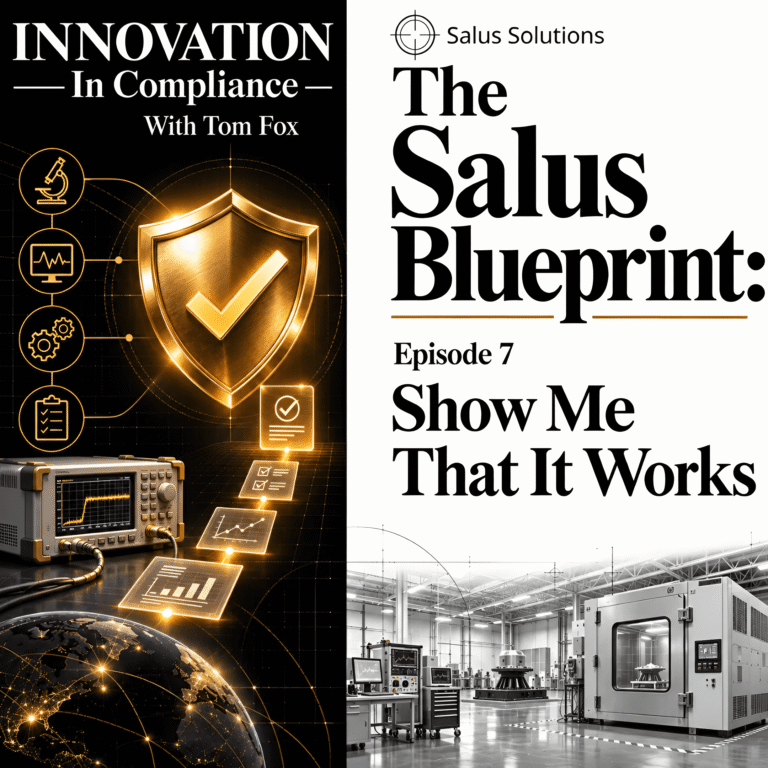
What questions might a leader face on a difficult morning? In this special podcast series, Marc Duncan, Bridget Lee-Young, and Scott Pickett of Salus Solutions explain one useful idea for a variety of corporate professionals, such as corporate risk and compliance leaders and anti-bribery and corruption professionals, and then demonstrate how that idea changes a decision. This podcast is also for police and fire chiefs, emergency managers, finance and operations executives, CEOs, boards, and leaders of commercial, public, and private organizations. Over the next 4 weeks, we will be running this special series.
In Episode 7, we look at testing evidence and updating crisis communications. Today, the panel discusses what constitutes evidence that backup crisis communications and other continuity capabilities work, using Riverbend’s after-hours test failure to show how checkbox compliance misses single points of failure. They emphasize that evidence comes from current, repeatable testing (e.g., night dispatchers reaching drivers with the main system off) with documented date/time, participants, and outcomes, and that older tests with different staff or vendors are history, not evidence. The group highlights the need to test backups and “back up for the backup” frequently, set review cadence by policy (often annually) while also triggering earlier reviews when risks, people, suppliers, sites, missions, threats, or incidents change, and establish “par values” for critical areas. They cite an export-control shipping failure to stress that critical updates require confirmation beyond a single email, vendor coordination, and verification. They describe SALIS tools as a documented loop (intel/assessment/decisions/ops) that builds a defensible, board-ready path from information to tested action.
Key highlights:
- “What would count as evidence that Riverbend’s backup communications actually work?”
- “How is a test result different from a policy document, a training attendance list, or a completed purchase order?”
- “What should an exercise capture about failure conditions, time to respond, who was reached, and what still did not work?”
- “How do risk and compliance leaders show management and the board an honest picture without drowning them in metrics?”
- “When an exercise uncovers a new gap, how do you assign correction and verify the correction worked?”
- “What new information should flow back into SalINTEL, SalTHIRA, SalCAPA, and SalOPS?”
- “How often should an organization reconsider a capability when people, suppliers, conditions, or mission requirements change?”
- “How would a public-safety leader and a CFO assess the same test result from their different responsibilities?”
Questions for Our Listeners: If your board asked tomorrow for the full path from warning to tested action, could you show it—or would the evidence be scattered across people and systems? In the final episode, we reconnect the whole cycle and show where to start.
About Salus Solutions: “Salus helps organizations understand what matters, make informed protective decisions, and carry them into action. SalCAPA is the method and coordination environment that connects those steps.”
Salus Solutions sponsors this podcast series.