


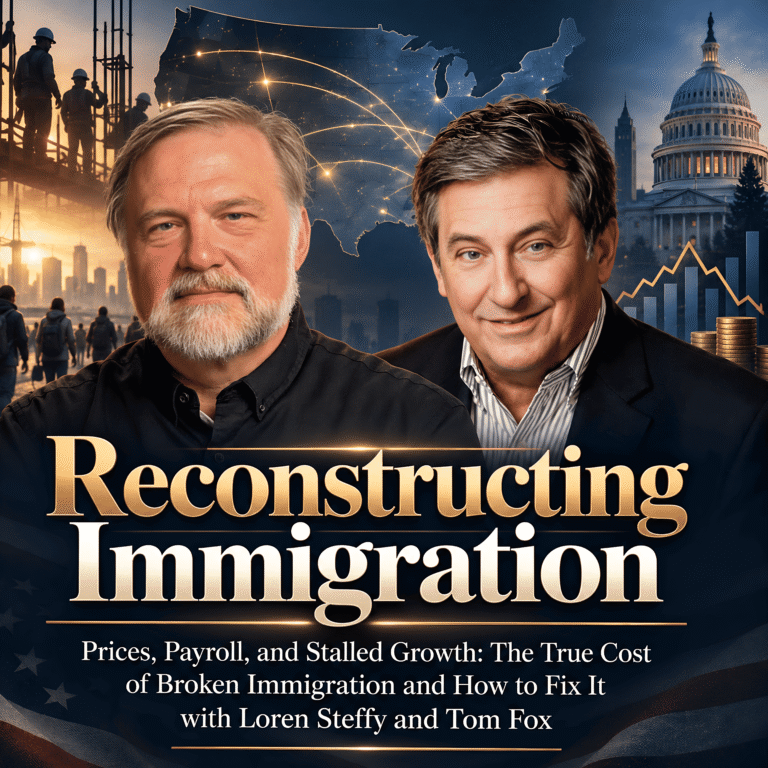
Immigration is argued in America as a question of borders, crime, and culture. It is actually a question of labor supply and the people who feel that most directly are the ones trying to staff a job site, a hospital floor, a kitchen, or a fabrication yard. This series makes the economic case, one argument per episode, in the language business owners already use: head count, cost base, compliance risk, competitive position. It does not relitigate the politics. It reframes the problem as a workforce problem and ends with what an employer can actually do about it. The theme of the entire series is: America has spent forty years treating its largest economic asset as a liability, and the bill is now coming due in wages, prices, and growth.
In this Episode 4 we look at the costs at the cash register for Americans. Summer 2022: chicken breast at four dollars a pound, heating bills doubling, childcare past $2,000 a month, inflation at 9.1 percent, and the most aggressive rate increases in modern history. Everyone argued about supply chains and stimulus. Almost nobody noticed that the largest labor-supply shift in decades was quietly draining pressure out of the wage-price spiral from below. Steffy explains why immigration restriction is now the most underpriced inflation risk in the economy.
Key Higlights
- Walk through the shock-absorber argument.
- Which prices does this actually move? Be specific.
- What is the risk running the other way, right now?
- Does any other country give us a control group?
- “Immigrants drive up housing costs — that’s why my rent is high.”
SOUNDBITE
“The Federal Reserve can control interest rates. It cannot conjure workers out of thin air.”
CLOSE
Watch two series over the next year: services inflation excluding housing, and residential construction employment. That’s where this shows up before anyone announces it.
RESOURCES
Purchase Reconstructing Immigration