


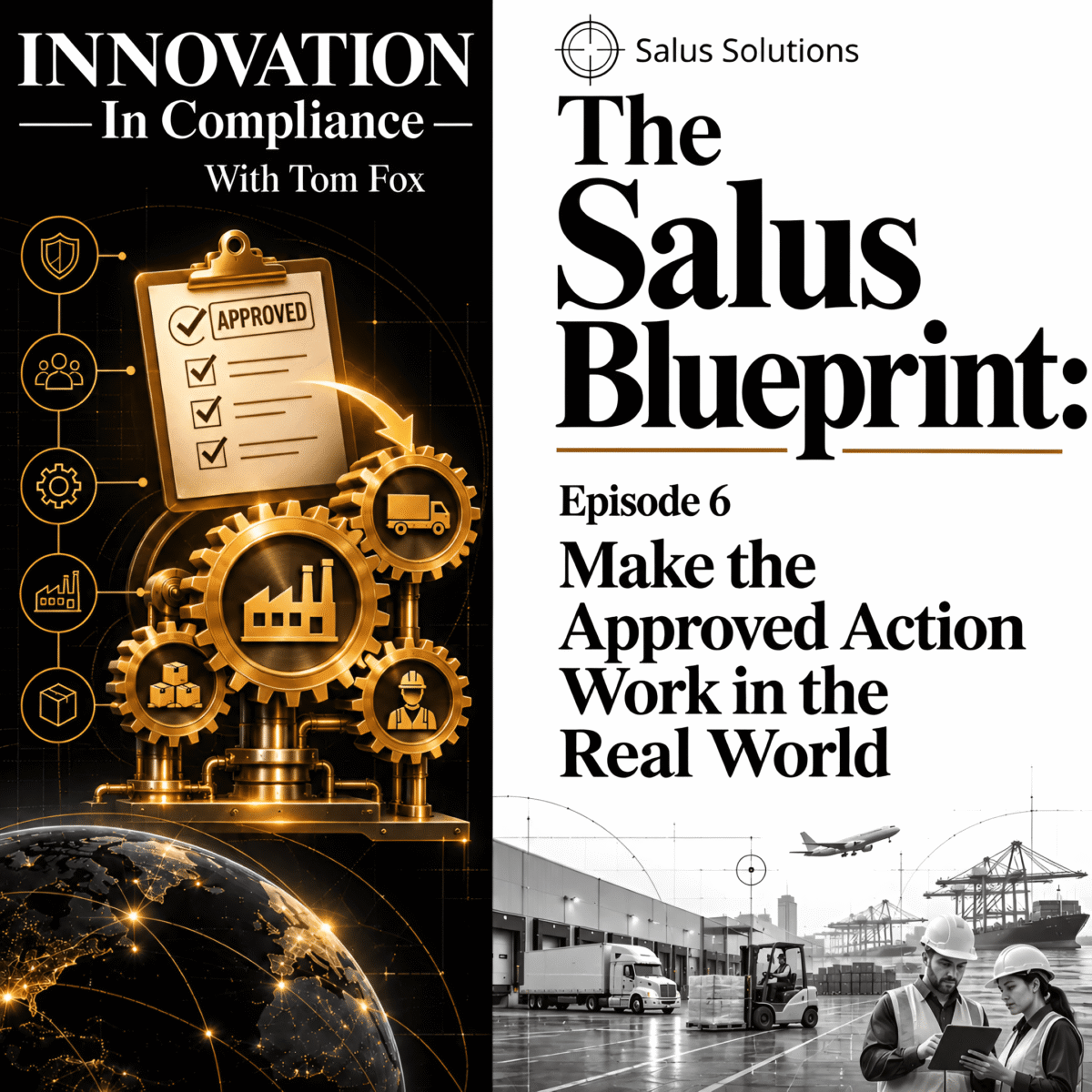
What questions might a leader might face on a difficult morning? In this special podcast series, Marc Duncan, Bridgett Lee-Young and Scott Pickett of Salus Solutions, explain one useful idea for a variety of corporate professionals such as corporate risk and compliance leaders, anti-bribery and corruption professionals, and then demonstrate how that idea changes a decision. This podcast is also for police and fire chiefs, emergency managers, finance and operations executives, CEOs, boards, and leaders of commercial, public, and private organizations. Over the next 4 weeks, we will be running this special series.
In this Episode 6, we look at proving resilience through exercises and Supply Chain testing. The panel reviews how organizations must turn contingency responsibilities into actionable assignments by testing plans under real operating conditions. They emphasize tabletop and full-scale exercises using “injects” to reveal communication and process failures without derailing objectives, and stress bringing experienced practitioners who know where systems break. They describe SALOps as the scalable “boots on the ground” action arm that validates intelligence and technology in the field, such as confirming carrier coverage, radio options, and 5G/FirstNet performance, and urge compliance and risk leaders to define what “done” means beyond checkboxes (training and testing included). Examples from Hurricane Sandy and energy assurance highlight gaps between notional plans and stressed reality. The discussion also covers supply chain resilience through vendor testing, early anomaly indicators, backups, and insider-threat risks, previewing a next episode on evidence, exercises, and corrections.
Key Highlights
- “How do you turn ‘we need backup communications’ into who does what, by when, with what resources and authority?”
- “What might SalOPS support before an incident, during a disruption, and after it, if the Protected Member requests it?”
- “Where should a police chief, fire chief, emergency manager, contractor, and private organization coordinate, and where do their distinct authorities stay separate?”
- “How do you discover whether the plan works for the night shift, remote site, or vendor outage, rather than only at headquarters?”
- “What should operations tell leadership when an approved measure cannot be implemented as designed?”
- “How do you ensure a procurement or vendor-control response does not interrupt the very service you are trying to protect?”
- “What should SalCAPA show about owners, requests, status, and exceptions as implementation proceeds?”
- “What would a short tabletop exercise reveal before an actual storm?”
Questions for Our Listeners: Can you prove your new capability works, or are you about to mistake a completed task for a protected organization? Next time we examine evidence, exercises, and correction.
About Salus Solutions: “Salus helps organizations understand what matters, make informed protective decisions, and carry them into action. SalCAPA is the method and coordination environment that connects those steps.”
Salus Solutions is the sponsor of this podcast series.