


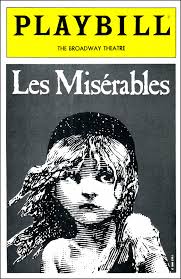
The New York Times recently ran an article on the creation of the play Les Misérables. When the show premiered at London’s Barbican Theatre in 1985, the creative team celebrated with champagne and optimism. But by the next morning, that optimism had curdled. Critics savaged the show, The Evening Standard called it a “glum opera,” and The Daily Mail mocked it as “ripples of cheap sentiment.” Yet forty years later, the musical has become a global juggernaut: 15,500 London performances, translations into 22 languages, and productions across 53 countries.
How did a project that began as a critical failure turn into one of the most beloved works of modern theatre? The answer lies in the same principles that define a strong corporate compliance program: resilience, continuous improvement, and purpose-driven leadership. Today, I want to use this most beloved story behind Les Misérables (Les Miz) to explore lessons for compliance professionals seeking to build programs that endure, inspire, and transform.
Act I: Facing the Critics – Resilience in the Face of Failure
Producer Cameron Mackintosh had just 48 hours after opening night to decide whether to fund a West End transfer. With negative reviews piling up, the rational business decision might have been to pull the plug. But Mackintosh did not because he listened to a different source of data: the public. Within days, the Barbican box office was inundated with calls. Demand skyrocketed. Word of mouth triumphed over the headlines. Mackintosh saw that passion and persistence, not panic, should guide his decision-making. (IE., Cool, Calm, and Collected)
For compliance officers, this moment is instructive. Programs often face early resistance: executives skeptical of costs, employees fatigued by training, or media narratives about “bureaucracy over business.” Like Mackintosh, compliance leaders must look beyond the immediate criticism and focus on long-term trust indicators: employee engagement, internal reporting rates, and cultural alignment. As John Caird, one of the show’s co-directors, later recalled, “It was two or three days of worry. Then it became apparent this thing was unstoppable.” That’s what resilient leadership looks like. It is the courage to hold the line until values prove their worth.
Act II: Reinvention and Collaboration – Building Through Continuous Improvement
The original French production of Les Misérables was a creation of Claude-Michel Schönberg and Alain Boublil. It was little more than “a series of tableaux.” To bring it to London, Mackintosh assembled a powerhouse team: Caird, Trevor Nunn, and poet James Fenton. Together, they reshaped the story, studied Victor Hugo’s 1,400-page novel, and discovered a central truth: the conflict between forgiveness and justice.
When the scene of Jean Valjean stealing silver from a bishop was reimagined to include the bishop’s forgiveness, the show found its soul. As Caird put it, “Sewing God into the show was what animated the characters.” In compliance terms, that’s equivalent to finding your “why.” Many programs begin as checklists: rules, policies, and audits. But the real power comes when compliance discovers its animating purpose: integrity, fairness, and the belief in redemption.
And the Les Misérables team did not stop improving. Even weeks before opening, they were rewriting scenes and composing new music. The haunting ballad “Bring Him Home,” for instance, was added at the eleventh hour to showcase Colm Wilkinson’s voice. A lyric change from “the song of common men” to “the song of angry men” captured the fire of revolution and made the anthem unforgettable. That kind of iterative creativity mirrors modern compliance practice. Programs thrive when they are dynamic. When risk assessments lead to policy refinements, when whistleblower feedback reshapes processes, and when technology brings fresh insight into employee behavior. Continuous monitoring and improvement are not simply boxes to check; instead, they are the lifeblood of sustained success.
Act III: Mission, Meaning, and the Power of Emotion
What ultimately made Les Misérables unstoppable was not just the music or the staging. It was emotion and story. The raw humanity of people struggling against injustice. Audiences from Shanghai to São Paulo connected to Jean Valjean’s redemption, Fantine’s suffering, and the students’ defiance on the barricades. The musical’s emotional resonance even crossed from stage to real life. During the Tiananmen Square protests in 1989, members of the Los Angeles cast watched the news backstage, then went out to sing “Do You Hear the People Sing?” with renewed intensity. “We were singing to empower them,” one actor said.
That is what great art and great compliance can do: inspire people to act on their values. A compliance culture isn’t sustained by fear of enforcement but by belief in purpose. When employees see compliance not as control but as conscience, they become part of something larger. Les Misérables endures because its story is universal. As Caird reflected, “Deep down, so many members of the audience feel the same sense of fate or destiny about their own life journeys.” Compliance, too, speaks to that inner struggle, doing the right thing when no one’s watching, holding fast to integrity under pressure, and believing that redemption is possible even after mistakes.
Act IV: Governance, Adaptation, and Global Legacy
Even as Les Misérables became a global brand, its creative and business stewards never lost sight of governance. The show’s licensing model ensures consistent quality worldwide. Each local production is supported by an extensive oversight network, a framework that any compliance professional would recognize as a control environment.
The show’s adaptability has also been key to its longevity. From Paris to London, from Broadway to Shanghai, the creative team allowed for local variation without losing the show’s ethical and emotional core. For compliance, the essence of risk-based design is adapting policies and procedures to the local context while maintaining global standards.
The duality of consistency and flexibility is the hallmark of resilient compliance systems. Whether you’re dealing with data privacy laws in the EU or anti-bribery rules in emerging markets, the goal is the same: uphold integrity, but adapt intelligently.
Curtain Call: The Compliance Lessons from Les Misérables
Forty years on, Les Misérables remains not just a musical but a movement. Its improbable rise from derision to dominance reflects the same principles that make compliance programs succeed in the long run. Here are three key lessons for today’s compliance professionals:
1. Resilience Over Reputation. Critics will come, whether they are journalists, executives, or employees, and they will be skeptical of compliance initiatives. What matters is endurance. Listen to feedback, adapt when necessary, but stay rooted in purpose. Like Mackintosh, bet on the long-term power of doing what’s right, not what’s popular.
2. Continuous Reinvention Is Compliance Excellence. Les Misérableswas refined until every lyric and note supported the story. Similarly, compliance programs must be living systems. They must constantly be assessed, tested, and evolved. Success comes not from a perfect launch but from perpetual improvement.
3. Emotion and Ethics Drive Engagement. What made Les Misérablesunforgettable was not its spectacle but rather its soul. The same applies to compliance. Rules deter misconduct; stories inspire integrity. Embed humanity into your messaging. Celebrate courage. Encourage second chances. Compliance is not about fear. It is about belief.
Final Encore
From the opening-night “wake” to four decades of standing ovations, Les Misérables proves that greatness often begins in adversity. For compliance professionals, the lesson is clear: Build programs with purpose, persistence, and passion. Like Valjean himself, a great compliance culture does not just survive, it redeems, inspires, and endures.
