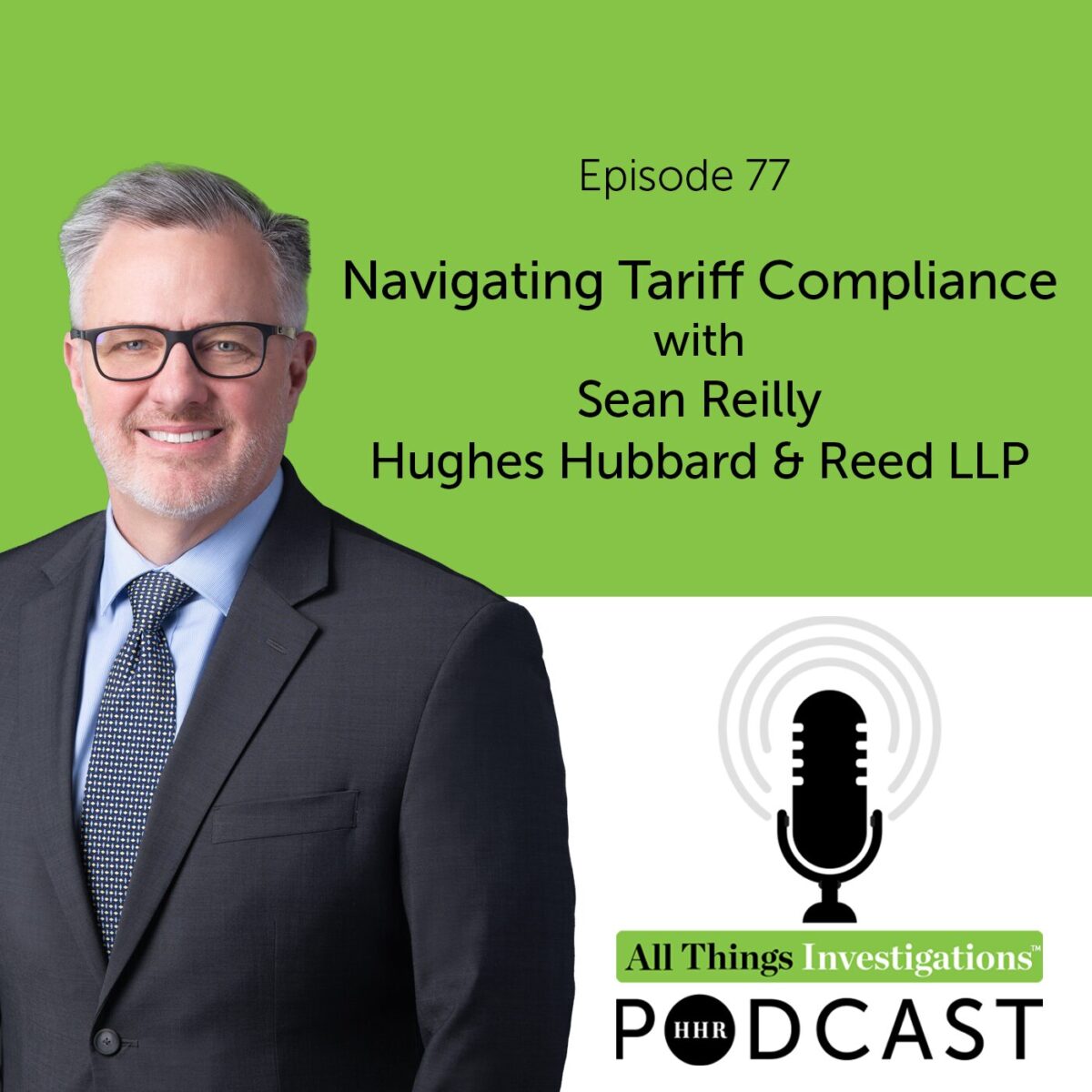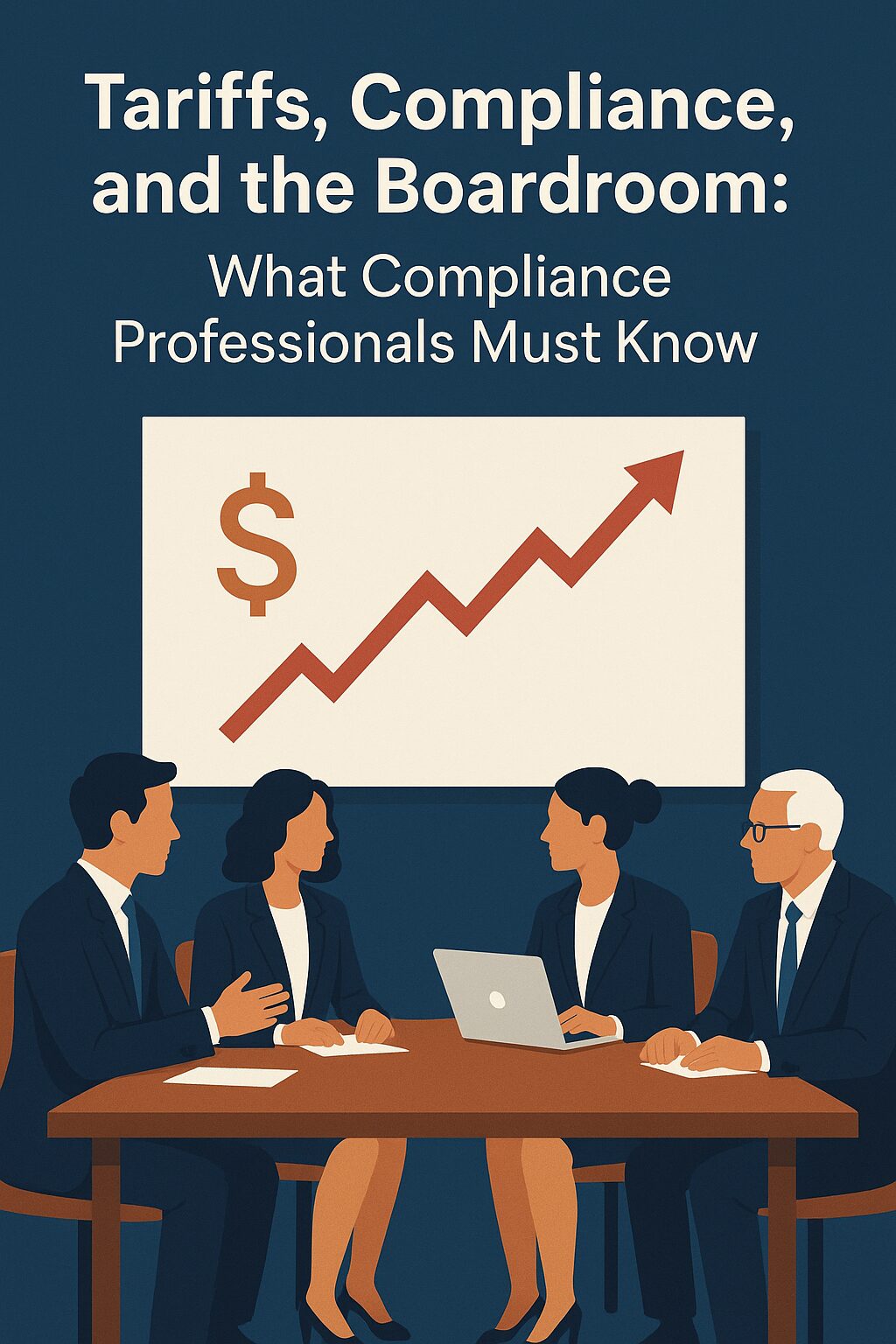
Tariffs rarely capture the same headlines as sanctions or anti-bribery enforcement, but they present an equally dynamic and increasingly risky compliance landscape. In a recent episode of All Things Investigation, I had the opportunity to sit down with Sean Reilly to discuss tariffs, compliance risks, and what boards and compliance officers should be doing to prepare for a volatile environment.
Our conversation underscored a simple truth: tariffs are no longer an abstract trade issue reserved for economists. They pose a compliance risk that spans supply chains, financial disclosures, and boardroom oversight. For companies that import, export, or rely on global supply chains, tariffs are now at the forefront.
The Tariff Landscape: Constantly Moving Targets
One of the defining characteristics of today’s tariff regime is its unpredictability. Rates fluctuate, exemptions appear and disappear, and the scope of covered countries can shift almost overnight. Compliance officers cannot afford to treat tariffs as a “set it and forget it” exercise.
The practical reality is that tariff compliance requires daily monitoring. Companies must track which tariff rates apply, how long they remain in place, and whether supply chains have been reconfigured in response. This requires a blend of vigilance and flexibility, monitoring trade flows in real-time while being prepared to adjust operations and compliance programs in response to policy changes.
Building the “Tariff Team”
So, who within the company should be responsible for tariff compliance? Sean and I discussed the importance of cross-functional collaboration. Tariff issues are not simply the province of legal or compliance. They touch finance, procurement, supply chain management, and government affairs.
A well-prepared company will assemble a “tariff team” composed of:
- Compliance and legal to interpret rules and assess enforcement risks.
- Supply chain and procurement to track sourcing shifts and supplier behavior.
- Finance to model tariff costs and forecast bottom-line impacts.
- The board is responsible for exercising oversight and ensuring risk-based governance.
Tariff compliance cannot be siloed. It requires coordination and clear lines of accountability across the enterprise.
The Risk of “Tariff Washing”
One of the most significant risks in the current environment is “tariff washing.” This occurs when suppliers attempt to re-route goods through third countries to take advantage of lower tariff rates. Sometimes these are legitimate supply chain shifts. At other times, they are cosmetic or fraudulent, designed solely to avoid higher tariff rates.
Compliance officers must apply a healthy degree of skepticism. Does the shift in sourcing make commercial sense? Has there been a genuine change in manufacturing capacity, or is this simply a repackaging exercise to disguise the true country of origin?
Here, compliance can borrow a tool from anti-corruption programs: the business justification test. Just as we require a legitimate rationale for engaging a third party in an FCPA context, we must demand that supplier shifts in response to tariffs be commercially rational and properly documented.
Documentation and Commercial Sense
Documentation remains the bedrock of compliance. If regulators come knocking, companies must be able to show not only what decisions were made, but why those decisions made sense at the time. That requires contemporaneous documentation of sourcing decisions, tariff classifications, and supplier relationships.
Equally important is the “commercial sense” analysis. As Sean noted, if a decision never made sense on its face, regulators will treat it with suspicion. The first line of defense is to scrutinize whether a supplier’s promise, price change, or sourcing shift is realistic or whether it seems too convenient.
Enforcement Is Coming
While tariff enforcement is still maturing, the writing is on the wall. In May 2025, the DOJ issued guidance, which, among other items, made tariff and customs fraud a high-priority enforcement area. The False Claims Act (FCA) is emerging as a powerful enforcement tool in this space. Indeed, the DOJ has recently announced the establishment of an entire tariff fraud task force.
Under the FCA, false paperwork designed to evade tariff payments can trigger treble damages and whistleblower claims. That means private individuals, including former employees and competitors, can bring lawsuits on behalf of the government. The financial incentives are significant: whistleblowers can recover 10–30% of the government’s final award.
This shift dramatically raises the stakes. Tariff fraud is not just a matter of customs penalties—it can also lead to multimillion-dollar FCA settlements. Competitors now have a financial incentive to blow the whistle if they suspect rivals are skirting tariffs.
The Board’s Role
Boards may not traditionally view tariffs as a governance priority, but that is changing. Directors have a duty of oversight under Caremark, and tariff exposure now falls squarely within that duty.
Boards should be asking management:
- How are tariffs impacting the company’s cost structure?
- What compliance processes are in place to monitor and document tariff compliance?
- Are supplier shifts legitimate, commercially justified, and properly vetted?
- What role does whistleblower risk play in the company’s compliance posture?
Boards are not meant to manage tariffs on a day-to-day basis, but they must oversee the risk and ensure that systems are in place to prevent abuse.
Looking Ahead
As we head into 2026, tariffs are unlikely to disappear. Even if legal challenges reduce the administration’s use of certain authorities, other tools will remain. Tariffs will continue to be used as instruments of economic policy, and compliance professionals must be ready.
That means strengthening tariff monitoring, reinforcing supplier due diligence, and documenting commercial rationales for key decisions. It also means educating boards and business units about the rising enforcement risks, particularly under the False Claims Act.
For compliance professionals, the tariff environment presents both challenges and opportunities. Those who master this space will not only protect their companies but also position themselves as indispensable advisors in the boardroom.
Five Key Takeaways for Compliance Professionals
1. Tariffs Are a Dynamic Risk. Tariffs are unlike many other regulatory obligations because they change with dizzying speed. Rates may rise or fall depending on diplomatic negotiations, trade disputes, or shifting political priorities. Compliance officers cannot rely solely on last quarter’s data or assumptions; they must be vigilant and monitor tariff developments daily. A product classified correctly yesterday could be noncompliant today if the rate changes or a new rule takes effect. Internal systems must be nimble enough to capture and update these changes, ensuring that procurement, logistics, and finance have accurate, real-time information. Failure to adapt exposes companies to both financial and legal risk.
2. Cross-Functional Tariff Teams Are Essential. Managing tariffs is not solely the responsibility of the compliance department. The risks span multiple functions, from procurement’s sourcing decisions to finance’s cost projections and the board’s oversight responsibilities. A cross-functional team ensures no blind spots exist in how tariffs affect the organization. Compliance provides regulatory interpretation, procurement evaluates supplier reliability, finance forecasts cost impacts, and leadership weighs strategic tradeoffs. When these perspectives are integrated, the company can respond quickly and coherently to tariff changes. Without collaboration, gaps emerge in due diligence, documentation, or reporting, which can leave the company vulnerable to enforcement actions or unanticipated costs.
3. Watch for Tariff Washing. One of the most pressing risks in global trade is the temptation to “wash” tariffs by re-routing goods through third countries with lower rates. On paper, this may appear to be a smart sourcing decision, but compliance officers must ask the hard question: Does it make commercial sense? If a supplier suddenly shifts production from China to a Southeast Asian country without evidence of new investment, it may be little more than cosmetic repackaging. Such schemes are red flags for regulators and can be construed as fraud. Companies must scrutinize supplier claims, demand documentation, and verify that supply chain changes are legitimate and accurate.
4. False Claims Act Enforcement Is Rising. The Department of Justice has elevated tariff fraud to a priority enforcement area, and the FCA is fast becoming the weapon of choice. Unlike traditional customs penalties, FCA cases allow treble damages and whistleblower suits, making the stakes far higher. Employees, competitors, and even third parties now have financial incentives to report suspected fraud, with rewards ranging from 10% to 30% of the government’s recovery. This dramatically increases exposure. Companies must prepare by documenting tariff decisions, validating supplier changes, and maintaining clear audit trails to ensure compliance with relevant regulations. Without robust controls, even an innocent mistake could be portrayed as reckless evasion under the FCA.
5. Boards Must Exercise Oversight. Directors cannot delegate tariff risk to management and assume it ends there. Oversight duties require boards to understand how tariffs impact the company’s cost structure, supply chain, and competitive position. This does not mean diving into paperwork, but it does mean asking probing questions: How are tariffs monitored? Are supplier shifts legitimate? What whistleblower risks exist? A board that demands clear answers demonstrates active oversight and helps shield the company from regulatory criticism. Conversely, a board that ignores tariffs may face liability under its duty of care. Documentation, escalation procedures, and ongoing dialogue with compliance are essential.
Conclusion
Tariffs may not dominate the compliance headlines, but they pose real, material risks to companies operating in today’s global economy. The volatility of tariff regimes, the threat of enforcement under the False Claims Act, and the boardroom’s duty of oversight all converge to create a complex challenge.
Compliance professionals who treat tariffs as a core risk, on par with sanctions, export controls, and anti-bribery, will help their organizations avoid costly missteps and strengthen their resilience. As Sean Reilly aptly put it, tariff compliance starts with asking whether a decision makes commercial sense. In today’s enforcement climate, that simple question may be the best protection a company has.