Categories
All Things Investigations

All Things Investigations – Terrorism Designations of Mexican Cartels Fundamentally Enhances Risk for All Companies

Welcome to the Hughes Hubbard Anti-Corruption & Internal Investigations Practice Group’s podcast, All Things Investigation. In this podcast, host Tom Fox is joined by Jeremy Paner and Diego Durán de la Vega to discuss the designation of cartels and other actors in Mexico as foreign terrorist organizations and what this means for US businesses.

This episode considers the significant compliance regulation changes affecting US domestic and Mexican companies. The focal point is the recent designation of cartels and their members as Foreign Terrorist Organizations (FTO) and/or Specially Designated Global Terrorists (SDGT). Unlike in the past, where counter-narcotics sanctions had a limited impact on day-to-day business operations, these new rules introduced a different risk landscape. The spotlight is not simply on the widely-publicized foreign terrorist organizations but rather on the lesser-known yet impactful, specially designated global terrorist (SDGT) actions. These SDGT designations empower the US Treasury’s terrorist finance tracking program, effectively increasing surveillance on Mexican payments, thus posing new challenges and risks for domestic companies.

Key highlights:

  • Introduction to New Rules Impacting US Companies
  • Impact on Domestic Mexican Companies
  • Terrorism Designations and Their Implications
  • Treasury’s Terrorist Finance Tracking Program

Resources:

Jeremy Paner

Diego Durán de la Vega

Hughes Hubbard & Reed website

Designation of Criminal Cartels as Foreign Terrorist Organizations Increases Compliance Risks for Companies (US or Not) Operating in Mexico and Greater Latin America

Categories
The Ethics Experts

Episode 204 – Gary Ballesteros

In this episode of The Ethics Experts, Nick welcomes Gary Ballesteros.

Gary Ballesteros is Vice President of Law, Chief Compliance Officer and Ombudsman. He leads the team of compliance professionals who oversee Rockwell Automation, Inc.’s compliance with regulatory requirements around the globe. Under his leadership, Rockwell has been named one of the World’s Most Ethical Companies by Ethisphere Magazine.

As the Company’s Ombudsman, Gary serves a critical role in the Company’s culture of ethics and integrity. The Ombudsman has a direct reporting authority to the Board of Directors and is empowered to investigate any claims or allegations of misconduct within the Company. The Ombudsman maintains various hotline reporting mechanisms that can be accessed anonymously by any employee worldwide; he also manages a staff of investigative personnel and counsel who investigate any reported violations of our Code of Conduct.

Categories
Corruption, Crime and Compliance

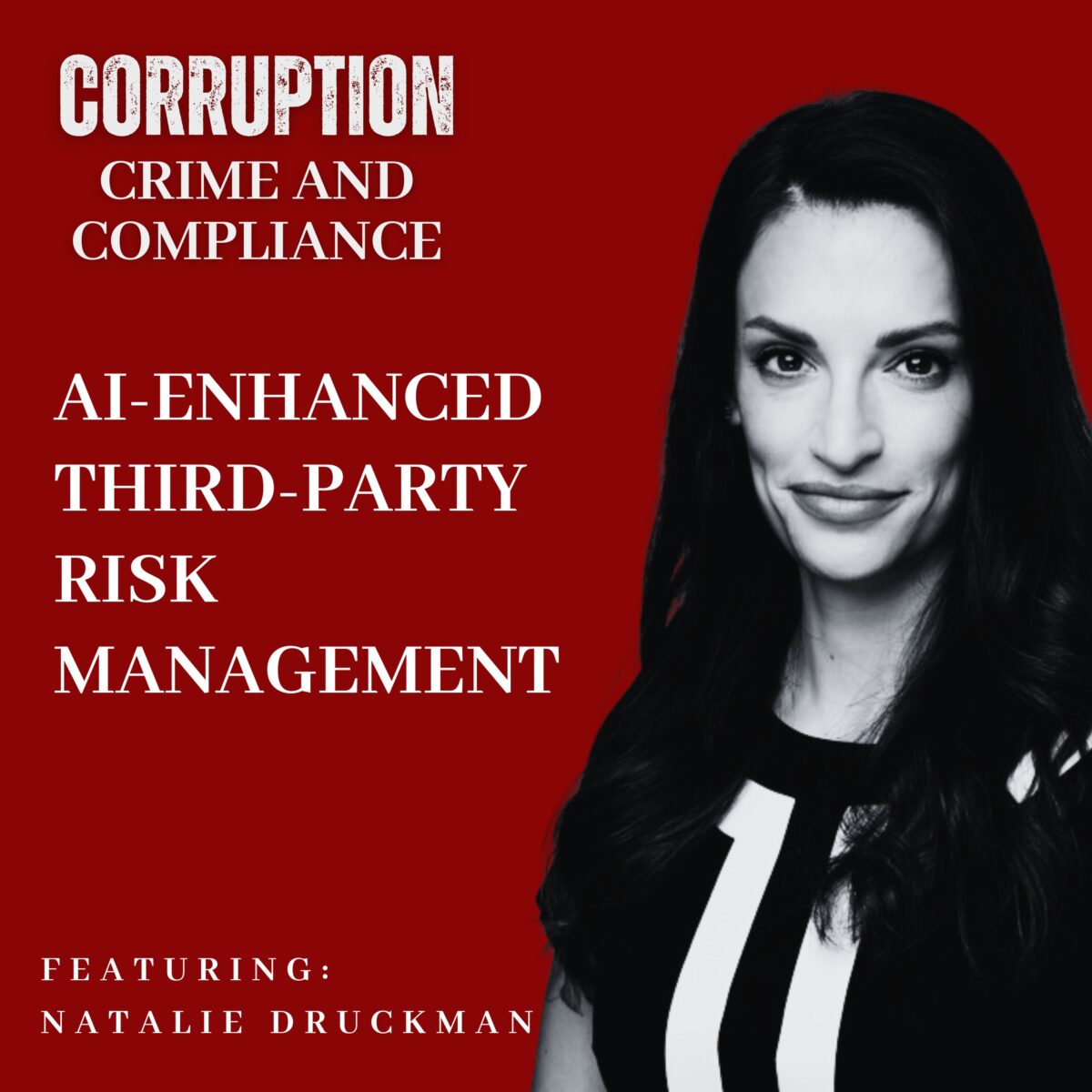
[Replay] Natalie Druckman from Certa on AI-Enhanced Third-Party Risk Management

How do you manage risk when the vulnerabilities outside your organization aren’t in your hands? In this episode of Corruption, Crime, and Compliance, we delve into third-party risk management with our guest, Natalie Druckman, from Certa. As we discuss the regulatory landscape in EMEA and the US, Natalie highlights the higher regulatory burden faced by companies in EMEA and how Certa uses AI to streamline workflows, provide intuitive data visualization, and enhance risk forecasting capabilities. AI is the future of third-party risk management, now and in the future.

  • Cybersecurity has become one of the top concerns for organizations. In 2012, Target worked with a third-party vendor and, as a result, suffered an attack that exposed their customers’ credit data. Since then, compliance departments have started working closely with IT to prevent such vulnerabilities. 
  • Unlike the US, EU companies don’t benefit from gaps created between state and federal regulations. EMEA faces a mandatory and substantial regulatory burden, particularly in areas like ESG and compliance. A forced labor scandal can sink a company, so ESG’s importance is on par with cyber security.
  • Global companies increasingly recognize the importance of addressing ESG topics alongside cybersecurity and financial risks. ESG considerations, such as diversity, modern slavery, and gender pay gaps, have significant reputational and revenue impacts.
  • AI is changing the world in many ways, including compliance. Certa aims to provide a comprehensive solution for third-party risk management, compliance, and operational risks by streamlining processes and incorporating AI capabilities to enhance efficiency and effectiveness.
  • Certa utilizes various AI capabilities, including design AI, which allows users to create workflows using plain language. They don’t need to know anything about tech; they can dictate the process, and AI generates the necessary code and infrastructure. This allows the company to remain flexible and quickly adapt to change.
  • Insights AI is another capability that collects and analyzes data, making it far more accessible and efficient in managing up-to-the-minute risks and developments. This technology also uses design AI, allowing plain language inputs to create actionable, detailed reports immediately.
  • Recall AI allows companies to guarantee rapid and consistent responses from suppliers and customers by recalling past interactions to create surveys, forms, workflows, and processes. This removes the back-and-forth burden on all parties while retaining the human touch.
  • Smaller and midsize companies should prioritize risk management processes and consider automated solutions like Certa. Regardless of their industry or size, these companies can benefit from the efficiency and effectiveness of an automated platform.

Resources:

Michael Volkov on LinkedIn | Twitter

The Volkov Law Group

Natalie Druckman on LinkedIn

Certa

Email Natalie: nat@certa.ai

Categories
Compliance Tip of the Day

Compliance Tip of the Day – AI for Whistleblower Anonymity

Welcome to “Compliance Tip of the Day,” the podcast where we bring you daily insights and practical advice on navigating the ever-evolving landscape of compliance and regulatory requirements. Whether you’re a seasoned compliance professional or just starting your journey, we aim to provide bite-sized, actionable tips to help you stay on top of your compliance game. Join us as we explore the latest industry trends, share best practices, and demystify complex compliance issues to keep your organization on the right side of the law. Tune in daily for your dose of compliance wisdom, and let’s make compliance a little less daunting, one tip at a time.

Today, we look at how to harness AI for whistleblower anonymity and incident management.

Categories
Daily Compliance News

Daily Compliance News: March 17, 2025, The Severance Edition

Welcome to the Daily Compliance News. Each day, Tom Fox, the Voice of Compliance, brings you compliance-related stories to start your day. Sit back, enjoy a cup of morning coffee, and listen in to the Daily Compliance News—all from the Compliance Podcast Network. Each day, we consider four stories from the business world: compliance, ethics, risk management, leadership, or general interest for the compliance professional.

Top stories include:

  • Your ‘Innie” and work-life balance. (NYT)
  • RTO lunch ‘disrupters.’ (FT)
  • 11 steps to improve your work-life balance. (Forbes)
  • Difference in work generations. (HR Exchange)
Categories
FCPA Compliance Report

FCPA Compliance Report – Celebrating the 2025 World’s Most Ethical Companies: Highlights with Erica Salmon Byrne

Welcome to the award-winning FCPA Compliance Report, the longest-running podcast in compliance. In this episode, Tom welcomes Erica Salmon Byrne, Chief Strategy Officer and Executive Chair at Ethisphere, on an exciting launch day for the 2025 World’s Most Ethical Companies honoree list.

The World’s Most Ethical Companies list features 136 companies from 44 industries across 19 countries; the episode delves into the significance, process, and celebration behind this prestigious designation. Erica discusses the impressive Ethics Premium, revealing that publicly traded honorees have outperformed a comparable index by 7.8%, underscoring the profitability of ethical business practices. Listeners will gain insights into the rigorous application process, the importance of cross-functional relationships, and the global nature of the honoree list. Erica also previews the upcoming Global Ethics Summit and emphasizes the critical role of talent acquisition and retention in corporate success.

Key highlights:

  • What is Launch Day?
  • Ethics Premium Highlights
  • Overview of Honoree Companies
  • Global Ethics Summit Preview
  • Deep Dive into the Ethics Premium

Resources:

Erica Salmon Bryne on LinkedIn

Ethisphere

World’ Most Ethical Awards for 2025

Tom Fox

Instagram

Facebook

YouTube

Twitter

LinkedIn

Categories
Blog

Harnessing AI for Whistleblower Anonymity and Incident Management

With the Trump Administration’s retreat on prosecuting for corruption and bribery, whistleblowing and whistleblowers will only become more important in organizations. Whistleblowers strengthen the ethical backbone of our organizations and markets by stepping forward to report misconduct, fraud, corruption, and other unethical practices. 2022 marked a milestone, with the Securities and Exchange Commission (SEC) receiving 12,000 whistleblower tips. This surge underscored not only the growing willingness of individuals to voice concerns but also the pressing need for more robust systems to protect these courageous actors from the significant risks they face, including retaliation and privacy breaches.

As compliance professionals, we have a responsibility not only to encourage whistleblowers but also to protect and empower them. One of the most innovative advancements in whistleblower protection today comes from Artificial Intelligence (AI), a game-changer reshaping whistleblower programs’ very foundations. Devin Partida recently laid out his thoughts in a piece entitled The Role of AI in Whistleblower Identity Protection and Incident Reporting.

Understanding the Whistleblower’s Dilemma

Whistleblowers play a pivotal role in safeguarding transparency and ethics across all sectors. Yet, their path is fraught with personal and professional risks. Retaliation, loss of career opportunities, and privacy breaches often discourage many from speaking out. While regulatory measures such as the False Claims Act provide critical protections against retaliation, there’s a clear need for stronger safeguards that can adapt to today’s complex compliance challenges.

This is precisely where AI, through advanced machine learning and natural language processing (NLP), can significantly enhance whistleblower programs’ safety, security, and effectiveness.

AI’s Role in Strengthening Anonymity

The cornerstone of any robust whistleblower system is the anonymity it guarantees. AI-powered systems excel in preserving this anonymity by intelligently identifying and anonymizing personally identifiable information (PII) within reports. AI-driven anonymization techniques meticulously scan whistleblower submissions, removing or masking names, locations, dates, and other identifiers that could expose whistleblower identities.

Natural Language Processing, a sophisticated subset of AI, takes anonymization to an even more nuanced level. NLP algorithms can contextually analyze narratives, distinguishing essential information from sensitive identifiers. By doing so, NLP ensures that reports retain crucial content for investigation purposes without compromising the whistleblower’s anonymity. The result is a robust protective layer that fosters trust and encourages more individuals to come forward.

Securing Data Transmission with AI

A critical vulnerability for whistleblowers often lies in the transmission of sensitive information. AI dramatically enhances the security of this transmission process by integrating encryption and blockchain technologies. Encryption algorithms ensure whistleblower reports remain unreadable without the correct decryption key, effectively securing sensitive data from unauthorized access.

AI complements encryption by optimizing these security measures dynamically, staying ahead of evolving cyber threats. Additionally, blockchain technology, a decentralized, immutable ledger, significantly boosts the integrity of whistleblower data. AI-managed blockchain systems verify and maintain the authenticity of reported incidents, ensuring that any attempt at data manipulation is promptly detected and mitigated.

Moreover, AI systems constantly monitor security environments, adjusting security parameters in real time to counteract emerging threats and vulnerabilities. This proactive, adaptive approach offers unparalleled protection for whistleblower data, maintaining confidence in the integrity of the reporting system.

Machine Learning Enhancing Incident Management

Incident management can be challenging and resource-intensive. Here, machine learning (ML) becomes indispensable. ML algorithms rapidly categorize and prioritize reports based on severity, credibility, and urgency. This swift sorting enables compliance teams to address critical issues promptly, significantly enhancing responsiveness and efficacy.

Beyond prioritization, machine learning tools cluster similar incidents, facilitating more efficient and insightful reviews. By processing large datasets quickly, ML techniques provide compliance professionals with actionable insights, enhancing decision-making capabilities and ensuring robust follow-through on reported misconduct.

Incident tracking and management automation significantly reduce manual oversight, freeing compliance professionals to concentrate on higher-order strategic tasks. Machine learning transforms the compliance landscape through these capabilities, providing agility and depth previously unachievable by manual processes alone.

Ethical Considerations and Challenges

As compliance leaders, however, we must approach AI adoption thoughtfully. While AI and ML offer compelling advantages, they also introduce potential biases and ethical concerns. AI systems trained on skewed datasets can inadvertently perpetuate biases, affecting the fairness and impartiality of incident reporting and analysis.

Compliance programs must continuously monitor and recalibrate AI systems, ensuring biases are identified and mitigated swiftly. Moreover, ethical considerations around data confidentiality and individual privacy remain paramount. Maintaining robust ethical standards ensures AI deployment enhances, rather than undermines, the trust and security whistleblowers need.

Moving Forward: A Culture of Transparency and Trust

These points fit directly into the Department of Justice’s expectations for whistleblower systems and companies in the 2024 Evaluation of Corporate Compliance Programs. Moreover, for compliance professionals committed to cultivating transparency, integrity, and trust within organizations, integrating AI into whistleblower programs is not just advisable—it’s essential. AI-powered solutions empower compliance functions by protecting whistleblowers’ identities, securing data transmission, and streamlining incident management processes.

When whistleblowers feel safe and secure, they become more willing to report wrongdoing, creating a virtuous cycle that strengthens organizational ethics and compliance culture. Organizations adopting these advanced technologies demonstrate a clear commitment to integrity and ethical behavior, significantly enhancing their reputation and operational effectiveness.

As we embrace AI’s potential, the future of whistleblower protection appears brighter, more secure, and more effective than ever. Compliance professionals must champion this transformation, understanding AI’s promise and proactively addressing its challenges. By leveraging AI wisely, we can better protect whistleblowers and foster the transparent, ethical environments essential for sustainable organizational success.