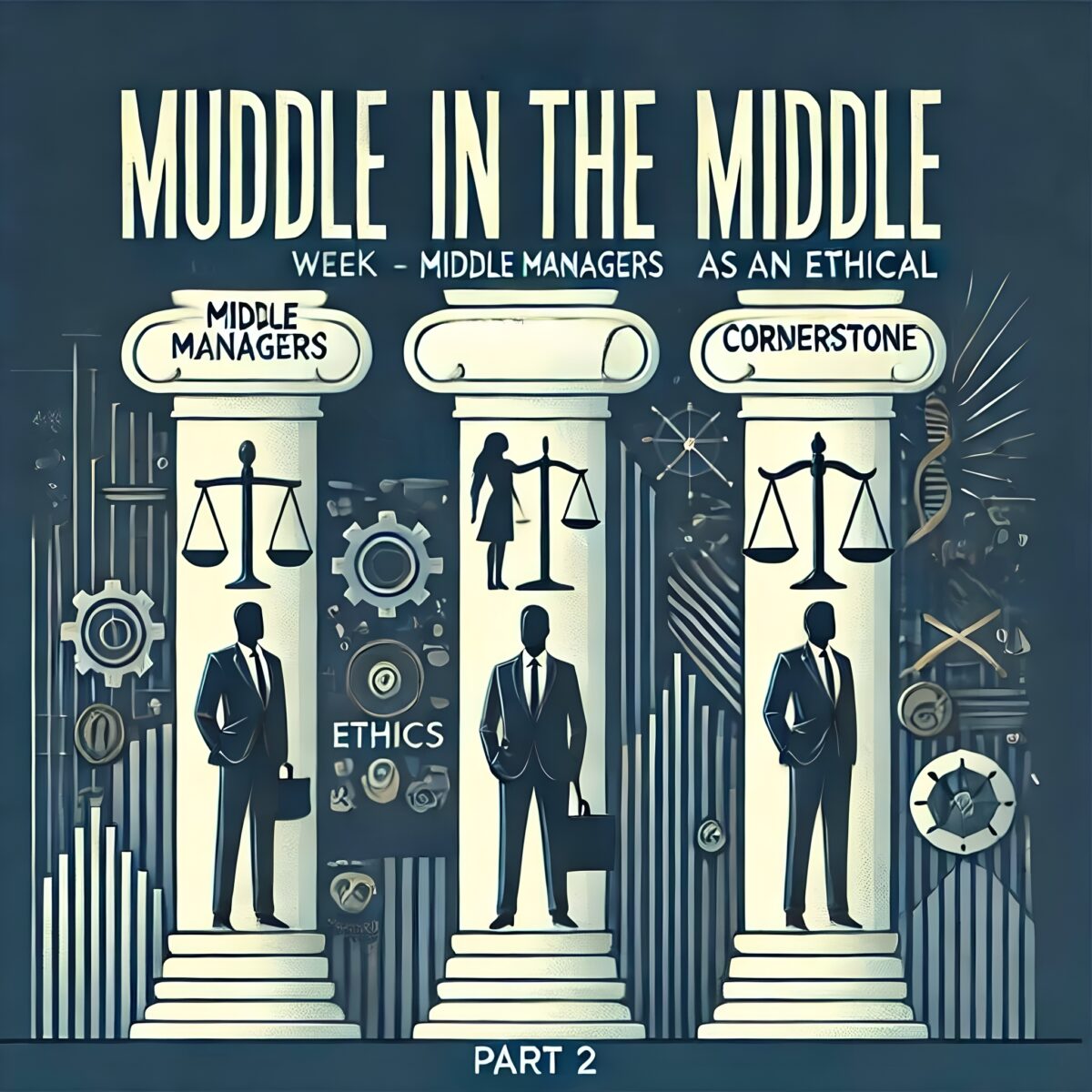
We continue our exploration of middle managers as a key to effective compliance. Middle managers often find themselves unfairly characterized and depicted as bottlenecks or bureaucratic hurdles, and their essential contributions to corporate culture and ethics are frequently overlooked. However, these unsung heroes in corporate compliance are crucial in promoting compliance and upholding ethical business practices. In Brooke Vuckovic’s article “Employees See Middle Managers as an Organization’s Moral Compass,” the author wrote how middle managers made a meaningful difference in their teams’ lives and upheld their organizations’ moral compass. In Part 2, I want to demonstrate that middle managers can be your organization’s ethical cornerstones.
Becoming the middle manager whom others genuinely respect, admire, and recall as a moral role model requires deep work. She noted two areas in particular where middle managers can assist compliance: first, by taking a regular self-inventory to gauge their existing standing and willingly correcting habits and behaviors; second, by monitoring them on an ongoing basis. I wanted to use her article to highlight what lessons compliance professionals can learn from recognizing and empowering middle managers as vital moral compasses within their organizations.
The Quiet Power of Everyday Ethics
When asked about exemplary moral business leaders, MBA students in Vuckovic’s survey commonly referenced high-profile CEOs known for their ethical stances, such as Yvon Chouinard and Ratan Tata. However, far more frequently, they cited their middle managers, whose day-to-day actions and decisions consistently demonstrated integrity and moral leadership. These managers reinforced ethics through small, repeated actions, showing politeness, offering genuine compliments, and consistently supporting their teams.
Lesson 1: Commitment Matters Most
Compliance begins with genuine care and commitment to people. Middle managers earn trust and respect through simple, consistent actions, following promises, actively advocating for their teams, and being genuinely attentive to concerns. When managers demonstrate such commitment, compliance becomes an authentic expression of the organization’s culture rather than merely procedural adherence.
One powerful example from the research illustrates a manager who carefully paced workloads and fairly distributed responsibilities, creating an environment where employees willingly stepped up during urgent situations. “I would have followed her over a cliff,” stated one respondent, reflecting profound respect earned through everyday integrity and empathy.
Lesson 2: Upholding Values Under Pressure
Middle managers frequently face the dual pressures of organizational demands and ethical considerations. Compliance professionals must recognize and empower managers who are willing to stand firm on ethical grounds, even when faced with significant pressure. In Vuckovic’s findings, managers prioritizing integrity over expediency gained the deepest admiration. For example, one manager’s decision not to hurriedly approve complex financial changes without thorough review demonstrated an unwavering commitment to doing the right thing, reinforcing the critical compliance principle of diligence over speed.
Lesson 3: Proactive Protection of Team Culture
Managers who proactively address ethical and behavioral issues before they escalate provide critical protection for their teams and organizations. Effective compliance involves early intervention, and middle managers are ideally positioned to identify and correct behaviors that could undermine conformity. For instance, managers praised by respondents were those who confronted team members withholding crucial information or engaging in behaviors detrimental to organizational integrity. Such proactive stances resolved immediate issues and set lasting expectations for ethical behavior.
Lesson 4: Continuous Ethical Inventory
Compliance professionals can leverage Vuckovic’s recommendation of regular ethical self-inventories to encourage middle managers to consistently reflect on their commitments to their teams and higher ethical standards. This method involves routinely examining instances where managers have demonstrated integrity, fairness, and moral courage. Managers are encouraged to regularly ask themselves critical questions, such as “Have I demonstrated a commitment to integrity under pressure?” This type of assessment can deeply embed ethical considerations into daily managerial practices.
Lesson 5: Learning from Ethical Role Models
Finally, the importance of role modeling in compliance cannot be overstated. Middle managers who actively engage in ethical practices provide practical, observable models for their teams, cultivating an organizational culture where compliance and ethics are deeply valued and proactively pursued. Managers who publicly advocate for clear policies and consistently reinforce ethical priorities, such as data privacy and integrity, set benchmarks that elevate the entire organization. Compliance professionals should celebrate and highlight such ethical exemplars, making their behaviors visible and emulated across the company.
Empowering Middle Management for Stronger Compliance
Compliance professionals have a clear role in reframing how middle management is viewed within their organizations, not as obstacles or bureaucratic necessities, but as indispensable ethical leaders. As Vuckovic compellingly illustrates, middle managers who regularly demonstrate care, integrity, and moral courage form the backbone of an authentic compliance culture.
By championing the ethical contributions of middle managers, organizations reinforce compliance at every level and build a resilient, trustworthy culture that sustains ethical excellence in the face of daily pressures and complex dilemmas. Middle managers not only play a crucial role in corporate compliance, but they also serve as exemplary role models.
I hope you will join me tomorrow when I consider how to elevate your compliance regime by empowering middle managers.
For more on this topic, check out The Compliance Handbook, a Guide to Operationalizing Your Compliance Program, 6th edition, which LexisNexis recently released. It is available here.



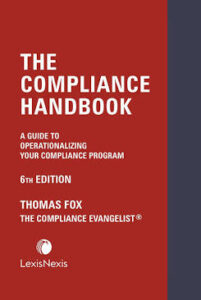 For more on this topic, check out The Compliance Handbook, a Guide to Operationalizing Your Compliance Program, 6th edition, which LexisNexis recently released. It is available here.