Categories
Compliance Tip of the Day

Compliance Tip of the Day – Crowd Sourcing Risk Intelligence

Welcome to “Compliance Tip of the Day,” the podcast that brings you daily insights and practical advice on navigating the ever-evolving landscape of compliance and regulatory requirements. Whether you’re a seasoned compliance professional or just starting your journey, our goal is to provide you with bite-sized, actionable tips to help you stay ahead in your compliance efforts. Join us as we explore the latest industry trends, share best practices, and demystify complex compliance issues to keep your organization on the right side of the law. Tune in daily for your dose of compliance wisdom, and let’s make compliance a little less daunting, one tip at a time.

Today, we consider how you can use your data to crowdsource your risk intelligence.

For more information on this topic, refer to The Compliance Handbook: A Guide to Operationalizing Your Compliance Program, 6th edition, recently released by LexisNexis. It is available here.

Categories
Daily Compliance News

Daily Compliance News: July 24, 2025, The In Phone Hell Edition

Welcome to the Daily Compliance News. Each day, Tom Fox, the Voice of Compliance, brings you compliance-related stories to start your day. Sit back, enjoy a cup of morning coffee, and listen in to the Daily Compliance News. All, from the Compliance Podcast Network. Each day, we consider four stories from the business world, including compliance, ethics, risk management, leadership, or general interest, that are relevant to the compliance professional.

Top stories include:

  • Morgan Stanley screening draws scrutiny. (WSJ)
  • Carlos Ghosn finally faces justice. (Bloomberg)
  • No ‘hello,’ no answer? (FT)
  • Megadeals are in the offing. (Reuters)

You can donate to flood relief for victims of the Kerr County flooding by going to the Hill Country Flood Relief here.

Categories
Everything Compliance

Everything Compliance: Episode 157, The Q2 – 2025, Great Women in Compliance Edition

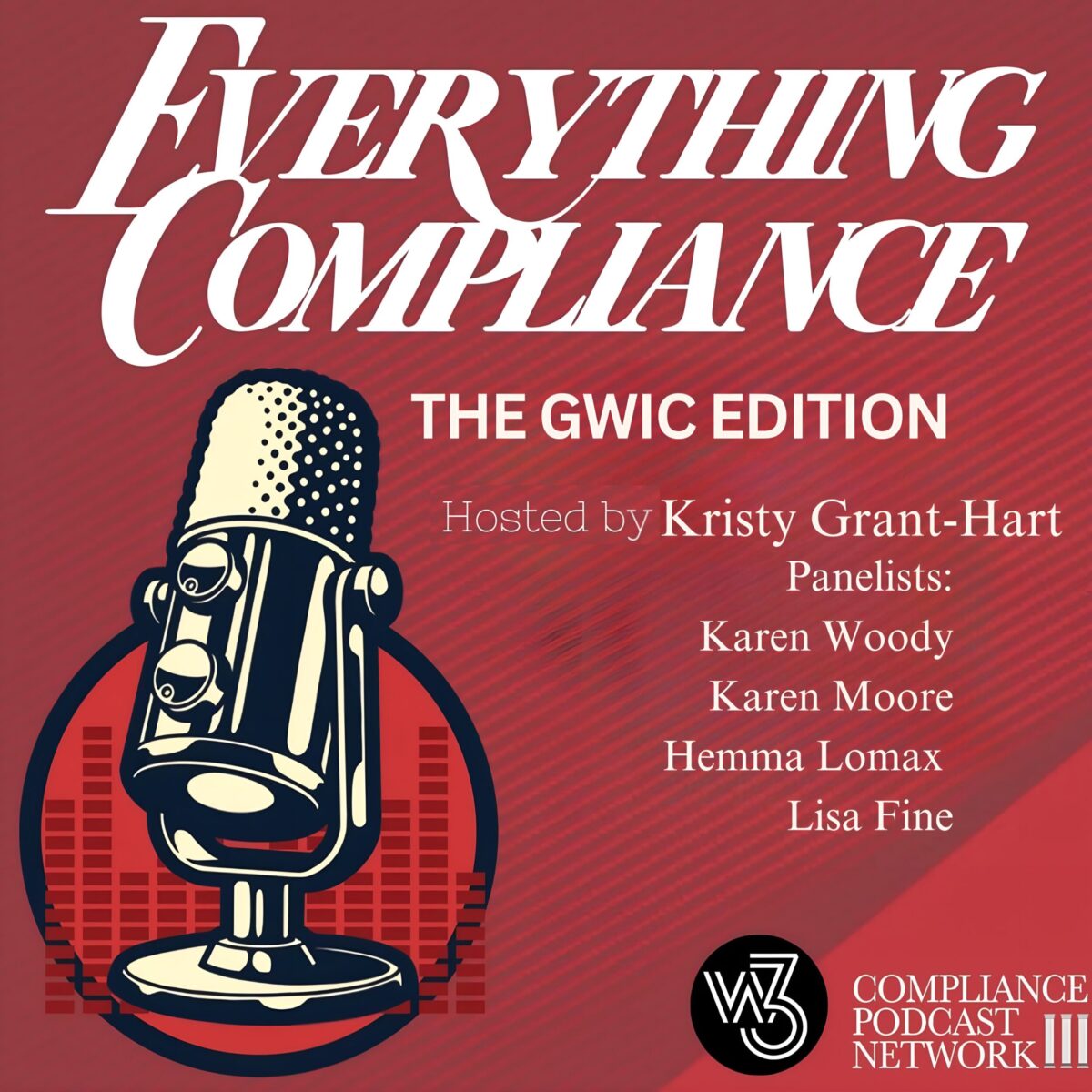
A few months ago, we hosted a Special Edition of Everything Compliance, featuring the two primary hosts of the Great Women in Compliance, Lisa Fine and Hemma Lomax, along with our female panelists from Everything Compliance, Karen Woody and Karen Moore, all moderated by Kristy Grant-Hart. The episode was so popular (and the host and guests had so much fun) that everyone involved decided to make it a quarterly event. Today’s episode is hosted by Kristy Grant-Hart, with panelists Karen Moore, Lisa Fine, and Hemma Lomax.

Highlights include:

  • Lisa Discusses UK Fraud Prevention Law
  • Hema on the False Claims Act
  • Karen on Compliance, Rewards, and Incentives
  • Exploring Behavioral Science in Business
  • Ethics and Compliance Incentives
  • AI, Blackmail, and Whistleblowing
  • Sentient AI and Ethical Dilemmas
  • Rants and Raves: Compliance and Beyond

The members of this special episode of Everything Compliance (GWIC edition) are:

  • Karen Moore is an Adjunct Law professor at the Fordham School of Law.
  • Lisa Fine – is a co-host of the award-winning Great Women in Compliance.
  • Hemma Lomax– is a co-host of the award-winning Great Women in Compliance.

The host of this special episode of Everything Compliance is Kristy Grant-Hart, VP, Head of Advisory Services at Diligent and co-host of the award-winning podcast 2 Gurus Talk Compliance.

Categories
Life with GDPR

Life With GDPR: Episode 114 – Navigating GDPR in Global Outsourcing with Inge Zwick

Tom Fox takes a solo turn as Jonathan Armstrong is on assignment. Today, Tom visits with Inge Zwick, Executive Director, Head of Europe, and ESG Lead at Emapta Global, a global outsourcing company.

They discuss the company’s operations, with a particular focus on managing GDPR compliance within the outsourcing framework. They also discuss common misconceptions about outsourcing under the GDPR, risk assessment processes, handling data subject access requests, and integrating compliance into business operations. Zwick also shares insights into how EMAPTA collaborates with clients to ensure compliance and offers advice to business leaders on future-proofing their outsourcing strategies in light of GDPR requirements. Additionally, the discussion explores the integration of ESG initiatives within the company’s operations.

Key takeaways:

  • Outsourcing and GDPR Compliance
  • Risk Assessment and Data Security
  • Subject Access Requests (SAR)
  • Outsourcing Contracts and GDPR Obligations
  • Integrating Compliance into Operations

Resources:

Connect with Tom Fox

Connect with Inge Zwick

Connect with Emapta Global

Life with GDPR was recently honored as a Top Data Security Podcast.  

Categories
Hill Country Authors

Hill Country Authors – Exploring Mental Health and Community-Based Practices with Claudette Fette

Welcome to a new season of the award-winning Hill Country Authors Podcast, sponsored by Stoney Creek Publishing. In this podcast, Hill Country resident Tom Fox visits with authors who live in and write in and about the Texas Hill Country. In this episode, Tom visits Claudette Fette, an academic from Texas Woman’s University, to talk about her professional background and her work in mental health and community-based practices.

Fette shares the journey that led her to occupational therapy and advocacy, influenced by her son’s struggles with mental illness and addiction. They discuss the development and principles of authentic wraparound services, the importance of multidisciplinary staffing, and the effectiveness of early intervention and preventative mental health support. Fette also touches on the failures of the criminal justice system in dealing with mental health and substance abuse, advocating for restorative justice practices. Additionally, she provides insights into her writing and publishing process for her book, ‘No Saints Here,’ and the ongoing resources she provides through her blog and website.

Key highlights:

  • Claudette Fette’s Professional and Academic Journey
  • The Story Behind ‘No Saints Here’
  • Community-Based Alternatives to Institutionalization
  • The Importance of Multidisciplinary Staffing
  • Early Intervention and Preventative Mental Health Support
  • Educational Interventions and Support Systems
  • Criminal Justice System and Mental Health
  • Authentic Wraparound and Recovery
  • Writing and Publishing Journey

Resources

Claudette Fette on Stoney Creek Publishing

No Saints Here on Texas A&M University Press

Stoney Creek Publishing Website

Podcast Cover Art 

Nancy Huffman Fine Art

Tom Fox

Instagram

Facebook

YouTube

Twitter

LinkedIn

Categories
Blog

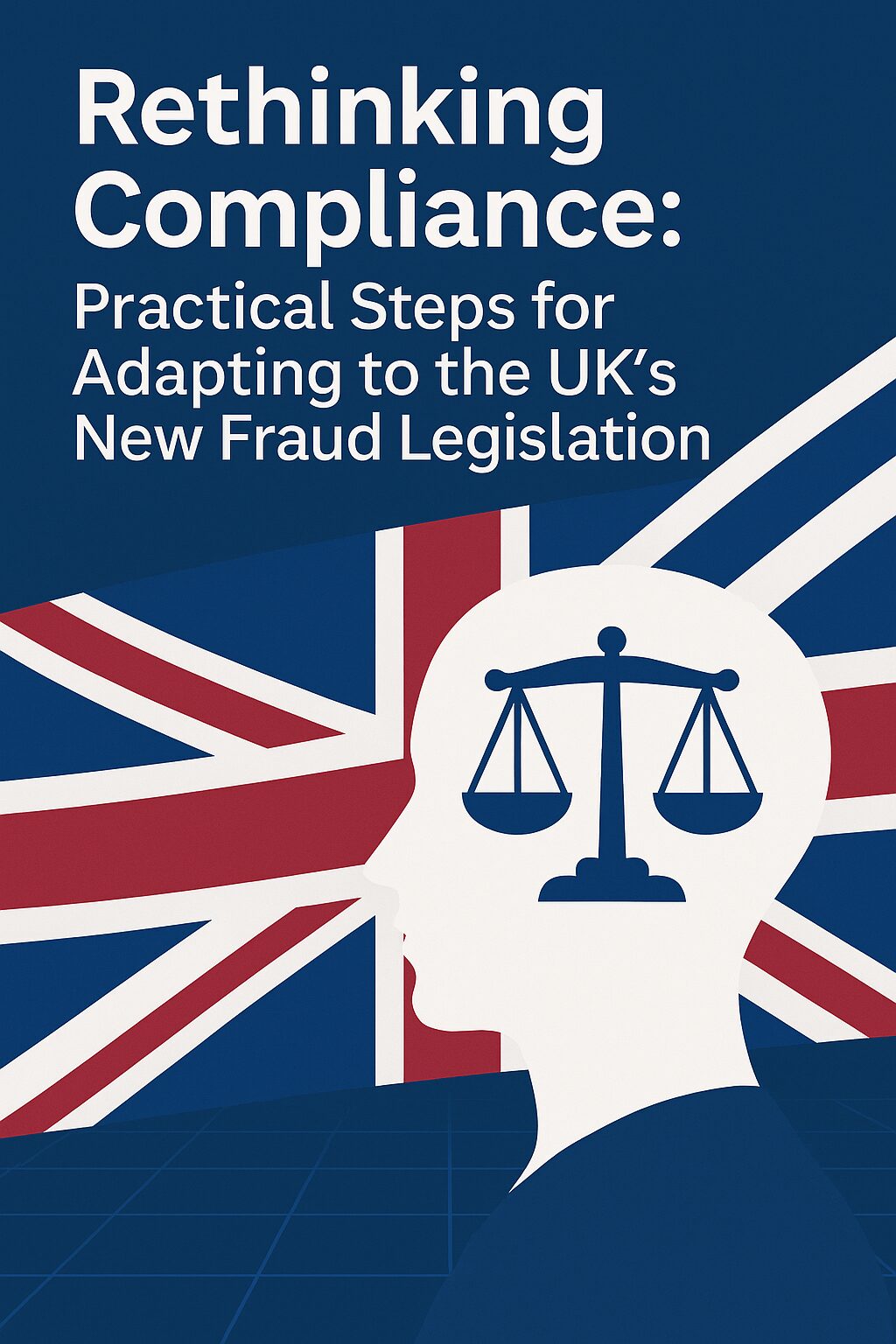
Rethinking Compliance: Practical Steps for Adapting to the UK’s New Failure to Prevent Fraud Legislation

The introduction of the Economic Crime and Corporate Transparency Act 2023, specifically the offense of failure to prevent fraud (FTPF), takes effect on 1 September 2025. Every US company doing business in the UK or with UK companies must be aware of this law and its implications for them. The jurisdiction is as broad as or even broader than the US Foreign Corrupt Practices Act (FCPA). Corporate compliance professionals are finding themselves in uncharted territory with this new legal framework, requiring a thorough understanding of how this legislation applies and how it can potentially reshape their compliance strategies. Fortunately, the UK government has put out a document entitled “Economic Crime and Corporate Transparency Act 2023: Guidance to organisations on the offence of failure to prevent fraud.” (The Guidance) Over the next several blog posts, I will explore the Guidance and its implications for US-based compliance professionals.

The FTPF introduces corporate criminal liability for large organizations where an associated individual commits fraud, intending to benefit the organization or its clients. This represents a seismic shift for corporate compliance programs because senior management does not need to have ordered or even been aware of the fraud for liability to attach. The very act itself, if proven to benefit the organization or its clients, triggers organizational accountability.

Which companies exactly fall under this statute? The scope applies specifically to large organizations, defined as incorporated entities or partnerships that meet at least two of the following criteria: having more than 250 employees, a turnover exceeding £36 million, or total assets exceeding £18 million. This definition intentionally includes subsidiaries and partnerships within its ambit, casting a wide net for compliance oversight.

The Guidance clearly defines the types of fraud included under the new offense. These base fraud offenses include fraud by false representation, failing to disclose information, abuse of position, false accounting, cheating the public revenue, and fraudulent trading. Organizations must now look beyond mere regulatory adherence to proactive fraud detection and prevention strategies, given the broad spectrum of fraud covered.

The term “associated person” is critical. It extends beyond employees and explicitly includes agents, subsidiaries, or any other persons providing services for or on behalf of the organization. The Guidance notably excludes those merely supplying goods, emphasizing service relationships as the core focus. Understanding the depth and breadth of these associations will require enhanced due diligence processes, rigorous vetting of service providers, and a fundamental re-evaluation of contractual relationships.

Territoriality is another aspect that compliance professionals must closely evaluate. The offense holds a distinct UK nexus; thus, fraud committed by associated persons must either occur in the UK or involve gains or losses realized within UK boundaries. This global perspective on compliance places significant responsibility on UK-based operations with international associations and activities.

Notably, the Guidance outlines scenarios to clarify ambiguities. Consider, for instance, the fraud committed by the payroll department, which diverted employee pension funds to support other internal projects. Here, the payroll head abuses their position of trust to commit fraud intended to benefit the company’s operations. Even if no senior manager or director was aware of the fraud, the company could still face prosecution under this legislation unless it has demonstrably reasonable procedures in place to prevent such fraud.

In terms of defensive mechanisms, the guidance emphasizes the implementation of “reasonable fraud prevention procedures.” This implies that corporations must adopt tailored compliance systems that consider the specific risks associated with their industry, size, and operational territories. Simply having generic fraud detection tools will likely fall short of satisfying this legal standard. Instead, robust, proactive, risk-specific compliance measures, supported by ongoing training and review, become non-negotiable.

The Serious Fraud Office will lead investigations into the FTPF, and the Crown Prosecution Service will handle any courtroom work. An interesting aspect here is the possibility of Deferred Prosecution Agreements (DPAs) in England and Wales, suggesting that organizations may negotiate terms if fraud prevention measures were deemed insufficient initially but have since been significantly improved.

The Guidance emphasizes the importance of corporate cooperation with enforcement authorities. Organizations that demonstrate transparent reporting, proactive fraud detection efforts, and comprehensive preventive frameworks are likely to receive more favorable prosecutorial discretion and may be eligible for DPAs.

From a compliance perspective, understanding intent to benefit is crucial. The Guidance explicitly notes that even indirect or unrealized benefits to the organization, such as a failed attempt to attract investors through false accounting, could trigger liability. The intent to benefit need not be the primary motivation; any incidental or indirect benefit, financial or otherwise, places the organization at risk. Compliance programs must thus anticipate, monitor, and mitigate even seemingly remote risks.

This guidance represents not only a legal shift but also a call for a cultural transformation within corporations. Compliance professionals must foster an environment where ethical practices are embedded, whistleblowers are supported, and robust prevention frameworks are continuously evaluated and strengthened.

Key Highlights for Corporate Compliance Professionals:

  1. Understand the expanded scope of corporate liability and who qualifies as an associated person.
  2. Clearly identify the specific types of fraud covered under the Act.
  3. Implement tailored and robust fraud prevention procedures.
  4. Recognize the importance of territorial considerations for global operations.
  5. Foster a proactive and ethical organizational culture, supported by strong whistleblowing protocols.

The Economic Crime and Corporate Transparency Act 2023 mandates a higher degree of vigilance, proactive risk management, and cultural alignment with anti-fraud values. Organizations failing to adapt swiftly to this evolving compliance landscape risk severe financial penalties, reputational damage, and operational disruption. Forward-looking compliance professionals will seize this moment to reinforce corporate integrity, safeguard organizational reputation, and ensure lasting resilience against fraud.

The Guidance provides an entire section on compliance with the FTPF. Join us tomorrow as we take a deep dive into its prescripts.


Categories
Red Flags Rising

Red Flags Rising: S01 E21 – “Secondary Tariffs” with Tom Fox

Mike and Brent were honored guests on the FCPA Compliance Report podcast with their podfather, Tom Fox, the Voice of Compliance and founder of the Compliance Podcast Network. They discuss the concept of “secondary tariffs” recently threatened by the U.S. as to Russia’s trading partners (00:44), what would such secondary tariffs as to Russia mean, and for whom (03:21), how multinational companies should start thinking through the impact of these potential tariffs (04:37), the need to be very, very, very careful about schemes that seem too good to be true (because they are) (06:03), how risk-based compliance can help multinationals evaluate proposed reconfigurations of procurement flows (09:36), where self-certifications by suppliers might not be sufficient (10:22), and then conclude with a deep dive into what False Claims Act enforcement for tariff evasion might look like and how to mitigate enforcement risks by understanding and leveraging the False Claims Act’s “knowledge” element (13:52).

Resources:

Compliance Podcast Network

Tom Fox on LinkedIn

FCPA Compliance Report podcast

More about Tom Fox

Brent LinkedIn

Mike LinkedIn

Mike & Brent’s “Fresh Looks” Series