Categories
Compliance Tip of the Day

Compliance Tip of the Day: Compliance Lessons from The SAP FCPA Enforcement Action

Welcome to “Compliance Tip of the Day,” the podcast where we bring you daily insights and practical advice on navigating the ever-evolving landscape of compliance and regulatory requirements.

Whether you’re a seasoned compliance professional or just starting your journey, our aim is to provide you with bite-sized, actionable tips to help you stay on top of your compliance game.

Join us as we explore the latest industry trends, share best practices, and demystify complex compliance issues to keep your organization on the right side of the law.

Tune in daily for your dose of compliance wisdom, and let’s make compliance a little less daunting, one tip at a time.

In today’s episode, we consider SAP FCPA enforcement actions, which present numerous lessons learned. We unpack the key compliance takeaways.

For more information on the Ethico ROI Calculator and a free White Paper on the ROI of Compliance, click here.

Categories
Daily Compliance News

Daily Compliance News: June 4, 2024 – The AMLA Edition

Welcome to the Daily Compliance News. Each day, Tom Fox, the Voice of Compliance, brings you compliance-related stories to start your day. Sit back, enjoy a cup of morning coffee and listen to the Daily Compliance News. All from the Compliance Podcast Network.

Each day, we consider four stories from the business world: compliance, ethics, risk management, leadership, or general interest for the compliance professional.

In today’s edition of Daily Compliance News:

  • EU gets a new financial crime agency. (WSJ)
  • Consulting firms in the cross-hairs. (FT)
  • Top Japanese automakers mishandled vehicle testing. (NYT)
  • Ericsson clears monitorship and concludes DPA.  (Morning Star)

For more information on the Ethico ROI Calculator and a free White Paper on the ROI of Compliance, click here.

Categories
Blog

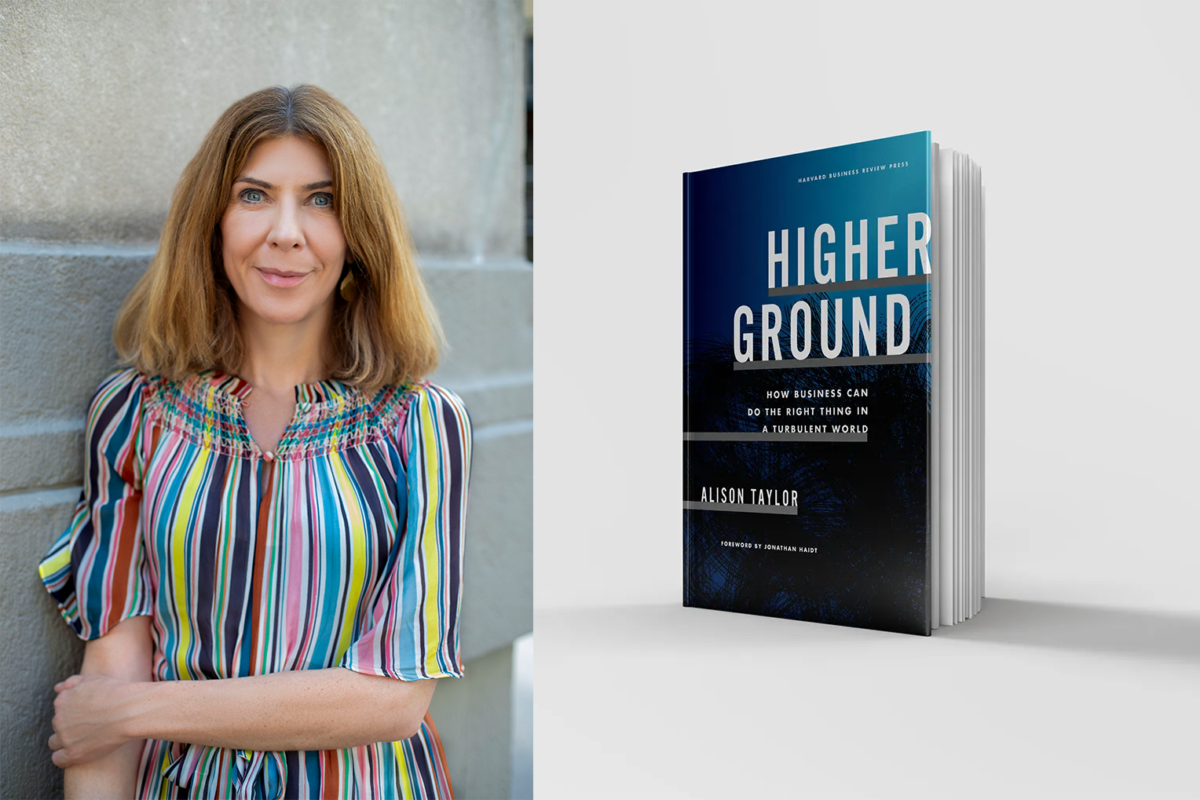
Navigating the New Ethical Landscape: Higher Ground with Alison Taylor

On a recent edition of the SBR Authors Podcast, I recently had the opportunity to visit with Alison Taylor, a renowned figure in the compliance and ethics community, about her new book,  Higher Ground. Alison has one of the most diverse professional backgrounds of any person I know in compliance. She is a Clinical Professor and Executive Director of Ethical Systems at NYU Stern School of Business. This blog delves into the key points discussed during the podcast, shedding light on the evolving landscape of business ethics and the challenges of maintaining an ethical culture today.

A series of intriguing transitions mark Taylor’s career. She began her professional journey with editing, consulting, and political risk roles before spending twelve years in corporate investigations. This period saw her working with Control Risks, leading investigations across the Middle East, Africa, and the Americas. Her work included due diligence, FCPA investigations, and background checks when FCPA enforcement gained significant momentum.

In 2015, Alison transitioned to the field of sustainability. She joined a non-profit organization to consult with multinational corporations on climate change, human rights, and corporate responsibility issues. Since late 2019, she has been part of the faculty at NYU, first running a think tank called Ethical Systems and now adding on as a full-time faculty member. Alison’s broad experience across different business ethics and sustainability domains gave her a unique perspective, ultimately leading to her book, Higher Ground.

Taylor’s shift from corporate investigations to sustainability and ESG highlighted a fascinating disconnect. While both fields aimed to define what it means to be a good and ethical business, they approached the issue very differently. The language, concepts, and philosophical foundations varied significantly between the two. This disconnect inspired her to explore why these two disciplines, despite their common goals, needed to communicate more effectively with each other.

Higher Ground aims to bridge this gap. Taylor sought to provide clarity for those grappling with questions about business ethics and the role of businesses in society, especially for senior leaders who may need deep expertise in both compliance and sustainability. The book is designed to guide readers through the complexities of these topics, offering a path forward in an increasingly chaotic business environment.

Writing a book is challenging, and Taylor’s experience was no different. She initially thought of herself as not a morning person but quickly realized that her most productive writing time was in the early hours of the day. She found that she could only manage about three to four hours of effective writing each day, after which her productivity declined. This disciplined approach helped her balance writing the book with her full-time job and teaching responsibilities.

The process took about two years and involved multiple rewrites and restructures. Taylor described it as an emotional roller coaster, with periods of satisfaction followed by moments of doubt. Despite the challenges, she completed the book, providing valuable insights into the evolving field of business ethics.

Taylor chose to open her book with the story of Starbucks and its labor rights issues. Despite being a leader in sustainability and labor rights by many measures, Starbucks faced significant reputational challenges over its stance on unionization. This example illustrated how a company could excel in ESG metrics yet still suffer reputational damage due to specific strategic errors.

Starbucks, known for its favorable treatment of employees and leadership in sustainability, faced backlash from students, investors, and employees over its anti-union stance. This contradiction highlighted the complexities of maintaining an ethical reputation. Alison used this case to demonstrate that reputational risk is not a linear accountability mechanism but more like a funhouse mirror, reflecting the unpredictable nature of stakeholder perceptions.

Taylor emphasized the importance of honesty and focus in building stakeholder trust. In today’s polarized environment, companies are often caught between unrealistic expectations from the left and the right. She argued that companies need to be more honest about what they can and cannot achieve, focusing on a few strategically important issues rather than trying to address every concern.

She suggested that companies conduct materiality assessments to identify the most relevant issues and concentrate on these areas. Companies can build more sustainable trust with their stakeholders by aligning their actions with their strategic priorities and being transparent about their limitations.

Taylor discussed the importance of aligning rules and policies with the broader business culture. She noted that compliance efforts often fail when there is a disconnect between stated values and actual behavior or when there are different rules for senior leaders and other employees. Successful compliance programs require the support and engagement of the entire organization, not just the compliance department.

She also highlighted the need for compliance and ethics teams to work closely with other parts of the business. By integrating ethical considerations into the overall business strategy, companies can create a more coherent and practical approach to compliance and corporate responsibility.

With five generations now present in the workplace, Alison explored the challenges and opportunities of engaging a diverse workforce. Younger employees are more likely to be concerned with climate change and diversity and expect authenticity and accountability from their employers.

Taylor also noted that younger employees often push for change, while resistance is more common at the senior levels. Companies need to find ways to harness this energy and passion and use it to drive positive change. This involves creating mechanisms for employee voice and encouraging open debate about ethical issues.

Alison Taylor’s Higher Ground provides a thoughtful and comprehensive guide to navigating the complex world of business ethics and sustainability. Her insights from a rich and varied career offer valuable lessons for companies striving to build trust and maintain ethical cultures in an ever-changing landscape. By focusing on strategic priorities, aligning actions with values, and engaging a diverse workforce, businesses can rise to the challenges of today’s ethical environment and positively impact society.


Categories
All Things Investigations

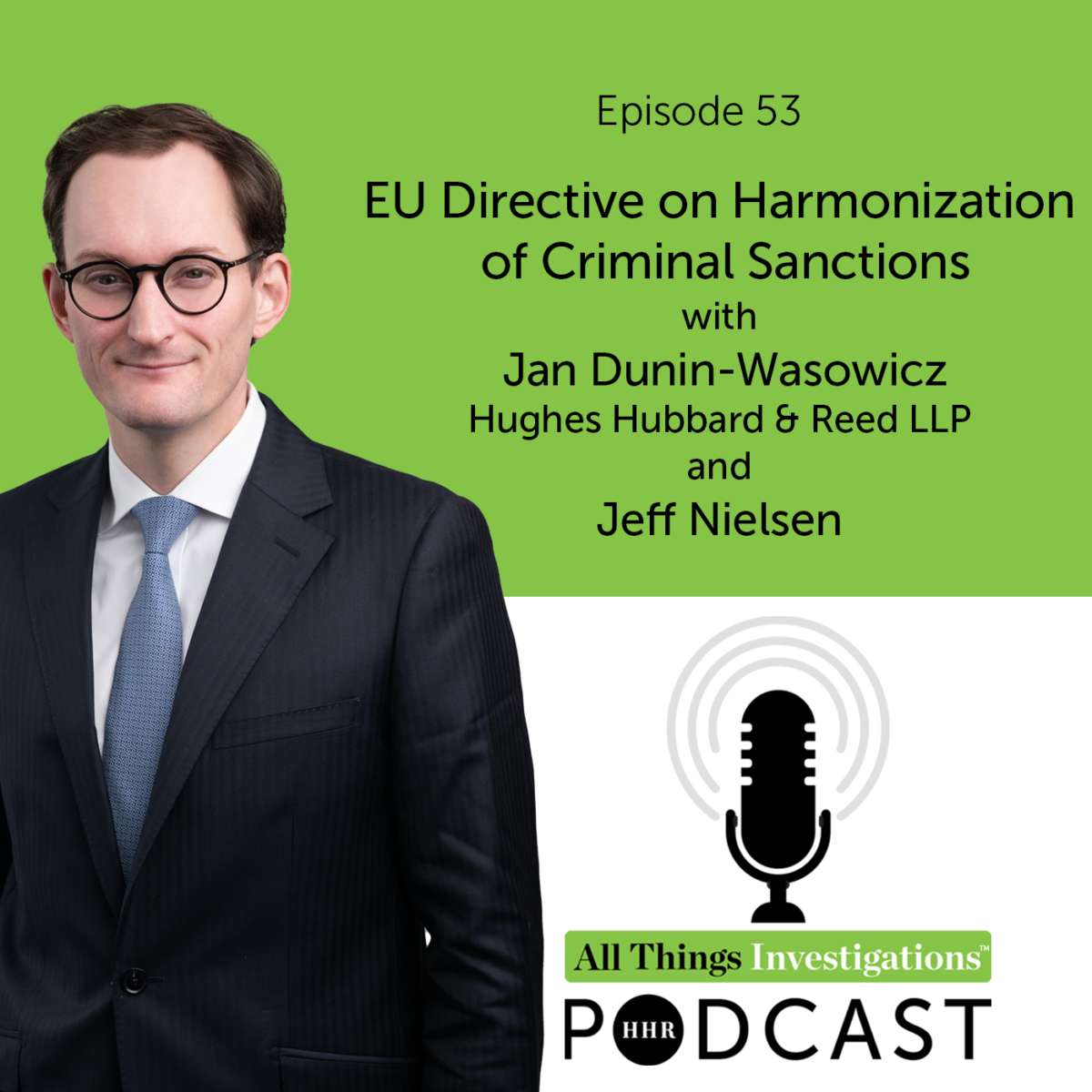
All Things Investigations: Jan Dunin-Wasowicz and Jeff Nielsen on The EU Directive on Harmonization of Criminal Sanctions

Welcome to the Hughes Hubbard Anti-Corruption & Internal Investigations Practice Group’s podcast All Things Investigation. In this podcast, Tom Fox is joined by Jan Dunin-Wasowicz a partner at Hughes Hubbard & Reed, who is a leading figure in trade sanctions and Jeff Nielsen, International Sanctions & Export Controls Lawyer at Rambol, for a deep dive into current issues in export control and economic sanctions.

In Part 2 of a special two-part series on All Things Investigations, host Tom Fox is once again joined by Jeff Nielsen and Jan Dunin-Wasowicz to discuss trade sanctions from a global perspective. In this Part 2, Jeff and Jan provide their expertise on the EU Directive on Harmonization of Criminal Sanctions, detailing its implications and the challenges faced in its implementation across the 27 member states.

They explain the mechanics of EU sanctions, enforcement disparities among member states, and the directive’s focus on setting minimum standards for criminal offenses. The conversation also delves into future outlooks on the EU’s stance towards the Russian invasion of Ukraine and the evolving profession of trade sanctions compliance.

Key Highlights:

  • Understanding the EU Directive on Harmonization of Criminal Sanctions
  • Challenges and Implications of the Directive
  • Future of Trade Sanctions and Compliance
  • Career Advice for Aspiring Trade Sanction Experts
  • Conclusion and Final Thoughts

Resources:

Hughes Hubbard & Reed website

Jeff Nielsen on LinkedIn

Jan Dunin-Wasowicz on LinkedIn

HHR client alert on The Dawn of a New Era for EU Sanctions Enforcement? EU Adopts Directive on the Definition of Criminal Offences and Penalties for the Violation of EU Sanctions

Categories
Compliance Tip of the Day

Compliance Tip of the Day: Compliance Lessons from The ABB FCPA Enforcement Action

Welcome to “Compliance Tip of the Day,” the podcast where we bring you daily insights and practical advice on navigating the ever-evolving landscape of compliance and regulatory requirements.

Whether you’re a seasoned compliance professional or just starting your journey, our aim is to provide you with bite-sized, actionable tips to help you stay on top of your compliance game.

Join us as we explore the latest industry trends, share best practices, and demystify complex compliance issues to keep your organization on the right side of the law.

Tune in daily for your dose of compliance wisdom, and let’s make compliance a little less daunting, one tip at a time.

In today’s episode, we review the ABB FCPA Enforcement actions and tease out the compliance lessons.

For more information on the Ethico ROI Calculator and a free White Paper on the ROI of Compliance, click here.

Categories
Blog

The Power of Mentorship in Compliance

Lisa Fine and Ellen Hunt recently hosted Melanie Sponholz, recently honored as Compliance Week’s 2024 Mentor of the Year, and Margarita Derelanko, Senior Director of Compliance at Ivy Rehab Physical Therapy, on an episode of the Great Women in Compliance podcast. They had a lively discussion about mentorship, featuring some of the most influential voices in our field. Melanie and Margarita share a mentor-mentee relationship that exemplifies the value of mutual growth and support in our profession.

Mentorship in compliance is more than just guidance; it’s a two-way street that fosters growth and learning for mentors and mentees. Melanie highlights this beautifully, noting that she knows as much from Margarita as Margarita does from her. This reciprocal relationship underscores a fundamental truth about mentoring: an ongoing exchange of knowledge, experience, and support.

Ellen echoed this sentiment, emphasizing the compliance community’s open, sharing nature. In a profession where continuous learning and adaptation are crucial, connecting, sharing, and learning from others is invaluable. Whether through LinkedIn connections, conferences, or casual conversations, every interaction holds the potential for growth and learning.

One of the most critical skills for any mentor is the ability to listen. Ellen stressed that understanding what the mentee needs is paramount. Whether they are seeking career advice, expertise in a specific area, or simply a supportive ear, a good mentor listens first and provides guidance tailored to those needs.

Margarita added that an impactful mentor must be fully present during interactions. This means dedicating undivided attention to the mentee and fostering deep, meaningful conversations that can lead to significant insights and growth. For mentees, being open-minded and receptive to feedback is equally important. Actual progress comes from incorporating the advice and perspectives shared by mentors.

Authenticity and confidence are foundational qualities that mentors should possess. Melanie highlighted the importance of mentors who are comfortable in their skin and genuinely interested in lifting others. This positive energy not only makes mentoring relationships more enjoyable but also more effective.

Lisa shared a personal reflection on the value of vulnerability in mentorship. Early in her career, she found it challenging to relate to mentors who always presented a perfect facade. Only when mentors began sharing their fears and failures did she realize everyone faces challenges. This openness fosters a deeper connection and gives mentees a more realistic view of their journeys.

In today’s interconnected world, mentorship doesn’t have to follow a traditional path. Margarita noted that mentors can be found in various ways, including blogs, newsletters, and virtual interactions. Compliance professionals like Kristy Grant-Hart and Amy Barnard Bahn, who frequently share their expertise online, serve as mentors to many without formal relationships.

This flexibility in mentorship avenues is a testament to the compliance community’s adaptability. Whether through structured programs or informal exchanges, the opportunities to learn and grow are abundant. Ellen related the value of building a diverse network of mentors, akin to having a “kitchen cabinet” of advisors for different aspects of one’s career and personal development.

For those seeking mentors, taking the initiative to reach out is crucial. Melanie encouraged professionals not to be bold and to ask for a virtual coffee or a quick chat. Specificity in your request—highlighting what you admire about their work and what you hope to discuss—can make the approach more effective. Most people in our field are willing to share their knowledge and experiences, especially when approached with genuine interest and respect.

Mentorship is also about fostering confidence. Margarita highlights how influential mentors can instill a sense of belief in their mentees, helping them recognize and harness their potential. This confidence is essential in a field like compliance, where the ability to stand firm in your decisions and actions can have significant implications.

Ellen iterated on the need for safe spaces in mentoring relationships. Whether you are navigating a difficult situation at work or seeking to improve your skills, having a mentor who provides honest feedback in a supportive manner is invaluable. These safe spaces allow growth without the fear of judgment, enabling mentees to tackle challenges head-on.

It is clear that mentorship in compliance is not just about passing down knowledge—it is about building relationships that foster mutual growth, support, and inspiration. Whether you’re a seasoned professional or just starting your career, there is immense value in seeking and providing mentorship.

The bottom line is you need to take action: reach out to someone who inspires you, whether it’s through LinkedIn, a professional network, or an email. Build your kitchen cabinet of mentors and be open to the diverse perspectives and experiences they bring. Remember, the compliance community thrives on collaboration and support; there is always room for one more connection.

Categories
Corruption, Crime and Compliance

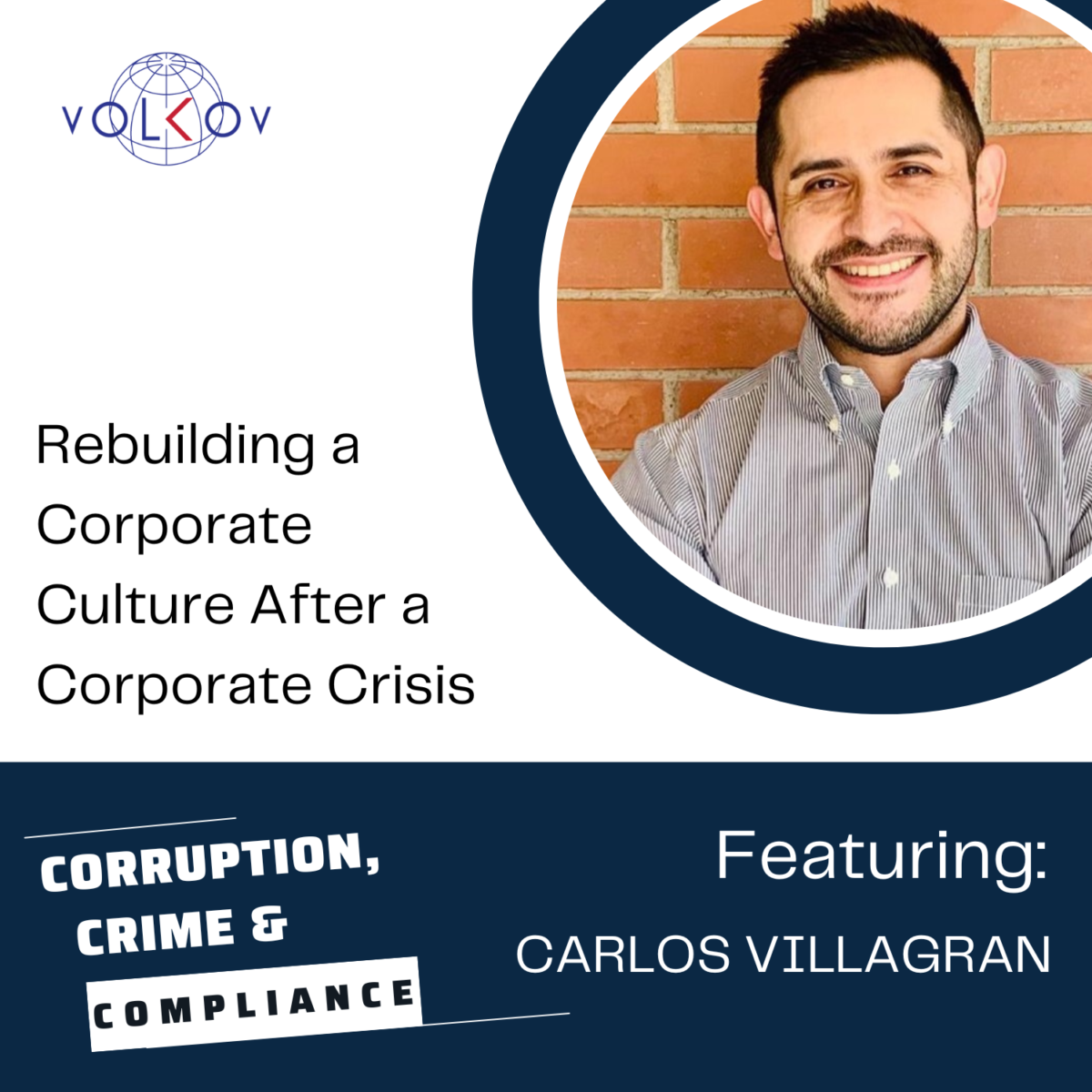
Carlos Villagrán Discusses Rebuilding a Corporate Culture After a Corporate Crisis

Carlos Villagrán is the Director of Compliance at CMPC, a 100-year-old Chilean-based holding company, one of the worldwide leading pulp, paper, packaging, personal care, and other forest products manufacturers.

With more than 20,000 employees, CMPC has industrial operations in 9 countries (LatAm and the US) and commercial offices in the US, Europe, and China, selling and distributing its products to more than 45 countries around the world.

Carlos joined CMPC to remediate and rebuild CMPC’s culture and compliance program after a devastating scandal — CMPC was prosecuted for its involvement in a decade-long conspiracy to fix prices in Peru and Chile for consumer paper products.

Carlos discusses the challenges he faced in rebuilding CMPA’s culture and commitment to compliance. His story is an inspiration to all legal and compliance professionals and provides important instructive lessons to corporate leaders and compliance professionals.

You’ll hear Michael and Carlos discuss:

  • The importance of rebuilding and rediscovering the values and purpose of CNPC after a major corporate crisis.
  • The effects on market share quotas and sales prices when CNPC faced an investigation and found to be the leader of a cartel in Chile and Peru.
  • How the crisis significantly impacted CNPC’s reputation, leading to public protests and consumer backlash in Chile and Peru.
  • CNPC’s compliance team addressed the company’s complex nature because of its diverse workforce, including data analytics experts, IT professionals, and engineers.
  • How the compliance program at CNPC shifted from a traditional approach to a more cultural and system-thinking perspective, aligning with the company’s values and operations.
  • Success for the compliance program at CNPC is defined by the number of critical tables the team is seated on, indicating their value and integration within the business operations.

Resources:

Carlos Villagrán on the Web | LinkedIn

Email: carlos.villagran@cmpc.cl or cfvillagran@gmail.com

Michael Volkov on LinkedIn | Twitter

The Volkov Law Group

Categories
Daily Compliance News

Daily Compliance News: June 3, 2024 – The Citgo 6 Edition

Welcome to the Daily Compliance News. Each day, Tom Fox, the Voice of Compliance, brings you compliance-related stories to start your day. Sit back, enjoy a cup of morning coffee and listen to the Daily Compliance News. All from the Compliance Podcast Network.

Each day, we consider four stories from the business world: compliance, ethics, risk management, leadership, or general interest for the compliance professional.

In today’s edition of Daily Compliance News:

  • Citgo 6′ members sue for $400M, alleging Houston-based company’s complicity in their torture (Houston Chronicle)
  • DC Ethics Board says Guilliani should be disbarred.  (Reuters)
  • Will ex-President Zuma control South African government? (Bloomberg)
  • FAA wants systemic change at Boeing. (BBC)

For more information on the Ethico ROI Calculator and a free White Paper on the ROI of Compliance, click here.

Categories
FCPA Compliance Report

FCPA Compliance Report: Andy Spalding on Transforming Global Sports

Welcome to the award-winning FCPA Compliance Report, the longest running podcast in compliance.

In this edition of the FCPA Compliance Report,  Tom Fox welcomes Professor Andy Spalding, an expert in anti-corruption law, to discuss his extensive work with the Paris Olympic Committee in preparation for the 2024 Olympic Games.

Spalding shares insights about his involvement with the French Anti-Corruption Agency (AFA) and elaborates on how anti-corruption and human rights reforms are being integrated into the Olympic preparations.

The discussion also delves into the historical significance of these reforms and their potential to have a lasting positive impact. Furthermore, Fox and Spalding explore the groundbreaking work done by Qatar during the FIFA World Cup and its implications for future mega sporting events.

The episode concludes with thoughts on how the accumulated knowledge and best practices from different countries could shape the future of global sporting events, emphasizing the importance of collaboration among stakeholders.

Highlights in this Episode:

  • Involvement with Paris 2024 Olympics
  • Role and Impact of French Anti-Corruption Agency (AFA)
  • Innovative Compliance Measures for Paris Olympics
  • Comparison with Qatar’s World Cup Reforms
  • Future of Anti-Corruption in Mega Sporting Events

Resources

Andy Spalding at University of Richmond – School of Law

CCI Webinar on A New Era in Megasports Anti-Corruption

Tom Fox

Instagram

Facebook

YouTube

Twitter

LinkedIn


For more information on the Ethico ROI Calculator and a free White Paper on the ROI of Compliance, click here.

Categories
Adventures in Compliance

Adventures in Compliance: Compliance Lessons from The Second Stain, Part 1

Welcome to a review of all the Sherlock Holmes stories collected in “The Return of Sherlock Holmes.”

This collection comprises thirteen detective stories written by Sir Arthur Conan Doyle, marking the reappearance of the brilliant detective Sherlock Holmes after his apparent death in “The Final Problem.”

The collection spans various intriguing cases and mysteries that Holmes and his loyal friend, Dr. John Watson, tackle.

Today, we conclude our exploration of the third group of short stories found in “The Return of Sherlock Holmes” with the first of a two-part look at the final story in this series, “The Adventure of the Second Stain.”

In this episode, we begin a special two-part look into “The Adventure of the Second Stain,” examining vital compliance lessons such as information security, risk management, ethical conduct, incident response, due diligence, communication, and accountability.

Additionally, we discuss ethical principles like honesty, responsibility, confidentiality, justice, duty, moral courage, empathy, and professional conduct, all through the lens of this classic detective tale.

Key Highlights:

  • Commentary on The Second Stain
  • Compliance Lessons from The Second Stain
  • Ethical Lessons from The Second Stain
  • Conclusion and Invitation to Engage

Resources:

The New Annotated Sherlock Holmes

Sherlock Holmes FAQ

Connect with Tom Fox

Instagram

Facebook

YouTube

Twitter

LinkedIn

For more information on Ethico and a free White Paper on top compliance issues in 2024, click here.