Categories
Daily Compliance News

Daily Compliance News: September 4, 2026, When the Whip Comes Down, Cue the Rolling Stones Edition

Welcome to the Daily Compliance News. Each day, Tom Fox, the Voice of Compliance, brings you compliance-related stories to start your day. Sit back, enjoy a cup of morning coffee, and listen in to the Daily Compliance News. All from the Compliance Podcast Network. Each day, we consider four stories from the business world, compliance, ethics, risk management, leadership, or general interest for the compliance professional.

Top stories include:

  • The NBA lowers the whip and hammer on the LA Clippers. (NBA Press Release)
  • Boeing: No monitor, No Problem. (Reuters)
  • Dutch pull gold out of the US due to ‘instability’. (WSJ)
  • Courts struggling to tame big tech. (NYT)

To learn about the intersection of Sherlock Holmes and the modern compliance professional, check out Tom’s latest book, The Game is Afoot-What Sherlock Holmes Teaches About Risk, Ethics and Investigations on Amazon.com.

Categories
Blog

Boeing, Caremark, and the Evidence of Good-Faith Oversight

On August 13, 2026, the Delaware Court of Chancery dismissed claims arising from the January 2024 Alaska Airlines door-plug blowout. A door plug left Boeing’s factory without four securing bolts, the FAA grounded the aircraft, and investigations identified production and quality problems. Yet corporate trauma did not establish bad-faith board oversight. The question was what the directors knew, what systems delivered that information, and how the company responded. For a Chief Compliance Officer, that distinction is the heart of the case. Boeing showed what evidence of conscientious oversight can look like. The Boeing Derivative Litigation, Consol. C.A. No. 2024-1210-MTZ (Del. Ch. Aug. 13, 2026) (the “Opinion”).

This decision continues the evolution of the Caremark Doctrine and details what Boards of Directors need to consider to meet their obligations under the Caremark Doctrine. For compliance professionals, this case should be studied for not only its substantive analysis but also for how you will need to train.

Caremark Still Asks Two Hard Questions

Caremark liability is rooted in the duty of loyalty and bad faith, not negligence or a poor outcome. Directors may face liability if they fail to implement a reporting system or if they establish one but consciously fail to monitor it, preventing themselves from learning about problems that require attention. The required state of mind is an intentional dereliction of duty or conscious disregard of known responsibilities. A flawed effort is not the same as no good-faith effort.

That standard should not become a message that directors are protected unless they do nothing. Directors must demonstrate how they tried. Fiduciaries who implement and attend to a reasonable board-level reporting system meet the baseline duty. Even for mission-critical operations, “Caremark does not demand omniscience.” The Board’s task is therefore not perfect foresight. It is disciplined attention.

The Record That Protected the Board

The most useful part of the Opinion for compliance professionals is its description of Boeing’s governance machinery. The board met at least every two months, and airplane safety was discussed at every meeting. Management provided commercial-airplane updates on safety, quality, operational performance, and production targets. A Chief Aerospace Safety Officer delivered global safety updates twice each year.

Boeing also had an Aerospace Safety Committee with directors experienced in engineering, manufacturing, aerospace, aviation, or safety. It met at least 23 times from January 2022 through July 2024. Reporting included safety risk registers, in-service safety reports, Speak Up updates, and special-attention reports. Significant safety incidents or regulatory actions were to be reported to the board or committee within 24 hours or as soon as reasonably practicable. The Audit Committee separately monitored internal controls, legal compliance, the DOJ deferred prosecution agreement, and FAA obligations.

After the door plug incident, the Aerospace Safety Committee met within a day, met again twice during the following week, and arranged an onsite factory inspection. That record did not erase the operational failure. It demonstrated an active reporting and response system.

An analysis from the law firm of Sullivan & Cromwell, whose authors’ firm represented Boeing and the defendants, makes the same point: mission-critical reporting, clear committee mandates, escalation channels, and contemporaneous records can be decisive when a court examines good faith. “Delaware Court of Chancery Reinforces Limits on Oversight Liability; Stresses Importance of Conscientious Board Oversight,” Harvard Law School Forum on Corporate Governance (the “S&C Analysis”).

Train Directors to Distinguish Red from Yellow

Plaintiffs characterized dozens of reports on manufacturing and safety risks as ignored red flags. The Court rejected that theory because it threatened to convert the “volume and depth” of reporting from a best practice into evidence of disloyalty. As the defendants put it, “If everything is a red flag, then nothing is.”

Recurring adverse information is not harmless, but the board must classify and connect it. A Caremark red flag must put directors on notice that the company is violating law or headed toward specific corporate trauma. It must also connect to the misconduct that caused the loss. General operational risks under active remediation may instead show that reporting is functioning. The Court described yellow flags involving operational risk, management responses, or matters insufficiently tied to the door-plug incident.

Board training should therefore require directors to ask three questions whenever adverse information arrives: Is this a business risk or a legal compliance risk? What is management doing about it? What facts would require escalation, independent verification, or a change in strategy?

Business Judgment Has a Boundary

The Opinion also distinguished business risk from positive law. Production schedules and the management of ordinary operational risk generally receive business-judgment deference. Directors, however, have no discretion to cause the company to violate the law knowingly.

The plaintiffs argued that Boeing’s production goals favored profits over safety. The Court found no particularized allegation that the targets themselves violated the law or that directors pursued a lawbreaking strategy. The record also showed that Boeing adjusted targets, delayed production increases, and evaluated staffing, quality, supply chain, and factory-health risks. Those actions supported an inference of good-faith business judgment, not conscious disregard.

For directors, the training point is not that every production decision is insulated. The board should understand where business discretion ends, and legal obligation begins. Compliance should identify the applicable mandates, show how they enter board reporting, and specify which thresholds require action rather than monitoring.

Books and Records Are Part of the Control Environment

The plaintiffs obtained extensive books and records describing committee responsibilities, recurring reports, risk metrics, remediation, and post-incident response. The record used to challenge the directors also demonstrated their engagement.

This is not a reason to create defensive minutes. It is a reason to create accurate, decision-useful records. Minutes should capture material questions, requested follow-up, commitments, and unresolved issues. Dashboards should show trends and control effectiveness, not merely activity. Closed items should include validation. Elevate persistent issues rather than repeatedly relabeling them. As the S&C Analysis observes, contemporaneous records can be critical because the court examines what the board received, whether it signaled obvious illegality or specific trauma, and how directors and management responded.

Five Questions For Your Board

  1. Mission-critical risk. Which legal, safety, compliance, cybersecurity, or operational risks could threaten the company’s viability, customers, or license to operate? The board should identify these risks based on the company’s industry, regulatory obligations, business model, and risk profile. Directors should understand which controls address each mission-critical risk and which executives are accountable for operating them. Compliance should periodically test whether the board’s risk priorities remain aligned with changing regulations, business operations, and emerging threats.
  2. Reporting architecture. Which committee owns each risk, what information reaches it, and through which escalation channel? Committee charters should assign clear oversight responsibility and prevent material risks from falling into gaps between the board and its committees. Directors should receive decision-useful information, including trends, control failures, remediation progress, and emerging exposure, rather than raw operational data. The reporting architecture should also define when management must escalate an issue from a committee to the full board.
  3. Red-flag discipline. What criteria distinguish ordinary variance, a yellow flag requiring remediation, and a red flag requiring Board action? Management and the board should establish objective escalation thresholds based on legal exposure, customer harm, financial impact, recurrence, control failure, and the possibility of significant corporate trauma. Yellow flags should receive documented remediation plans, accountable owners, deadlines, and continuing monitoring. Red flags should trigger prompt board attention, independent inquiry where appropriate, and documented decisions about containment, investigation, disclosure, and corrective action.
  4. Response evidence. Do minutes and dashboards show questions, decisions, owners, deadlines, testing, and closure, or only that a presentation occurred? Board records should demonstrate that directors engaged with material information, challenged management assumptions, and requested appropriate follow-up. Dashboards should track remediation through completion and include evidence that corrective actions were tested for effectiveness. Minutes should accurately capture the substance of your Board’s oversight without becoming defensive narratives or sanitized accounts of difficult discussions.
  5. Speak-up integrity. Can employees raise concerns without retaliation, and does the board receive meaningful information about allegations, investigations, trends, and corrective action? Directors should understand how reports are received, triaged, investigated, escalated, and resolved across the organization. Board reporting should address substantiation rates, recurring allegations, investigation delays, retaliation claims, root causes, and remediation effectiveness. Your Board should also evaluate whether employees trust the reporting system and whether management responds consistently regardless of the seniority or business importance of the individuals involved.

Boeing continues to provide a wealth of lessons learned for compliance professionals. The Delaware Court Opinion reminds us that the Caremark Doctrine offers neither immunity nor a checklist safe harbor. It reminds boards that the Caremark Doctrine is tested through evidence of good-faith effort. Compliance must build that effort into governance before the next crisis and ensure the record shows that directors received, understood, challenged, and followed through on critical information.


Categories
Everything Compliance - Shout Outs and Rants

Shout Outs and Rants: AI, Investigations, Kickbacks and Kids

Welcome to a new season of Everything Compliance – Shout Outs and Rants. We have a new host, Adam Turteltaub, and a new panelist, Rebecca Walker, who joins returning regulars Jonathan Armstrong and Karen Moore for the next iteration of Everything Compliance Shout Outs and Rants.

  • Adam shouts out to the Boeing documentary Free Fall and Peter Robison’s book Flying Blind for lessons on culture, whistleblowers, and safety, and praises United Airlines for returning a plane to address a mechanical issue.
  • Rebecca raises a compliance training dilemma: employees using company AI tools to answer test or “test-out” questions, which may look like cheating and undermine training records in an investigation, yet could mirror desired real-world behavior if employees are expected to consult policies, compliance, or an AI chatbot when issues arise.
  • Jonathan recounts a scandal involving Scotland’s First Minister John Swinney, including FOI-revealed travel costs (about £45,000 in flights and significant car hire) allegedly contrary to policy and justified as meetings in Kentucky.
  • Karen shouts out to the 25 incoming Fordham MSL Introduction to Corporate Compliance students and reflects on the shift from accidental to intentional compliance careers.

Everything Compliance Shout Outs and Rants is a production of the Compliance Podcast Network.

Categories
Daily Compliance News

Daily Compliance News: August 19, 2026, The Avoiding Caremark Edition

Welcome to the Daily Compliance News. Each day, Tom Fox, the Voice of Compliance, brings you compliance-related stories to start your day. Sit back, enjoy a cup of morning coffee, and listen in to the Daily Compliance News. All from the Compliance Podcast Network. Each day, we consider four stories from the business world, compliance, ethics, risk management, leadership, or general interest for the compliance professional.

Top stories include:

  • Boeing directors avoid Caremark claim over door blowout. (Bloomberg)
  • Why do BODs keep giving senior execs more chances? (WSJ)
  • States seek over $200bn from Meta for children’s social media addiction. (NYT)
  • ABC sues FCC for its illegal acts. (Reuters)

To learn about the intersection of Sherlock Holmes and the modern compliance professional, check out Tom’s latest book, The Game is Afoot-What Sherlock Holmes Teaches About Risk, Ethics and Investigations on Amazon.com.

Categories
Daily Compliance News

Daily Compliance News: January 8, 2026, The Sneaker Fraud Edition

Welcome to the Daily Compliance News. Each day, Tom Fox, the Voice of Compliance, brings you compliance-related stories to start your day. Sit back, enjoy a cup of morning coffee, and listen in to the Daily Compliance News. All, from the Compliance Podcast Network. Each day, we consider four stories from the business world, compliance, ethics, risk management, leadership, or general interest for the compliance professional.

Top stories include:

  • Energy companies say Venezuela owes them billions. (NYT)
  • Sneaker fraud leads to a 70-month prison sentence. (DW)
  • More brand-creator partnerships. (Forbes)
  • Pilot of blown-door aircraft sues Boeing. (BI)
Categories
Daily Compliance News

Daily Compliance News: December 5, 2025, The White Collar Criminal Enterprise Edition

Welcome to the Daily Compliance News. Each day, Tom Fox, the Voice of Compliance, brings you compliance-related stories to start your day. Sit back, enjoy a cup of morning coffee, and listen in to the Daily Compliance News. All, from the Compliance Podcast Network. Each day, we consider four stories from the business world, compliance, ethics, risk management, leadership, or general interest for the compliance professional.

Top stories include:

  • The US lost over $29bn to fraud, waste, and abuse in Afghanistan. (USAToday)
  • The FTC orders Boeing to divest an asset as part of the merger. (WSJ)
  • EU considers interim measures against Meta. (Reuters)
  • How far from Earth has executive comp gone? (FT)

The Daily Compliance News has been honored as No. 2 in the Best Regulatory Compliance Podcasts category.

Categories
2 Gurus Talk Compliance

2 Gurus Talk Compliance – Episode 63 – The Farewell to the Tall Guy Edition

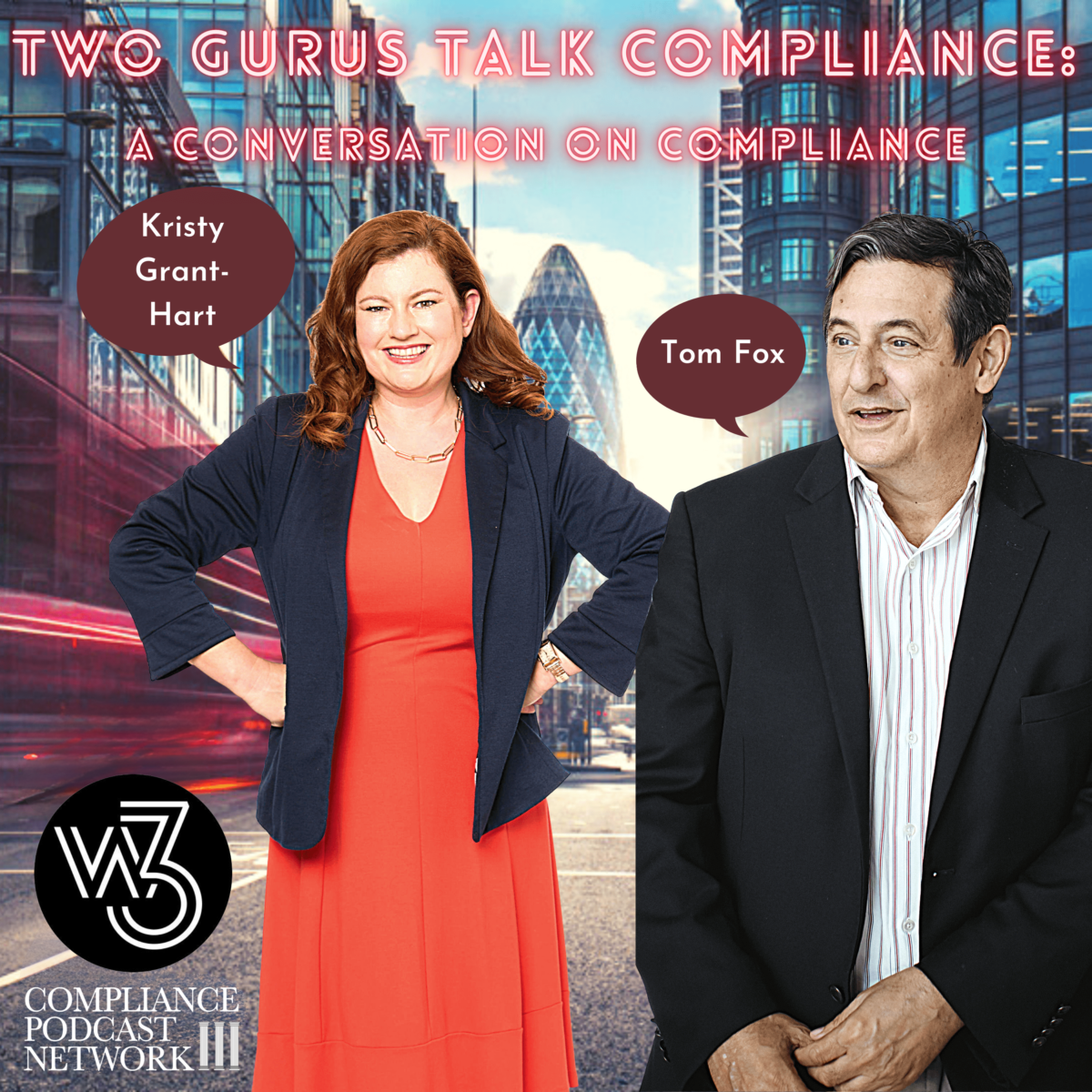
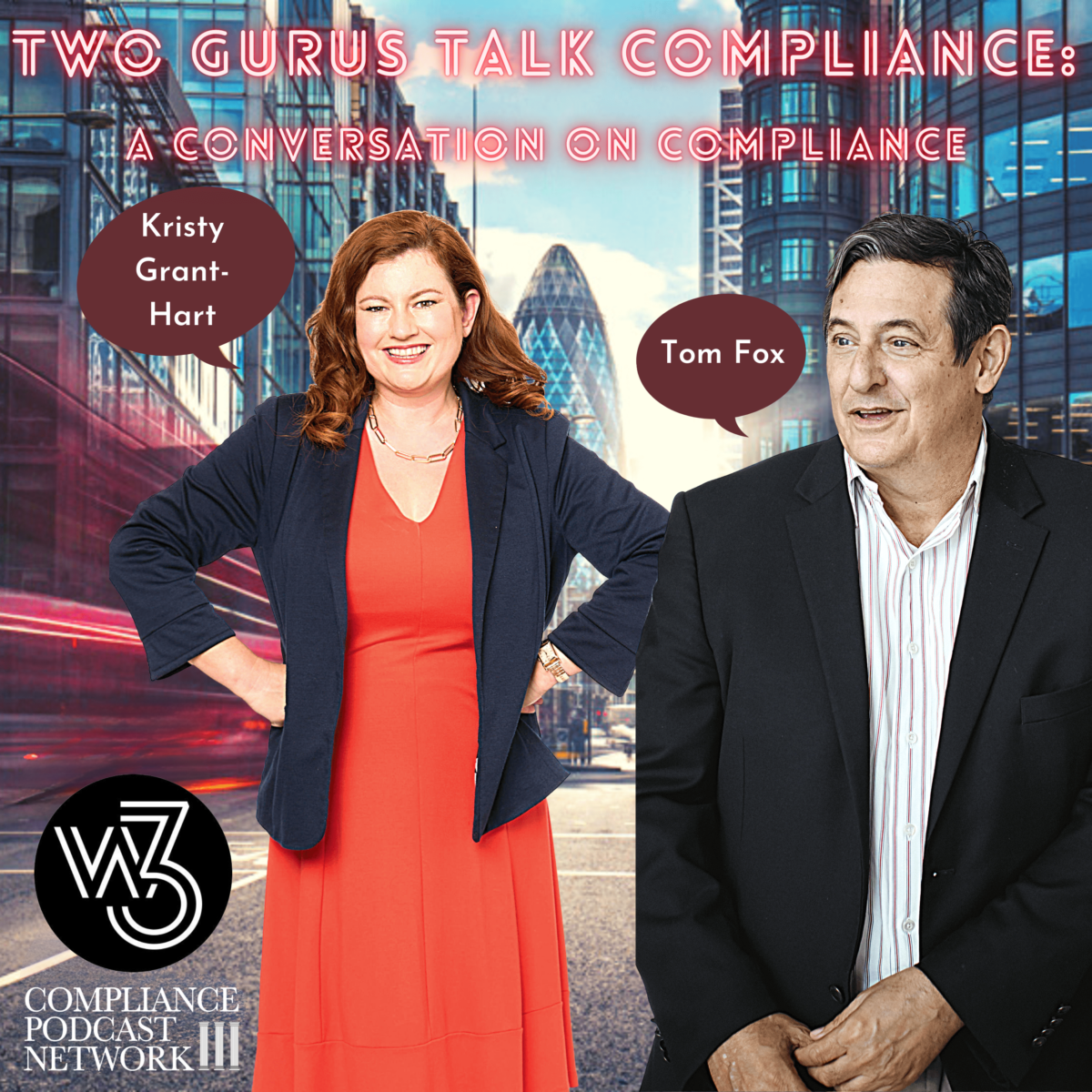
What happens when two top compliance commentators get together? They talk compliance, of course. Join Tom Fox and Kristy Grant-Hart in 2 Gurus Talk Compliance as they discuss the latest compliance issues in this week’s episode!

Stories this week include:

  • Boeing hit with $5bn in late fee penalties. (BBC)
  • All about FATF. (Bloomberg)
  • Will Tesla lose Musk (w/o $1tn pay package)? (Yahoo!Finance)
  • Does insider trading = insider betting? (Bloomberg)
  • Tom Hayes sues UBS for $400M. (Reuters)
  • SEC Chair Talks Messaging Enforcement, Misses the Point – Radical Compliance
  • Corruption Probe Underway at Rio Tinto’s Mongolian Copper Mine – WSJ
  • Facebook’s new holiday ad pines for a social platform that’s long gone – Fast Company
  • CEOs Are Furious About Employees Texting in Meetings – WSJ
  • Florida man arrested after making bomb threat against himself: police – WFLA

Connect with the hosts:

Resources:

Kristy Grant-Hart on LinkedIn

Prove Your Worth

Tom

Instagram

Facebook

YouTube

Twitter

LinkedIn

Categories
10 For 10

10 For 10: Top Compliance Stories For the Week Ending, November 1, 2025

Welcome to 10 For 10, the podcast that brings you the week’s Top 10 compliance stories in one podcast each week. Tom Fox, the Voice of Compliance, brings to you, the compliance professional, the compliance stories you need to be aware of to end your busy week. Sit back, and in 10 minutes, hear about the stories every compliance professional should be aware of from the prior week. Every Saturday, 10 For 10 highlights the most important news, insights, and analysis for the compliance professional, all curated by the Voice of Compliance, Tom Fox. Get your weekly filling of compliance stories with 10 for 10, a podcast produced by the Compliance Podcast Network.

Top weekly stories include:

  • Boeing hit with $5bn in late fee penalties. (BBC)
  • Corruption probe at Historic Environment Scotland. (BBC)
  • KPMG, Novo Bank targeted in corruption probe. (Bloomberg)
  • Ukraine receives an award for ABC. (Ukrinform)
  • All about FATF. (Bloomberg)
  • Texting in meetings is a CEO no-no. (WSJ)
  • Will Tesla lose Musk (w/o $1tn pay package)? (Yahoo!Finance)
  • Does insider trading = insider betting? (Bloomberg)
  • Tom Hayes sues UBS for $400MM. (Reuters)
  • How will the US define ‘country of origin’? (NYT)

You can check out the Daily Compliance News for four curated compliance and ethics-related stories each day, here.

Connect with Tom 

Instagram

Facebook

YouTube

Twitter

LinkedIn

You can purchase a copy of my new book, Upping Your Game, on Amazon.com

Categories
Daily Compliance News

Daily Compliance News: October 31, 2025, The Happy Halloween Edition

Welcome to the Daily Compliance News. Each day, Tom Fox, the Voice of Compliance, brings you compliance-related stories to start your day. Sit back, enjoy a cup of morning coffee, and listen in to the Daily Compliance News. All, from the Compliance Podcast Network. Each day, we consider four stories from the business world, including compliance, ethics, risk management, leadership, or general interest, relevant to the compliance professional.

Top stories include:

  • Boeing hit with $5bn in late fee penalties. (BBC)
  • Corruption probe at Historic Environment Scotland. (BBC)
  • KPMG, Novo Banco targeted in corruption probe. (Bloomberg)
  • Don’t lose your luggage on Air France. (NYT)

The Daily Compliance News has been honored as the No. 2 in the Best Regulatory Compliance Podcasts category.

Categories
FCPA Compliance Report

FCPA Compliance Report – Whistleblowing in 2025 – Insights from Mary Inman

Join Tom Fox as he welcomes back Mary Inman, a leading expert in whistleblower law and compliance, to discuss the dynamic landscape of whistleblowing in 2025. Mary shares her insights on the rise of whistleblowing, the impact of AI, and the evolving legal protections for whistleblowers.

Key takeaways:

– 🚨 Whistleblowing is on the rise due to changes in administration and rapid technological advancements.

– 🌐 International cooperation is crucial, with new SEC initiatives focusing on cross-border enforcement.

– 🏛️ The antitrust whistleblower program is a significant development, offering new opportunities for insiders.

– 💼 Competitors are increasingly acting as whistleblowers, especially in trade fraud cases.

– 🧠 Mental health support for whistleblowers is gaining attention, with resources becoming more available.

Key highlights:

  • The Current State of Whistleblowing
  • Antitrust Whistleblower Program
  • International Cooperation and SEC Initiatives
  • Trade Fraud and Whistleblower Roles
  • Whistleblower Mental Health and Compliance Lessons
  • Evolving Legal Protections for Whistleblowers
  • Connecting with Whistleblower Resources

Resources:

Mary Inman

🔸 LinkedIn: Mary Inman

🔸 Email: Mary Inman

🔸 Law Firm: Whistleblower Partners

Tom Fox

Instagram

Facebook

YouTube

Twitter

LinkedIn

For more information on the use of AI in Compliance programs, my new book, Upping Your Game. You can purchase a copy of the book on Amazon.com.