


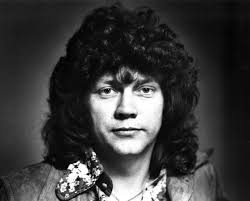
1, 2, 3, 4. While that sequence is well known, it is also one of the greatest rock n’ roll count-ins. It opens the John Lodge-written song “Ride My See Saw” by The Moody Blues. We lost John Lodge last week. The Moody Blues are in my top 5 bands of all time and were one of the leading lights of progressive (prog) rock.
According to his New York Times (NYT) obituary, John Lodge and Justin Hayward joined the band in 1966, replacing two founding members, Denny Laine and Clint Warwick. The classic Moody Blues lineup was now in place with Lodge and Hayward, with Mike Pinder on keyboards, Graeme Edge on drums, and Ray Thomas on flute and vocals.
It was their groundbreaking release of the 1967 album, “Days of Future Passed,” that changed rock n’ roll forever. It fused rock and orchestral music, establishing The Moody Blues as pioneers of progressive rock. It was one of the first rock albums to be structured as a concept album, telling a story over a 24-hour cycle. It propelled the band to international success, particularly through the enduring hit single “Nights in White Satin“. It offered elaborate arrangements, lush contributions from the London Festival Orchestra, and the plaintive sound of Mr. Pinder’s Mellotron, an electromechanical keyboard that plays samples of different instruments.
While the Moody Blues had hits for the rest of the century, it was their development of prog rock for which they will always be known. Today, I want to pay tribute to Lodge and explore five timeless lessons compliance professionals can learn from him and from The Moody Blues.
1. Innovation Begins When You Refuse to Accept the Status Quo
When Days of Future Passed was released in 1967, it was unlike anything listeners had ever heard. The Moody Blues combined rock instrumentation with full orchestral arrangements, creating a symphonic concept album that broke every rule of the time. Instead of focusing on singles or radio hits, they presented a continuous musical experience that told a story, a day in the life of ordinary people, elevated to art.
For compliance professionals, the lesson is clear: the most meaningful innovation happens when you refuse to accept “the way it’s always been.” Lodge and his bandmates didn’t abandon structure; they reimagined it. Likewise, modern compliance programs shouldn’t merely follow old templates. Whether it is integrating AI-driven monitoring, developing behavioral analytics, or crafting narrative-based training, progress comes from seeing beyond the checklist and daring to compose something new. In other words, the future of compliance is not mechanical; it is symphonic.
2. Harmony Requires Every Voice
The Moody Blues were more than the sum of their parts. Lodge’s melodic bass anchored Justin Hayward’s soaring vocals, Ray Thomas’s flute added ethereal texture, and Graeme Edge’s drumming provided both rhythm and poetry. Each member contributed a distinct voice, yet they blended perfectly into harmony.
A world-class compliance program operates the same way. No single person or department can carry the tune alone. Compliance requires a cross-functional orchestra; legal, HR, finance, audit, operations all playing from the same score. When departments act in isolation, the result is noise; when they work in harmony, it is music. Lodge’s approach to collaboration reminds us that leadership in compliance is not about conducting with authority but coordinating with empathy. The best Chief Compliance Officers listen as much as they lead.
3. Build Systems That Evolve
Progressive rock, by its very name, implies evolution, the willingness to progress. The Moody Blues constantly evolved their sound: from the baroque experimentation of On the Threshold of a Dream to the electronic textures of Long Distance Voyager. They did not stagnate; they adapted.
Compliance programs, too, must evolve with changing times. Regulations, markets, and technologies shift. What worked in 2015 may be obsolete in 2025. The DOJ’s 2024 Evaluation of Corporate Compliance Programs underscores this need for adaptability, requiring that programs be “dynamic, data-informed, and risk-based.” Lodge’s musical journey embodies that principle. He never let nostalgia stop innovation. Compliance officers should adopt the same mindset, continuously evaluating controls, integrating feedback, and embracing technology to remain relevant. Evolution, not inertia, sustains credibility.
4. Tell a Story That Inspires, Not Just Informs
The Moody Blues were not just musicians; they were storytellers. Songs like Nights in White Satin, Question, and Isn’t Life Strange resonated because they connected emotionally. They did not lecture; instead, they invited listeners to reflect. Each album was an emotional arc, designed to make people feel, not just think.
That is precisely the challenge and opportunity for compliance communication. Too often, we rely on policies and PowerPoints that inform but fail to inspire. John Lodge understood that engagement requires narrative. Compliance professionals can learn from that: training should tell stories, not recite statutes. Whistleblower programs should humanize courage, not just codify reporting channels. Codes of conduct should speak to values, not just violations. In short, emotion drives ethics. Lodge showed us that communication, when done with authenticity, can change behavior. Compliance leaders should compose their messaging the same way musicians write songs: with heart, structure, and meaning.
5. Legacy Matters More Than Fame
Though The Moody Blues achieved global recognition, they never chased popularity at the expense of integrity. Their albums demanded patience and reflection, qualities at odds with commercial radio. Yet their influence endures precisely because they valued substance over spectacle. Lodge once said he wanted to “create music that would last.” And it has.
For compliance professionals, this is the ultimate lesson: sustainability over visibility. A compliance program’s success is not measured by awards or press releases but by resilience, the quiet trust employees place in doing the right thing even when no one’s watching. Lodge’s passing reminds us that legacies are built note by note, day by day. In compliance, every investigation handled with fairness, every training delivered with clarity, every policy written with purpose, these are our symphonies. The work may seem routine, but over time, it becomes timeless.
Closing Reflections: From Melodies to Ethics
As we reflect on John Lodge’s contribution to music, we can see the deeper resonance for our own profession. Progressive rock does not simply entertain; it continues to expand what music could be. Likewise, compliance today is no longer a back-office function; rather, it is a driver of culture, innovation, and trust.
Both disciplines, music and compliance, strive for harmony amid complexity. Both require structure balanced with creativity. Both depend on collaboration, communication, and conviction.
So as we say goodbye to John Lodge, perhaps we can also rededicate ourselves to what he and The Moody Blues represented: the belief that art and ethics can elevate humanity. Because in the end, every great compliance program, like every great song, seeks the same outcome: to move people toward something better.
===============================================================
A special thanks to Alison Taylor, who many years ago named me the Rock’ N’ Roll Compliance Blogger. It is my favorite moniker of all time and one I still take seriously.
Tom’s Top 5 John Lodge Songs (all links from YouTube)
- Ride My See Saw – Lodge said of the song, “It started, really, like a lot of my rock ‘n’ roll songs, as a rhythm track building up. “I wanted it to be this chorale, where we’re all singing these harmonies through the song — it’s interesting that way,” he added.
- I’m Just a Singer (in a rock n roll band)- Lodge retook the lead for this Top 20 track, the last single of the Moody Blues’ first phase. Lodge’s message was world peace through music, singing that “I’m just a-wandering on the face of this earth/Meeting so many people who are trying to be free…Now we’ve found the key.” The song marked the last time the group used a Mellotron, which was one of its sonic hallmarks, while the saxophone sound came from a Chamberlin keyboard.
- (Evening) Time to Get Away – Lodge made his prog rock mark on the group’s thematic masterwork first with “Lunch Break: Peak Hour” but more memorable with the airy “(Evening) Time to Get Away),” part of “The Afternoon” suite that kicked off side two in tandem with Hayward’s “Forever Afternoon (Tuesday?).”
- Natural Avenue – Part of the album Lodge and Hayward made together during the Moodys’ hiatus, this kicked off the second side of the album with symphonic bombast. Its theme, established in the title, maintained Lodge’s heartfelt belief in the divine (spiritually more than religiously) power of music.
- Gemini Dream – This song emerged from a jam session built from a dance-floor targeted beat, with Lodge’s chugging bass pushing the groove. Lodge’s original title, by the way, was “Touring in the USA,” while Hayward came up with “Backstage Pass;” they settled on “Gemini Dream” as a representation of their dual personalities. It received an ASCAP songwriting award for the track, which reached its No. 12 peak as the Moody’s best for a new song in eight years.
Resources:
