Categories
Regulatory Ramblings

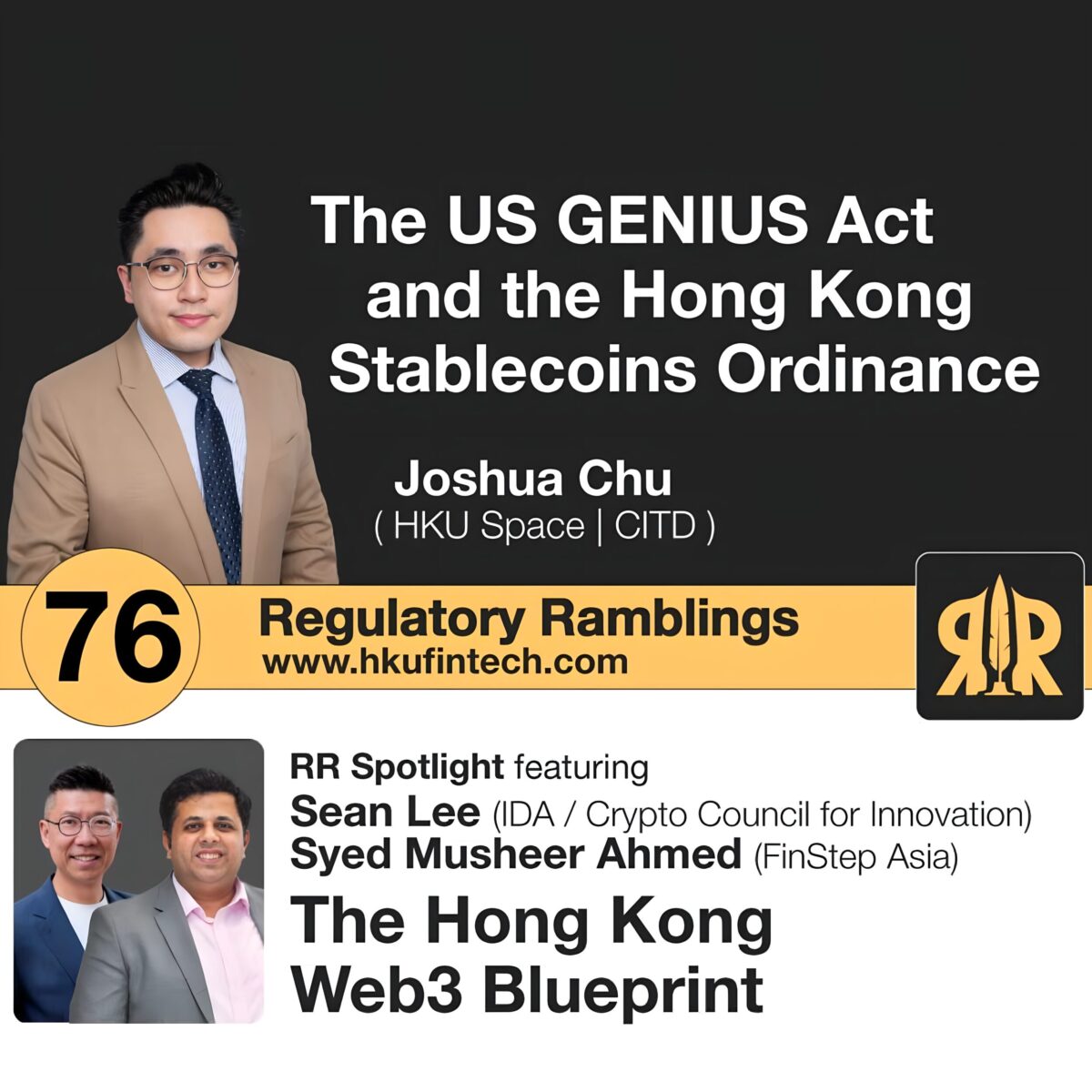
Regulatory Ramblings: Episode 76 – The Digital Future: The US GENIUS Act and Hong Kong Stablecoins Ordinance // The Hong Kong Web3 Blueprint: Building a Web 3 International Financial Hub Report

The common theme for this episode is FinTech and Web3 writ large – with an eye towards digital assets and virtual currency.

In today’s spotlight segment, we’ll be speaking with a returning guest and a dear friend of the program – Syed Musheer Ahmed of Hong Kong-based FinStep Asia on the recently disseminated “Hong Kong Web3 Blueprint: Building a Web 3 International Financial Hub” report. Joining Musheer is Sean Lee, co-lead of Web3 Harbour’s Policy Committee and one of the key leaders of the Blueprint task force.

Following that, we’ll be chatting with local lawyer Joshua Chu on the recently passed US GENIUS Act and what it means for making the US a stablecoin hub.

Joshua Chu

Joshua Chu is a prominent Hong Kong lawyer in all matters fintech and crypto, and a prolific writer. His opinion and insights are much sought after by the local press and correspondents of major foreign news organizations operating in the city. You can often hear him at his most candid on the radio at RTHK. He is also co-chair of the Hong Kong Web 3 Association and legal advisor to the Hong Kong Blockchain Association.


Syed Musheer Ahmed

Syed Musheer Ahmed is managing director of FinStep Asia – a firm he founded six years ago. With over 18 years of extensive experience as an ecosystem builder in the realms of capital markets, fintech, and virtual assets, including a decade as a global markets trader, he came to Hong Kong to attain his MBA from the University of Hong Kong and London Business School’s joint program.

A self-described “fintech ballerina,” since 2016, Musheer has contributed extensively to building the region’s fintech and virtual assets ecosystem, particularly as the co-founder and concurrent board member and the inaugural general manager of the Fintech Association of Hong Kong (FTAHK).

He has also done a stint as a regulator. Beyond his many contributions to the territory’s fintech regulatory policy during his tenure with the FTAHK, from October 2022 to January 2024, he served as a financial markets risk assurance lead with the Virtual Assets Regulatory Authority in Dubai.

Sean Lee
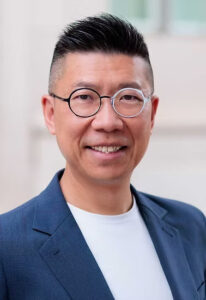
Sean Lee, Co-founder of IDA, a digital asset technology company, aims to lead the widespread adoption of blockchain finance and empower Belt and Road businesses to integrate seamlessly between Web2 and Web3.  Previously, Sean was the CEO of the Algorand Foundation, where he led the layer-1 protocol to achieve a top-10 network valuation of over $10 billion under his leadership.

Sean has active engagements with global regulators and policymakers as a Senior Advisor for the Crypto Council for Innovation in regulatory advocacy and advancing the transformative potential of digital assets, and APAC policy advisor for the Stablecoin Standard.  Sean is also an elected member of the Hong Kong Government’s Cyberport Entrepreneurship Committee Advisory Group and a Forbes Digital Asset contributor.


Discussion:

The conversation starts with a discussion of the Hong Kong Web3 Blueprint Report. Musheer and Sean share with Regulatory Ramblings host Ajay Shamdasani that the document should be seen as a roadmap for hastening blockchain development in the territory. For that purpose, Web3 Harbour joined forces with PwC Hong Kong to launch five action groups this August on stablecoins, funds, and other critical segments.

Ultimately, it is a call for more action across various aspects, from investment to talent, policy, infrastructure, and standards,  to accelerate the development of Web 3.0 in the SAR.

The report highlights the “transparency, security, and user empowerment” of decentralization.

As the SCMP put it: “The blueprint seeks to leverage what it calls ‘Web3 superpowers’ through the development of ‘five key enablers’: talent, market infrastructure, standards, regulation, and funding and economic contribution. It calls on participants to focus on open finance, trade finance, capital markets, asset management, and carbon markets.

The report was compiled with input from Web3 Harbour members and other industry stakeholders.

Web3 Harbour chairman Gary Liu, formerly CEO of the Post, said greater private-public collaboration was among its goals, but it was primarily a guide for where the private sector should focus its efforts.

To that end, the report should not be seen as just a document- it is a blueprint for transformation, the guests say. From regulation and standards to infrastructure and talent, the Hong Kong Web3 Blueprint identifies the key enablers that will shape Hong Kong’s position as a global Web3 finance hub.

Hong Kong has distinct advantages to capture a significant part of the global Web3 opportunity, but the question is, how do we get there? asks Musheer and Sean. They also share what prompted them to write the report now, their key observations and conclusions, and what policy outcomes they advocate.

Ultimately, talent, infrastructure, standards, regulation, and funding are the critical enablers identified in the Web3 Blueprint that are crucial to positioning Hong Kong as a Web3-enabled international financial centre. The document outlines how Web3 technologies can drive sustainable innovation, create economic growth, and raise the territory’s digital finance leadership on the world stage.

Following that, we discussed the enactment of the new GENIUS Act in the US in late July with Joshua. In what was labelled “Crypto Day” during that country’s recent “Crypto Week,” the U.S. House of Representatives first passed the CLARITY market structure bill and then the GENIUS Act on July 18 – the latter of which was signed by President Trump. These moves by Congress were seen as historic steps forward in the regulation of virtual assets in the United States – or as one pundit put it: “Crypto’s time has come.”

The US legislation is the first standalone bill aimed at providing clarity for the growing cryptocurrency ecosystem – particularly the regulation of stablecoins.

According to TRM Labs, stablecoins now represent over 60% of all crypto transaction volume – up from just 35% two years ago. More than 90% of fiat-backed stablecoins in circulation are pegged to the US dollar. Although TRM estimates that 99% of stablecoin activity is licit, their speed, scale, and liquidity have made them appealing for illicit uses, including ransomware payments, fraud, and terrorist financing.​

The GENIUS Act (Guiding and Establishing National Innovation for U.S. Stablecoins) establishes reserve requirements for stablecoin issuers, alongside consumer protection measures and anti-money laundering (AML) provisions.

These provisions aim to provide greater stability and security for stablecoin markets, ensuring they are better integrated into the U.S. financial system. This marks a key moment for the regulatory framework governing digital assets, as the U.S. works to balance innovation with risk management.

As for the CLARITY Act, it addresses broader market structure issues within the cryptocurrency space. The Senate is working on its market structure bill. After both chambers have acted, they will conference to reconcile their differences and finalize a version of the CLARITY bill that will move forward – likely this fall.​

The passage of both bills reflects a significant effort to provide clear regulatory guidance for the crypto market, helping to address the growing need for oversight as the industry continues to expand.

At the same time, half a world away in Hong Kong, the city’s Stablecoins Ordinance (Cap. 656) (Stablecoins Ordinance) and related implementation guidelines issued by the Hong Kong Monetary Authority commenced operation on 1 August 2025 – with a transitional period granted solely for issuance purposes.​

This new regime is touted as a significant milestone for Hong Kong’s growing digital assets market. According to King & Wood Mallesons: “It is relevant to institutions that wish to engage in the primary market issuance of fiat-referenced stablecoins, as well as other secondary market transactions in or involving Hong Kong. Even if you are outside Hong Kong, you should pay attention to the restrictions imposed under the Stablecoins Ordinance for any stablecoin-related activities with a Hong Kong nexus.”

At a glance, the Hong Kong Stablecoins Ordinance regulates:​

– Issuers of stablecoins and the structure of a stablecoin itself.

– Offers of stablecoins.

– Related market integrity and conduct matters.

The regime took effect on 1 August 2025, with a transitional period for issuance only.

The Stablecoins Ordinance regulates “specified stablecoins,” which are stablecoins (ie, a cryptographically secured digital representation of value) that purport to maintain a stable value with reference wholly to one or more official currencies or other HKMA-specified units of account or stores of economic value (see section 4 of the Stablecoins Ordinance).

While this is a rather technical definition, it essentially captures:

– a stablecoin linked to an “official currency”; and

– a stablecoin linked to other “units of account” or “stores of economic value”, in each case, as designated by the HKMA (by notice published in the Gazette).

To date, the HKMA has not specified any such units of account or stores of economic value, but we expect they may include commodities such as gold.

Joshua delineates the longer-term implications for our region and the world as a result of the above regulatory developments in Hong Kong and the US.

Regulatory Ramblings podcasts is brought to you by The University of Hong Kong – Reg/Tech Lab, HKU-SCF Fintech Academy, Asia Global Institute, and HKU-edX Professional Certificate in Fintech, with support from the HKU Faculty of Law.

Useful links in this episode:

You might also be interested in:

Connect with RR Podcast at:

LinkedIn: https://hk.linkedin.com/company/hkufintech 
Facebook: https://www.facebook.com/hkufintech.fb/
Instagram: https://www.instagram.com/hkufintech/ 
Twitter: https://twitter.com/HKUFinTech 
Threads: https://www.threads.net/@hkufintech
Website: https://www.hkufintech.com/regulatoryramblings 

Connect with the Compliance Podcast Network at:

LinkedIn: https://www.linkedin.com/company/compliance-podcast-network/
Facebook: https://www.facebook.com/compliancepodcastnetwork/
YouTube: https://www.youtube.com/@CompliancePodcastNetwork
Twitter: https://twitter.com/tfoxlaw
Instagram: https://www.instagram.com/voiceofcompliance/
Website: https://compliancepodcastnetwork.net
Categories
Regulatory Ramblings

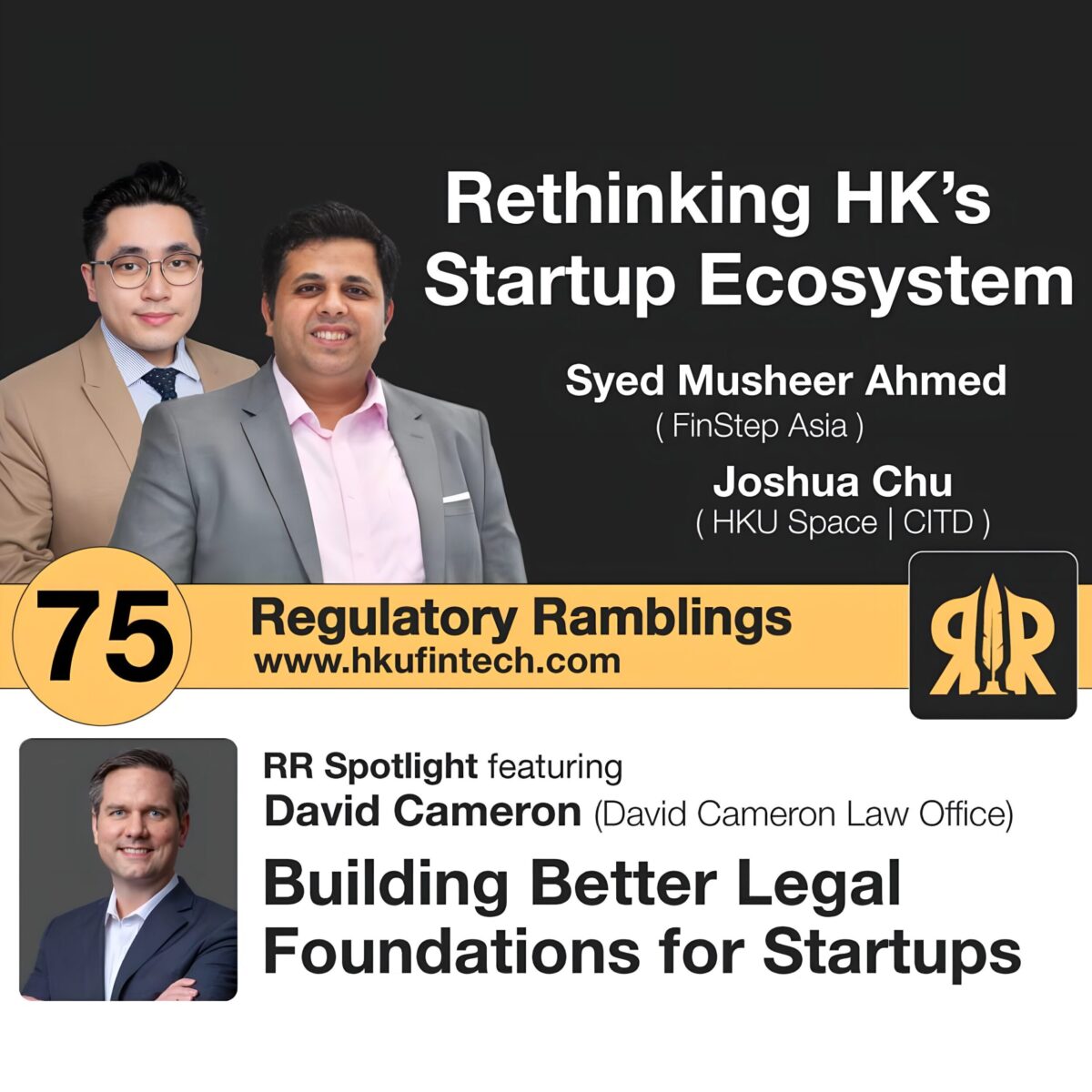
Regulatory Ramblings: Episode 75 – Rethinking Hong Kong’s Startup Ecosystem and Its Legal Foundations with Syed Musheer Ahmed, Joshua Chu, and David Cameron

In this episode, we feature two conversations exploring different frontiers of finance and technology.

This episode focuses on Hong Kong’s startup company environment. Specifically, how conducive is the city’s ecosystem for their inception, growth, and scaling up—legally, commercially, and policy-wise?

In the initial spotlight segment, we speak with David Cameron, a veteran American lawyer based in the territory who advises startups on the challenges and pitfalls startups face in their earlier stages. Obtaining affordable and sound legal advice is a key part of their quandary.

Following that, we discuss how to establish a body that provides genuine support and mentoring to emerging HK businesses, featuring Syed Musheer Ahmed, managing director of FinStep Asia and a former regulator with the Virtual Asset Regulatory Authority in Dubai, alongside local lawyer Joshua Chu. Simply put, it’s going to revolve around a public-private partnership.

David Cameron is managing partner and founder of the David Cameron Law Office, or DCLO—an independent, HK-based law firm offering international legal services. Founded in 2021, the firm is qualified to act on matters of Hong Kong and New York law. He has 16 years of experience in the Hong Kong market—including time spent at some of the largest law firms in the world, such as Linklaters and Allen & Overy.

DCLO is a corporate law firm, offering advice and solutions on general corporate matters, capital raising, M&A, fund formation, and contract law. DCLO also has specialized areas in family law, employment law, immigration, and litigation. In addition, DCLO has the unique offering of acting as external general counsel for growing companies that do not yet have their own in-house legal counsel.

DCLO is also deeply involved in Hong Kong initiatives, such as family offices, Hong Kong limited partnership funds (LPFs), Hong Kong open-ended fund companies (OFCs), and the Hong Kong Capital Investment Entrant Scheme.

Joshua Chu is a prominent Hong Kong lawyer in all matters fintech and crypto, and a prolific writer. His opinion and insights are much sought after by the local press and correspondents of major foreign news organizations operating in the city. You can often hear him at his most candid on the radio at RTHK. He is also co-chair of the Hong Kong Web 3 Association and legal advisor to the Hong Kong Blockchain Association.

Syed Musheer Ahmed is the managing director of FinStep Asia—a firm he founded six years ago. With over 18 years of extensive experience as an ecosystem builder in the realms of capital markets, fintech, and virtual assets, including a decade as a global markets trader, before coming to Hong Kong to attain his MBA from the University of Hong Kong and London Business School’s joint program.

A self-described “fintech ballerina,” since 2016, Musheer has contributed extensively to building the region’s fintech and virtual assets ecosystem, particularly as the co-founder and as a concurrent board member and the inaugural general manager of the Fintech Association of Hong Kong (FTAHK).

He has also done a stint as a regulator. Beyond his many contributions to the territory’s fintech regulatory policy during his tenure with the FTAHK, from October 2022 to January 2024, he served as a financial markets risk assurance lead with the Virtual Assets Regulatory Authority in Dubai.

Discussion:

The conversation begins with a recent article published in the South China Morning Post, written by Petty Sito and Julie Zhang, which discusses how InvestHK, a quasi-governmental body, is now supporting local companies in expanding their overseas operations, a shift from its previous focus on attracting investment to the city over the past 25 years.

The article mentions that the Evident Group, operator of a digital investment platform for alternative assets and licensed by the Securities and Futures Commission, formed a partnership with Zand Bank, the UAE’s first fully licensed digital bank. The collaboration will provide the Dubai-based bank’s clients with investment opportunities through Evident’s tokenization technology and infrastructure.

Yet, is that enough when places like Singapore, Taiwan, and Israel long ago seemed to have learned how to nurture and scale up startups to go global? Our guests today believe that an empowered, well-resourced startup-centric body would be a good idea, and it will require a public-private partnership to make it happen.

The crux of the discussion is what can be done to improve Hong Kong’s startup ecosystem? More pointedly, what can be done to help up-and-coming companies reach their potential and become the juggernauts of tomorrow? Indications are that it will require a separate entity offering genuine startup support, something beyond InvestHK, Cyberport, Science Park, or the Hong Kong Trade Development Council.

David kicks things off, sharing his thoughts on the legal and compliance challenges that startups face in the Special Administrative Region with Regulatory Ramblings host Ajay Shamdasani. They discuss how to effectively serve as a lawyer for a startup when they don’t have much of a legal budget. In such instances, fractional or part-time in-house counsel might be more suited to a firm’s means and needs.

Yet, beyond legal considerations, other mistakes do startups make, such as running out of money too soon, seem like a cliché at this point. David shares his perspective on what can be done to improve the city’s ecosystem for startups and stresses that legal expenses should be seen as an investment in a firm’s future rather than costly, burdensome drudgery.

The discussion then shifts to Musheer and Joshua in the second segment. They stress that looking objectively at the SAR’s existing structure of InvestHK, Cyberport, and Science Park, and without being overly critical of what has come before, though past government actions – mistakes have been made and, hopefully, lessons have been learned. Even still, they ask, what would need to be done to create a proper startup support entity?

As Musheer notes, something distinct from either Cyberport or HKSTP is needed: “more of an internal InvestHK with a main [key performance indicator] of building and sustaining [a] local ecosystem.”

They both emphasize that the hallmark of a strong startup ecosystem is the strength of its community. “They need bank account access, government subsidies, and both local and international business ties,” Musheer said.

In a similar vein, Joshua added: “Is the community open to it [startups]? Hong Kong can be very myopic, with everyone doing their own thing. Early-stage funding in here is weak. How do we fix that?”

Both men cited examples from around the world that have been successful, including private-public partnerships, incubators like Hong Kong’s WHub, and university grants for startups – all of which Hong Kong has.

“The pain points in Hong Kong are that it is rich in tech and ideas, but you need many people for startups to thrive; a critical mass of consumers. They need a pool of consumers ready to be excited about product launches. Then look at how incubators can pitch to select committees,” Joshua said.

Both experts conclude that the city needs not only investors, but also mentors and a nurturing, open-minded community with support systems. That includes non-financial operational support for local startups in Hong Kong, with adequate communication and partnerships, and angel investors who can help with coordinating matters.

Culture and mindset are a key part of the equation. The local startup scene needs local angel advisers because, as Joshua observes, “the Hong Kong business environment is too Asian, too formulaic and math-based. We need some element of [creative] strategy.”
Infrastructure issues are also a concern. For example, the city’s Cyberport and Science Park could use better transportation, they say, because both locations are far away from the core business districts of Central, Admiralty, and Wanchai. Beyond that, both say the city has great facilities that can help bring innovative companies together.
“What’s needed is more facilitation of commercialization,” Musheer said.

The ultimate question is whether private enterprises can collaborate with the government to develop more effective business strategies.

Regulatory Ramblings podcasts is brought to you by The University of Hong Kong – Reg/Tech Lab, HKU-SCF Fintech Academy, Asia Global Institute, and HKU-edX Professional Certificate in Fintech, with support from the HKU Faculty of Law.

Useful links in this episode:

You might also be interested in:

Connect with RR Podcast at:

LinkedIn: https://hk.linkedin.com/company/hkufintech 
Facebook: https://www.facebook.com/hkufintech.fb/
Instagram: https://www.instagram.com/hkufintech/ 
Twitter: https://twitter.com/HKUFinTech 
Threads: https://www.threads.net/@hkufintech
Website: https://www.hkufintech.com/regulatoryramblings 

Connect with the Compliance Podcast Network at:

LinkedIn: https://www.linkedin.com/company/compliance-podcast-network/
Facebook: https://www.facebook.com/compliancepodcastnetwork/
YouTube: https://www.youtube.com/@CompliancePodcastNetwork
Twitter: https://twitter.com/tfoxlaw
Instagram: https://www.instagram.com/voiceofcompliance/
Website: https://compliancepodcastnetwork.net

 

Categories
Regulatory Ramblings

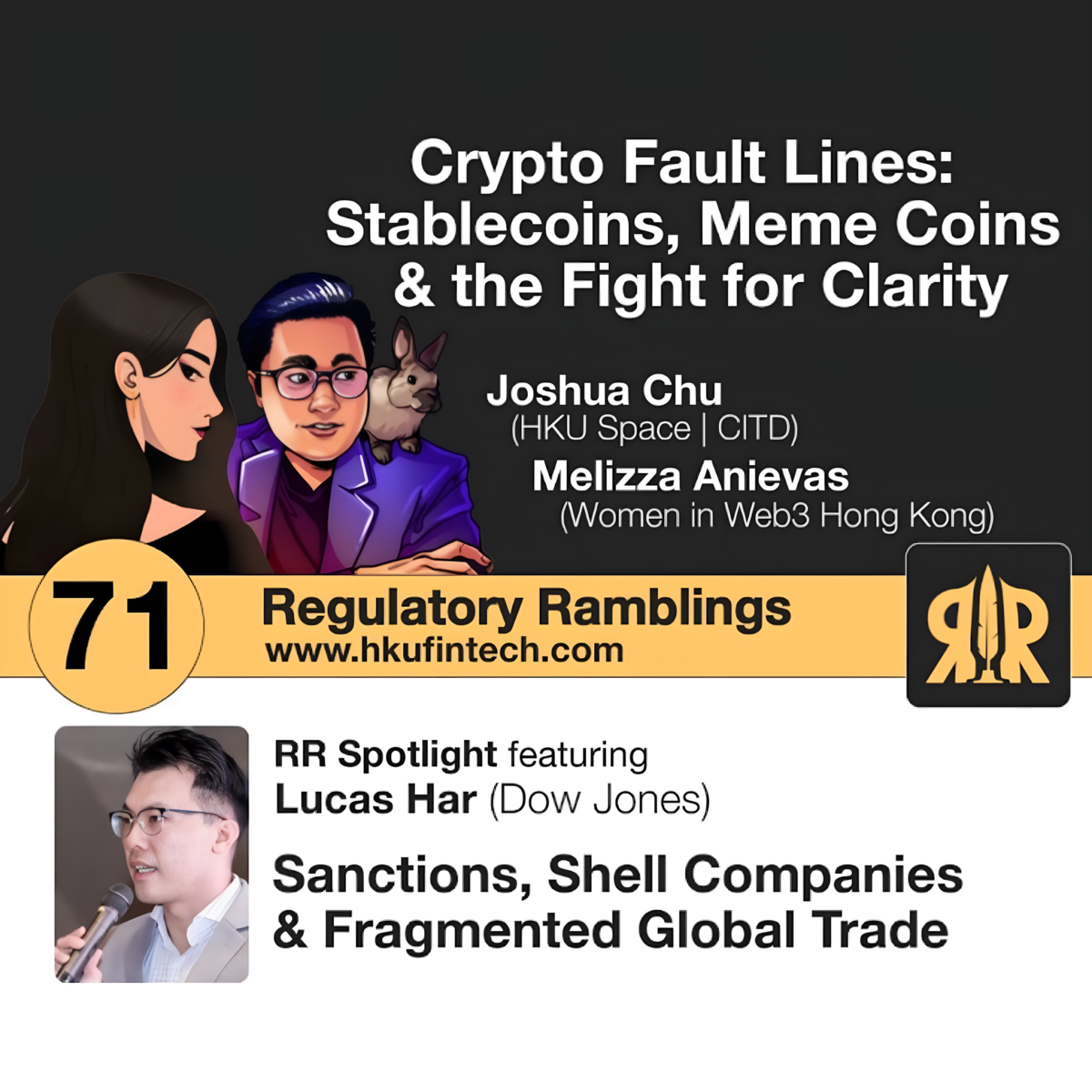
Regulatory Ramblings: Episode 71 – Crypto Fault Lines: Stablecoins, Meme Coins & the Fight for Clarity PLUS: Sanctions, Shell Companies & Fragmented Global Trade

This episode begins with a brief spotlight chat with Lucas Har from Dow Jones in Singapore, discussing trade compliance, sanctions, dual-use goods, and supply chain risk, particularly in the context of the currently strained US-China trade relationship following the recent increase in US tariffs on China and Hong Kong.

We then proceed to a discussion with Hong Kong-based Joshua Chu and Melizza Anievas to explore Hong Kong’s recently enacted Stablecoin Ordinance, including the distinction between meme coins and stablecoins, as well as the ever-evolving global landscape for virtual assets in light of recent regulatory developments in the US.

On May 21, 2025, the Hong Kong Legislative Council passed the Stablecoins Ordinance, creating a formal licensing regime for fiat-referenced stablecoin (FRS) issuers. While local in implementation, the regulatory milestone decisively places Hong Kong at the forefront of a broader Asian effort to shape the future of legitimate, rules-based decentralized finance (DeFi) and tokenized financial infrastructure.

The move came just one day after the US Senate passed the GENIUS Act. Against this backdrop, Hong Kong’s move added momentum to global harmonization efforts on stablecoin regulation, directing the policy debate more towards developing trustworthy digital asset ecosystems with practical, real-world utility and functionality.

The territory’s new framework requires all issuers promoting fiat-backed stablecoins to the general public locally to be licensed by the Hong Kong Monetary Authority (HKMA)—the city’s banking regulator and de facto central bank.

Additionally, issuers must hold reserves in either cash or high-quality, highly liquid assets, such as short-term government securities. Stablecoins must be redeemable at par value at any time. Issuers must regularly disclose their reserve holdings and undergo audits. AML/CFT compliance and risk controls are also required.

This regulatory clarity is paired with active development. For example, Hong Kong’s Stablecoin Sandbox, launched last year, has enabled companies such as Standard Chartered, Animoca Brands, and JD Coinlink to test real-world use cases across payments, capital markets, and trade finance. Ultimately, it reflects a coordinated effort to turn policy into practical rails for tokenized activity.

Joshua Chu

Joshua Chu is a prominent Hong Kong lawyer specializing in fintech and crypto matters, as well as a prolific writer. His opinion and insights are much sought after by the local press and correspondents of major foreign news organizations operating in the city. You can often hear him at his most candid on the radio at RTHK.

Joshua is also co-chair of the Hong Kong Web 3 Association and legal advisor to the Hong Kong Blockchain Association.



Melizza Anievas

Melizza Anievas is a co-founder and executive director of Women in Web3 Hong Kong. Under her leadership, Women in Web3 Hong Kong has grown to over 1,500 members and secured over HK$300,000 in sponsorships within a year, establishing working relationships with notable partners such as Google Cloud Hong Kong, The Sandbox, and Animoca Brands. A Web3 veteran since 2019, Melizza excels at devising growth-driven strategies and operating hyper-growth businesses.


Lucas Har

Lucas Har is based in Singapore and has been with Dow Jones Risk & Compliance for nearly a decade. He began his career with a focus on Anti-Money Laundering (AML) and Counter-Terrorism Financing (CTF) research across a diverse portfolio of Asia-Pacific jurisdictions.

Later, Lucas took on a leadership role overseeing the company’s content curation team, where he was responsible for news curation and monitoring adverse media.

In his current position, he manages the firm’s global trade compliance product suite, spearheading innovation and strategic growth.

He has also extensively engaged with financial institutions, corporations, and regulators across multiple regional jurisdictions, fostering discussions on export control compliance and further strengthening Dow Jones’s expertise in such an increasingly vital and complex area.

Discussion:

As our guests flesh out, several common threads emerge linking the two segments of today’s episode. The first is that of regulatory fragmentation across jurisdictions such as the US, mainland China, Hong Kong, and the EU.

There is also the issue of extraterritorial overreach and competition, particularly between China’s export rules and US crypto laws, as well as a global push for clarity in fast-moving, high-risk sectors, including the international trade of goods and virtual assets more broadly. Simply put, the heavy geopolitical undertones in both export control and digital asset regulation cannot be avoided, as they cast a shadow on the role of trust and credibility, or the lack thereof, in navigating both trade and cryptocurrency systems.

With that in mind, the podcast begins with Regulatory Ramblings host Ajay Shamdasani asking Lucas about the evolving regulatory landscape shaping international trade and its implications for Hong Kong businesses, as well as the impact of mainland China’s new export control regulations on dual-use goods.

Lucas shares what legal and compliance specialists need to know about the regulatory hurdles the firms they serve must adhere to, including sanctions and export control regulations, as well as best practices for enhancing due diligence procedures to mitigate trade-related risks.

Following that, Joshua and Melizza share their thoughts on what the new stablecoin ordinance will mean for Hong Kong, as well as the importance of recent US regulations. Securities and Exchange Commission clarifications on meme coins and their potential impact on legal, risk, and compliance strategies for developers and investors.

The three of them go on to discuss the key operational and regulatory challenges stablecoin issuers face under Hong Kong’s new licensing regime and how the US GENIUS and STABLE Acts might reshape the US stablecoin market and influence global regulatory approaches.

Indeed, something worth asking—and which Joshua and Melizza do not shy away from commenting on⁠ — is whether the relatively ‘light touch’ regulation of meme coins encourages innovation or exposes investors to undue risk.

The conversation concludes with a chat about how projects can effectively balance innovation with regulatory compliance amid differing US and APAC frameworks. Most memorable is how Melizza distinguishes between Web 3.0 and Web3.

Useful links in this episode:

You might also be interested in:

Connect with RR Podcast at:

LinkedIn: https://hk.linkedin.com/company/hkufintech 
Facebook: https://www.facebook.com/hkufintech.fb/
Instagram: https://www.instagram.com/hkufintech/ 
Twitter: https://twitter.com/HKUFinTech 
Threads: https://www.threads.net/@hkufintech
Website: https://www.hkufintech.com/regulatoryramblings 

Connect with the Compliance Podcast Network at:

LinkedIn: https://www.linkedin.com/company/compliance-podcast-network/
Facebook: https://www.facebook.com/compliancepodcastnetwork/
YouTube: https://www.youtube.com/@CompliancePodcastNetwork
Twitter: https://twitter.com/tfoxlaw
Instagram: https://www.instagram.com/voiceofcompliance/
Website: https://compliancepodcastnetwork.net