


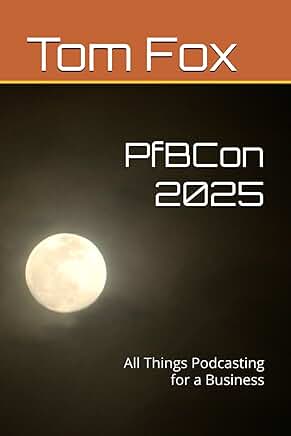
Podcasting for business has finally grown up. In November, I held the Podcasting for Business Conference. Today, I am thrilled to announce my latest book, PfBCon—All Things Podcasting for a Business, summarizing all the presentations from the event.
For years, podcasting was treated as either a hobby or a marketing gimmick. That era is over. As my book makes clear, podcasting has matured into a serious business discipline, with defined frameworks, repeatable strategies, and measurable outcomes. If you are a podcaster, this book gives you the blueprint to stop guessing and start designing shows that actually work. But here is the pivot that matters most to me as a compliance professional.
Everything in this book applies directly to how modern compliance teams communicate, influence, and lead inside their organizations. Podcasting is no longer just an external branding tool. It is one of the most underutilized internal communications platforms available to compliance leaders today. The same structures that help business podcasters build trust, authority, and engagement externally can be deployed with even greater impact inside a company.
Podcasting for Business Is About Intentional Design
One of the book’s core lessons is that podcasting for business is not about “having a podcast.” It is about designing a communication tool around a specific business objective. Megan Dougherty’s work on podcast value, math, and business podcast blueprints is the intellectual backbone of the book, and it is where compliance professionals should start paying attention.
Every effective business podcast answers three questions:
- Why does this show exist?
- What business outcome is it designed to support?
- How will success be measured?
That framing is instantly familiar to anyone who has built or run a compliance program. Policies, training, investigations, and reporting mechanisms are not judged on activity; they are judged on effectiveness. Podcasting, when done correctly, fits squarely within that same logic. This is where podcasters often stop reading and where compliance professionals should start.
Use Case #1: Internal Compliance Communications
Most compliance failures are not caused by a lack of rules. They are caused by a lack of understanding, relevance, and trust. Traditional internal compliance communications struggle because they are static, legalistic, and one-directional. A policy memo does not invite engagement. A slide deck does not create a connection. Annual training does not reinforce daily decision-making. A well-designed internal compliance podcast does all three.
What PfBCon—All Things Podcasting for a Business demonstrates repeatedly is that voice matters. Audio creates familiarity. Regular cadence creates expectation. Conversation creates meaning. An internal compliance podcast can:
- Reinforce tone from the top in a consistent, human way;
- Translate policies into real-world scenarios that employees actually recognize; and
- Normalize conversations about risk, ethics, and accountability.
Short, focused episodes, ten to fifteen minutes, can be integrated into the rhythm of work without disrupting it. They can feature compliance leaders, business unit heads, internal audit, HR, or even anonymized case discussions drawn from real issues the organization has faced. This is not about entertainment. It is about embedding compliance into daily operations, exactly what regulators expect and what the DOJ’s Evaluation of Corporate Compliance Programs has emphasized year after year.
The book’s insistence on intentional design is the key. An internal compliance podcast should not be a dumping ground for announcements. It should have a defined purpose: education, reinforcement, or escalation awareness. When designed with that clarity, it becomes one of the most effective internal communication tools a compliance team can deploy.
Use Case #2: Speak-Up and Ethics Messaging
If there is one area where compliance communications consistently fall short, it is the speak-up culture. Hotlines are measured. Policies are posted. Training is delivered. And yet employees still hesitate to raise concerns. Why? Because a speak-up culture is not built by mechanisms. It is built on stories, responses, and trust.
Several contributors in the book, particularly those focused on branded podcasting and relationship-driven content, make a point that resonates deeply for compliance: people engage when they hear how others think, respond, and learn, not when they are told what to do. An internal ethics podcast can change the speak-up equation by:
- Explaining what happens after a report is made;
- Demystifying investigations without breaching confidentiality;
- Reinforcing non-retaliation through lived examples, not slogans, and
- Showing how issues raised by employees led to real improvements.
This is where the conversational format is essential. Speak-up culture is emotional, not procedural. Audio allows compliance leaders to speak plainly, acknowledge complexity, and show accountability. It humanizes the compliance function in a way no policy document ever will.
The book’s emphasis on authenticity and consistency is critical here. A single episode does not build trust. A pattern of honest, steady communication does. That is exactly how successful business podcasts build loyal audiences and exactly how compliance teams can build credible speak-up cultures.
Use Case #3: Board and Senior Management Engagement
Board oversight of compliance has never been more important or more challenging. Boards are inundated with dashboards, reports, and slide decks. What they often lack is context. They see metrics, but they do not always hear the thinking behind the program. One of the most overlooked applications of podcasting for compliance is as a board-level communication tool.
This does not mean publishing a public podcast for directors. It means using audio strategically to supplement traditional reporting. Short, periodic recordings can:
- Provide narrative context around compliance risks.
- Explain why certain metrics moved up or down.
- Highlight emerging risks before they appear in dashboards; and
- Reinforce management’s ownership of compliance, not just delegation.
As the book makes clear, podcasting excels at explaining why, not just what. For boards and senior executives, that is invaluable. It allows compliance leaders to communicate judgment, foresight, and alignment with business strategy in a format that fits how leaders consume information.
This is not theoretical. Several contributors discussed podcasting as a credibility and authority tool. In compliance, credibility with the board is everything. Audio, used thoughtfully, can strengthen that relationship rather than replace formal reporting.
Why This Book Matters for Compliance Professionals
PfBCon—All Things Podcasting for a Business is not a compliance book. That is precisely why compliance professionals should read it. It provides something that compliance guidance often lacks: operational communication frameworks. It explains how to design content that people listen to, how to maintain consistency, and how to align communication with organizational objectives.
For podcasters, this book is a roadmap out of randomness. For compliance professionals, it is a blueprint for modernizing how we communicate ethics, risk, and accountability. If compliance is expected to be proactive, embedded, and influential, then compliance communications must evolve as well. Podcasting, done with intent, is one of the most powerful ways to do that.
Final Thought and Call to Action
Podcasting for business is not about chasing downloads. Compliance communications are not about checking boxes. Both are about trust, clarity, and sustained engagement. If you are a podcaster who wants structure, discipline, and results, this book delivers. If you are a compliance professional looking for new ways to reach employees, strengthen speak-up culture, and engage senior leadership, this book will challenge how you think about communication.
I hope you will purchase and read PfBCon—All Things Podcasting for a Business. It is not just a guide for podcasters. It is a playbook for anyone serious about using communication as a strategic business and compliance tool. You can purchase the book here on Amazon.com.
