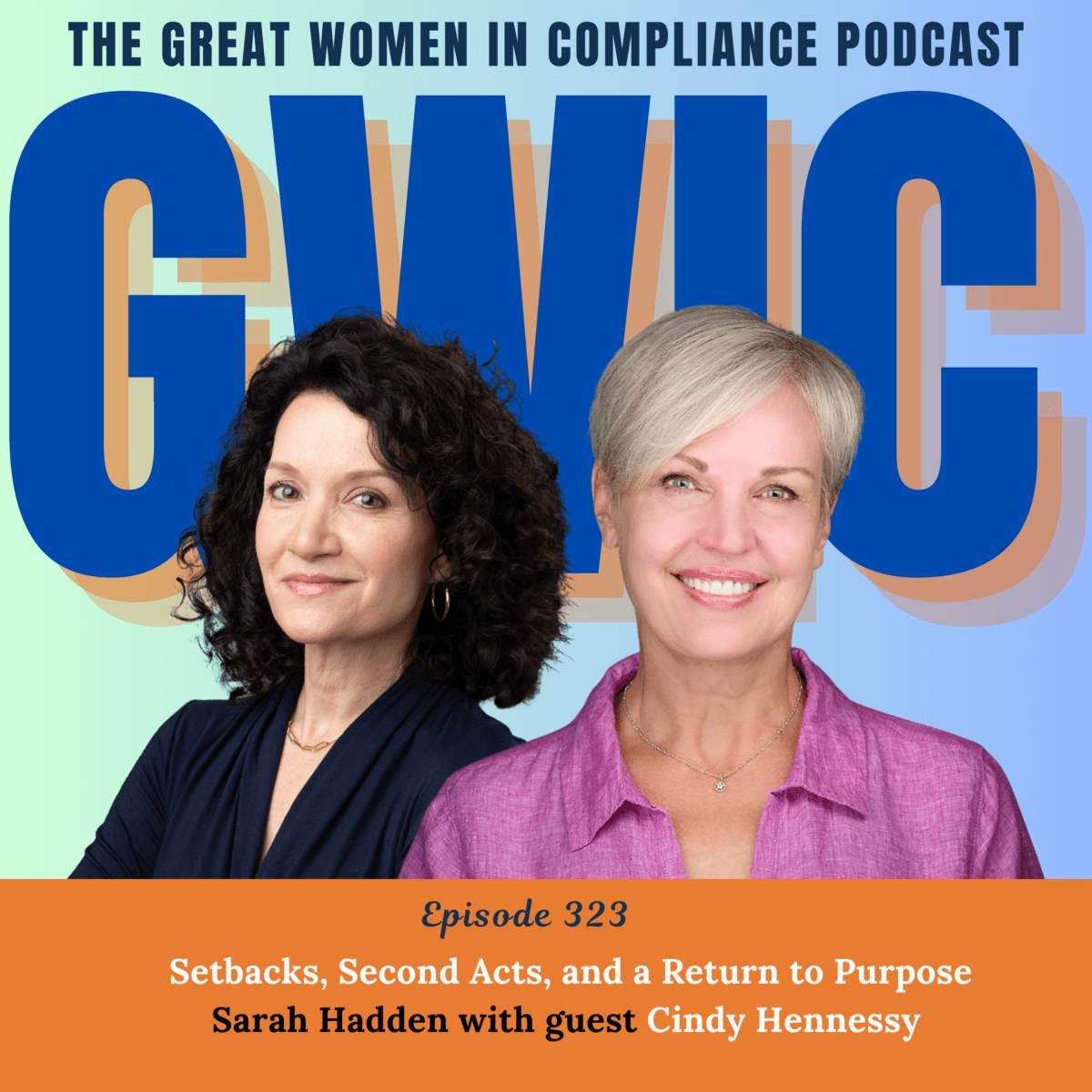
Sarah Hadden sits down with Cindy Hennessy for a candid, funny, and deeply human conversation about career loss, reinvention, and what can happen when the next chapter of your life isn’t the one you planned. Cindy talks openly about being laid off late in her career—and refusing to let her employer call it “retirement”—and the long “hallway” between that ending and the unexpected opportunity that eventually brought her full circle to mission-driven work at Make-A-Wish. Along the way, Sarah and Cindy talk about resilience, the luxury and importance of waiting for work that aligns with your values, the surprising gifts that can come from rejection, and the power of writing to help us make sense of difficult experiences. There’s also an emotional-support Pomeranian, a lifelong love affair with the Oscar Mayer Wienermobile, and a reminder that sometimes joy, hope, and a willingness to laugh at yourself are pretty good tools for navigating whatever comes next.
Takeaways:
- Losing a job can be deeply personal—especially when work has been an important part of your identity—and there’s no reason to sanitize the experience or pretend it didn’t hurt.
- Cindy describes the uncertain period after a major life disruption as “the hallway”: one door has closed, the next hasn’t opened yet, and sometimes the only way forward is simply to live through the space in between.
- A late-career transition can also create an opportunity to get much more intentional about what you want—including the freedom to say no to work that doesn’t align with your values.
- Cindy’s path back to Make-A-Wish, where she had worked 25 years earlier, wasn’t something she carefully engineered. In fact, she initially wasn’t sure she wanted the job—a good reminder to stay open to possibilities that don’t look quite right at first.
- Mission matters. After years of interesting but sometimes less personally aligned work, Cindy talks about the joy of using her experience to serve an organization whose purpose she deeply believes in.
- Writing has been one of Cindy’s lifelong tools for processing difficult experiences. She shares her experience with the 100-Day Reckoning, a structured writing practice that helped her step outside a painful situation and find greater perspective, kindness, and understanding.
- Reinvention doesn’t necessarily mean chasing another bigger title. Cindy is deliberately thinking about how to do meaningful work while also making more room for travel, friends, family, writing, Mahjong—and eventually a life that isn’t organized around a W-2.
- And finally: Never give up on the Wienermobile. Cindy certainly hasn’t.