Categories
Sunday Book Review

Sunday Book Review: March 1, 2026, The Top Books on Alamo Edition

In the Sunday Book Review, Tom Fox considers books that would interest compliance professionals, business executives, or anyone curious. It could be books about business, compliance, history, leadership, current events, or anything else that might interest Tom. In this episode, we look at 4 top books on the fall of the Alamo.

  1. A Time to Stand by Walter Lord
  2. The Gates of the Alamo by Stephen Harrigan
  3. Three Roads to the Alamo by William C. Davis
  4. Forget the Alamo by Bryan Burrough, Chris Tomlinson, and Jason Stanford
Categories
Blog

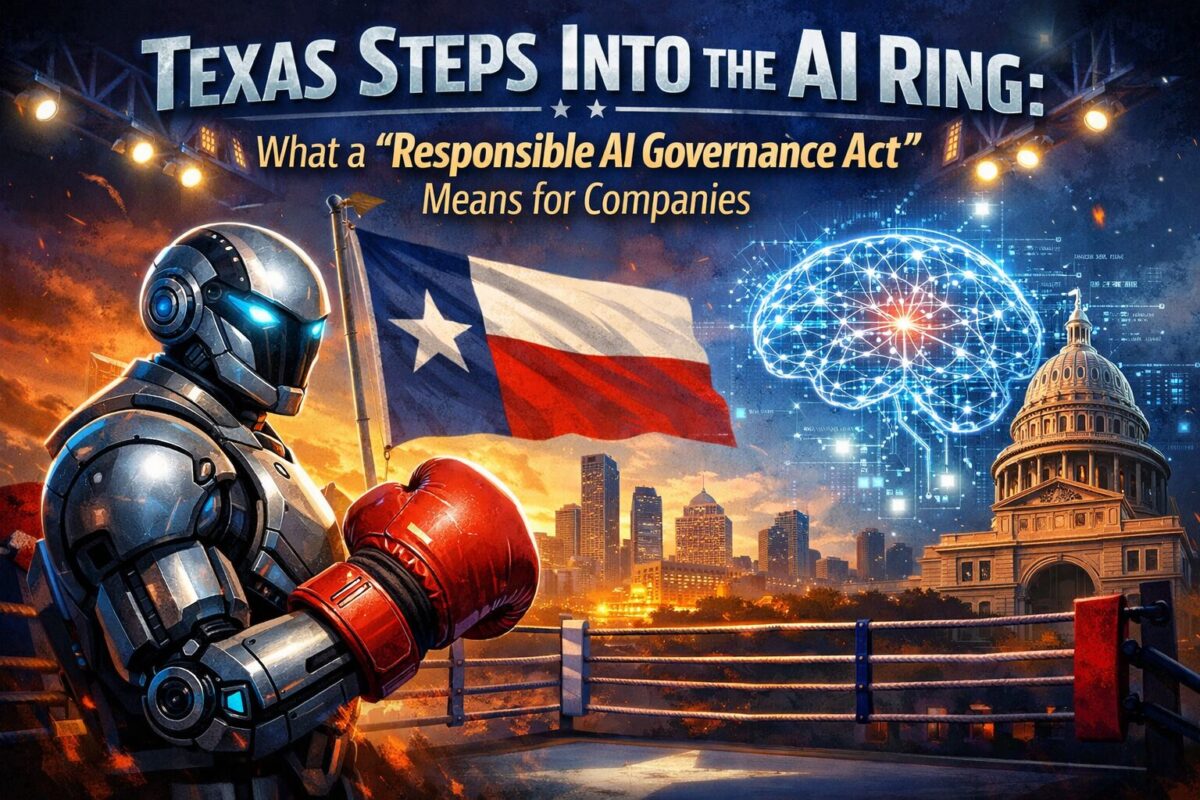
Texas Steps Into the AI Ring: What a “Responsible AI Governance Act” Means for Companies

Contrary to the standard belief and even Governor Abbott’s pronouncements, there is some regulation in the great state of Texas. With the Texas Responsible Artificial Intelligence Governance Act (TRAIGA), Texas made a clear statement: artificial intelligence is no longer just a product feature or a data science experiment. It is a regulated business risk. If your organization builds, buys, deploys, or relies on AI to make decisions about people, Texas is signaling that you should be able to explain what the system does, prove you are not using it in harmful ways, and demonstrate governance over it.

Based on your summary, the Texas Responsible Artificial Intelligence Governance Act creates a statewide framework with four big pillars: (1) prohibitions on certain harmful or discriminatory uses, (2) limits on biometric surveillance, (3) disclosure requirements in defined contexts, (4) oversight infrastructure, including a regulatory sandbox, and (5) enforcement with noted safe harbors. That is not “innovation-killing.” It is Texas doing what Texas does: setting boundaries on unacceptable conduct while leaving room for businesses to move fast within guardrails.

Today, we begin a two-part look at state regulation of AI. Today in Part 1, we consider the Texas approach. Tomorrow in Part 2, we review the federal attempt to eviscerate all state AI regulation, claiming federal preemption through the Trump Administration’s sweeping Executive Order titled “Ensuring a National Policy Framework for Artificial Intelligence.”

1. Prohibited Uses: Drawing Hard Lines Around Harm and Discrimination

The most important practical takeaway for a corporate audience is this: Texas is moving toward outcome-focused restrictions, not just paperwork. When a law prohibits “harmful or discriminatory uses,” the question becomes: harmful to whom, and in what context? For most companies, the risk zones are predictable:

  • Employment: recruiting, resume screening, interview scoring, promotion, performance evaluation, and workforce reduction.
  • Credit and financial decisions: underwriting, pricing, and fraud flags that drive adverse decisions.
  • Housing and insurance: eligibility, pricing, and claims triage.
  • Customer access: KYC onboarding, account shutdowns, and refund decisions.
  • Public-facing services: education, health-related triage, and benefits navigation.

From a compliance program perspective, this pushes you toward two controls you should already want:

• A documented AI use-case inventory, categorized by impact level.

• A discrimination and fairness control, meaning pre-deployment testing plus monitoring, and a mechanism to remediate.

If you are thinking, “We do not use AI for those decisions,” the next question is whether the vendor tool uses AI under the hood. Texas-style statutes tend to treat “deployment” broadly, and regulators are rarely impressed by “the vendor did it” as a defense.

2. Biometric Surveillance: The Texas Red Line

You mentioned restrictions on “unauthorized biometric surveillance.” In plain English, that means the law is likely concerned with face recognition, voiceprints, gait recognition, and other identifiers used to track or identify people.

Corporate implications typically fall into three areas:

  • Physical security: access control systems, visitor management, and camera analytics.
  • Retail and venues: loss prevention, “known offender” lists, and customer behavior analytics.
  • Workplace monitoring: time clocks using facial recognition and productivity monitoring that drifts into biometrics.

If you use biometric tools, your governance should address:

  • Lawful basis and authorization—consent, notice, contractual, and policy controls.
  • Purpose limitation—what it is used for and what it is not used for.
  • Retention and deletion—biometric data cannot be a forever asset.
  • Vendor constraints—no secondary use, no model training on your biometric data unless explicitly approved.

Even if Texas is not your primary market, this is the type of requirement that quickly becomes “lowest common denominator” compliance across a multi-state footprint.

3. Disclosure: The Practical “Tell the Truth” Requirement

You flagged “clear AI disclosures in some contexts.” For corporate teams, disclosure obligations usually arise when AI materially interacts with a person or influences a decision that affects them.

Think of disclosure as a three-part discipline:

  • When you disclose: at the point of interaction or decision.
  • What you disclose: that AI is used, what it is used for, and how a person can seek assistance or appeal.
  • How you disclose: clear, conspicuous, and not buried in terms and conditions.

The compliance opportunity here is that disclosure forces operational clarity. If you cannot describe the system in plain language, you almost certainly do not have adequate control over it.

4. Oversight and a Regulatory Sandbox: “Governance With a Business On-Ramp”

A state oversight body, along with a “sandbox” approach, signals that Texas wants responsible experimentation. Done right, a sandbox creates a controlled pathway to test higher-risk systems with agreed guardrails, transparency, and reporting.

For companies, the sandbox concept maps to an internal capability you should build anyway:

  • Pilot governance: criteria for what can be tested, where, with whom, and with what monitoring.
  • Kill switches: the ability to stop or roll back quickly.
  • Post-pilot review: documented lessons learned before scaling.

This is compliance that enables innovation, not blocks it.

5. Enforcement: Centralized, Cure-Oriented, and Compliance-Friendly

Enforcement authority under the Texas Responsible Artificial Intelligence Governance Act is deliberately centralized in the Texas Attorney General’s office. That decision matters. By excluding a private right of action, the statute avoids the litigation-driven compliance chaos that has plagued other regulatory regimes. Instead of trial lawyers driving outcomes, Texas has opted for a single, accountable enforcement authority with discretion, consistency, and an institutional understanding of regulatory tradeoffs.

Equally important is the statute’s 60-day cure period. This provision reflects a mature regulatory philosophy: most compliance failures in emerging technologies are not rooted in bad intent but in complexity, novelty, and rapid innovation cycles. The law gives companies the opportunity to remediate, document corrective action, and improve governance before penalties attach. That is precisely how effective compliance programs are built.

The explicit safe harbor for organizations aligned with recognized frameworks such as the NIST AI Risk Management Framework or ISO/IEC 42001 further reinforces this approach. Texas is not inventing bespoke standards in isolation. It is rewarding companies that invest in globally recognized, risk-based governance systems.

This is not a punitive regulation designed to extract fines or score political points. It is a regulatory governance intended to incentivize foresight, structure, and accountability. For compliance professionals, that is the right signal at exactly the right moment.

Join us tomorrow as we consider what the attempted federal preemption via Executive Order might mean for Texas and other states.


Categories
AI Today in 5

AI Today in 5: October 16, 2025, The Texas Gas Edition

Welcome to AI Today in 5, the newest edition to the Compliance Podcast Network. Each day, Tom Fox will bring you 5 stories about AI, so start your day, sit back, enjoy a cup of morning coffee, and listen in to the AI Today In 5, all from the Compliance Podcast Network. Each day, we consider four stories from the business world, compliance, ethics, risk management, leadership, or general interest related to AI.

Top AI stories:

  1. Silicon Valley is pouring money into AI. (Yahoo!Finance)
  2. AI credentials program for healthcare. (BusinessWire)
  3. AI chatbots are replacing Indian call centers. (Reuters)
  4. Texas energy and AI chips. (WSJ)
  5. Microsoft to process data using AI inside the UAE. (The National)

For more information on the use of AI in Compliance programs, my new book, Upping Your Game, is available. You can purchase a copy of the book on Amazon.com.

Categories
Daily Compliance News

Daily Compliance News: September 2, 2025, The Channeling Linda Ronstadt Edition

Welcome to the Daily Compliance News. Each day, Tom Fox, the Voice of Compliance, brings you compliance-related stories to start your day. Sit back, enjoy a cup of morning coffee, and listen in to the Daily Compliance News. All, from the Compliance Podcast Network. Each day, we consider four stories from the business world, compliance, ethics, risk management, leadership, or general interest that are relevant to the compliance professional.

Top stories include:

  • War Hero and corrupt Congressman dies. (NYT)
  • The world will need oil and the FCPA for a long, long time. (NYT)
  • The great state of Texas is MAHA. (FT)
  • Texas says Chinese can’t own land in Texas. (BBC)

Linda Ronstadt Long, Long Time on YouTube

Categories
Daily Compliance News

Daily Compliance News: August 6, 2024 – The Texans Don’t Want Corruption Edition

Welcome to the Daily Compliance News. Each day, Tom Fox, the Voice of Compliance, brings you compliance-related stories to start your day. Sit back, enjoy a cup of morning coffee and listen to the Daily Compliance News. All from the Compliance Podcast Network.

Each day, we consider four stories from the business world: compliance, ethics, risk management, leadership, or general interest for the compliance professional.

In today’s edition of Daily Compliance News:

  • Texans don’t want corruption in government.  (YahooNews)
  • Law firms should let associates unplug (good luck with that). (Reuters)
  • Banned AI chips coming into the US. (NYT)
  • Who makes the corporate rules? (FT)

For more information on the Ethico ROI Calculator and a free White Paper on the ROI of Compliance, click here.

Categories
Daily Compliance News

Daily Compliance News: July 26, 2024 – The Whistleblower Compensated Edition

Welcome to the Daily Compliance News. Each day, Tom Fox, the Voice of Compliance, brings you compliance-related stories to start your day. Sit back, enjoy a cup of morning coffee and listen to the Daily Compliance News. All from the Compliance Podcast Network.

Each day, we consider four stories from the business world: compliance, ethics, risk management, leadership, or general interest for the compliance professional.

In today’s edition of Daily Compliance News:

  • Maersk pays $700K for wrongfully terminating a whistleblower. (WSJ)
  • The end of the Texas miracle. (FT)
  • Does Chipotle cheat customers? Not on purpose.  (NYT)
  • Crash victims’ families to oppose new Boeing DPA. (Reuters)

For more information on the Ethico ROI Calculator and a free White Paper on the ROI of Compliance, click here.

Categories
The Hill Country Podcast

The Big Empty On 5 Economic Issues Facing Texas Today: Part 5-Housing

This is a special podcast series on current economic and cultural issues faced by the state of Texas, its governments, and its citizens. We will explore these issues with author Loren Steffy through the prism of his book The Big EmptyThe Big Empty, set in 1999, is a tale about the sense of place and tells the story of a fictional company AzTech which builds a semiconductor plant in the dying west Texas city of Conquistador. The attempt is beset by the clash of cultures in bringing Silicon Valley tech entrepreneurs to rural Texas. The book also raises multiple economic issues facing Texas as we move toward the mid-21st century. Over this 5-part podcast series, we will consider the following issues facing Texas today: water, power, land investment, housing, and the clash of cultures.

In Episode 5, we look at the issue of housing in Texas. In the book, the newcomers build a gated community with a huge fountain at the entrance. There is a private golf course attached to the gated community. What happens to small towns when a large manufacturing plant moves in? What happens to the property values? Where can local teachers, firefighters, and police live? What happens when incoming plant workers have to live in other towns? What is affordable housing? What is achievable housing? Do you want long or even short-term rentals to propagate in your small town? These and other affordable living issues are front in center in Texas today.

Purchase The Big Empty

Categories
The Hill Country Podcast

The Big Empty On 5 Economic Issues Facing Texas Today: Part 3-Land and Development

This is a special podcast series on current economic and culture issues faced by the state of Texas, its governments and its citizens. We will explore these issues with author Loren Steffy, through the prism of his book The Big EmptyThe Big Empty set in 1999, is a tale about the sense of place and tells the story of a fictional company AzTech which builds a semi-conductor plant in the dying west Texas city of Conquistador. The attempt is beset by the clash of culture in bringing Silicon Valley tech entrepreneurs to rural Texas. The book also raises multiple economic issues facing Texas as we move towards the mid 21st century. Over this 5-part podcast series we will consider the following issues facing Texas today; including water, power, land investment, housing and the clash of cultures.

In Episode 3, we consider land and development. How was the town of Conquistador able to get AzTech to build a semi-conductor plant in their hometown. What are the laws in Texas which allow communities to cut taxes for new development and how are those laws employed? How do Chapter 313 incentives work? Who makes up the school district tax revenue shortfall? What is the resort effective and how does that impact local property values? How will Texas compete with other states for development going forward. For Texas to continue to grow it will have to entice companies to Texas but will it continue to do so based upon the pocketbooks of its citizens?

Purchase The Big Empty

Categories
The Hill Country Podcast

The Big Empty On 5 Economic Issues Facing Texas Today: Part 1-Water

This begins a special podcast series on current economic and culture issues faced by the state of Texas, its governments and its citizens. We will explore these issues with author Loren Steffy, through the prism of his book The Big EmptyThe Big Empty set in 1999, is a tale about the sense of place and tells the story of a fictional company AzTech which builds a semi-conductor plant in the dying west Texas city of Conquistador. The attempt is beset by the clash of culture in bringing Silicon Valley tech entrepreneurs to rural Texas. The book also raises multiple economic issues facing Texas as we move towards the mid 21st century. Over this 5-part podcast series we will consider the following issues facing Texas today; including water, power, land investment, housing and the clash of cultures.

In Episode 1 we consider water and water resource in a time of water scarcity. In the book, the newcomers build out a lake which sits in the front of their gated community and is used to water their private golf course. We explore questions of where water is found and how is it delivered, transmission to move to water where you need it and what happens if you have too much water. We consider the clash of culture in using water to create a water feature for a gated community that is either seen as a positive by its residents or a waste of water in the time of draught by the locals. Water as a sustainable commodity is a question facing Texas today and for the future.

Purchase The Big Empty.

Categories
Hill Country Authors

Robert Locander and Richard Shaw on the Real World of Texas Politics

Welcome to the award-winning The Hill Country Authors Podcast. In this podcast, Hill Country resident Tom Fox visits with authors who live in and write up the Texas Hill Country.  In this episode, I visit with Bob Locander and Richard Shaw, who together with Kevin Bailey are the authors of the Real World of Texas Politics. Richard is a former union official, and Bob taught Texas politics at the University level. They have put together a great one-volume resource on what moves Texas politics, which of course is money. They write from their own experiences and advise on how the people of the state of Texas can get their democracy back.

Resources

Real World of Texas Politics on Stoney Creek Publishing