We continue exploring how a corporate compliance function can use middle managers to make compliance more effective. This is perhaps the most dynamic era for business, with sweeping reengineering, digitization, and agile initiatives that have dramatically transformed the job of managers. Change has come in three dimensions: power, skills, and structure. Managers now have to think about making their teams successful rather than being served by them, coaching performance, not overseeing tasks, and leading in rapidly changing, more fluid environments.
No role has shifted more than that of the middle manager, who has undergone significant transformations. Today’s managers are no longer task overseers; they are increasingly expected to serve as vital conduits for compliance, embodying and advocating ethical standards across organizational layers. A recent article from Harvard Business Review, “Managers Can’t Do It All” by Diane Gherson and Lynda Gratton, lays bare the mounting pressures managers face and underscores a compelling necessity: reinventing the middle manager role to navigate contemporary workplace demands effectively.
These shifts have piled more responsibilities onto middle managers, requiring them to demonstrate new capabilities. The authors found that research shows that most middle managers struggle to keep up. More importantly, they posit a crisis is looming, if not already here, for middle managers. Some organizations, however, are heading it off by reimagining the role of middle managers. This article looks at three factors that have helped middle managers develop new skills, rewire systems and processes to support their work better, and even radically redefine the role.
Despite these pressures, the role of middle managers as compliance champions has become even more critical. Compliance officers rely on middle management to uphold standards and monitor and report potential risks. Ensuring these managers understand and embrace their evolving responsibilities is no longer optional; compliance is imperative.
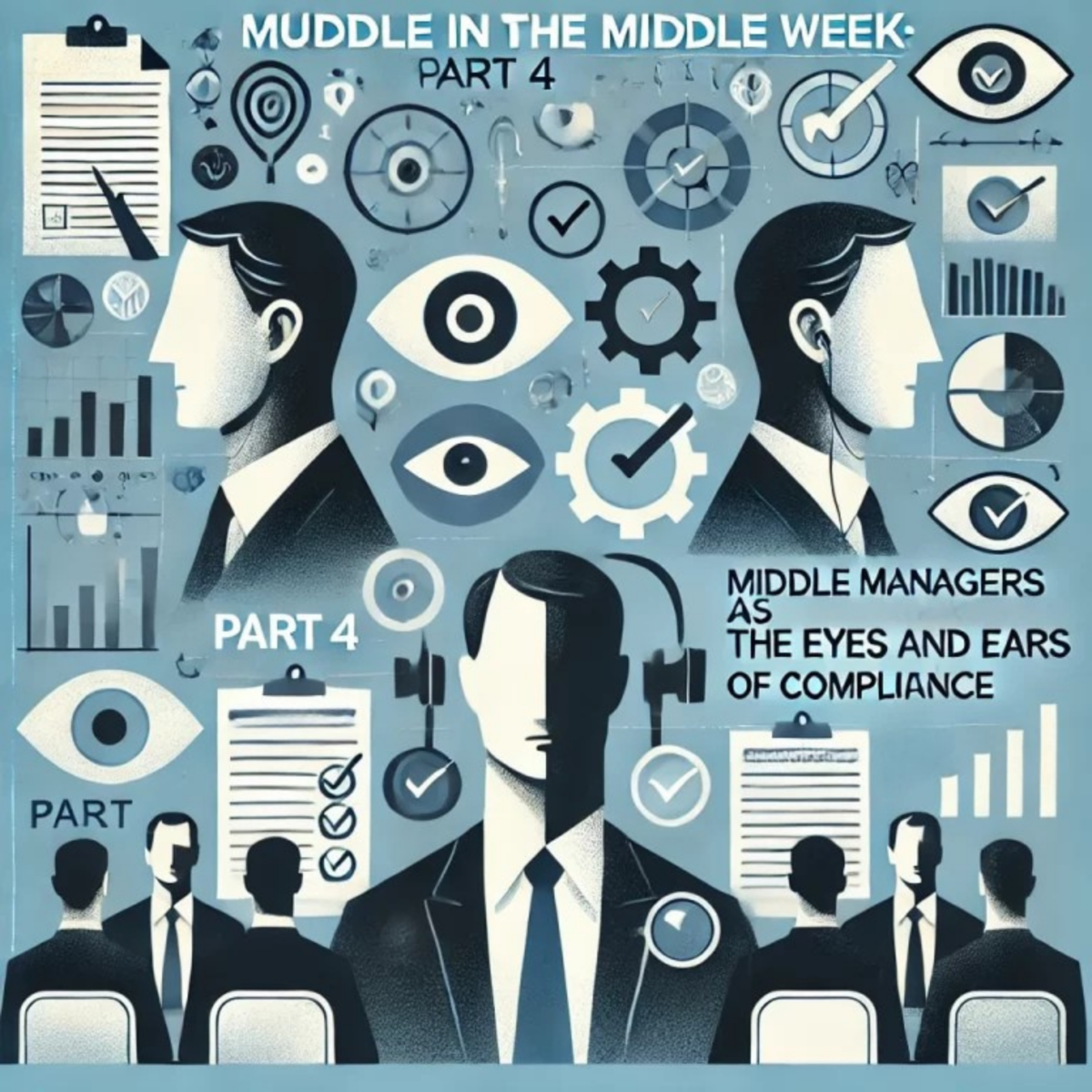
Compliance professionals are uniquely positioned to leverage these insights. Middle managers, after all, play a crucial role in compliance frameworks, acting as frontline observers who detect and escalate potential ethical and compliance risks. Compliance teams must evolve their training methods and operational expectations to equip these pivotal figures better. In part 4, we explain how middle managers can work to be the eyes and ears of compliance.
Training Middle Managers to be the Eyes and Ears of Compliance
Drawing from these organizational examples, compliance leaders can consider several key lessons to empower middle managers effectively:
- Shift Mindsets from Oversight to Coaching
- The authors pointed to Standard Chartered’s initiative in developing its middle managers as “people leaders,” which underscores a vital transition: moving from traditional supervisory roles to ones of active coaching. Compliance professionals should train middle managers to adopt a coaching mindset that focuses less on direct oversight and more on empowering and guiding their teams through supportive, ongoing feedback.
When middle managers learn to coach, they naturally cultivate environments where openness and transparency thrive. Employees feel comfortable bringing compliance concerns forward and secure in knowing their managers will support rather than penalize them for raising issues.
- Invest in Managerial Accreditation and Continuous Development
- Next, the author looks at IBM’s strategic approach, which highlights the impact of investing in robust accreditation and continuous learning programs for managers. Compliance officers can replicate this model by creating certifications or licenses tied to compliance competencies. Courses in ethical decision-making, risk identification, and fostering psychological safety can empower middle managers to address compliance concerns before they escalate proactively.
A dedicated compliance accreditation signals clearly that your organization prioritizes compliance skills as essential managerial capabilities, helping ensure managers remain attuned to the shifting compliance landscape.
- Utilize Digital Tools to Streamline Compliance Activities
- The authors noted that IBM’s use of artificial intelligence to remove administrative burdens from managers serves as a powerful example of compliance functions. By automating routine compliance tasks, such as approvals or routine monitoring, compliance professionals can free managers to focus on more significant compliance issues, including fostering a culture of integrity.
Equipping managers with digital tools for real-time guidance, instant risk assessments, and compliance insights allows them to swiftly spot compliance risks and report potential red flags without getting bogged down in administrative details.
- Clarify Roles by Splitting Responsibilities
- The authors found that Telstra’s innovative management structure, clearly dividing “leaders of people” from “leaders of work,” is instructive for compliance. Clearly delineating roles within compliance can relieve managerial overload and sharpen compliance effectiveness. As “leaders of people,” middle managers can concentrate on building ethical cultures, supporting compliance education, and nurturing open communication about ethical concerns.
In contrast, “leaders of work” roles can ensure compliance measures are embedded directly into day-to-day operations and workflows. Clear role definitions help middle managers understand how they contribute to the compliance mission, enhancing accountability and effectiveness.
- Foster Community and Peer-to-Peer Learning Among Managers
- One particularly valuable strategy highlighted by Standard Chartered involves creating robust managerial communities. Compliance professionals should replicate this practice by establishing regular forums where managers can share compliance experiences, insights, and best practices. Peer-to-peer discussions can significantly enhance managers’ awareness and responsiveness to compliance issues.
Community-focused approaches to addressing common challenges, such as diversity initiatives or ethical dilemmas, help embed compliance deeply into the organizational culture. Compliance becomes a shared responsibility rather than merely an isolated regulatory function.
Strengthening Compliance through Empowered Middle Management
Once perceived merely as conduits for executive directives, middle managers must now become active facilitators of compliance culture. Compliance professionals face the critical task of equipping these managers to navigate their evolving roles adeptly. The authors’ article provides powerful insights and practical models to guide this transformation.
Organizations that invest wisely in their middle managers, explicitly developing them as proactive compliance champions, will discover they possess invaluable partners positioned perfectly to detect and address compliance risks early. In our digitized, agile, and remote workplace, it’s not enough for compliance professionals alone to manage compliance risks; effective management relies on empowering managers to recognize, respond to, and ultimately embody a culture of compliance.
As the authors suggest, transformative managerial roles are not merely advantageous but essential for thriving in today’s new world of work. Compliance professionals who internalize these lessons and train middle managers to become proactive stewards of compliance will enhance organizational integrity, reduce risks, and strengthen their company’s ethical foundation.
I hope you join me tomorrow when I consider empowering middle managers to drive compliance transformation.
For more on this topic, check out The Compliance Handbook, a Guide to Operationalizing Your Compliance Program, 6th edition, which LexisNexis recently released. It is available here.



 For more on this topic, check out The Compliance Handbook, a Guide to Operationalizing Your Compliance Program, 6th edition, which LexisNexis recently released. It is available here.