In the world of corporate compliance, the most challenging issues are often not the ones found in policies and procedures but the ones that hit close to home. When an investigation, a potential violation, or a risk becomes personal, even the most seasoned compliance professionals can struggle to maintain objectivity, leadership, and ethical clarity.
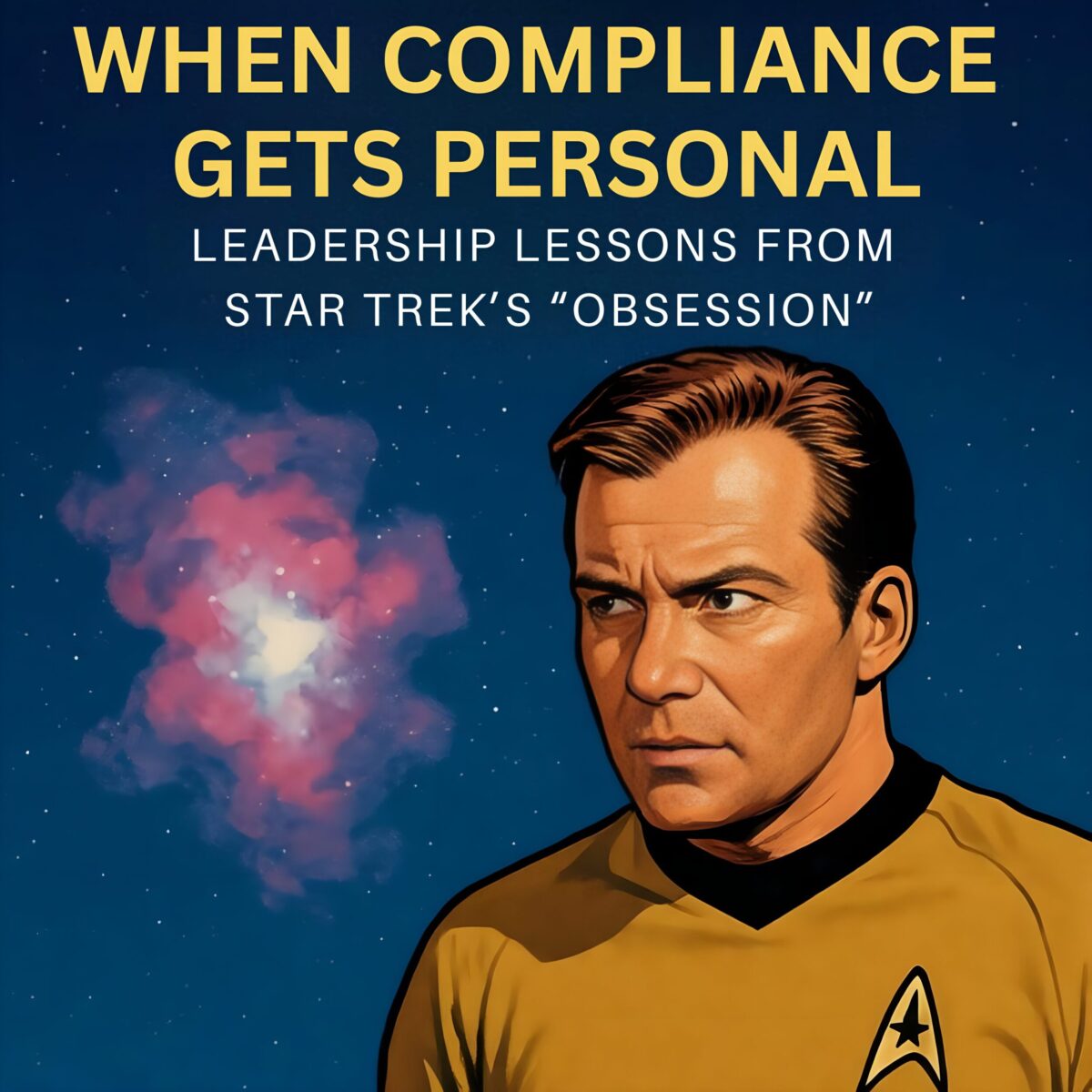
No episode of Star Trek: The Original Series captures this dilemma more powerfully than “Obsession.” Captain Kirk finds himself battling a deadly cloud-like creature that once decimated his former crew. His pursuit becomes a personal vendetta, blurring the lines between duty and obsession. For compliance professionals, “Obsession” offers a vivid cautionary tale about the dangers and the growth opportunities when leadership gets personal.
Here are five key leadership lessons for compliance professionals, each illustrated by a scene from this classic episode.
Lesson 1: The Danger of Letting Past Failures Drive Present Decisions
Illustrated By: Early in “Obsession,” Captain Kirk becomes fixated on the mysterious cloud-creature, which he encountered as a young officer. He blames himself for not destroying it years ago, feeling responsible for the deaths of his former crewmates. This guilt clouds his judgment and causes him to pursue the creature at the expense of his current mission and crew.
Compliance Lesson: It is natural for past failures or unresolved issues to haunt compliance professionals, whether it is a missed red flag, a mishandled investigation, or a colleague’s misconduct that slipped through the cracks. However, leadership means acknowledging these feelings without letting them dictate current actions. Fixating on the past can compromise your objectivity, impair decision-making, and erode team trust.
Create a structured debrief process after investigations and audits, encouraging candid discussions of lessons learned—but draw a clear line between healthy reflection and self-blame. If you notice yourself or a colleague ruminating on a past failure, seek outside perspective from a mentor or coach.
Lesson 2: Beware of Conflicts Between Personal Motivations and Organizational Mission
Illustrated By: The pursuit of the creature leads him to override the advice of Spock and McCoy, risking a critical rendezvous with the USS Yorktown, which is carrying vital medical supplies. His vendetta threatens to derail the Enterprise’s primary mission and put others at risk.
Compliance Lesson: Personal motivations, even those rooted in a sense of justice or accountability, can create conflicts with the organization’s broader mission. For compliance leaders, it’s essential to recognize when personal feelings, loyalties, or ambitions are at odds with what’s best for the company, stakeholders, or compliance program as a whole.
Regularly revisit your program’s core mission and values. Before making significant decisions, pause to ask: “Am I doing this for the right reasons? Is this truly about compliance and ethics, or is my agenda creeping in?” Encourage a culture of peer challenge, where team members can safely question each other’s motivations in high-stakes situations.
Lesson 3: Listen to Your Team—Even When You Disagree
Illustrated By: Throughout the episode, Spock, McCoy, and other crew members challenge Kirk’s judgment, pointing out the risks of his obsession. Kirk initially rebuffs their advice, convinced that only he understands the threat. It is only when he finally listens to his officers that he can devise an effective plan to confront the creature.
Compliance Lesson: Leadership in compliance is not about always being right; rather, it is about fostering a culture where diverse perspectives are welcomed, especially when an issue becomes personal. Leaders must actively seek and value dissenting opinions and be open to changing course based on credible advice, even if it stings.
During high-stress or personal cases, explicitly ask your team for feedback and alternative viewpoints. Consider creating “devil’s advocate” roles in investigations and setting ground rules that ensure even junior team members can raise concerns without fear of reprisal.
Lesson 4: Maintain Professional Distance—Don’t Let Emotions Overwhelm Ethics
Illustrated By: Kirk’s obsession nearly leads him to take unnecessary risks, endangering himself and his crew. His emotional investment clouds his judgment, and he pushes past reasonable boundaries in pursuit of what he believes is justice. Only when he regains his professional composure does he successfully lead his crew to resolve the crisis.
Compliance Lesson: When issues become personal, whether due to relationships, past failures, or high stakes, it is easy for emotions to override ethics and professionalism. Compliance leaders must learn to recognize when they are too close to a situation and take deliberate steps to regain perspective.
Build time for reflection into your workflow, especially during emotionally charged investigations. When possible, delegate or recuse yourself from cases where you cannot maintain impartiality. Seek support from trusted colleagues or external advisors to help you keep perspective and objectivity.
Lesson 5: The Power of Accountability—Owning Up to Mistakes and Moving Forward
Illustrated By: At the episode’s conclusion, Kirk reflects on his actions with McCoy, admitting that his personal feelings clouded his judgment and nearly led to disaster. He doesn’t make excuses but owns up to his mistakes and takes the lessons to heart, recommitting himself to his duty as captain.
Compliance Lesson: True leadership is not about perfection, but about accountability. When personal issues intrude and mistakes are made, the best compliance leaders acknowledge their errors, communicate them transparently, and model a commitment to continuous improvement. This builds credibility, trust, and resilience within the team and across the organization.
Foster a culture of accountability at all levels. After challenging cases, hold post-mortems to identify both successes and failures, and publicly recognize leaders and team members who model accountability. Use mistakes as learning opportunities, not sources of shame.
Final ComplianceLog Reflections
“Obsession” stands as a reminder that even the best leaders are vulnerable when the stakes become personal. But it also shows the power of self-awareness, teamwork, and accountability to bring us back to our best selves. For compliance professionals, the message is clear: We must learn to recognize when our history, emotions, or motivations are shaping our decisions; then pause, reflect, and act by our values and mission.
By encouraging diverse viewpoints, maintaining professional boundaries, and owning our mistakes, we can transform moments of personal challenge into opportunities for growth and organizational strength. That is the essence of ethical leadership in compliance.
So, as you navigate your next difficult investigation or compliance challenge, especially the one that hits close to home, remember Kirk’s journey. Do not shy away from what is personal. Embrace it, learn from it, and lead with courage, humility, and integrity.
Resources:
Excruciatingly Detailed Plot Summary by Eric W. Weisstein
MissionLogPodcast.com
Memory Alpha