Welcome to Season 2 of Classroom Insiders, a podcast with Professor Karen Woody and her Insider Trading Seminar students from Washington and Lee University. They explore the arc and evolution of insider trading over the last century. Each episode will feature a discussion between Karen Woody and students about insider trading and regulation. Find out what the future lawyers of the university think about past and current legislation and learn more about this fascinating area of law.
In this episode of Classroom Insider Season 2, Professor Woody is joined by students Iyla and Mia to delve into the intricacies of insider trading law through the lens of the Panuwat case. The conversation focuses on Panuwat, a former executive at Medivation who utilized non-public information about Medivation’s acquisition by Pfizer to trade in Insight’s stocks, resulting in significant profits. This case is pivotal as it marks a notable expansion of insider trading law under the SEC’s ‘shadow trading’ concept, where the misappropriation theory and the collateral market connection were brought to a new light. The discussion covers the challenges and implications of this expansion, comparing it to previous cases like SEC v. Obis and highlighting the evolving nature of insider trading regulations through litigation rather than legislation. They also touch upon the potential future impacts of the ruling on corporate compliance and insider trading laws, making this episode essential listening for anyone in the compliance field.
Key highlights:
Panuwat Case Details and SEC Allegations
SEC’s Redefinition of Materiality
Historical Context: SEC v. OBIS
Debating the Fairness of the Panuwat Case
Potential Implications and Future of Insider Trading Law
Welcome to the Daily Compliance News. Each day, Tom Fox, the Voice of Compliance, brings you compliance-related stories to start your day. Sit back, enjoy a cup of morning coffee, and listen in to the Daily Compliance News—all from the Compliance Podcast Network. Each day, we consider four stories from the business world: compliance, ethics, risk management, leadership, or general interest for the compliance professional.
DRC accuses Apple Sub of using conflict minerals. (BBC)
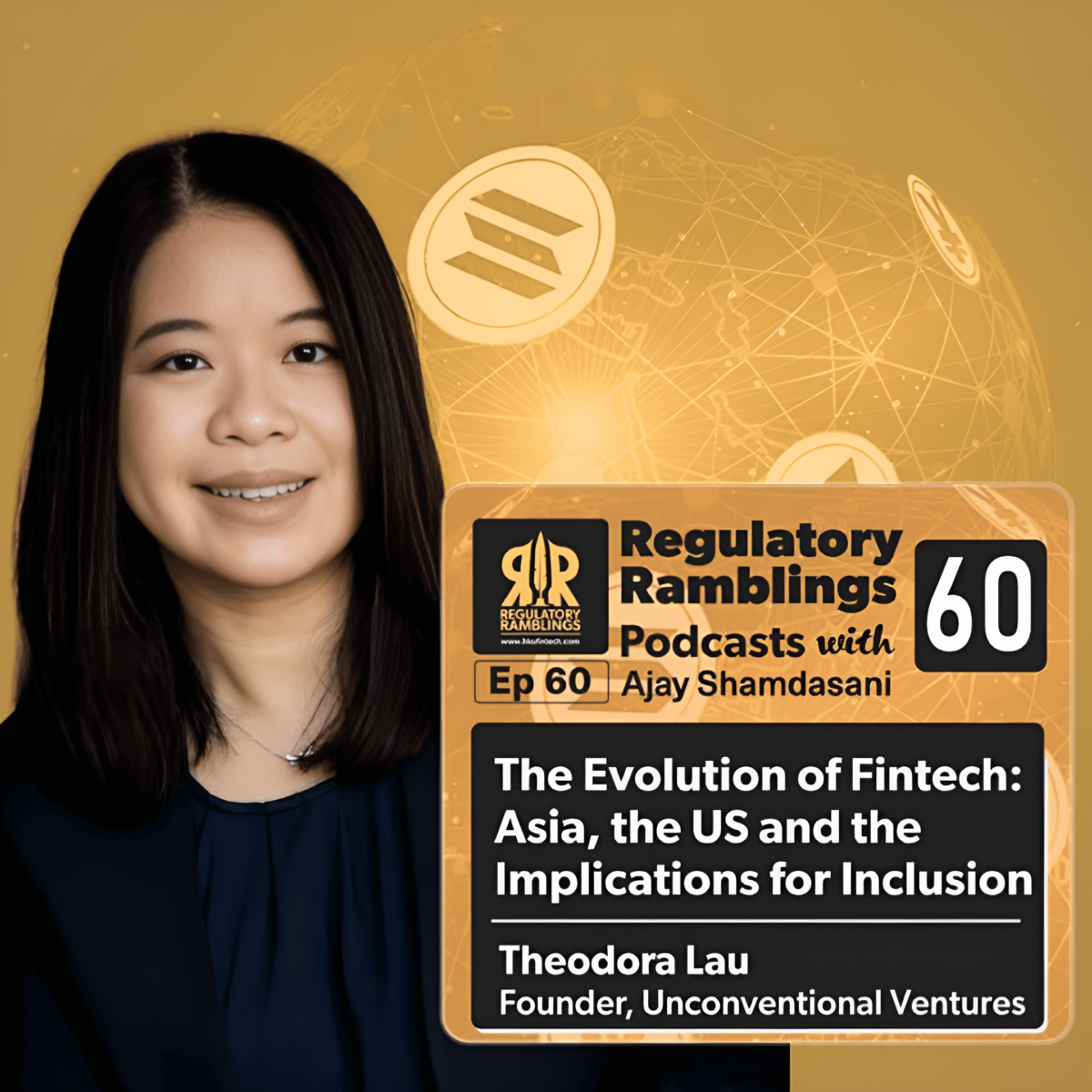
Based in the US, Theodora Lau, or Theo, as she’s known, is Hong Kong-born and bred and the founder of Unconventional Ventures. Her firm’s mission is to develop and grow an ecosystem of financial institutions, corporations, startups, entrepreneurs, venture capitalists, and accelerators to improve banking and meet the often-unmet needs of consumers, including older adults and women. Theo’s mission is to connect founders with funders, specifically underrepresented entrepreneurs.
She regularly mentors and advises startups in financial services and healthcare/caregiving as part of her work. She is also an advisor to B21 Ventures, which focuses on entrepreneurs disrupting finance and health through artificial intelligence.
Theo has been referred to by the American Banker as one of the “Most Influential Women in FinTech” and is one of few global experts providing authoritative insights on both the US vis a vis Asia.
Besides being a best-selling author, Theo is an accomplished technologist and is much sought after for her unique insights on the success of super apps in Asia, the evolution of AI, and the disparity in digital adoption between regions. She is also a public speaker, writer, and advisor who seeks to spark innovation in the public and private sectors to benefit forgotten demographics and create a more inclusive society.
Theo regularly discusses AI, gender equity, FinTech, inclusion, and longevity. She is a guest contributor for various top industry events, publications, and podcasts, including Fintech Futures, the American Banker, BBC, the Journal of Digital Banking, Harvard Business Review, Nikkei Asia, MIT Tech Review, Money20/20, Finovate, RISE, FinTech Week Hong Kong, Breaking Banks, Irish Tech News, and the Forbes Technology Council.
She is the co-author of “Beyond Good: How Technology is Leading a Purpose-Driven Business Revolution” and co-author of “The Metaverse Economy” (both books are now available in paperback editions). Theo is also the host of One Vision, a podcast on innovation and fintech, and runs a weekly LinkedIn newsletter called FinTech Prose on emerging technologies (such as voice-activated/enabled software and AI), inclusion, longevity, fintech, innovation, and using technology for good. Her monthly column on Fintech Futures explores the intersection of FinTech and humanity.
She holds a Bachelor of Science degree in chemical engineering from Rensselaer Polytechnic Institute (RPI) in New York and a Master of Science in project management from George Washington University in Washington, DC.
In this episode of Regulatory Ramblings, Theo provides listeners with an in-depth look at the evolving fintech landscape and its regulatory challenges. A common thread in her discussion with our host, Ajay Shamdasani, is the seeming chasm in digital adoption between Asia and the US.
Theo talks about growing up in Hong Kong, eventually heading to the States for education, and her impressions two-plus decades later as having been fortunate enough to have a catbird seat at the beginning of the modern age of digital finance.
Having seen FinTech evolve throughout her career, she also recounts the field’s greatest successes in terms of benefits to the financial system and society overall. Theo comments on why the US is so far behind places like Japan and China in terms of digital payment options, noting that in China, the development of the ecosystem is primarily driven by large, big tech juggernauts like WeChat and Tencent. Similarly, in Japan, which she emphasizes has been “pretty cash heavy until recent times,” the nation’s conglomerates are pushing the move towards digital payments. She stresses, however, that while Asia has a rich FinTech ecosystem, it is at different levels of development because the region is not a monolith.
Theo also shares her thoughts on how long it will be before the US fully embraces digital banking, as many Americans still seem content to write cheques.
It is in sharp contrast to Hong Kong, where the South China Morning Post reported in mid-December 2024 that, based on figures from the Hong Kong Association of Banks, the use of cheques in the Special Administrative Region has fallen and is expected to continue to decline at an annual rate of between 10-20%. The number of cheque payments in the city dropped by 27% to 4.33 million this November, compared with 5.9 million in November 2021, while the value fell by 22% to HK$468.54 billion per month over the same period.
Other markets, such as the UK, Australia, and Singapore, are also trying to reduce the use of cheques.
Yet, as Theo remarks, the number of regulators in the US might at least partly explain its sluggishness in rolling out more digital payment options.
Reflecting on the post-Covid world, she points out that worldwide, financial regulators and central banks have been proactive, despite geopolitical issues, to create linkages for seamless cross-border transactions and transfers—as seen by Project Nexus, the Bank of International Settlements Innovation Hub, and the Monetary Authority of Singapore building towards a unified system for fast payments across Southeast Asia, with a planned extension into South Asia.
What used to be siloed and driven by private organizations has led regulators to see the value of interconnectivity now.
The challenge is how FinTech can benefit financial inclusion. There is a widespread perception that tech creators sometimes promise more than they can deliver, especially in terms of bettering the lives of the poor, elderly, illiterate, uneducated, or uninformed.
The problem is not confined to developing nations: 4.2% of US households, or 5.6 million households, are classified as unbanked, with a further 14.2%, or 19 million households, deemed underbanked. The question is, therefore, one of fairer access to the financial apparatus.
The discussion concludes with Theo stating that it is not technology that poses the most significant challenge. Instead, she says, it is the adoption of tech by local regulators or enterprises and the regulations that enable them. She also remarks on generative AI and machine learning in financial services and whether they can facilitate digital inclusion in the Asia-Pacific and the West while acknowledging the related liability issues and that regulators are perhaps not as tech-savvy as they need to be.
Looking ahead, Theo notes that a key challenge is that many startups and tech firms generally focus their marketing and sales on younger users—despite more wealth held by older people—because of a perception of a lack of digital competency amongst the latter by entrepreneurs.
She says another roadblock to tech adoption is by financial institutions themselves, as many banks and MNC CEOs are more focused on the bottom line and fear that large, transformational projects will cost millions and hurt their remuneration.
Regulatory Ramblings podcasts is brought to you by The University of Hong Kong – Reg/Tech Lab, HKU-SCF Fintech Academy, Asia Global Institute, and HKU-edX Professional Certificate in Fintech, with support from the HKU Faculty of Law.
For over 50 years, the Kerrville Folk Festival has been a haven for folk music lovers, singer-songwriters, and storytellers from around the globe. Set against the serene Quiet Valley Ranch backdrop, this festival is more than just a music event—it’s a community, a family, and a celebration of artistic expression and camaraderie.
In this episode, Tom welcomes Deb Rouse, Executive Director of the Kerrville Folk Festival, to discuss the festival’s recent events and exciting plans for 2025. Deb reflects on the successful ‘Welcome Home Fest’ in October, shares details on the ongoing ‘blind presale’ for 2025 tickets, and introduces a new payment plan option for attendees. Highlighting the 50th anniversary of the New Folk Singer-Songwriter Competition, Deb explains the rigorous two-round screening process that narrows over 1,341 entries to 24 finalists and offers valuable advice for aspiring songwriters looking to compete. The episode closes with Deb discussing her role as Executive Director, the challenges faced, and the importance of evolving the festival to stay relevant for future generations.
Key highlights:
Recap of 2024 and Plans for 2025
Ticket Sales and Payment Plans
New Folk Singer-Songwriter Competition-Application Process and Screening
Welcome to The Magnificent 7 Rides Again, a captivating podcast series that delves into the vibrant world of seven talented female artists painting amidst the breathtaking landscapes, wildlife, and vistas of the Texas Hill Country. Join us as we explore their creative journeys, uncover the inspirations behind their work, and celebrate their unique perspectives on art and life. In season 2, we visit with the artists after their 2024 exhibit, The Magnificent Seven Rides Again, at the Kerrville Art and Culture Center. In this episode, host Tom Fox welcomes back Nancy Huffman.
Nancy discusses her reflections on the recently concluded art show and her upcoming plans for the new year. Nancy shares her experience of the event’s energetic opening and the community’s engagement with her whimsical, colorful artworks, especially their appeal to children. She also discusses her artistic process, how changing seasons inspire her work, and her approach to new subject matter and media. Looking ahead, Nancy reveals her plans for rescheduling art shows disrupted by family issues, including exhibits at Pint and Plow and Grape Juice. She also discusses the return of the Hunt show and previews her thoughts on future projects, including the 2025 Magnificent Seven exhibition.
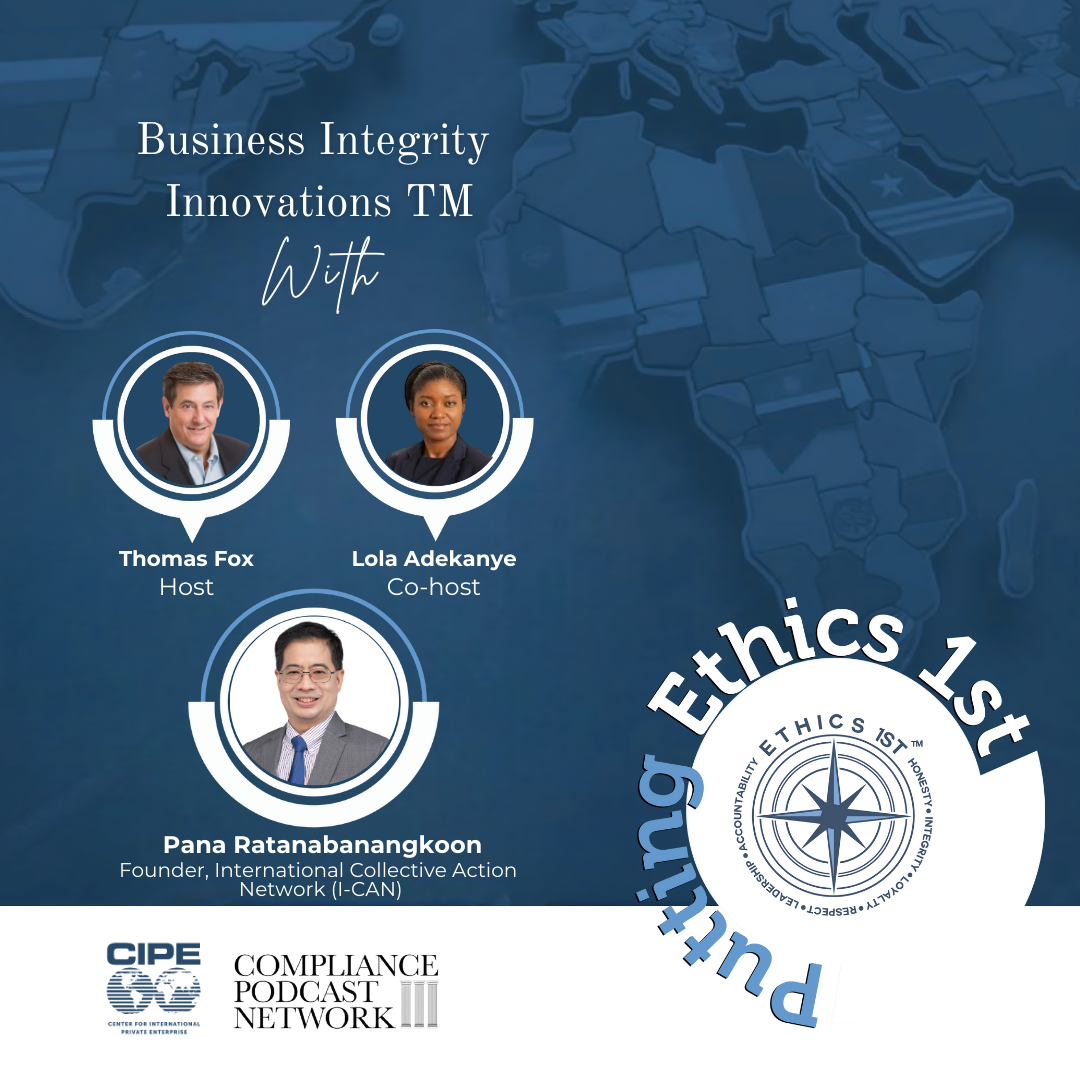
Business Integrity Innovations is brought to you by the Center for International Private Enterprise (CIPE) and the Compliance Podcast Network (CPN). This podcast is inspired by Ethics 1st, a multi-stakeholder initiative led by CIPE that creates pathways for accountable and sustainable investment in Africa. Companies can use Ethics 1st to standardize their business practices, develop sound corporate governance systems, and demonstrate their commitment to compliance and business ethics.
In this episode, Tom and Lola are joined by Pana Ratanabanangkoon, who has over 30 years of experience in the energy industry and is a key figure in the anti-corruption movement. Pana shares his journey from working with Shell in various countries to leading the Thai Collective Action Against Corruption (Thai CAC). He details the evolution of Thai CAC, highlighting its significant growth and innovative strategies in collective action, certification processes, and compliance. Pana also discusses establishing the International Collective Action Network (ICANN) to support similar initiatives globally. The conversation delves into the challenges and motivations driving anti-corruption efforts in the private sector and explores future trends, including the potential role of AI in enhancing compliance programs.
Welcome to Reel Creators of the Texas Hill Country, where we dive deep into the heart of filmmaking in one of America’s most unique and captivating landscapes. From rolling hills and rustic towns to thriving cities and hidden gems, the Texas Hill Country offers endless inspiration for filmmakers, and we’re here to uncover every aspect. In this podcast, we’ll meet the passionate directors, cinematographers, screenwriters, and crews who bring their creative visions to life in this storied region. Join us as we explore the challenges, rewards, and unique stories that make filmmaking here an art. Whether you’re a seasoned pro or simply curious about the world behind the camera, Reel Creators of the Texas Hill Country promises to be your all-access pass to the vibrant filmmaking community of the Hill Country and beyond.
In this Season One, we will feature the production of the film Sherlock Holmes: Mare of the Night, a TriGoodwyn production headed by filmmaker CJ Goodwyn. We will visit with CJ Goodwyn, members of his crew, the cast, and the production team. In episode 2, I visited with Emily Edwards, who had the role of Mary Watson in Sherlock Holmes-Mare of the Night.
Emily Edwards, originally from Lubbock, Texas, has seamlessly transitioned from a rich stage performance background to the film industry, bringing her passion for character development to the forefront. Known for her recent role in “Sherlock Holmes—Mare of the Night,” Emily draws parallels between her interpretation of Mary Watson and the dynamics of the original Sherlock series, seeing her character as pivotal in exploring the intricate relationships with John Watson and Sherlock Holmes. The transition from theater to film has challenged Emily to adapt to the absence of real-time audience feedback, prompting her to rely on the collaborative nature of film sets and her instincts. Through thoughtful script analysis and engaging discussions with directors and co-actors, Emily has enhanced her craft, finding new depths in portraying complex character relationships on screen.
Key highlights:
Mary Watson’s Influence on John’s Life
Mary Watson and Sherlock Holmes
Navigating the Transition from Theater to Film
Script Analysis Enhances Character Dynamics on Screen
Welcome to the Daily Compliance News. Each day, Tom Fox, the Voice of Compliance, brings you compliance-related stories to start your day. Sit back, enjoy a cup of morning coffee, and listen in to the Daily Compliance News—all from the Compliance Podcast Network. Each day, we consider four stories from the business world: compliance, ethics, risk management, leadership, or general interest for the compliance professional.
Macy’s $151MM accounting error—does it even matter? (WSJ)
Welcome to Rotary Voices of Kerrville, the podcast series that shines a spotlight on the Rotary Club of Kerrville, Texas—a club with a rich community service, leadership, and dedication history. For nearly 100 years, the Rotary Club of Kerrville has been at the heart of initiatives that make a real difference locally and globally. Through this podcast, we’ll explore the club’s incredible projects, hear from its inspiring members, and learn about the values driving their commitment to “Service Above Self.” In this episode, host Tom Fox speaks with Judy Eychner, who shares her experiences and journey with the Rotary Club. This is the first of a two-part husband and wife series, as Judy’s husband, George Eychner, will join us for our next episode.
Judy’s Rotary journey started with her invitation to join by Sherry Cunningham in the early 2000s. Judy reflects on her professional background in real estate and her initial attraction to Rotary due to its inclusivity and the values it stands for. She elaborates on her involvement in various Rotary initiatives, such as the ”Josh the Otter’ water safety program, highway cleanup, and fundraising events like ”Pints for Polio.” Judy highlights key aspects like friendships, community work, and the role of women in Rotary, which have significantly enriched her professional and personal life.
We discuss Rotary’s impact on fostering community bonds and providing networking opportunities. Judy discusses her public service in Kerrville, emphasizing how civic life and Rotary involvement complement each other. This episode provides valuable insights for young professional women considering joining Rotary, emphasizing the dual benefits of community service and personal growth.
Welcome to this Special Edition of Everything Compliance. In this episode, Matt Kelly, Jonathan Marks, Karen Woody, and Karen Moore examine various issues for compliance professionals under the incoming administration.
Jonathan Marks discusses how deepfake videos facilitate fraud and how companies can combat this scourge. He shouts out to Miriam Chamani and her Voodoo Spiritual Temple.
Karen Moore takes a deep dive into sustainability requirements in the EU and what these obligations mean for US companies under the second Trump administration. She shouts out to all the delivery folks this holiday season.
Matt Kelly examines the DOGE initiative and its potential impact on compliance. He rants about the Pete Hegseth nomination and praises the South Korean people who opposed the presidential coup.
Karen Woody examines what the new Trump administration may mean for the SEC in the future and rants about Time Magazine naming Donald Trump its Man of the Year.
Tom Fox shouts out to the Shuffle Mamas.
The members of the Everything Compliance are:
Karen Woody – is one of the top academic experts at the SEC. Woody can be reached at kwoody@wlu.edu
Jonathan Armstrong – is our UK colleague and an experienced data privacy/data protection lawyer in London. He can be reached at Jonathan.Armstrong@puntersouthall.law.
Jonathan Marks – can be reached at jtmarks@gmail.com
The host and producer, rantor (and sometime panelist) of Everything Compliance is Tom Fox, the Voice of Compliance. He can be reached at tfox@tfoxlaw.com. Everything Compliance is a part of the award-winning Compliance Podcast Network.
For more information on the Ethico Toolkit for Middle Managers, available at no charge by clicking here.
Check out the full 3-book series, The Compliance Kids on Amazon.com.