Categories
Corruption, Crime and Compliance

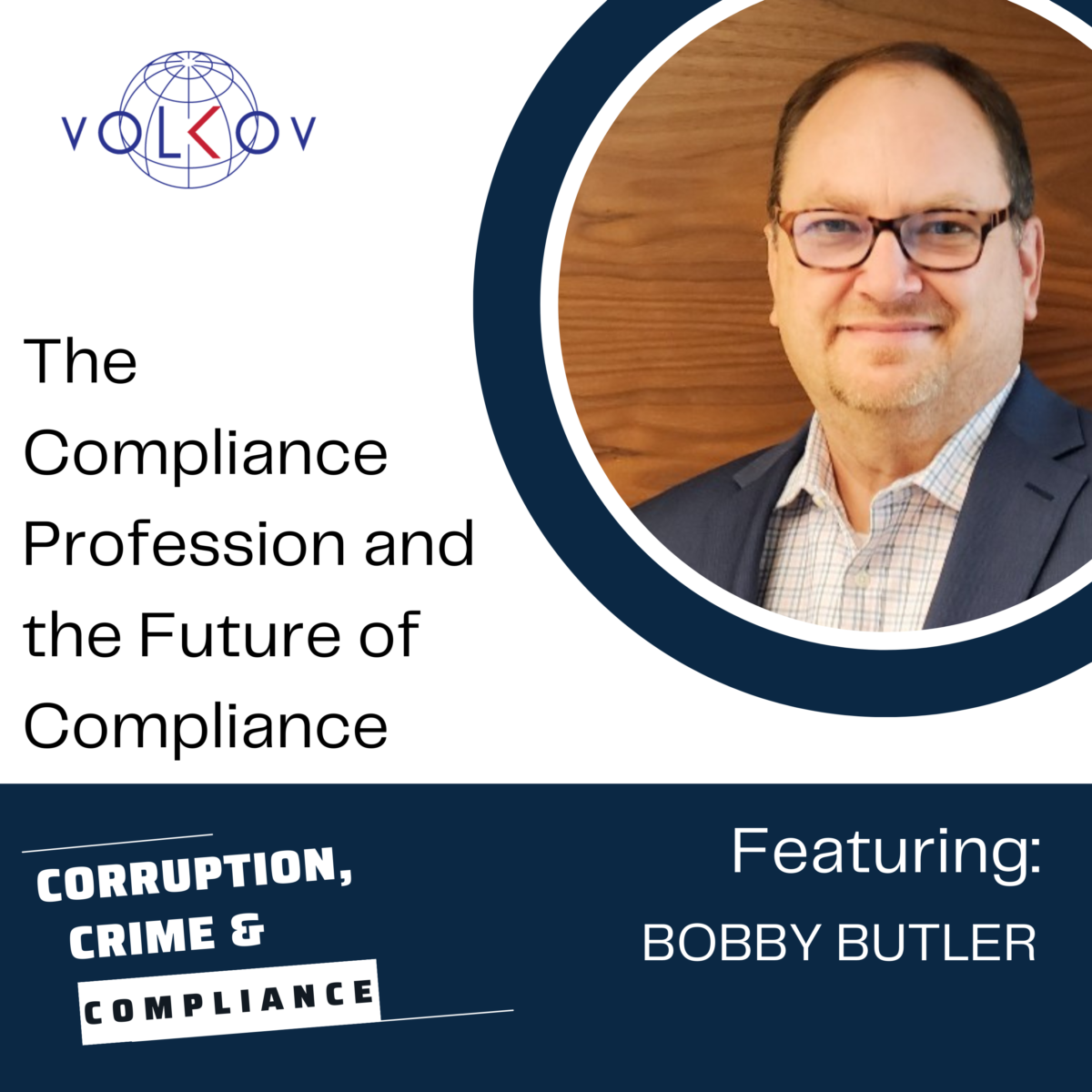
Bobby Butler on the Compliance Profession and the Future of Compliance

Bobby Butler joins Michael Volkov on this episode of Corruption, Crime and Compliance, to explore the evolution of compliance over 20 years. While enforcement actions sparked major progress, Bobby contends compliance is moving firmly into the realm of competitive advantage and performance multiplier. Millennials and younger generations ‘vote with their feet’, demanding ethical cultures, so compliance may increasingly drive talent retention as well.  

Bobby Butler has over 20 years of experience building world-class ethics and compliance programs. In his early career, he investigated export control issues and quickly became passionate about compliance. Known for his persistence and commitment to finding solutions, he is a pioneer who helped elevate compliance from an ad hoc function to a strategic asset.


You’ll hear Michael and Bobby discuss:


  • In the early 2000s, compliance programs were sparked by reactions to major DOJ enforcements rather than proactive investments. Companies finally dedicated ample resources when faced with “shock and awe” consequences.
  • Bobby got his start investigating export controls issues at Conoco after unlawful server exports to Syria. He quickly became passionate about trade compliance and then FCPA compliance during the explosion of enforcements in the mid-2000s.
  • Working at ground zero compliance teams at Vetco and Baker Hughes during monitorships gave Bobby deep experience with elements of gold standard compliance programs long before codified evaluation criteria.
  • Bobby argues justifying significant resources without an enforcement action catalyst remains extremely challenging. Compliance fights for a seat at the table and has to insert compliance considerations into business meetings.  
  • Persistence and consistency in messaging are critical for credibility and influence as a compliance officer. Strong yet flexible personalities tend to thrive compared to introverts.
  • Compliance has to focus on finding creative solutions to enable opportunities: frame compliance as a competitive advantage and performance multiplier.
  • Tactics Bobby used to persuade executives include tying bonuses to compliance training completion, positioning compliance in sales materials and constant insertion into business meetings.
  • The compliance skill set has grown into a dedicated career path with specialized education channels, not just a secondary legal role. 
  • Bobby sees government enforcements continuing to increase given complex technologies and geopolitics.


KEY QUOTES

“…we have to find ways for the business to grow. We’ve got to be sitting there at the table with them, thinking of solutions. The more brain power you put at problem-solving and doing it in a compliant way, that’s how you build trust with people.” – Bobby Butler


“And every day that goes by, when there’s not a compliance issue and you can certify that controls have passed and the elements are there and you have outside counsel come in and do an assessment of your program and you continuously improve and each day goes by and you don’t have an issue. Well, there’s another positive impact to the investment and the return on shareholder value and more importantly, the company brand.” – Bobby Butler


“…we’re out there preaching the good news that compliance can be a good thing. Because at the end of the day, when the company does get in trouble, compliance sets policy, sets voluntary boundaries where the law sets mandatory boundaries.” – Bobby Butler


Resources

Bobby Butler on LinkedIn

Categories
31 Days to More Effective Compliance Programs

One Month to a More Effective Compliance Program Through Culture: Day 14 – How Investigative Triage Can Drive Culture

One area that organizations rarely consider impacting culture is the assessment and triage process in a hotline or speak-up process. A proactive approach allows for increased response time and the ability to set realistic expectations for stakeholders, but this is a key component for improving corporate culture. One mechanism not thought of by compliance professionals is the setting of service level agreements (SLAs) to set response times based on the nature of the allegation. This concept, borrowed from customer service practices, ensures that employees who come forward with complaints or allegations are provided with a clear understanding of the expected timeline for response and communication. By setting these expectations, organizations can foster a culture of open communication and trust.

Obviously, a triage process is particularly important for multinational companies that operate across different regions. With varying compliance programs and regulations in different countries, having a well-documented process becomes essential. It allows compliance departments to navigate the complexities of compliance programs and investigations, ensuring consistency and adherence to local laws.

The triage process and technology play a vital role in promoting a corporate culture. By proactively assessing and triaging complaints and allegations, organizations can increase response time and set realistic expectations for stakeholders. It is important to consider the impact on employee rights and the need for thorough investigations when making decisions about the importance of the triage process and technology in organizational compliance.

 Three key takeaways:

1. Think about how your triage process can be used to foster culture.

2. Set Service Level Agreements, make them public, and adhere to them to engender trust in your organization.

3. However, it is important to recognize the tradeoffs involved in balancing different factors when implementing a triage process.

Do you want to improve your culture? How can you assess your culture and develop a strategy to improve it going forward? In this free webinar on the new tool, The Culture Audit with Tom Fox and Sam Silverstein on Tuesday, November 28, 12 CT. For more information and registration, click here.

Categories
Blog

Understanding the Risk – Return Relationship in Compliance

Investing in any form involves a certain level of risk, and the potential return is directly related to the level of risk taken on. This principle holds true for both private equity and venture capital investing. Private equity investors aim for positive returns on most of their investments by acquiring established businesses, while venture capital investors accept higher risk for the potential of significant returns on early-stage companies. Understanding this risk-return relationship is crucial for making informed investment decisions.

It is incumbent for every Chief Compliance Officer (CCO) and compliance professional to understand the risk-return relationship in investment and how that relationship applies to a corporate compliance function. By developing such an understanding, CCOs and compliance professionals can not only change the dynamic between seemingly disparate corporate functions such as compliance and finance; but will also allow a broader and more fulsome discussion of corporate investment in compliance resources.

One key concept in assessing investment stability and potential rewards is beta risk. Investopedia defines it as “Beta is used in the capital asset pricing model (CAPM), which describes the relationship between systematic risk and expected return for assets (usually stocks). CAPM is widely used as a method for pricing risky securities and for generating estimates of the expected returns of assets, considering both the risk of those assets and the cost of capital.” In other words, Beta risk refers to the correlation between an investment and the broader market. Compliance officers can utilize this concept to identify low-risk investments that perform well regardless of market conditions. By considering beta risk, compliance officers can make more informed decisions about allocating resources and managing compliance programs.

This highlights the concept of compliance as risk balancing, which challenges traditional notions of avoiding surprises and instead embraces potential positive surprises and opportunities for growth. This approach recognizes that managing risk can create significant growth opportunities, demonstrating the value of compliance in supporting business growth. This also provides an opportunity for the compliance function to demonstrate its role in a business’s overall growth strategies and greater profitability.

Such an approach also emphasizes the importance of CCOs and compliance professionals speaking the language of finance when discussing risk and return. By using concepts such as beta risk and understanding the different approaches to investing, compliance professionals can have more meaningful conversations with finance departments and other stakeholders. This enables them to effectively communicate the potential risks and rewards associated with compliance investments.

Obviously there are tradeoffs involved in balancing different factors when considering risk and return. While minimizing surprises may seem like a desirable goal, CCOs and compliance professionals should also be open to positive surprises can lead to unexpected growth opportunities. By managing risk effectively and considering the potential rewards, compliance officers can make strategic decisions that align with the organization’s goals.

This also leads directly to the importance of considering the compliance impact when making decisions about risk and return. Compliance programs play a crucial role in managing risk and ensuring ethical business practices. By investing in compliance initiatives, organizations can protect their reputation, mitigate legal and regulatory risks, and create a culture of integrity. Compliance investments can yield positive returns by fostering employee trust, attracting investors, and enhancing overall business performance.

Understanding the risk-return relationship in investment and compliance roles is essential for making informed decisions. Compliance officers can leverage concepts such as beta risk to identify low-risk investments that perform well regardless of market conditions. By embracing Compliance as Risk Balancing and considering the potential rewards, compliance professionals can effectively communicate the value of compliance investments to finance departments and other stakeholders. Ultimately, investing in compliance supports business growth and helps organizations navigate the complex landscape of risk and return.

Categories
FCPA Compliance Report

Compliance Lessons from Venice – Into The Lion’s Mouth

In Part 3 of this special 3-episode series, we explore how Venice created the first modern hotline and whistleblower reporting system. Whistleblower and hotline reporting systems in compliance programs are crucial tools for organizations, providing a confidential platform for employees to report misconduct. Fox emphasizes the value of using an external hotline system, which offers an additional layer of anonymity and impartiality and can bring specialized expertise that may be difficult to match within an organization.

He also highlights the role of hotlines in collecting detailed information, which can provide greater insight into situations and help protect companies from accusations of negligence or wrongdoing. Fox underscores the need for hotlines to inspire employee confidence, offer on-demand support from subject matter experts, and provide in-built litigation support and avoidance tools. Join Tom Fox in this episode of the Compliance Lessons from Venice podcast to delve deeper into the significance of hotline reporting systems in compliance programs.

Categories
Blog

How the Venetian Republic Invented the Modern Hotline-Into the Lion’s Mouth

It turns out that Venice invented the modern hotline reporting system with their Lion’s Mouth reporting protocol. The symbol of Venice is the Lion St. Mark. The use of this symbol has led to the maxim straight from the lion’s mouth. This adage came because the Republic of Venice had its own hotline reporting system where citizens could report misconduct. A citizen could write down his concern on paper and literally put this message into the mouths of statues of lions’ heads placed around the city. The system was originally set up to be anonymous, but later changed to require that a citizen had to write down his name when submitting a message. I thought about this early form of anonymous reporting and then Hotline reporting and how it portended the hotline system used today to help companies identify compliance issues which might arise under the FCPA or other compliance laws.

Hotline reporting systems play a crucial role in modern compliance programs. They provide employees with a confidential and secure channel to report suspected misconduct or violations of company policies. In a recent episode of the podcast “Compliance Lessons from Venice,” hosted by Tom Fox, the importance and benefits of hotline reporting systems were discussed in detail.

One of the key factors emphasized in the podcast is the need for hotline systems to allow employees to report misconduct confidentially and without fear of retaliation. This is in line with the guidance provided in the FCPA Resource Guide, which states that an effective compliance program should include a mechanism for confidential reporting. By ensuring anonymity and protection, hotline reporting systems encourage employees to come forward with their concerns, leading to early detection and prevention of compliance issues.

One of the benefits of using external hotline systems, as highlighted by Tom Fox, is the increased employee trust. Employees tend to trust third-party providers more than internally maintained systems, as they perceive an extra layer of anonymity and impartiality. External providers also bring specialist expertise that may be difficult to match within an organization.

Another benefit of hotline reporting systems is the collection of detailed information. Information is power, and by gathering and recording information throughout the complaint’s lifecycle, companies gain greater insight into the situation. This allows for more effective protection against accusations of negligence or wrongdoing. Hotline systems should provide consolidated, real-time access to data across departments and locations, along with analytic capabilities to uncover trends and hotspots.

Data retention is another important factor to consider. Hotline systems should meet the company’s data retention policies, especially considering privacy regulations like GDPR. Having a secure and accessible report retention database ensures compliance with data protection requirements and avoids the need for complicated and costly arrangements for storing older reports.

To be effective, hotline reporting systems must inspire employee confidence. Retaliation or perceived unfairness can destroy the effectiveness of internal reporting and poison the company’s culture. Employees should feel that the hotline offers the highest levels of protection and anonymity. It should allow them to bring their concerns directly to someone outside the immediate chain of command or workplace environment, especially when the complaint involves a supervisor or superior. Providing the option to submit reports from offsite locations also enhances participation rates.

Hotline systems should offer on-demand support from subject matter experts. Opening lines of communication can bring new issues to the compliance group’s attention. It is crucial to follow up on reports in a timely manner and avoid sitting on complaints, as this can lead to employee frustration and potential legal risks.

Inbuilt litigation support and avoidance tools are also important features of hotline reporting systems. Compliance with legal requirements for document retention, attorney work product protections, and attorney-client privilege should be pre-configured in the system. Developing these tools in-house can be costly and expose the organization to unnecessary risks.

Direct communication with the persons filing a complaint is another aspect that enhances the effectiveness of hotline reporting systems. It signals to employees that their complaints are being heard at the highest level and reinforces their confidence in the process.

In addition to these key factors, the podcast episode also highlighted the importance of publicizing the hotline, training employees on how to use it, and ensuring no retaliation for its use. Regularly reviewing the data provided by the hotline and identifying any gaps is also crucial for making informed decisions and improving the compliance program.

Hotline reporting systems are essential components of modern compliance programs. They provide employees with a confidential and secure channel to report misconduct, leading to early detection and prevention of compliance issues. By ensuring anonymity, protection, and access to expert support, hotline reporting systems foster employee trust and contribute to a strong compliance culture within organizations. It turns out we do not have Sarbanes-Oxley to thank for the modern hotline system but the Republic of Vencie.

Categories
Principled Podcast

Principled Podcast – S10E11: Ethics and entrepreneurs: Why E&C is Crucial to Start-Up Innovation?

What you’ll learn on this podcast episode

The worldwide surge in start-up culture, from venture capital and angel investors to equity structures and fundraising rounds, has transformed business today. But why have so many well-funded start-ups—like FTX and Theranos—imploded in a cloud of scandal? In this episode of the Principled Podcast, host Susan Divers discusses the role of ethics in start-up companies with Tammy Mah-Fraser, an executive director for Alberta Innovates, and Shai Dubey, an assistant professor and distinguished faculty fellow at the Smith School of Business at Queen’s University Ontario. Listen in as the three examine how entrepreneurs, investors, and funders can better integrate ethics and compliance at the beginning of their business endeavors.

Guest: Tammy Mah-Fraser

Tammy Mah-Fraser – Grayscale

Tammy Mah-Fraser, DrPH, MSc is the executive director of Health Platforms at Alberta Innovates. As executive director, she tackles system barriers involving multiple organizations for better health outcomes to enable a learning health system and to accelerate commercialization. As a former genetic counselor, she is passionate about incorporating the end-user whether patient, public, or provider early in the process—as well as equipping individuals and companies with tools and training to support their research and product development. She is a project sponsor of several provincial programs—Alberta Clinical Research Consortium and Alberta SPOR SUPPORT Unit—and two ethics programs: A pRoject Ethics Community Consensus Initiative and the Ethics of Innovation Consortium.

Guest: Shai Dubey

Shai Dubey – Grayscale

Shai Dubey is an adjunct assistant professor and distinguished faculty fellow of business law at the Smith School of Business at Queen’s University. He teaches courses in negotiations, cross-cultural management, ethics, domestic and international business law, and entrepreneurship. He is the academic director for project courses in various MBA programs and the MIB program. Shai has served as the director of the Cornell-Queen’s EMBA program (now EMBAA), the MIB program, the Graduate Diploma in Business program, and the full-time MBA program.

Shai earned his bachelor’s degree from the University of Toronto and his Law Degree from Queen’s University. Shai is also a graduate of the aviation Flight Technology Program at Seneca College. After graduating from Seneca College in 1984, he began his working career as a commercial pilot. In 1985 he founded and ran both an executive aircraft charter company and a flight training school based in Toronto. After selling this company, Shai worked as an aviation consultant providing strategic and regulatory advice to Canadian and foreign clients.

Upon completing law school in 1994, Shai articled and practiced law with two major law firms in Toronto, specializing in corporate commercial law with an emphasis on mergers and acquisitions, corporate finance, and aviation. In 1999, Shai became the Chief Operating Officer, General Counsel, and a member of the Board of Directors of Quicklaw Inc., the leading provider of legal online data base services to the legal profession in Canada. In 2002, upon the sale of Quicklaw to a multinational corporation, Shai returned to the private practice of law. In 2006, Shai joined Smith on a full-time basis.

Host: Susan Divers

Susan_Divers_Principled_Podcast

Susan Divers is a senior advisor with LRN Corporation. In that capacity, Ms. Divers brings her 30+ years’ accomplishments and experience in the ethics and compliance area to LRN partners and colleagues. This expertise includes building state-of-the-art compliance programs infused with values, designing user-friendly means of engaging and informing employees, fostering an embedded culture of compliance and substantial subject matter expertise in anti-corruption, export controls, sanctions, and other key areas of compliance.


Prior to joining LRN, Mrs. Divers served as AECOM’s Assistant General for Global Ethics & Compliance and Chief Ethics & Compliance Officer. Under her leadership, AECOM’s ethics and compliance program garnered six external awards in recognition of its effectiveness and Mrs. Divers’ thought leadership in the ethics field. In 2011, Mrs. Divers received the AECOM CEO Award of Excellence, which recognized her work in advancing the company’s ethics and compliance program.

Mrs. Divers’ background includes more than thirty years’ experience practicing law in these areas. Before joining AECOM, she worked at SAIC and Lockheed Martin in the international compliance area. Prior to that, she was a partner with the DC office of Sonnenschein, Nath & Rosenthal. She also spent four years in London and is qualified as a Solicitor to the High Court of England and Wales, practicing in the international arena with the law firms of Theodore Goddard & Co. and Herbert Smith & Co. She also served as an attorney in the Office of the Legal Advisor at the Department of State and was a member of the U.S. delegation to the UN working on the first anti-corruption multilateral treaty initiative.

Mrs. Divers is a member of the DC Bar and a graduate of Trinity College, Washington D.C. and of the National Law Center of George Washington University. In 2011, 2012, 2013 and 2014 Ethisphere Magazine listed her as one the “Attorneys Who Matter” in the ethics & compliance area. She is a member of the Advisory Boards of the Rutgers University Center for Ethical Behavior and served as a member of the Board of Directors for the Institute for Practical Training from 2005-2008.

She resides in Northern Virginia and is a frequent speaker, writer and commentator on ethics and compliance topics. Mrs. Divers’ most recent publication is “Balancing Best Practices and Reality in Compliance,” published by Compliance Week in February 2015. In her spare time, she mentors veteran and university students and enjoys outdoor activities.

Categories
FCPA Compliance Report

Compliance Lessons from Venice – Arsenale and Corporate Culture

In Part 2 of this special 3-part series, we continue our look at compliance lessons from Venice by reviewing the Arsenale and corporate culture. The Arsenale district in Venice, a significant maritime hub from the mid-1200s to mid-1400s, serves as a fascinating historical example of compliance program implementation. The district was renowned for its innovative shipbuilding techniques, which were zealously guarded as state secrets through strict regulations and severe punishments for violators.

Tom draws parallels between the practices of the Arsenale district and the guidance provided by the DOJ and SEC. He emphasizes the importance of a balanced approach to compliance, incorporating both incentives and discipline. Fox suggests that companies should provide job security, compensation for mishaps, and assistance to families as incentives for employees to remain loyal and compliant, while also using financial rewards, promotions, and acknowledgments as effective tools for driving corporate culture. Join Tom Fox on this episode of the Compliance Lessons from Venice podcast as he delves deeper into the lessons that can be learned from the Arsenale district’s historical example.

Categories
Blog

Compliance Lessons from Venice: Incentives, Consequences and Compliance

This week I am running a three-part blog post series and three-part podcast series on compliance lessons from one of the most beautiful cities on earth, Venice. We will consider how construction in Venice can inform your compliance program, how the Venice ship building and repair business located in the Arsenale inform both corporate culture and your compliance program and how Venice created the first modern day hotline reporting system. In this second blog post and accompanying podcast we look at the Venetian ship building and ship repair industry centered in the Arsenale District and how they created a culture of compliance with the workers and implemented strategies which informed modern day compliance programs.

The Arsenale district in Venice serves as a historical example of the implementation of a corporate culture and implementation of a compliance program. This district was a significant maritime hub from the mid-1200s to the mid-1400s, known for its innovative shipbuilding techniques, which were considered state secrets. To protect this valuable intellectual property, the Venetian Fathers established a series of incentives and punishments that can inform best practices in compliance programs today.

One of the key takeaways from the Arsenale district is the importance of balancing incentives and discipline in a compliance program. This concept is emphasized by the Department of Justice (DOJ) and the Securities and Exchange Commission (SEC). Companies can learn from this historical example by implementing clear procedures and consequences for violations, publicizing disciplinary actions as a deterrent, and offering positive incentives to encourage adherence to ethical business practices.

On the consequence side, the Venetian Fathers forbade skilled workers from leaving the city to work in neighboring or rival cities, establishing the first non-compete agreement. Additionally, those caught sharing state secrets faced summary execution after excruciating torture. While these specific punishment techniques may not be applicable in modern corporate America, they highlight the need for severe consequences for violations.

In terms of incentives, the Arsenale district focused on job security. Layoffs were unheard of, and if someone lost their job due to injury or mishap, they received enough compensation to sustain themselves in the city. Furthermore, the company provided funeral expenses and assistance to the family of a deceased worker, ensuring their well-being.

The dual focus on keeping shipbuilding secrets within the city and incentivizing loyalty among workers aligns with the DOJ and SEC’s emphasis on incorporating both incentives and discipline into compliance programs. According to the guidance provided by these regulatory bodies, companies should have clearly defined procedures that are applied reliably and promptly, with punishments commensurate with the violation. Publicizing disciplinary actions internally, where appropriate, can serve as a deterrent and demonstrate the consequences of unethical actions.

However, the guidance also highlights the importance of positive incentives. The DOJ and SEC recognize that rewards for following a company’s internal code of conduct and conducting business ethically can drive compliant behavior. These incentives can take various forms, such as personal evaluations, promotions, rewards for improving compliance programs, and recognition for ethical behavior.

Companies can integrate incentives into their DNA through the hiring and promotion process. Senior management hires and promotions should include a compliance component, ensuring that individuals who prioritize compliance are recognized and rewarded. By making compliance evaluations a part of every employee’s overall evaluation, companies can further incentivize compliance.

The Arsenale district serves as a valuable historical example of the tradeoffs involved in balancing incentives and discipline in a compliance program. While severe punishments were imposed to protect state secrets, the district also prioritized job security and support for workers and their families. This approach highlights the importance of considering the impact on employees when making decisions about compliance program implementation.

In conclusion, the Arsenale district in Venice provides valuable insights into the implementation of a compliance program. By balancing incentives and discipline, companies can establish clear procedures and punishments for violations, publicize disciplinary actions as a deterrent, and offer positive incentives to drive compliant behavior. The historical example of the arsenal district emphasizes the importance of considering the impact on employees when making decisions about compliance program implementation.

Categories
Corruption, Crime and Compliance

Electronics Communications Risks in The Era of Ephemeral Messaging

Ephemeral messaging applications like Snapchat, WhatsApp, and Telegram have presented a complex challenge for compliance professionals and legal counsel. On one hand, these technologies can reduce data storage and preservation costs, minimize breach exposure, and allow the prioritization of communications data. On the other hand, they can create blind spots by deleting communications records and seriously obstructing internal investigations. How can companies balance the benefits of ephemeral messaging against the risks of compliance program undermining? In this week’s episode of Corruption, Crime, and Compliance, Michael Volkov discusses recent DOJ guidance regarding ephemeral messaging risks and outlines practical steps organizations can take to strike the right balance.

You’ll hear him discuss:

  • Ephemeral messaging can reduce data storage and preservation costs, which can be significant for companies facing litigation or investigations. It also reduces potential breach exposure by deleting data.
  • However, ephemeral messaging can obstruct internal investigations and create corporate blind spots by deleting communications records before they can be reviewed. This undermines compliance programs.
  • DOJ’s guidance outlines several steps companies can take to allow ephemeral messaging while mitigating risks:
    • Understand how the apps delete data and what types of data are stored;
    • Tailor policies on use to your specific risk profile and business needs;
    • Clearly communicate policies to employees and ensure regular enforcement;
    • Examine how policies impact the ability to conduct investigations and respond to subpoenas;
    • Evaluate the overall reasonableness of the risk mitigation strategy.
  • Practical steps to make ephemeral messaging safer include:
    • Restricting use to specific authorized purposes like scheduling;
    • Requiring employees to maintain deletion settings;
    • Conducting periodic audits of devices;
    • Requiring preservation and company access to work communications,
    • Coordinating ephemeral messaging policies with broader data preservation policies.
  • If a company provides devices to employees, it has more control and ability to restrict apps and access data, but even then, steps need to be taken to mitigate risks.
  • BYOD policies are more complex since consent and privacy restrictions may limit what companies can do. However, a BYOD policy still needs to address comprehensively:
    •   Preserving data
    •   Allowing corporate audits and access
    •   Segregating work data where possible
    •   Outlining consequences for violations
    •   Respecting local privacy laws
    •   Getting employee consent
  • With the right policy framework, BYOD can potentially allow ephemeral messaging while protecting data availability.

KEY QUOTES:

“Companies have a vested interest in preserving their internal communications for a variety of reasons, to hold internal actors accountable, or even outside actors sometimes, and to protect the organization from potential private and government claims or investigations that may have serious direct or collateral consequences.” – Michael Volkov

“If the government issues a grand jury subpoena as part of a criminal investigation and the company fails to preserve data generated by use of an ephemeral messaging system, a company could be held liable for failing to preserve data relevant to the criminal investigation. Such consequences can be significant…” – Michael Volkov

“While a company may have limited access to employees’ personal devices when it supplies devices to its employees, the company should regularly secure certifications by its employees that has not used its personal device for work-related purposes, with emergency exceptions, of course. Similarly, companies have to develop testing protocols for its BYOD policy and secure employee consent to examine the personal device limited solely to business data.” – Michael Volkov

Resources

Michael Volkov on LinkedIn | Twitter

The Volkov Law Group

Categories
FCPA Compliance Report

Compliance Lessons from Venice – Doing Compliance The Old Fashioned Way

Today we begin a special holiday podcast series on compliance lessons from Venice. In Part 1, we are doing compliance in the old-fashioned way.

The importance of compliance departments and the simplicity of compliance programs cannot be overstated. These elements are vital in maintaining ethical standards within an organization. An effective compliance program must have a compliance department that is adequately staffed with professionals who can handle the day-to-day compliance work. He argues that these departments should not only have the necessary headcount but also the expertise to answer questions and provide guidance to company personnel. Fox also underscores the significance of basic methods in compliance programs, likening them to the simple yet effective block-and-tackle pulley system used in Venice. Join Tom Fox as he delves deeper into this topic in the Compliance Lessons from Venice podcast episode.