Categories
Life with GDPR

Life With GDPR – Lessons Learned from The Singtel Opus Data Breach

Tom Fox and Jonathan Armstrong, renowned experts in cyber security, co-host the award-winning Life with GDPR. In this episode, they look at litigation over a data breach against Singtel Opus in Australia and the fallout from an investigation report.

The recent data breach at Intel Optus, affecting 1.2 million individuals, has brought to light the critical role of strategic communication in managing cybersecurity breaches. Tom and Jonathan Armstrong, offer their unique perspectives on this issue. Fox emphasizes the inevitability of cybersecurity breaches and the need for a comprehensive strategy, including effective communication, to manage them. He warns against the potential consequences of mishandling communication during a breach, such as jeopardizing insurance coverage.

Armstrong highlights the complexity of maintaining privilege in a global corporate structure and the importance of careful language to avoid invalidating insurance or causing unnecessary speculation. He also underscores the need for a holistic approach to cybersecurity, encompassing prevention, detection, remediation, and crisis communication. Join Tom Fox and Jonathan Armstrong as they delve deeper into this topic in the latest Life with GDPR podcast episode.

  •  Key Takeaways:
  • Implications of Language in Data Breach Reporting
  • Navigating CEO Communication and Insurance Coverage
  • Navigating Insurance Coverage in Data Breaches

 Resources

For more information on the issues raised in this podcast, check out the Cordery Compliance, News Section. For more information on Cordery Compliance, go to their website here. Also check out the GDPR Navigator, one of the top resources for GDPR Compliance by clicking here. Check out the Cordery Data Breach Academy here.

Connect with Tom Fox:

Connect with Jonathan Armstrong:

●   Twitter

●   LinkedIn

Categories
It's art

It’s art, let’s talk about it – Mark McKenna, Paint What You Love

The Museum of Western Art is dedicated to excellence in the collection, preservation, and promotion of Western Heritage and the education and cultural enrichment of our diverse audiences. The Museum serves as a bridge between the past and the present, ensuring that the legacy of the American West will be preserved for the future. Western Art is as engaging and important as ever. In this podcast series, Museum Executive Director Darrell Beauchamp visits with the artists who work in this Western heritage to talk about their work, the legacy of Western Art, and why talking about it is so important today. In this episode, Darrell visits with Mark McKenna.

Mark McKenna’s journey into the art world was not predetermined but evolved over time, starting from his high school years. Initially planning to become a dentist, McKenna was convinced by a professor and professional illustrator to pursue his passion for art. This decision set him on a path that would lead to his evolution from an art teacher to a renowned wildlife artist.

McKenna’s love for art was evident from a young age. In high school, he recognized that he would make art for his entire life. However, the idea of making a living as an artist seemed far-fetched, as he observed that most artists were struggling financially. With a desire to provide for a family, McKenna initially planned to become a dentist. It was during his time at Brigham Young University, Idaho, that a professor and professional illustrator recognized his talent and convinced him to pursue a career in art.

The professor’s advice resonated with McKenna, and he realized that he could create beautiful things as an artist instead of working in people’s mouths. This revelation changed the course of his life, and he decided to pursue a Bachelor of Fine Arts in illustration. As he got closer to graduation, McKenna also double majored in art education, which eventually led him to become a high school art teacher.

Teaching art allowed McKenna to combine his love for art with education. For eight years, he taught high school art, with seven of those years spent in Cody, Wyoming. This location proved to be a perfect fit for McKenna, as it provided him with inspiration from the wildlife and natural beauty of the area. Teaching also provided him with financial stability, allowing him to focus on his art without the pressure of making sales.

During his teaching years, McKenna attended a workshop with renowned wildlife artist Greg Beecham, who became his mentor. This workshop proved to be a turning point in McKenna’s career. The guidance and inspiration he received from Beecham elevated the quality of his work and ignited his passion for wildlife art. Over the next five years, McKenna built his art career, attending shows and making connections in the art world.

In 2018, McKenna made the decision to transition from teaching to becoming a full-time working artist. This transition was smooth, thanks to the foundation he had built during his teaching years and the mentorship of Greg Beecham. McKenna’s art career continued to flourish, with each year bringing new opportunities and growth.

Recognition at the Museum of Western Art was a significant milestone for McKenna. His work is displayed in galleries like Astoria Fine Art in Jackson Hole, Wyoming, and his website, MarkMcKennaStudios.com, provides a platform for art enthusiasts to explore and purchase his artwork. McKenna’s success can be attributed to his dedication to painting what he loves, painting often, and finishing what he starts.

In addition to his artistic skills, McKenna emphasizes the importance of effective self-marketing for artists. He utilizes social media platforms like Instagram and Facebook to showcase his work and connect with his audience. McKenna also understands the importance of proper framing and hanging of artwork, as it can significantly impact the presentation and professionalism of the piece.

Looking to share his knowledge and experience with other artists, McKenna is currently creating an online course that focuses on teaching artists how to utilize Photoshop, various aspects of the painting process, and the business side of art. This course will provide aspiring artists with valuable insights and practical skills to navigate the art world.

Mark McKenna’s evolution from an art teacher to a renowned wildlife artist is a testament to the power of following one’s passion and seeking guidance from mentors. His dedication to his craft, combined with his ability to balance teaching and art, has allowed him to create a successful career in the art world. McKenna’s story serves as an inspiration to aspiring artists, reminding them to paint what they love, seek mentorship, and embrace the opportunities that come their way.

 Resources

Museum of Western Art

Darrell Beauchamp on LinkedIn

Mark McKenna on Instagram

Categories
Innovation in Compliance

The Future of Communication in Financial Compliance: Part 4 – Accentuate the Negative?

This week, I have a special five-part podcast series sponsored by Verint on the Future of Communication in Financial Compliance. My guest in this series is Phil Fry, VP and GTM of Financial Compliance Strategy at Verint. Over this series, we will take a deep dive into the current status of communications in financial institutions, how to be or not be compliant, analysis and insight into the area, and how to avoid accentuating the negative and the human element in compliance. In this fourth podcast, we ask if you must accentuate the negative.

Phil Fry, the VP and General Manager of Financial Compliance Strategies at Verint, brings over forty years of experience in the financial compliance industry and a deep understanding of the challenges financial firms face in adhering to regulations amidst evolving communication modes. He specializes in the voice regulatory compliance capture world, particularly emphasizing the financial industry. He firmly believes in the importance of data quality in financial industry compliance, stressing the need to capture and record all trade-related communications, regardless of the time, place, or platform they occur on.

Fry argues that incomplete or missing data can hinder compliance efforts and investigations and that it is crucial to identify and categorize any gaps in the data to reduce false positives and improve trade surveillance. He also discusses the importance of linking conversations to gain insights into communication patterns and improve investigations. His extensive experience in the field shapes Fry’s perspective, and he is dedicated to solving legacy issues related to third-party identification and linking conversations together for improved investigations. Join Tom Fox and Phil Fry on this episode of the Future of Communications podcast as they delve deeper into the importance of data quality in financial industry compliance.

Key Highlights:

  • Data Gaps and Communication Patterns in Finance
  • Biometric Speaker Detection and Analysis
  • Data Quality: The Key to Reliable Analysis

Resources:

Phil Fry on LinkedIn

For More Information check out Verint.

Categories
Blog

The Importance of Data Quality in Financial Communications Compliance

This week I have a special five-part podcast series, sponsored by Verint on the Future of Communication in Financial Compliance on the Innovation in Compliance podcast series on the Compliance Podcast Network. My guest in this series is Phil Fry, VP and GTM of Financial Compliance Strategy at Verint. Over this series, we will take a deep dive into the current status of communications in financial institutions; how to be or not be compliant; an analysis and insight into the area; and how to avoid accentuating the negative and the human element in compliance. In this fourth post, we consider the importance of data quality in financial institutions’ communications compliance.

In the ever-evolving financial industry, compliance is a critical aspect that ensures the integrity and stability of the market. One key factor that plays a crucial role in compliance is data quality. The ability to capture, analyze, and maintain high-quality data is essential for financial firms to meet regulatory requirements and effectively manage risk. Data completeness is the foundation of any investigation in the financial industry. It is not just about capturing the data, but also about identifying and addressing any gaps in data capture and communication. Regulators are particularly interested in the gaps that go unnoticed, making it imperative for compliance teams to pay close attention to these areas. As Phil Fry emphasized, “It’s the things that go under the radar that regulators are most interested in.”

The financial industry operates across multiple channels, platforms, and modalities, making data capture a complex task. Compliance teams must ensure that they cover a wide range of devices and capture all relevant conversations related to trades. However, challenges arise when employees use different devices or when conversations occur on platforms that are not easily captured. In such cases, compliance efforts are hindered, and the risk of missing critical information increases.

To address these challenges, innovative techniques such as Identity Insights are being employed. Identity Insights leverages biometric techniques to detect and isolate different speakers in a conversation, storing this information securely in a searchable manner. This goes beyond traditional identification methods and helps solve legacy issues in capturing third-party identification across various communication channels. By linking conversations together, compliance teams can gain valuable insights into communication patterns and improve investigations.

Data quality is not just about capturing complete data; it also involves the accuracy and reliability of the captured data. The adage “Garbage In, Garbage Out” holds in the financial industry. If the data captured is of poor quality, any analysis or insights derived from it will be flawed. Therefore, it is crucial to ensure that the captured data is structured, properly labeled, and contains all necessary metadata. This reduces the risk of false positives and enables compliance teams to make informed decisions.

Legacy data poses another challenge in maintaining data quality. While capturing and analyzing real-time data is essential, it is equally important to consider the vast amount of historical data that financial firms possess. The quality and structure of this legacy data can vary, making it difficult to extract meaningful insights. However, advancements in technology offer opportunities to enhance the analysis of legacy data and reduce the risk of crucial information being overlooked.

Balancing the tradeoffs involved in data quality is a constant challenge for compliance teams. On one hand, they need to capture as much data as possible to ensure completeness and accuracy. On the other hand, they must also consider the cost and resources required to manage and analyze large volumes of data. Striking the right balance is crucial to optimize compliance efforts and reduce the risk of regulatory violations.

In conclusion, data quality plays a vital role in financial industry compliance. By focusing on data completeness, addressing gaps in data capture, and leveraging innovative techniques, compliance teams can enhance investigations, improve trade surveillance, and ensure adherence to regulations. The importance of data quality cannot be overstated, as it forms the foundation for accurate analysis and insights. As the financial industry continues to evolve, maintaining high-quality data will be crucial in mitigating risks and ensuring a robust compliance framework.

For More Information check out Verint.

Categories
31 Days to More Effective Compliance Programs

One Month to More Effective Compliance Through Culture: Day 12 – Fixing an Unsafe Workplace

We continue to look at fostering an ethical culture through psychological safety, using as a starting point the “Fostering Ethical Conduct Through Psychological Safety” whose authors believe that “when psychological safety is lacking, it may be a consequence of the employee having witnessed unethical behavior.” The more unethical behavior a person sees, the more likely they are to feel psychologically unsafe.

The authors basically state the obvious when they write, “It makes intuitive sense that being in a work environment where unethical behavior is prevalent might diminish psychological safety.” Put another way “people are most reluctant to speak up in ethically troubled environments, where we most need them to do so.” This is an important issue for every CCO and business leader. To overcome such a deficiency, they found that “several other factors correlated with strong speak-up behavior, keeping everything else constant: moral engagement, moral attentiveness, and organizational justice combined with clarity of expectations.”

Moral engagement. As a CCO you should endeavor to create an atmosphere where ethical conduct matters, “so that when employees recognize a potentially unethical situation, they will be motivated to do what’s right.”

Moral attentiveness. You can educate employees to recognize the ethical dimensions of situations. You can have managers highlight examples of ethical and unethical behavior with their teams and encourage dialogue on workplace ethics.

Organizational justice. Obviously, talk is cheap and it is actions, not deeds, that matter. The DOJ has made clear in the 2023 Evaluation of Corporate Compliance Programs that the keeper and responsibility of institutional justice sits with the CCO and the authors find that this same concept “is vital to building a reputation of organizational justice.”

Clarity of expectations. CCOs must communicate a clear message to employees so that employees will have “an understanding of organizational standards and are clear about expectations.”

Unethical conduct can remain hidden for a time but is likely to be discovered eventually, causing far more harm than if it were caught and corrected early. Psychological safety thus can help organizations respond and improve quickly instead of allowing misconduct and unethical behavior to fester and further degrade workplace psychological safety, thus triggering a vicious cycle.”

 Three key takeaways:

1. Without psychological safety, corporate culture will suffer.

2. When your CEO engages in illegal behavior, what is the impact on culture?

3. Use moral engagement, moral attentiveness, and organizational justice to foster an improved culture.

Do you want to improve your culture? How can you assess your culture and develop a strategy to improve it going forward? In this free webinar on the new tool, The Culture Audit with Tom Fox and Sam Silverstein on Tuesday, November 28, 12 CT. For more information and registration, click here.

Categories
The Hill Country Podcast

The Hill Country Podcast – Kerrville City Manager Dalton Rice

Welcome to the award-winning The Hill Country Podcast. The Texas Hill Country is one of the most beautiful places on earth. In this podcast, Hill Country resident Tom Fox visits with the people and organizations that make this the most unique area of Texas. Join Tom as he explores the people, places, and activities of the Texas Hill Country. In this episode, am joined by Andrew Gay as co-host with Dalton Rice as our guest.

Dalton Rice is a seasoned professional with a diverse background spanning the military, healthcare administration, and public administration. As the current City Manager of Kerrville, Texas, Rice offers a unique perspective on the role and responsibilities of a city manager in Texas. He views the city manager as the chief executive officer of a city, responsible for overseeing all departments and appointed by the city council, a contrast to a mayoral system where the mayor is elected as the CEO. Rice’s experiences in the military and public sectors have shaped his understanding of the importance of navigating the political landscape, maintaining neutrality, and fostering open dialogue with city residents. Join Tom Fox, Andrew Gay, and Dalton Rice as they delve deeper into this topic on the next episode of the Hill Country Podcast. 

Key Highlights:

  • Navigating Political Impacts: The City Manager System
  • Dalton Rice’s Journey from Firefighter to Green Beret
  • The Demands and Commitment of City Management
  • Enhancing Community Well-being through Quality Projects

 Resources:

City of Kerrville

Texas Hill Country Podcast Network

Tom Fox

Instagram

Facebook

YouTube

Twitter

LinkedIn

Categories
Great Women in Compliance

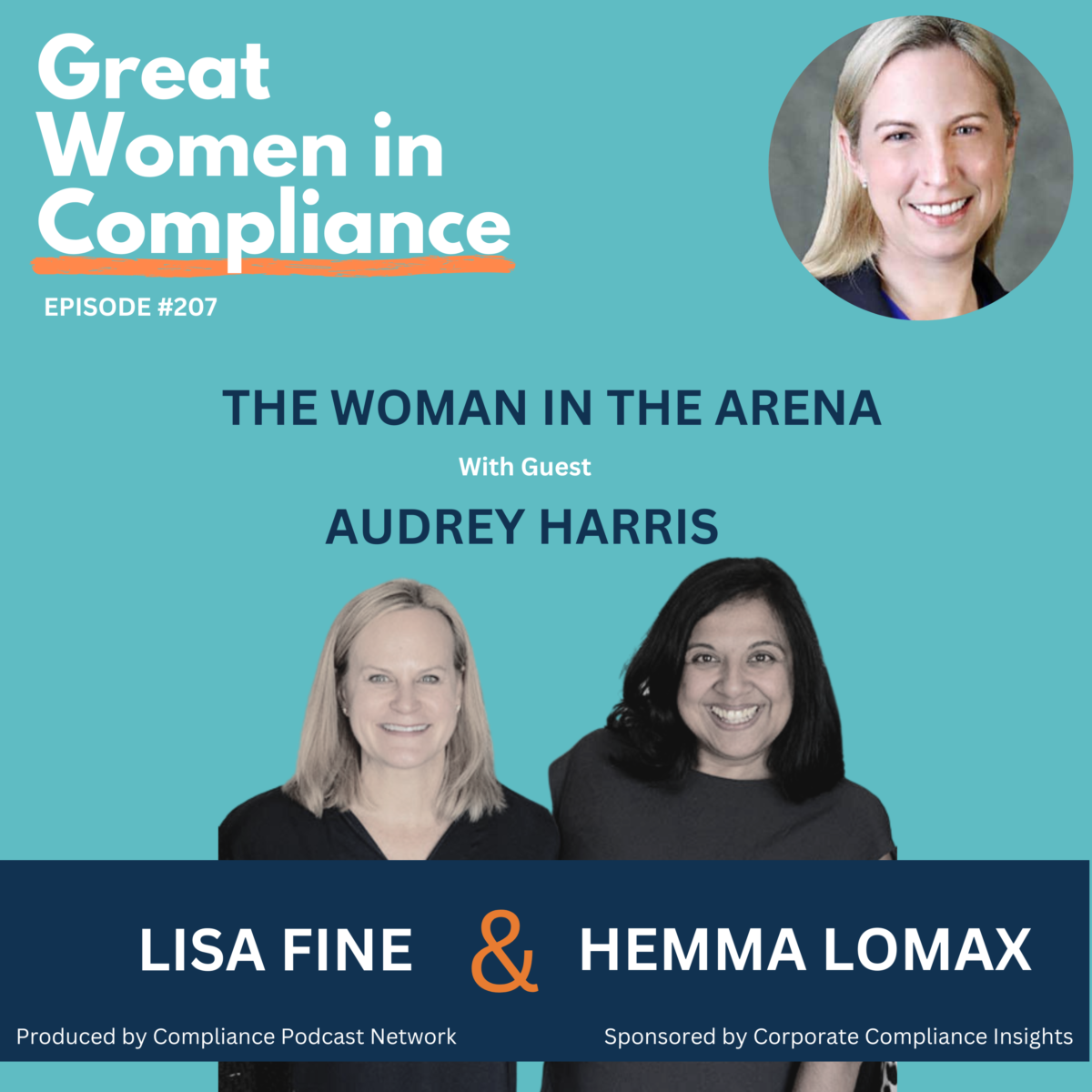
Great Women in Compliance: Audrey Harris – The Woman in the Arena

Audrey Harris, this week’s guest, shared a quote with us that is very meaningful to her. It is from Theodore Roosevelt, about “The Man in the Arena. Since this is #GWIC, we have expanded this to the women in the arena. That is the woman who is actually in the arena, not the critic or the person who waits to offer suggestions or say what can be done better after the hard calls are made and who strives to do the work and…spends herself on a worthy cause; who at the best knows, in the end, the triumph of high achievement, and who at the worst, if she fails, at least fails while daring greatly, so that her place shall never be with those cold and timid souls who neither knows victory nor defeat.”

Audrey Harris is the woman in the arena. She is Managing Director, of  Global Anticorruption, Compliance, Ethics & Non–Financial Risk at Affiliated Monitors, Inc., was formerly at two world-class law firms, and has also been a Chief Compliance Officer. She has made hard decisions in real-time and now helps organizations do the same.

In this episode, Lisa and Audrey talk more about what the woman in the arena does and why Ethics and Compliance Officers are truly the people in the arena. Audrey will also provide insight on the most recent US Department of Justice statement, whether it really is the “Monaco Memo 3.0,” and her views about what is significant in the memo and the guidance it provides.

 The arena for GWIC next week is US Thanksgiving, so we are off but will see you with a great episode on November 29.

The Great Women in Compliance Podcast is on the Compliance Podcast Network with a selection of other Compliance-related offerings. GWIC is also sponsored by Corporate Compliance Insights, where we have a page where you can hear every episode. If you are enjoying this episode, please rate it and/or provide a review.

Corporate Compliance Insights is a much-appreciated sponsor and supporter of GWIC, including affiliate organization CCI Press publishing the related book; “Sending the Elevator Back Down, What We’ve Learned from Great Women in Compliance” (CCI Press, 2020). If you enjoyed the book, the GWIC team would be very grateful if you would consider rating it on Goodreads and Amazon and leaving a short review.  Don’t forget to send the elevator back down by passing on your copy to someone who you think might enjoy reading it when you’re done, or if you can’t bear parting with your copy, consider it as a holiday or appreciation gift for someone in Compliance who deserves a treat.

If you enjoyed the book, the GWIC team would be very grateful if you would consider rating it on Goodreads and Amazon and leaving a short review.  Don’t forget to send the elevator back down by passing on your copy to someone who you think might enjoy reading it when you’re done, or if you can’t bear parting with your copy, consider it as a holiday or appreciation gift for someone in Compliance who deserves a treat.

Categories
Compliance Into the Weeds

Compliance into the Weeds: OIG Says CCO Should be Independent

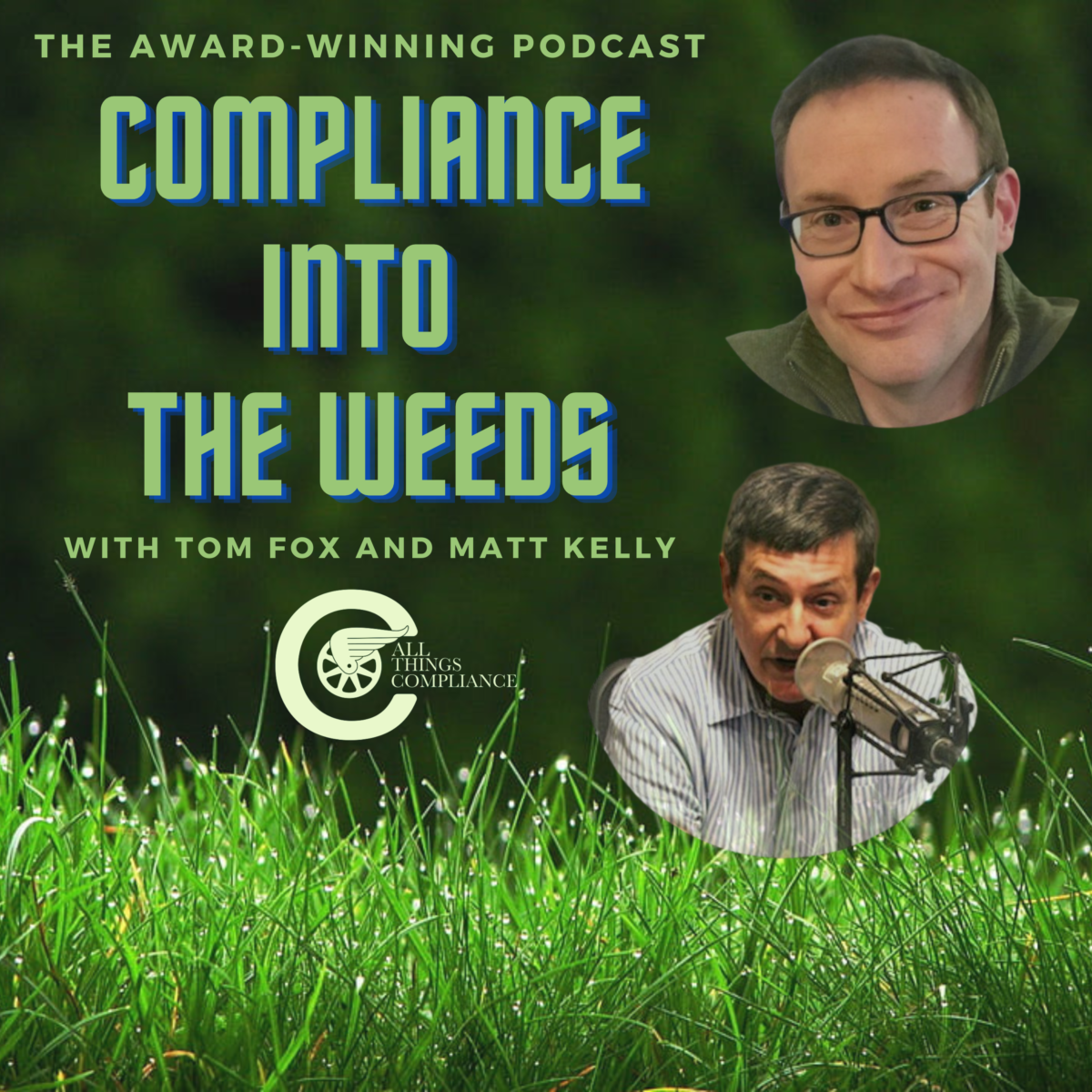
The award-winning, Compliance into the Weeds is the only weekly podcast that takes a deep dive into a compliance-related topic, literally going into the weeds to explore a subject more fully. Looking for some hard-hitting insights on sanctions compliance? Look no further than Compliance into the Weeds! In this episode, Tom and Matt take a deep dive into the recent OIG guidance for healthcare compliance professionals and healthcare compliance programs which notes that CCOs should be independent from the General Counsel’s Office.

The Office of Inspector General (OIG) has recently released guidelines that underscore the importance of independence for compliance officers in the healthcare sector. These guidelines, seen as a significant development in the field, stipulate that compliance should be separate from legal and finance departments, and outline the responsibilities of healthcare compliance officers.

Tom views this as a clear call for compliance officers to be independent and report directly to the CEO and the board. He suggests that this trend towards independence may extend beyond healthcare. Matt echoes this sentiment, highlighting the OIG’s strong endorsement of the independence of compliance officers. He believes this aligns with the emphasis on independence and autonomy that leading voices in the regulatory world have been advocating for. Join Tom Fox and Matt Kelly as they delve deeper into this topic in this episode of the Compliance into the Weeds podcast. 

Key Highlights:

  • The Importance of CCO Independence in Compliance Programs
  • The role of a healthcare CCO
  • Do you need a Law Degree to be a CCO in Healthcare Compliance
  • The Growing Significance of CCO Independence

Resources:

Matt’s blog post in Radical Compliance

Tom 

Instagram

Facebook

YouTube

Twitter

LinkedIn

Categories
Daily Compliance News

Daily Compliance News: November 15, 2023 – The Two Per Week Edition

Welcome to the Daily Compliance News. Each day, Tom Fox, the Voice of Compliance brings to you compliance-related stories to start your day. Sit back, enjoy a cup of morning coffee, and listen in to the Daily Compliance News. All, from the Compliance Podcast Network. Each day we consider four stories from the business world, compliance, ethics, risk management, leadership, or general interest for the compliance professional.

Stories we are following in today’s edition:

  • Ukraine legislator tied to Giuliani arrested for treason.  (WaPo)
  • 2 sexual harassment claims per week at McDonalds UK (TT)
  • Can Barclay’s move beyond scandal (and Jes Staley)? (FT)
  • US drops antitrust claims over hospital hiring. (Reuters)
Categories
Innovation in Compliance

The Future of Communication in Financial Compliance: Part 3 – Data Analysis and Insight

This week, I have a special five-part podcast series sponsored by Verint on the Future of Communication in Financial Compliance. My guest in this series is Phil Fry, VP and GTM of Financial Compliance Strategy at Verint. Over this series, we will take a deep dive into the current status of communications in financial institutions, how to be or not be compliant, analysis and insight into the area, and how to avoid accentuating the negative and the human element in compliance. In this third podcast, we take a deep dive into data analysis and insights.

Phil Fry, the VP and General Manager of Financial Compliance Strategies at Verint, brings over forty years of experience in the financial compliance industry and a deep understanding of the challenges financial firms face in adhering to regulations amidst evolving communication modes. He specializes in enhancing surveillance systems through data analysis and risk management. His perspective on this topic is shaped by his commitment to bridging the gap between what is captured and what is perceived to be captured, with a focus on proactive compliance.

Fry believes that surveillance teams can make proactive and smarter decisions by utilizing early analytics and risk analysis on captured data, focusing on high-risk conversations. He also emphasizes incorporating additional metadata points, such as time, geography, and communication patterns, to enhance surveillance capabilities. Fry’s initiatives, which include plans to add emotion detection and real-time call translation capabilities, aim to provide valuable data and insights to various corporate disciplines. Join Tom Fox and Phil Fry on this episode of the Future of Communications podcast to learn more about his innovative approach to improving surveillance systems.

Key Highlights:

  • Bridging the Gap: Pre-surveillance Insights
  • Improving Surveillance Efficiency through Data Analysis
  • Uncovering Valuable Intelligence from Spoken Interactions

Resources:

Phil Fry on LinkedIn

For More Information check out Verint.