In today’s edition of Daily Compliance News:
· More Austrian corruption unfolding. (FT)
· Cybersecurity tops CIO agendas. (WSJ)
· Holcim pleads guilty to making payments to terrorists. (Bloomberg)
· Meta forced to sell Giphy. (NYT)




I continue my Great Structures Week with focus on structural engineering innovations from ancient Rome. I am drawing these posts from The Teaching Company course, “Understanding the World’s Greatest Structures: Science and Innovation from Antiquity to Modernity”, taught by Professor Stephen Ressler who said “When I think of Rome, the first image that comes to mind is an arch.” It is present in aqueducts, in the triumphal arches that adorn the city of Rome, in the city gates and even in the Coliseum.
The arch was a major engineering advancement because the prior method for traversing horizontal distance was the beam, which was limited in its use. Ressler notes “because the arch carries its load entirely in compression, its span isn’t limited by the tensile strength of the material, the size of its stones, and it can span greater distances which might be conceived of with stone beams”. The arch itself has two essential characteristics. First it carries an entire load in compression, that is it counter-balances against itself, which allows for construction using the most basic building materials known in the ancient world: stone, brick and concrete.
Yet the second characteristic of the arch is equally significant. An arch requires “both vertical and horizontal reactions to carry a load. The downward load of the arch is balanced by an upward reaction from the base”. Both the Arch of Titus and Pont du Gard aqueduct are still standing and can be seen today as magnificent examples of this Roman innovation.
I wanted to use the dual load system whereby an arch supports not only great weight but also esthetic engineering designs to discuss how a Chief Compliance Officer (CCO) or compliance practitioner might develop resources to implement a best practice anti-corruption compliance program under the Foreign Corrupt Practices Act (FCPA), UK Bribery Act or other anti-bribery law. Funding of a compliance program is always one of the biggest challenges. Short of being in the middle of a worldwide FCPA, UK Bribery Act or other anti-corruption investigation, you are never going to receive all the funding you want or even think that you are going to need.
However, this corporate reality is not going to save you if the government comes knocking. The FCPA Resource Guide 2nd edition, provides the following, “Moreover, the amount of resources devoted to compliance will depend on the company’s size, complexity, industry, geographical reach, and risks associated with the business. In assessing whether a company has reasonable internal controls, DOJ and SEC typically consider whether the company devoted adequate staffing and resources to the compliance program given the size, structure, and risk profile of the business.”
Stephen Martin, CCO at Skillsoft, often says that an inquiry a prosecutor might make is along the lines of the following. First what the company’s annual compliance budget was for the past year. If the answer started with something like, “We did all we could with what we had ($100K, $200K, name the figure), the next inquiry would be, “How much was the corporate budget for Post-It Notes last year?” The answer was always in the 7-figure range. Then the KO punch question would be, “Which is more business critical for your company; complying with the FCPA or Post-It Notes?” Unfortunately, most companies spent far more on Post-It Notes than they were willing to invest into their compliance program.
However this corporate reality will allow you to look to other areas to assist the compliance function. An obvious starting place is Human Resources (HR). There are several areas in which HR can bring expertise and, in my experience, enthusiasm to the compliance function. Some of the reasons include the fact that HR is physically located at or touches every site in the company, globally. HR is generally seen as more approachable than many other departments in a company, unfortunately including compliance. A person’s first touch point with a company is often HR in the interview process. If not in the interview process, it is certainly true after a hire is made. Use this approachability.
HR has several key areas of expertise, such as in discrimination and harassment. But beyond this expertise, HR also has direct accountability for these areas. It does not take a very long or large step to expand this expertise into assistance for compliance. HR often is on the front line for hotline intake and responses. These initial responses may include triage of the compliant and investigations. With some additional training, you can create a supplemental investigation team for the compliance department.
Clearly HR puts on training. By ‘training the trainers’ on compliance you may well create an additional training force for your compliance department. HR can also give compliance advice on the style and tone of training. This is where the things that might work and even be legally mandated in Texas may not work in other areas of the globe; advice can be of great assistance. But more than just putting on the training, HR often maintains employee records of training certifications, certifications to your company’s Code of Conduct and compliance requirements. This can be the document repository for the Document, Document, and Document portion of your compliance program.
Internal Audit is another function that you may want to look at for assistance. Obviously, Internal Audit should have access to your company’s accounting systems. This can enable them to pull data for ongoing monitoring. This may allow you to move towards continuous controls monitoring, on an internal basis. Similarly, one of the areas of core competency of Internal Audit should also be internal controls. You can have Internal Audit assist in a gap analysis to understand what internal controls your company might be missing.
Just as this corporate function’s name implies, Internal Audit routinely performs internal audits of a company. You can use this routine job duty to assist compliance. There will be an existing audit schedule and you can provide some standard compliance issues to be on each audit. Further, compliance risks can also be evaluated in this process. Similar to the audit function are investigations. With some additional training, Internal Audit should be able to assist the compliance function to carry out or participate in internal compliance investigations. Lastly, Internal Audit should be able to assist the compliance function to improve controls following investigations.
A corporate IT department has several functions that can assist compliance. First and foremost, IT controls IT equipment and access to data. This can help you to facilitate investigations by giving you (1) access to email and (2) access to databases within the company. Similar to the above functions, IT will be a policy owner as the subject matter expert (SME) so you can turn to them for any of your compliance program requirements, which may need a policy that touches on these areas. The final consideration for IT assistance is in the area of internal corporate communication. IT enables communications within a company. You can use IT to aid in your internal company intranet, online training, newsletters or the often mentioned ‘compliance reminders’ discussed in the Morgan Stanley Declination.
Finally, do not forget your business teams. You can embed a compliance champion in all divisions and functions around the company. You can take this a step further by placing a Facility Compliance Officer at every site or location where you might have a large facility or corporate presence. Such local assets can provide feedback for new policies to let you know if they do not they make sense. In some new environments, a policy may not work. If your company uses SAP and you make an acquisition of an entity which does not use this ERP system, your internal policy may need to be modified or amended. A business unit asset can also help to provide a push for training and communications to others similarly situated. One thing that local compliance champions can assist with is helping to set up and coordinate personnel for interviews of employees. This is an often over-looked function but it facilitates local coordination, which is always easier than from the corporate office.
All of these other corporate functions can greatly assist you in the actual doing of compliance. Moreover, in a resource-constrained environment, these other corporate disciplines can be used to strengthen your compliance program, in a manner similar to vertical and transverse integration of structural integrity presented in an arch. Finally, just as the arch utilized some of the most basic construction elements in existence, by using the other corporate disciplines, engaging in precisely their corporate functions, you can create a strong foundation in your compliance program going forward.
Join us tomorrow where we look at the intersection of Gothic Cathedrals and compliance incentives.
The Compliance Life details the journey to and in the role of a Chief Compliance Officer. How does one come to sit in the CCO chair? What skills does a CCO need to navigate the compliance waters in any company successfully? What are some of the top challenges CCOs have faced, and how did they meet them? These questions and many others will be explored in this new podcast series. Over four episodes each month on The Compliance Life, I visit with one current or former CCO to explore their journey to the CCO chair. This month, my guest is Bridget Abraham, CCO at Remitly, who had a decidedly non-traditional path to the CCO Chair.
From Western Union, Bridget moved to the CCO Chair at Remitly, a remittance payment company. She discussed the mission-driven approach of Remitly to do the right thing. She talked about some of her early challenges and how she could leverage her economics background into a full compliance program. Some of her challenges included scaling up the compliance program and moving into new markets.
Resources
Bridget Abraham LinkedIn Profile
There’s no such thing as low risk or no risk.
Crafting a web of bribery with a corrupt law firm, a Nigerian fixer, and Panalpina’s hand landed Parker Drilling in hot waters. Tune in as Tom Fox and Michael DeBernardis explore the facts of the Parker Drilling case, why overestimating risk is always for the better, how proper conduct impacts sentencing, and why having the right people can impact outcomes.
▶️ Parker’s Offshore Oil Drilling with Tom Fox and Michael DeBernardis
Key points discussed in the episode:
✔️ Tom Fox lays out the basics of the Parker bribery case.
✔️Michael DeBernardis explains the points on the Nigerian agent’s efforts, bribery for unfair business advantage, the lack of due diligence, and fake invoices.
✔️ Tom Fox points out Sarbanes-Oxley as the main driver of compliance, the power of internal controls, the blurry calculations of discounts on the final sentencing, and the impact of Dan Chapman.
✔️ Michael DeBernardis highlights how the FCPA system maintains sentencing consistency but still has room for tightening and the nuances of every bribery case.
✔️Tom Fox underscores the importance of good conduct for the credit and an unanswered question. Michael DeBernardis reaffirms why having the right people in place is beneficial.
✔️ Tom Fox and Michael DeBernardis leave their final thoughts on the case: Have a second set of eyes on dubious wire transfers. Rethink how risk analysis is done. Focus on what you’re doing every step of the way.
—————————————————————————-
Do you have a podcast (or do you want to)? Join the only network dedicated to compliance, risk management, and business ethics, the Compliance Podcast Network. For more information, contact Tom Fox at tfox@tfoxlaw.com.
Linda Fisk is an award-winning author, speaker, and university professor. Her mission is to amplify and extend the success of other high-caliber business leaders. She is the CEO and Founder of LeadHERship Global, a community of unstoppable women enhancing their leadership blueprint and embracing their power to be the best version of themselves. In this week’s episode, she and Tom Fox discuss the challenges that come with leadership and how to overcome them.
Leadership Is a Passion
Tom asks Linda why she is so passionate about leadership and teaching others how to be effective leaders. She explains that throughout her career she has had the privilege to serve as the CEO or the CMO. From this position, she has witnessed first-hand “the transformational power of leaders coming together to solve problems, to advance solutions, to be able to tackle some of the most daunting issues our planet is facing today”. She explains that good leadership will always be the driving force behind a successful organization. She began studying leadership because she realized it was about making meaningful contributions to people’s lives. She believes that while there are natural-born leaders – anyone can be an excellent leader.
Origins of LeadHERship
Tom asks what led to Linda founding LeadHERship Global. While working in the C-suite, she responds, she witnessed the magnitude of what stellar leadership does for the success of the organization. Linda wanted to create “a haven for women in leadership” – a community where all women could be successful, despite their race, background, religion, or socioeconomic position. She says, “All women around the world are worthy of being considered valuable, and they should be honored, and they should be allowed to advance their success.” Her company provides all the resources, tools, learning, and connections for these women to level the playing field with their male counterparts and achieve success.
The Intervention of a Leadership Coach
Tom asks, “When should I hire a leadership coach?” Linda believes that you should hire a leadership coach when you:
Becoming a better leader means learning and practicing leadership skills. Hiring a coach means that you can get honest and objective feedback on the way your employees experience you as a leader.
Resources
Linda Fisk | LinkedIn | Twitter
I continue my Great Structures Week with a focus on great structures from the earliest times, ancient Egypt and Greece. I am drawing these posts from The Teaching Company course, entitled “Understanding the World’s Greatest Structures: Science and Innovation from Antiquity to Modernity”, taught by Professor Stephen Ressler. From Egypt there are of course the Pyramids, of which Ressler says, “They’re important, not just because they’re great structures, but also because they represent some of the earliest human achievements that can legitimately be called engineering. The Great Pyramid of Giza stands today as a testament to the strength and durability of Egyptian structural engineering skills.”
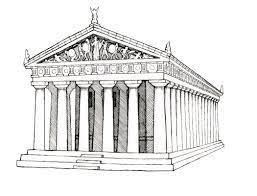
From Greece we derive what Vitruvius called the “Empirical Rules for Temple Design” which define a “single dimensional module equal to the radius of a column in the temple portico, then specify all other dimensions of the building in terms of that module.” These rules are best seen in Greek temples, largely consisting of columns, which are defined as “a structural element that carries load primarily in compression” and beams, which are “structural elements subject to transverse loading and carry load in bending.” My favorite example of the use of columns is seen in the Parthenon; the most famous of all Greek temples still standing.
In many ways these two very different structures stand as the basis of all structural engineering and Great Structures that come later throughout history. For any anti-corruption compliance regime based on the Foreign Corrupt Practices Act (FCPA), UK Bribery Act or other anti-bribery statutes, the same is true for a Code of Conduct and written policies and procedures. They are both the building blocks of everything that comes thereafter.
In an article Debbie Troklus, Greg Warner and Emma Wollschlager Schwartz, stated a company’s Code of Conduct “should demonstrate a complete ethical attitude and your organization’s “system-wide” emphasis on compliance and ethics with all applicable laws and regulations.” Your Code of Conduct must be aimed at all employees and all representatives of the organization, not just those most actively involved in known compliance and ethics issues. From the board of directors to volunteers, the authors believe that “everyone must receive, read, understand, and agree to abide by the standards of the Code of Conduct.” This would also include all “management, vendors, suppliers, and independent contractors, which are frequently overlooked groups.”
There are several purposes identified by the authors that should be communicated in your Code of Conduct. Of course the overriding goal is for all employees to follow what is required of them under the Code of Conduct. You can do this by communicating what is required of them, to provide a process for proper decision-making and then to require that all persons subject to the Code of Conduct put these standards into everyday business practice. Such actions are some of your best evidence that your company “upholds and supports proper compliance conduct.”
The substance of your Code of Conduct should be tailored to the company’s culture, and to its industry and corporate identity. It should provide a mechanism by which employees who are trying to do the right thing in the compliance and business ethics arena can do so. The Code of Conduct can be used as a basis for employee review and evaluation. It should certainly be invoked if there is a violation. To that end, I suggest that your company’s disciplinary procedures be stated in the Code of Conduct. These would include all forms of disciplines, up to and including dismissal, for serious violations of the Code of Conduct. Further, your company’s Code of Conduct should emphasize it will comply with all applicable laws and regulations, wherever it does business. The Code needs to be written in plain English and translated into other languages as necessary so that all applicable persons can understand it.
The written policies and procedures required for a best practices compliance program are well known and long established. As stated in the FCPA Resource Guide 2nd edition, “Among the risks that a company may need to address include the nature and extent of transactions with foreign governments, including payments to foreign officials; use of third parties; gifts, travel, and entertainment expenses; charitable and political donations; and facilitating and expediting payments.” Policies help form the basis of expectation and conduct in your company and Procedures are the documents that implement these standards of conduct.
Another way to think of policies, procedures and controls was stated by Aaron Murphy, in his book “Foreign Corrupt Practices Act”, when he said that you should think of all three as “an interrelated set of compliance mechanisms.” Murphy went on to say that, “Internal controls are policies, procedures, monitoring and training that are designed to ensure that company assets are used properly, with proper approval and that transactions are properly recorded in the books and records. While it is theoretically possible to have good controls but bad books and records (and vice versa), the two generally go hand in hand – where there are record-keeping violations, an internal controls failure is almost presumed because the records would have been accurate had the controls been adequate.”
Borrowing from an article in the Houston Business Journal, entitled “Company policies are source and structure of stability”, I found some interesting and important insights into the role of policies in any anti-corruption compliance program. Allen says that the role of policies is “to protect companies, their employees and consumers, and despite an occasional opposite outcome, that is typically what they do. A company’s policies provide a basic set of guidelines for their employees to follow. They can include general dos and don’ts or more specific safety procedures, work process flows, communication guidelines or dress codes. By establishing what is and isn’t acceptable workplace behavior, a company helps mitigate the risks posed by employees who, if left unchecked, might behave badly or make foolhardy decisions.”
Allen notes that policies “are not a surefire guarantee that things won’t go wrong, they are the first line of defense if things do.” The effective implementation and enforcement of policies demonstrate to regulators and the government that a “company is operating professionally and proactively for the benefit of its stakeholders, its employees and the community it serves.” If it is a company subject to the FCPA, by definition it is an international company so that can be quite a wide community.
Allen believes that there are five key elements to any “well-constructed policy”. They are:
Allen notes that for polices to be effective there must be communication. He believes that training is only one type of communication. I think that this is a key element for compliance practitioners because if you have a 30,000+ worldwide work force, the logistics alone of such training can appear daunting. Consider gathering small groups of employees, where detailed questions about policies can be raised and discussed, as a powerful teaching tool. Allen even suggests posting Frequently Asked Questions (FAQ’s) in common areas as another technique.
The FCPA Resource Guide 2nd edition ends its section on policies with the following, “Regardless of the specific policies and procedures implemented, these standards should apply to personnel at all levels of the company.” Allen puts a bit differently in that “it is important that policies are applied fairly and consistently across the organization.” He notes that the issue can be that “If policies are applied inconsistently, there is a greater chance that an employee dismissed for breaching a policy could successfully claim he or she was unfairly terminated.” This last point cannot be over-emphasized. If an employee is going to be terminated for fudging their expense accounts in Brazil, you had best make sure that same conduct lands your top producer in the US with the same quality of discipline.
Join us tomorrow where we look at the Roman Arch and resourcing your compliance program.

In “Understanding the World’s Greatest Structures: Science and Innovation from Antiquity to Modernity”, by Professor Stephen Ressler, he explores some of the world’s greatest structures and the development of structural engineering throughout history. Many structural engineering concepts are apt descriptors for an anti-corruption compliance program. So today, I will begin the ‘Great Structures Week’ as an entrée into an appropriate topic for an anti-corruption compliance program. Each day I will discuss a structural engineering concept together with one my favorite examples from Professor Ressler’s course.
To open the series I will consider what makes a structure great. Marcus Vitruvius Pollio (Vitruvius) was a Roman author, architect, and civil engineer during the 1st century BC, known for his work entitled De Architectura. Vitruvius is famous for proclaiming that a structure must exhibit the three qualities of firmitas, utilitas and venustas, meaning that it must be solid, useful and beautiful. These are sometimes termed the Vitruvian Triad and today these are loosely translated that great constructions must have form, function or structure. Form is the arrangement of space and harmony. Function is the measure of usefulness. Structure contains innovative techniques in its creation.
My favorite example of a structure that incorporates all three of these concepts is the Brooklyn Bridge. The beauty of the form follows the functions of the scientific principles that underlie the bridge’s structure. As Ressler noted “Each element of the form of the Brooklyn Bridge serves a structural purpose based on mathematical principles.” First the form itself is one of great beauty. The function remains the same, even if the modes of transport have evolved; the Bridge was designed to carry people from Brooklyn to Manhattan. Yet as Ressler notes, “beyond the aesthetic, these features are a direct reflection of the scientific principles underlying the bridge’s design. They are, in a word, structure – a system of load carrying elements that cause the bridge to stand up.” We have a graceful and elegant design, which operates to safely conduct people over the Hudson River, through an engineering design that allows the structure to act as intended.
This convergence of Vitruvius’ tripartite view of what makes a great structure is an appropriate analogy for a best practices anti-corruption compliance program to facilitate compliance with the FCPA, UK Bribery Act or similar regime. Over the years both the Department of Justice (DOJ) and Securities and Exchange Commission (SEC) have made clear that each company should have a compliance program that fits its needs. Indeed, in the FCPA Guidance, it could not have been made clearer when it stated, “Individual companies may have different compliance needs depending on their size and the particular risks associated with their businesses, among other factors. When it comes to compliance, there is no one-size-fits-all program.” The Guidance goes on to state the obvious when it notes, “companies may consider a variety of factors when making their own determination of what is appropriate for their specific business needs. Indeed, small- and medium-size enterprises likely will have different compliance programs from large multi-national corporations”.
The Guidance goes on to note, “Compliance programs that employ a “check-the-box” approach may be inefficient and, more importantly, ineffective. Because each compliance program should be tailored to an organization’s specific needs, risks, and challenges, the information provided below should not be considered a substitute for a company’s own assessment of the corporate compliance program most appropriate for that particular business organization. In the end, if designed carefully, implemented earnestly, and enforced fairly, a company’s compliance program—no matter how large or small the organization—will allow the company generally to prevent violations, detect those that do occur, and remediate them promptly and appropriately.”
Yet when viewed through Vitruvius’ prism, it is clear that an anti-corruption compliance program is much more holistic, with form, function and structure. A good compliance program is really about good financial controls. I think this is one outlook of FCPA compliance which is not discussed enough. Stanley Sporkin, in many ways the progenitor of the law, recognized that if a company was going to engage in corruption it would have to hide such activity through falsified books and records. Hence, he articulated the basis for having the accounting provisions included when Act was originally written and enacted into law. These provisions include both the books and records provision and the internal controls provision. The Guidance says, “the accounting provisions ensure that all public companies account for all of their assets and liabilities accurately and in reasonable detail”. So the form of a compliance program should be largely in financial controls that are baked into a company.
The formula of a compliance program can follow several forms. It can be based on the Hallmarks of an Effective Compliance Program from the FCPA Guidance, the Six Principles of Adequate Procedures as contemplated by the UK Bribery Act; the OECD 13 Good Practices or other formulations. The form of any of these articulations meets the Vitruvius definition.
Next is the function. Here I think it is appropriate to consider what the FCPA Resource Guide 2nd edition says regarding internal controls, that being “Internal controls over financial reporting are the processes used by companies to provide reasonable assurances regarding the reliability of financial reporting and the preparation of financial statements. They include various components, such as: a control environment that covers the tone set by the organization regarding integrity and ethics; risk assessments; control activities that cover policies and procedures designed to ensure that management directives are carried out (e.g., approvals, authorizations, reconciliations, and segregation of duties); information and communication; and monitoring.” Moreover, “the design of a company’s internal controls must take into account the operational realities and risks attendant to the company’s business, such as: the nature of its products or services; how the products or services get to market; the nature of its work force; the degree of regulation; the extent of its government interaction; and the degree to which it has operations in countries with a high risk of corruption.” This language points to function of any best practices compliance program, to make the company a better-run company.
Finally, in the area of structure it is incumbent to recall that any best practices anti-corruption compliance program continues to evolve. It evolves with technological innovations such as transaction or continuous controls monitoring. But a compliance program must evolve as your company evolves. Changing commercial realities and conditions can create new or increased FCPA compliance risks. Your compliance program needs to be able to detect, assess and manage new risk as your business creates new products; moves into new territories or develops new sales channels. The FCPA Resource Guide 2nd edition states, “They are dynamic and evolve as the business and the markets change.” To do so, “a good compliance program should constantly evolve. A company’s business changes over time, as do the environments in which it operates, the nature of its customers, the laws that govern its actions, and the standards of its industry.”
In this episode of the ESG Report, Cally Edgren and Devin O’Herron of Assent join Tom Fox to discuss product compliance and sustainability. They explore how the two worlds are starting to intersect.
Making sure products meet regulatory requirements is what product compliance is all about. In recent years, the requirements have been changing. There used to be a focus on safety features like mechanical and electrical safety, but things changed with the RoHS Directive in 2002. That directive was meant to make sure electronic waste from third-world countries was safe. “The RoHS directive and the EU Ecodesign Directive require compliance, or you cannot sell in locations where they are effective,” Cally remarks. It was one of the first times a regulatory rule had more to do with sustainability than traditional product safety.
Manufacturers need to understand that their customers are no longer just concerned with what they hold in their hands at the end of the process – they want to make sure that their suppliers are using responsible processes. The two worlds of operations compliance and product compliance are starting to connect. “What I am seeing and what I have experienced is we are starting to merge the environmental into the more traditional product safety,” Cally says.
As we become increasingly aware of the importance and relevance of the social and environmental costs associated with manufacturing processes and the barrier they present towards sustainability, ESG metrics represent another way of managing and measuring these externalities.
Resources
Cally Edgren on LinkedIn
Devin O’Herron on LinkedIn
Tom Fox’s email
Assent website
In this episode, I visit with Erica Salmon Byrne, now CEO at Ethisphere. We review the firm’s recent acquisition by Alpine Investors, a B-Corp. Key areas we discuss on this podcast are:
Resources
Ethisphere Press Release