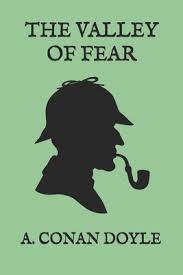
Here’s a detailed, insightful article in the style of Tom Fox for a corporate compliance audience, highlighting investigative lessons from the Sherlock Holmes novel, “The Valley of Fear.”
For compliance professionals, investigations are the bedrock of effective compliance programs. Whether it’s tracking down evidence of bribery, uncovering fraud schemes, or rooting out systemic misconduct, the investigative methods you deploy can significantly impact your organization’s integrity, reputation, and bottom line.
“The Valley of Fear” offers a wealth of investigative wisdom. Its narrative of deception, undercover operations, secret societies, and surprising plot twists provides vivid lessons highly relevant to today’s corporate compliance landscape. Let’s unpack five key investigative lessons, each illustrated with memorable scenes from this timeless detective classic.
Lesson 1: Do Not Take Facts at Face Value
Illustrated By: Detailed Analysis of the Crime Scene. Upon arrival at Birlstone Manor, Holmes carefully examines the room where Douglas’s body was discovered, noting inconsistencies like the placement of furniture, window access, and unusual blood patterns.
The central narrative of “The Valley of Fear” revolves around the apparent murder of John Douglas at his Manor House in Birlstone. Initially, the crime scene appears straightforward: Douglas has seemingly been shot at close range, and the crime scene implicates an intruder. Yet Holmes immediately suspects deeper layers beneath the obvious evidence. His meticulous examination of the scene, blood patterns, room layout, and oddities like misplaced items reveals inconsistencies that others missed.
For compliance professionals, the lesson is clear: avoid jumping to conclusions based solely on initial evidence. It is tempting and human to embrace straightforward narratives quickly. But like Holmes, investigators must resist that impulse, digging deeper, questioning assumptions, and rigorously testing evidence for hidden contradictions or overlooked facts. By refusing to accept surface-level interpretations, compliance teams protect organizations from premature and potentially misguided conclusions.
Compliance Takeaway: Always scrutinize initial evidence meticulously and objectively. Never accept evidence without question or assume that initial appearances represent complete facts.
Lesson 2: Investigative Cooperation is Essential
Illustrated By: Collaboration between Holmes and MacDonald. Holmes and Inspector MacDonald openly discuss theories, evidence, and ideas, working cooperatively rather than competitively. Holmes shares insights freely, establishing mutual trust and respect that propel the investigation forward.
Throughout the novel, Holmes collaborates closely with Scotland Yard’s Inspector MacDonald, who initially struggles to make sense of the complex scenario. Rather than competing, Holmes works cooperatively with MacDonald, openly sharing insights, theories, and information. Their mutual respect, dialogue, and professional cooperation ultimately contribute to solving the intricate puzzle.
Corporate compliance investigations similarly require effective internal and external cooperation. Compliance departments must partner seamlessly with Legal, HR, Audit, and IT functions, as well as outside counsel or forensic experts when necessary. Effective cooperation and collaboration across departments ensure thoroughness and objectivity, minimize blind spots, and enhance investigative outcomes. Holmes demonstrates that strong investigative results rely on teamwork rather than isolation or internal competition.
Compliance Takeaway: Foster collaborative relationships across organizational functions, aligning investigative efforts with Legal, HR, IT, and other stakeholders to produce effective outcomes.
Lesson 3: Patience and Persistence Yield Results
Illustrated By: Patient Uncovering of Douglas’s Background. Holmes painstakingly reconstructs Douglas’s past life in America, gradually identifying him as a Pinkerton detective who infiltrated the Scowrers. This meticulous work takes time, patience, and sustained investigative discipline.
Holmes painstakingly pieces together the clues surrounding John Douglas, ultimately revealing Douglas’s true identity as Birdy Edwards, a former Pinkerton detective who infiltrated a dangerous criminal organization, the Scowrers, in the United States. This revelation is not instantaneous; Holmes’ success comes from persistence, incremental discovery, and careful analysis of evidence collected over time.
In corporate compliance investigations, patience and persistence are equally critical. Compliance officers must frequently manage complex, multi-faceted investigations spanning weeks, months, or even years. Instant resolutions are rare; critical information often emerges slowly and incrementally. Holmes’s deliberate and patient approach to unraveling Douglas’s identity highlights the importance of tenacity, emphasizing that thoroughness and sustained attention invariably produce the clearest investigative outcomes.
Compliance Takeaway: Recognize and embrace that thorough investigative efforts are often incremental, requiring sustained attention and patience to understand complex compliance issues fully.
Lesson 4: Maintain a Big-Picture Perspective
Illustrated By: Contextual Awareness of Moriarty’s Influence. Holmes keeps Moriarty’s potential involvement clearly in mind throughout, maintaining awareness that individual incidents might connect to larger criminal patterns.
In the novel, Holmes repeatedly emphasizes that the apparent Birlstone murder is merely one small part of a larger, sinister picture orchestrated by the infamous Professor Moriarty. Though Moriarty never physically appears, his influence permeates the narrative, connecting seemingly unrelated events and adding deeper context to the investigation. Holmes maintains a sharp awareness of this broader context throughout, ensuring he does not lose sight of underlying motivations and interconnected plots.
This lesson resonates powerfully for compliance professionals. Frequently, investigations initially perceived as isolated incidents reveal systemic compliance or ethical weaknesses within an organization. Investigators must always remain cognizant of the broader organizational, cultural, or regulatory contexts influencing misconduct. By keeping this “big picture” perspective, compliance teams ensure investigations are holistic, not narrowly focused, enabling effective systemic remediation rather than piecemeal solutions.
Compliance Takeaway: Maintain holistic awareness in compliance investigations, ensuring isolated incidents are analyzed within broader organizational, regulatory, or ethical contexts to uncover deeper systemic issues.
Lesson 5: Effective Communication is Crucial
Illustrated By: Contextual Awareness of Moriarty’s Influence. Holmes keeps Moriarty’s potential involvement clearly in mind throughout, maintaining awareness that individual incidents might connect to larger criminal patterns.
At key points throughout the novel, Holmes carefully explains his deductions, processes, and conclusions to Inspector MacDonald, Dr. Watson, and other key players. His ability to clearly articulate reasoning and insights, especially when conclusions appear counterintuitive or complex, is essential to maintaining credibility, building consensus, and driving effective outcomes.
Corporate compliance investigators must also master clear, effective communication. It’s insufficient merely to uncover misconduct; the true skill lies in effectively communicating findings to stakeholders, management, regulators, and even potentially implicated employees. Holmes shows us that investigative brilliance must be matched by communicative clarity. In corporate settings, investigative reports must clearly explain methodology, facts, assumptions, and conclusions, ensuring decisions based on investigations are informed, justified, and actionable.
Compliance Takeaway: Maintain holistic awareness in compliance investigations, ensuring isolated incidents are analyzed within broader organizational, regulatory, or ethical contexts to uncover deeper systemic issues.
Sherlock Holmes as Compliance Inspiration
Sherlock Holmes remains an enduring inspiration to corporate compliance professionals precisely because effective investigations are foundational to compliance success. Holmes’s methods, including detailed scrutiny of evidence, a collaborative approach, patient and persistent inquiry, a holistic perspective, and clear communication, are not merely fictional flourishes; they represent essential best practices.
“The Valley of Fear” offers compliance officers vivid, relatable insights, underscoring that successful investigations require disciplined methodology, sustained inquiry, careful analysis, cross-functional cooperation, and effective stakeholder communication. As Sherlock Holmes memorably states, “It is, of course, a trifle, but there is nothing so important as trifles.” For compliance professionals today, Holmes’s wisdom is more relevant than ever, reminding us that attention to detail, disciplined process, and communicative clarity are never trivial.
By embracing Holmes’s investigative rigor and lessons from this classic novel, compliance professionals equip themselves and their organizations to meet today’s complex challenges effectively. After all, just like Holmes himself, the compliance investigator’s role is fundamentally about uncovering truth; patiently, methodically, and tirelessly ensuring organizational integrity and ethical clarity amidst a complex corporate landscape.




 David Cameron is managing partner and founder of the David Cameron Law Office, or DCLO—an independent, HK-based law firm offering international legal services. Founded in 2021, the firm is qualified to act on matters of Hong Kong and New York law. He has 16 years of experience in the Hong Kong market—including time spent at some of the largest law firms in the world, such as Linklaters and Allen & Overy.
 Joshua Chu is a prominent Hong Kong lawyer in all matters fintech and crypto, and a prolific writer. His opinion and insights are much sought after by the local press and correspondents of major foreign news organizations operating in the city. You can often hear him at his most candid on the radio at RTHK. He is also co-chair of the Hong Kong Web 3 Association and legal advisor to the Hong Kong Blockchain Association.
 Syed Musheer Ahmed