Categories
Career Can D0

A Recipe for Workplace Success with Bill Sims

On this episode of Career Can Do, Mary Ann Faremouth welcomes Bill Sims, a distinguished keynote speaker and author in safety, leadership, and employee empowerment. Bill is recognized for his insights into creating a safer and more productive work environment by emphasizing the importance of positive reinforcement, understanding generational dynamics in the workplace, and challenging traditional safety practices. Bill and Mary Ann delve into Human and Organizational Performance (HOP) and its intersection with behavioral-based safety, drawing insights from his book, Green Beans and Ice Cream.

According to Bill, effective communication involves articulating ideas and actively listening to others. By valuing input from all levels, leaders can tap into workers’ valuable knowledge about potential workplace dangers. Bill emphasizes the importance of fostering a workplace culture in which leaders not only communicate their expectations but also listen attentively to the insights and concerns of their workforce.

Leadership behavior is a powerful force in shaping a company’s culture, influencing both employee behavior and overall results. Bill emphasizes that positive reinforcement is a powerful tool for leadership, underscoring the need for leaders to understand how to create a culture of commitment. He advocates tailoring positive reinforcement strategies to individuals rather than adopting a one-size-fits-all approach. This personalized approach is essential for fostering a culture where individuals feel valued and motivated. 

When employees feel that their contributions are appreciated and that they are being recognized for their accomplishments, they are more likely to be engaged in their work and feel a sense of belonging to the company. As Bill puts it, leaders can either ignite a fire underneath their people or inside them.

Resources:

Bill Sims on the Web | LinkedIn | X (Twitter)

Faremouth.com 

Categories
Adventures in Compliance

The Memoirs of Sherlock Holmes – The Cardboard Box

Welcome to a review of all the Sherlock Holmes stories collected in the work “The Memoirs of Sherlock Holmes.” They appeared in the Strand Magazine from December 1892 to December 1893. Over the next 12 episodes, I will review each story and mine them for leadership, compliance, and ethical lessons.  In this, we look at the Adventure of the Cardboard Box story.

The Adventures of Sherlock Holmes, written by Arthur Conan Doyle, is a collection of thrilling detective stories that have captivated readers for over a century. These stories provide an engaging reading experience and valuable insights into ethical principles and leadership qualities. In this article, we will explore the key factors that impact ethical principles in Sherlock Holmes stories and the importance of considering their impact.

One of the stories that exemplifies the ethical principles in Sherlock Holmes is “The Adventure of the Cardboard Box.” This particular story revolves around a gruesome package containing severed human ears, which sets off a murder mystery. Throughout the investigation, ethical principles such as privacy, empathy, justice, honesty, and professional responsibilities come to the forefront.

Respecting privacy is a crucial ethical principle highlighted in this story. Sherlock Holmes and his loyal friend Dr. Watson handle the matter discreetly, ensuring that the gruesome details of the crime are not shared with the victim, Miss Susan Cushing, unless necessary. This emphasizes respecting others’ privacy and not intruding into their personal affairs.

Sherlock Holmes also demonstrates empathy and compassion in this story. He shows an understanding of the characters’ emotions and listens to their concerns, offering support. This ethical value emphasizes the importance of being sympathetic toward others, acknowledging their feelings, and showing compassion in difficult situations.

Justice and fairness are fundamental principles upheld by Sherlock Holmes. He strives to uncover the truth behind the crime and ensure that justice is served. Holmes does not allow personal biases or prejudice to cloud his judgment and seeks fair treatment for all involved. This highlights the importance of upholding justice and fairness in all our actions and decisions.

Honesty and integrity are virtues maintained by Sherlock Holmes and Dr. Watson throughout their investigation. They present facts as they discover them and do not manipulate or distort the truth. They confront the harsh realities of the case and deliver the truth, even if it may be uncomfortable or unpleasant. This teaches that honesty and integrity are essential in pursuing justice and solving problems.

Professional responsibility is another ethical principle exemplified by Sherlock Holmes. As a detective, Holmes has a strong sense of professional responsibility. He takes his role seriously and is dedicated to using his skills to help those in need. He recognizes the importance of his expertise and its impact on people’s lives. This highlights professionals’ ethical duties to fulfill their responsibilities diligently and utilize their skills for the greater good.

While “The Adventure of the Cardboard Box” remains one of the most engaging tales in the Sherlock Holmes series, it is not without controversy. The story’s gruesome nature and its ethical dilemmas make it a thought-provoking read. It challenges readers to consider the tradeoffs in balancing different ethical factors and the challenges associated with other approaches.

In conclusion, the ethical principles in Sherlock Holmes stories by Arthur Conan Doyle provide valuable lessons for readers. The stories emphasize the importance of privacy, empathy, justice, honesty, and professional responsibilities. They demonstrate the tradeoffs in ethical decisions and the challenges of different approaches. By considering the impact of our actions on others, we can strive to uphold these ethical principles in our lives.

Resource

The New Annotated Sherlock Holmes

Categories
Daily Compliance News

Daily Compliance News: October 16, 2023 – The HR into the Modern Era Edition

Welcome to the Daily Compliance News. Each day, Tom Fox, the Voice of Compliance, brings you compliance-related stories to start your day. Sit back, enjoy a cup of morning coffee, and listen in to the Daily Compliance News. All from the Compliance Podcast Network. Each day, we consider four stories from the business world: compliance, ethics, risk management, leadership, or general interest for the compliance professional.

Stories we are following in today’s edition:

  • Bringing HR into the modern era.  (WSJ)
  • Geopolitical volitivity. (FT)
  • Doctor charged with taking kickbacks from Insys settles. (Reuters)
  • Myanmar steps up anti-corruption crackdown. (NikkeiAsia)
Categories
FCPA Compliance Report

FCPA Compliance Report – Albemarle FCPA Enforcement Action – Overview

Welcome to the award-winning FCPA Compliance Report, the longest-running podcast in compliance. Today, we begin a short podcast series on the Albemarle FCPA enforcement action. Today, we open with Matt Kelly, providing an overview.

The intriguing case of Albemarle, a chemicals company embroiled in a bribery scheme, is a stark reminder of the importance of compliance and timely remediation measures. Albemarle faced hefty fines and penalties, totaling over $218 million, for using intermediaries to sell chemicals to state-owned oil companies and funnel bribes to government officials. However, the company’s swift action in withholding bonuses during their internal investigation and implementing remedial measures, such as eliminating sales agents and adopting a direct sales approach, was recognized and credited.

We underscore the significance of Albemarle’s transformation of its business model as a positive remediation measure that effectively reduces corruption risk. We also emphasize the importance of timely self-disclosure and the benefits of initiating remediation measures before an investigation is complete. The fines and penalties imposed on Albemarle are among the largest FCPA settlements in 2023. Join us in this FCPA Compliance Report podcast episode as we dive deeply into the regulatory outcome, remediation efforts, and compliance lessons from Albemarle’s case.

Key Highlights:

  • Bribery Scheme with “Friend” Emails
  • Identifying and Addressing Control Gaps for Ethical Business Practices
  • FCPA Settlement and Corruption Risk Reduction

Resources:

Tom Fox blog post series on the Albemarle FCPA Enforcement Action.

Tom Fox

Threads

Instagram

Facebook

YouTube

Twitter

LinkedIn

Categories
All Things Investigations

All Things Investigations: Episode 38 – CCO Certification – A Better Approach with Kevin Abikoff

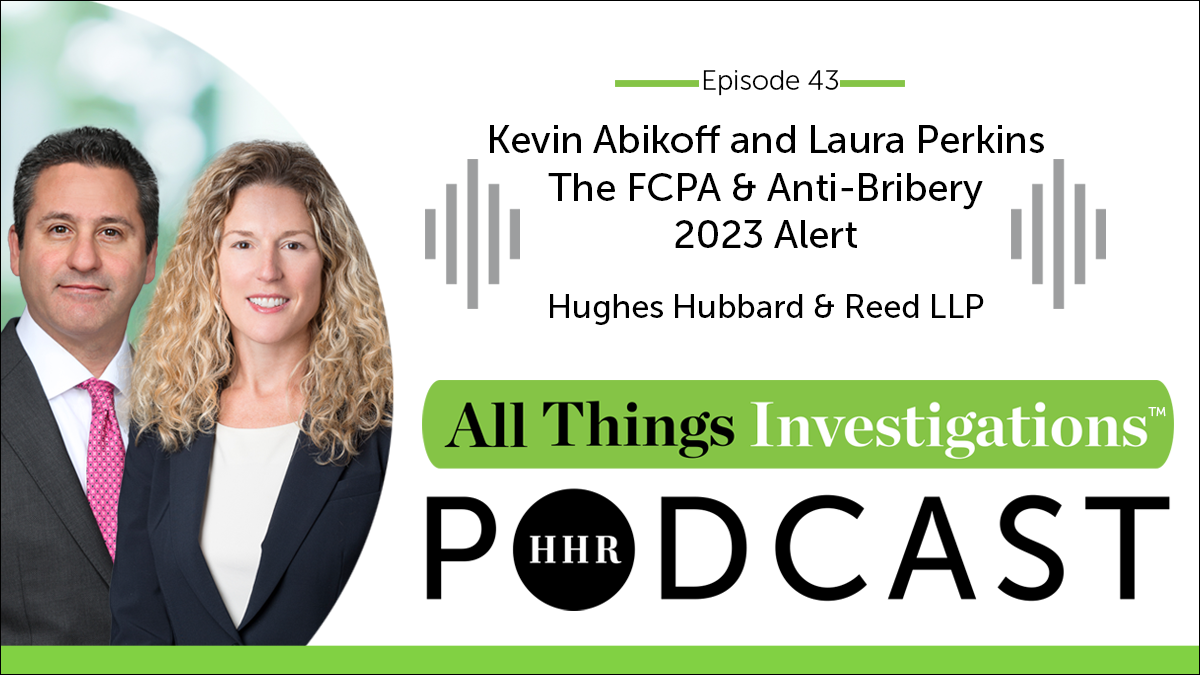
In this episode of All Things Investigation, Tom Fox and guest Kevin Abikoff discuss the Department of Justice’s introduction of a CCO certification in the wake of FCPA violations. Kevin offers his unique perspective on this issue; their conversation also explores broader issues of corporate governance and the role of the Board of Directors.

Kevin Abikoff is a Partner and Deputy Chair at Hughes Hubbard & Reed. He is a recognized authority in corporate governance and compliance. 

You’ll hear Tom and Kevin discuss:

  • Kevin questions the necessity of the CCO certification, suggesting it addresses a problem that doesn’t exist, given the absence of complaints from the Department of Justice about dishonesty during monitorships.
  • A more practical approach, Kevin posits, is a certification 12 to 24 months after a monitorship ends to empower CCOs during periods of vulnerability truly.
  • Measuring compliance effectiveness is subjective and may be void of vagueness in a legal context.
  • In the broader realm of corporate governance, the board has a pivotal role in overseeing compliance. Parallels to the Caremark duty and Delaware law are drawn.
  • Kevin raises concerns about the burden on CCOs to assess program effectiveness retrospectively, especially considering the dynamic nature of compliance programs over time.
  • Boards should take responsibility for compliance certifications and should sign off on these certifications, mirroring similar practices in financial reporting.
  • Innovation within compliance may be stymied if CCOs fear that enhancing a program might be used against them in the future, Kevin points out.

KEY QUOTES:

“I’ve just never heard, especially from the context of Chief Compliance Officer, that the DOJ feels like they’re being lied to. If that’s not the problem they’re trying to solve, I think the solution they have paved is, again, a solution in search of a problem that doesn’t exist…” – Kevin Abikoff

“If you’re going to have a certification and you want to empower the chief compliance officer, have the certification twelve months, 24 months after the conclusion of the monitorship and have the CCO certify that they continue to believe that the policies, procedures, things that have been put in place, continue to be in place.” – Kevin Abikoff

“Now what you fail to investigate can kill you.” – Kevin Abikoff

Resources:

Hughes Hubbard & Reed website 

Kevin Abikoff on LinkedIn

Categories
31 Days to More Effective Compliance Programs

One Month to a More Effective Compliance Program Through Innovation: Day 11 – Compliance Innovation Through KPIs

Measuring your compliance program’s effectiveness will be a critical criterion going forward. One of the mechanisms to do so is through Key Performance Indicators (KPIs). If you have been working towards your stated goals and reporting success, KPIs are critical in showing compliance program success or failure. And while specific requirements for this kind of reporting have been hotly debated in the industry for some time, KPIs are a regulatory requirement. Your KPIs will be specific and unique to your company and its business. Couple this with what goals you are trying to achieve as a whole as a compliance program, and you will see there is no set list of these metrics.

KPIs provide yet another mechanism for you to monitor and update your compliance program almost continuously. KPIs can be extremely low in cost and, therefore, something you can put in place without much approval from higher-ups in your organization that you might have to go to for budget approval. Finally, innovation can come in many ways. ComTech can be a huge jump forward. But sometimes innovation can occur at much less cost and a much more granular level. KPIs can be such a mechanism for you.

Three key takeaways:

  1. KPIs will be critical to assess a compliance program going forward.
  2. Set your KPIs.
  3. Decide on how to use KPIs and the blueprint for going forward.

For more information, check out The Compliance Handbook, 4th edition, here.

Categories
Blog

Messaging App Compliance in Regulated Industries: Lessons from Recent Enforcement Actions

In recent years, regulated industries, particularly broker-dealer firms like Wells Fargo and Morgan Stanley, have faced increased scrutiny from regulatory bodies due to their lack of compliance in policing messaging apps. The Securities and Exchange Commission (SEC) recently announced charges against 10 firms in their capacity as broker-dealers and one dually registered broker-dealer and investment adviser for widespread and longstanding failures by the firms and their employees to maintain and preserve electronic communications. The firms admitted the facts outlined in their respective SEC orders. These firms collectively “agreed to pay combined penalties of $289 million and have begun implementing improvements to their compliance policies and procedures to address these violations.” Additionally, the Commodity Futures Trading Commission (CFTC) ordered four financial institutions to pay $260 million for recordkeeping and supervision failures due to the widespread use of unapproved communication methods.

Even more troubling is the involvement of senior managers in these misconducts, leading the SEC to require an independent compliance consultant in multiple settlements. This highlights the significance of overall corporate culture and the need for stricter compliance measures. Matt Kelly and I recently explored these enforcement actions, the reforms that companies must implement, the role of consultants in reviewing these reforms, and the potential risks and consequences of using messaging apps for business purposes in a Compliance into the Weeds podcast.

Reforms in regulated industries focus on policies and procedures, messaging policies, and employee training. Companies must establish clear messaging policies that outline the acceptable use of communication channels and the importance of recordkeeping obligations. Training employees on these policies and ensuring their understanding is equally vital. Additionally, companies must track training records and allegations of policy violations, making them readily available for review. Next, both ongoing monitoring and continuous improvement must be utilized. Finally, do not forget the need for disciplinary frameworks, with repeat offenders and senior employees potentially facing more severe discipline.

The enforcement crackdown by the SEC and CFTC has already resulted in significant penalties, with fines totaling a staggering $550 million. J.P. Morgan was the first bank to face such a settlement decree, setting a precedent for other banks. This raises speculation about whether the misconduct will continue and if there will be additional enforcement actions. While some large securities firms have yet to be targeted, all regulated industries must take note and proactively address compliance issues.

As noted above, using improper messaging apps for business communication is a significant concern for regulators. Moreover, these violations of securities laws occurred due to employees using ephemeral messaging apps like WhatsApp and Snapchat, which turn off record preservation. Once again, the involvement of supervisory employees and managers in using these apps is even more alarming, further angering the regulators. The SEC’s requirement for an independent compliance consultant in multiple settlements indicates a focus on corporate culture and the need to address senior managers’ involvement.

While these enforcement actions focused on regulated industries, it raises an important question about whether non-regulated industries could also face similar exposure to the SEC. The Justice Department has emphasized taking messaging and communication app risks seriously for all companies. Therefore, even if a company operates outside the purview of specific regulations, it is crucial to consider the potential risks and consequences of using improper messaging apps for business purposes. In a Radical Compliance blog post, Kelly noted, “That is a terrible look for a company. It paints the picture of a management team not interested in good ethical conduct, and we all know how that goes over with the Justice Department when evaluating the state of your compliance program.”

We desired to shed some light on the recent enforcement actions against regulated industries for their lack of compliance in policing messaging apps. The fines and penalties imposed by the SEC and CFTC highlight the seriousness of these violations. Companies must implement reforms, establish robust policies and procedures, and prioritize employee training to ensure compliance. The conversation also underscores the potential risks and consequences of using improper messaging apps for business communication. All companies must prioritize compliance and take proactive measures to address these concerns regardless of industry. By doing so, companies can foster a culture of integrity and avoid the hefty fines and reputational damage associated with non-compliance.

Categories
Sunday Book Review

Sunday Book Review: October 15, 2023 – The Fall of SBF and Crypto Edition

In the Sunday Book Review, Tom Fox considers books that would interest the compliance professional, the business executive, or anyone who might be curious. It could be books about business, compliance, history, leadership, current events, or anything else that might interest Tom. In today’s edition of the Sunday Book Review, Tom considers four books reviewed by Brooke Masters in the FT on the fall of SBF, FTX, and crypto.

  1. Going Infinite: The Rise and Fall of a New Tycoon by Michael Lewis
  2. Number Go Up: Inside Crypto’s Wild Rise and Staggering Fall by Zeke Faux
  3. Easy Money: Cryptocurrency, Casino Capitalism, and the Golden Age of Fraud By Ben McKenzie and Jacob Silverman
  4. Tokens: The Future of Money in the Age of the Platform by Rachel O’Dwyer


Resource:

Michael Lewis on how Sam Bankman-Fried and FTX fell by Brooke Masters in the FT.

Categories
10 For 10

10 For 10: Top Compliance Stories For the Week Ending October 14, 2023

Welcome to 10 For 10, the podcast that brings you the week’s Top 10 compliance stories in one podcast each week. Tom Fox, the Voice of Compliance brings to you, the compliance professional, the compliance stories you need to be aware of to end your busy week. Sit back, and in 10 minutes hear about the stories every compliance professional should be aware of from the prior week. Every Saturday, 10 For 10 highlights the most important news, insights, and analysis for the compliance professional, all curated by the Voice of Compliance, Tom Fox. Get your weekly filling of compliance stories with 10 for 10, a podcast produced by the Compliance Podcast Network.

  • Staley was banned from the financial services arena.   (FT)
  • More 1MDB trouble for Goldman.  (Reuters)
  • When your ex testifies in your fraud case. (WaPo)
  • CA law requires companies to report carbon emissions.  (BBC)
  • Belgium to unfreeze frozen Russian assets. (WSJ)
  • SFO brings corruption charges.  (FT)
  • Elon Musk’s legal woes. (Reuters)
  • Crypto is having trouble getting CCOs. (WSJ)
  • Roger Ng heads to Malaysia.   (AP)

You can check out the Daily Compliance News for four curated compliance and ethics-related stories each day, here.

Connect with Tom 

Threads

Instagram

Facebook

YouTube

Twitter

LinkedIn

Categories
Kerrville Weekly News Roundup

Kerrville Weekly News Roundup: October 14, 2023

Welcome to the Kerrville Weekly News Roundup. Each week, veteran podcaster Tom Fox and his colleagues Andrew Gay and Gilbert Paiz get together to go over a couple of their favorite stories from the past week from Kerrville and the greater Hill Country. Sit back, enjoy a cup of morning coffee and listen in to get a wrap up of the Kerrville Weekly News. We each consider two of our favorite stories and talk about the upcoming weekend’s events which will enjoy or participate in this weekend.

In this episode, Tom and Andrew discuss the following stories which caught their attention over the past week.

·      Tom discusses the Lennar Housing project and the removal of Harvey Belew from the Commissioners Court website. He shouts out to the ALCS featuring the Houston Astros and Texas Rangers starting Sunday night in Houston.

·      Andrew discusses the eclipse coming to Kerrville. Andrew shouts out to our visitors and reminds people to be safe and wear the glasses.

Resources

Tom Fox on LinkedIn

Gilbert Paiz on LinkedIn

Andrew Gay on LinkedIn

Texas Hill Country Podcast Network

The Lead

Texas Tribune