Categories
Blog

The Game Is Afoot in Compliance: Why Sherlock Holmes Still Matters to the Modern Compliance Professional

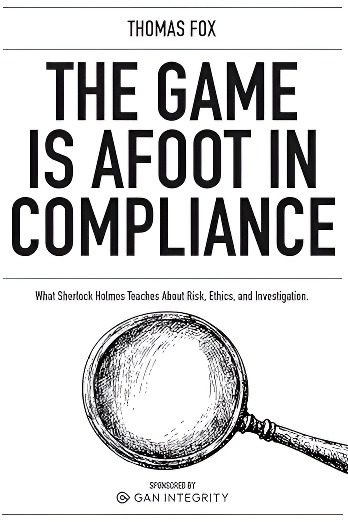
It is with no small amount of pride that I am pleased to announce the publication of my latest book, The Game Is Afoot in Compliance. The book was sponsored by Gan Integrity. There is a reason Sherlock Holmes still resonates with compliance professionals. It is not nostalgia. It is not literary charm. It is not Victorian fog and deerstalker hats. It is a method.

That is what makes The Game Is Afoot in Compliance such a compelling contribution to the compliance profession. The book’s central insight is that Holmes gives us more than a detective story. He gives us a way to think. He gives us a discipline of observation, skepticism, rigor, and moral clarity that aligns remarkably well with the Department of Justice’s expectations for a modern compliance program.

For Chief Compliance Officers, compliance practitioners, boards, internal audit, and legal, that is the real message. Holmes is not a gimmick. Holmes is a framework. In the book, each of the four Holmes novels maps onto a core compliance discipline. Taken together, they form a coherent approach to designing, testing, and leading a best-practices compliance program.

We start with A Study in Scarlet. The lesson here is investigation. Holmes insists on evidence before theory. He refuses to let assumptions drive conclusions. He follows facts, not narratives. That is as close as one can get to the DOJ’s current expectations. Under the 2024 Evaluation of Corporate Compliance Programs, the DOJ is not interested in whether a company can identify a problem. It wants to know whether the company can investigate thoroughly, understand what happened, determine why it happened, and use that knowledge to improve going forward. The FCPA Resource Guide makes the same point differently. A compliance program must work in practice, and a credible investigative function is a large part of proving that.

Holmes would understand that immediately. He would also understand root cause analysis. The novel A Study in Scarlet is not simply about solving a crime. It is about going deeper than the surface event and uncovering the human, structural, and historical causes beneath it. That is precisely what compliance officers must do. Misconduct rarely appears out of nowhere. It is usually the product of pressure, weak controls, cultural tolerance, or a failure to act on warning signs.

Then comes The Sign of Four. Here, the lesson is signals, data, and decision-making. Holmes’ genius was not that he had more information than everyone else. It was that he knew how to distinguish signal from noise. That may be the most important compliance lesson of all in 2026. Every company today is awash in data. The issue is not access. The issue is architecture, judgment, and discipline.

This is where The Game Is Afoot in Compliance becomes particularly timely. Fox connects Holmes to data analytics, pattern recognition, communication, and ongoing monitoring. That is exactly where the compliance profession has moved. The best programs use data to identify anomalies, test controls, and surface risks before they become enforcement matters. But data alone is not enough. Holmes reminds us that human judgment still matters. Someone has to ask the right question. Someone has to notice the odd payment, the missing approval, the relationship that makes no sense, or the policy exception that keeps repeating.

Boards should take note here as well. Board oversight in compliance is not passive. Directors should be asking whether the company has information flows that produce timely, useful, and actionable insights. They should ask whether the compliance function can convert data into decisions. They should ask whether management can explain what it is monitoring, why it is monitoring it, and what it has learned from that work. A dashboard without analysis is decoration. Holmes would have no patience for decorative oversight.

In The Hound of the Baskervilles, I turn to third-party risk and accountability. This may be the most direct compliance analogy in the entire book. The great danger in The Hound is not simply the hound itself. It is the myth surrounding it. People accept the legend. They stop asking hard questions. They allow fear and assumption to take the place of inquiry. How often does that happen in business? “That distributor has been with us forever.” “That agent knows the local market.” “That is how business gets done there.” Those are the modern legends of the Baskerville moor. In compliance, they are red flags wrapped in habit.

The FCPA Resource Guide is crystal clear that risk-based due diligence on third parties is essential. The DOJ has repeatedly emphasized that onboarding due diligence is not enough. Companies must monitor. They must test. They must revisit. Fox makes exactly that point through Holmes: trust without verification is not trust. It is negligence

This is also where independence comes in. Holmes often solved the problem because he was willing to step back from accepted narratives and popular opinion. The compliance function must have that same independence. It must be empowered, adequately resourced, and able to challenge business assumptions. If compliance is too close to the business to question it, then the program is already standing in the Grimpen Mire.

Finally, The Valley of Fear gives us the lessons of a speak-up culture, whistleblower protection, and controls on retaliation. This is perhaps the most urgent message in the book. Fear kills truth. It silences witnesses. It protects wrongdoers. It allows misconduct to metastasize. I use The Valley of Fear to show that a hotline alone is never enough. Regulators now expect proof that employees can raise concerns safely, that those concerns are investigated fairly, and that retaliation is prevented and punished. The ECCP makes this explicit. Companies must demonstrate that their reporting system is trusted and that appropriate controls are in place to prevent retaliation.

This is where leadership and board oversight become inseparable from culture. Tone at the top still matters, but so does conduct in the middle and response at the bottom. Employees watch what happens when someone raises a concern. They watch whether the reporter is protected. They watch whether the issue disappears. Every response is a cultural signal. That is one reason I wanted to write The Game Is Afoot in Compliance, and why I believe it is valuable for the compliance professional. It reminds us that compliance is not only about structure. It is about posture. Holmes teaches posture. He teaches curiosity over complacency. Evidence over assumption. Courage over convenience. Truth over comfort. Those are not literary flourishes. They are operational requirements for an effective compliance program.

The larger point is this: Holmes gives compliance professionals a mindset that fits modern enforcement expectations. The DOJ wants programs that work in practice. The FCPA Resource Guide calls for risk-based, dynamic, and grounded programs. Boards are increasingly expected to oversee not merely whether a program exists, but whether it is effective. In that environment, The Game Is Afoot in Compliance lands at exactly the right time.

It is a book launch with a larger purpose. It does not simply promote Sherlock Holmes as an entertaining analogy. It positions Holmes as a serious guide for the modern compliance professional. Fox gets that exactly right. Because at the end of the day, the best compliance officers are detectives of culture, analysts of systems, skeptics of easy answers, and guardians of institutional integrity. In other words, they are Holmesian.

And that is why this book matters.

5 Key Takeaways

  1. The Game Is Afoot in Compliance shows that Holmes provides a practical framework for modern compliance, not just a literary metaphor.
  2. A Study in Scarlet teaches the value of evidence before theory, rigorous investigation, and root cause analysis.
  3. The Sign of Four demonstrates that data only becomes useful when it is translated into disciplined monitoring, sound judgment, and defensible decisions.
  4. The Hound of the Baskervilles is a powerful lesson in third-party risk, independence, and the danger of letting myth or business custom replace due diligence.
  5. The Valley of Fear reminds us that fear and retaliation destroy speak-up culture, and that regulators now expect companies to prove their systems protect those who raise concerns.

You can purchase a copy of The Game Is Afoot in Compliance from Amazon.com. The book is sponsored by Gan Integrity and features a foreword by Karen Moore. Gan Integrity is sponsoring a road show, The Integrity Road, highlighting the book and each novel as a launching point for a larger discussion of compliance in 2026. The schedule is

Tuesday, April 21, in NYC, where we will discuss A Study in Scarlet and Investigations.

Tuesday, April 28, in San Francisco, where we will discuss the Sign of Four and AI in Compliance.

Tuesday, May 19, in London, where we will discuss The Hound of the Baskervilles and 3rd Party Risk.

You can register and find out more information here.

Categories
Blog

Sherlock Holmes and the Business of Compliance: Top Five Lessons from A Study in Scarlet

In a new season of Adventures in Compliance, we have journeyed through the ethical, investigative, and leadership lessons in Sir Arthur Conan Doyle’s foundational Sherlock Holmes novel, A Study in Scarlet. Today, I wanted to look at the novel from another perspective, exploring the novel for its compelling insights into critical business practices. Sherlock Holmes is not simply the world’s greatest fictional detective; he is also an insightful instructor in the art of business. Here are five top business lessons from Holmes’ first novel and how compliance professionals can incorporate these lessons into best-practice compliance programs.

Lessons Learned

1. Cultivating Diversified Skill Sets to Foster Innovation

When Dr. John Watson meets Sherlock Holmes, we see the convergence of two dramatically different skill sets. Practical and grounded, Watson complements Holmes’s exceptional analytical acumen and eccentric genius. This pairing is significant; Holmes benefits greatly from Watson’s structured and methodical approach, which developed from Watson’s training as a medical professional and his disciplined experience as a soldier.

In business compliance, it is essential to recognize the power of multidisciplinary teams. Just as Watson’s medical insights were crucial to Holmes’ understanding of crime, a strong compliance function requires input from various corporate functions such as legal, finance, HR, and operations. Encouraging collaboration across different departments brings about innovative compliance solutions that one-dimensional thinking can’t match.

Compliance Best Practice: Build cross-functional compliance teams and create environments where open dialogue between various business units becomes standard operating procedure.

2. Trust Encourages Risk-Taking and Innovation

A cornerstone of Holmes’s partnership with Watson was their mutual trust. Watson’s unwavering trust in Holmes gave Holmes the liberty to experiment boldly, occasionally taking unconventional paths toward solutions. This trusted partnership allowed Holmes to embrace creative risk-taking, essential to solving complex problems. In compliance programs, trust similarly fuels innovation. A company culture emphasizing trust will empower employees to bring forth concerns or innovative ideas without fear of reprisal. A trust-based compliance culture is a fertile ground for employee engagement, proactive problem-solving, and thoughtful risk-taking.

Compliance Best Practice: Foster a speak-up culture by actively demonstrating management’s responsiveness to employee concerns. Compliance officers must reinforce trust at all organizational levels.

3. Objective Feedback Sharpens Analytical Capabilities

Sherlock Holmes, despite his brilliance, greatly valued Watson’s objective insights. Holmes knew that an external perspective could identify blind spots he might overlook. Watson often provided straightforward observations that sharpened Holmes’ analysis, effectively guiding Holmes toward the solution by challenging his assumptions. In compliance, objective and candid feedback mechanisms are equally critical. Regular audits, external compliance reviews, and independent assessments act as the compliance function’s “Dr. Watson.” They help organizations identify areas needing improvement and provide a comprehensive understanding of compliance health.

Compliance Best Practice: Implement structured, objective compliance audits and reviews, ideally conducted by independent parties, to ensure the continuous refinement of compliance strategies.

4. Emotional Intelligence Enhances Decision-Making

While Holmes is famed for his detached logic, Watson’s emotional intelligence often balanced their investigative endeavors. Watson’s sensitivity towards human behavior complemented Holmes’ sharp logic and brought depth to their investigative methods. This integration of emotional intelligence and logical rigor proved pivotal in understanding suspects and witnesses.

Likewise, compliance is not merely about adhering to rules. It is about understanding and managing human behavior within the organizational context. Compliance officers who understand employee motivations and organizational psychology can effectively tailor compliance programs, addressing root behavioral drivers of misconduct rather than superficial symptoms alone.

Compliance Best Practice: Incorporate emotional intelligence training for compliance officers and team members. Ensure compliance communication demonstrates empathy and understanding, increasing employee acceptance and effectiveness.

5. Structured Communication Optimizes Organizational Clarity

Sherlock Holmes’ partnership with Watson was not simply effective because of their complementary skills but also exceptionally productive due to clear and structured communication. Holmes, meticulous and precise, effectively communicated his deductions, theories, and investigative approaches, thus providing Watson with clarity and alignment on strategy.

Structured communication in corporate compliance is similarly crucial. Clear, concise, and frequent communication from compliance teams ensures that every organizational member understands their responsibilities, obligations, and the reasoning behind compliance initiatives. Transparency and clarity can significantly reduce missteps caused by misunderstandings and ambiguity.

Compliance Best Practice: Develop a structured communication plan with regular compliance updates, clear policy documentation, accessible training materials, and transparent reporting channels.

6. Integrating Sherlock’s Business Wisdom into Compliance

In A Study in Scarlet, Sherlock Holmes does not simply solve mysteries; he implicitly outlines best practices that remain strikingly relevant to today’s compliance landscape. These lessons can translate for compliance professionals into actionable strategies to fortify compliance frameworks, improve organizational ethics, and drive business success.

Cross-Functional Synergy: Ensure diverse departmental insights inform your compliance program design. Holmes utilized Watson’s medical expertise, leveraging cross-departmental collaboration to create more robust, adaptive compliance structures.

Trust-Based Culture: Compliance innovation thrives where trust prevails. Demonstrating transparency and accountability cultivates trust and encourages innovative compliance problem-solving.

Objectivity and Independence: Regular external reviews and independent feedback ensure compliance programs remain sharp and attuned to emerging risks.

Emotional Insight: Emotional intelligence can enhance compliance effectiveness. Understanding employees’ emotional and psychological motivations can bolster compliance messaging and training efficacy.

Clear, Structured Communication: Establish a robust framework for clear compliance communication. This will prevent ambiguity and ensure alignment across all organizational levels.

Conclusion

Although fictional, Sherlock Holmes provides a powerful template for contemporary business compliance. By embodying these five business principles observed in A Study in Scarlet, compliance professionals can ensure their programs are robust, effective, proactive, and dynamic. Holmes reminds us that compliance, much like detective work, demands constant vigilance, a diverse skill set, structured communication, emotional intelligence, and trust-based relationships.

In the face of modern compliance challenges, ranging from regulatory upheavals and technological advancements to shifting corporate cultures, these timeless lessons from Sherlock Holmes offer valuable strategies that corporate compliance professionals can immediately deploy. As compliance programs evolve, embracing these lessons will position compliance officers not merely as corporate watchdogs but as critical strategic partners and business enablers.

Remember Holmes’ words: “There is nothing like first-hand evidence.” Compliance leaders must continuously seek first-hand insights into organizational behavior, culture, and practices. By applying Sherlockian clarity, logic, and strategic thinking to our compliance programs, we can transform compliance from a reactive safeguard into a proactive catalyst for ethical business excellence.

Let Holmes inspire your compliance journey, empowering your teams to navigate the complexities of corporate ethics and integrity with confidence and innovation. Embrace these five business lessons, apply them rigorously, and watch your compliance program thrive.

As Holmes would undoubtedly advise, the game is always afoot—so let’s play it well.

Categories
Adventures in Compliance

Adventures in Compliance: The Novels – Business Lessons from A Study in Scarlet

In this new season of Adventures in Compliance, host Tom Fox takes a deep dive into the Sherlock Holmes novels. Over this season, Tom will deeply dive into each novel over a four-part series. The four novels he will consider from the ethics and compliance perspective are A Study in Scarlet, The Sign of Four, The Hound of the Baskervilles, and The Valley of Fear. Tom begins with A Study in Scarlet for our new season’s first offering. In Part 4, we deeply dive into the business lessons compliance professionals can learn from the story.

Key takeaways include cultivating diversified skill sets, fostering a trust-based culture, valuing objective feedback, integrating emotional intelligence, and optimizing structured communications. These principles are explored in depth to provide actionable strategies for compliance professionals. The episode concludes a special four-part series on the novel with an invitation to join the next series on ‘The Sign of Four.’

Highlights include:

  • Deep Dive into ‘A Study in Scarlet’
  • Business Lessons from Sherlock Holmes
  • Integrating Holmes’ Wisdom into Compliance

Resources:

The New Annotated Sherlock Holmes

Sherlock Holmes FAQ by Dave Thompson

Connect with Tom Fox

Instagram

Facebook

YouTube

Twitter

LinkedIn

Categories
Adventures in Compliance

Adventures in Compliance: Investigate Lessons from A Study in Scarlet

In this new season of Adventures in Compliance, host Tom Fox takes a deep dive into the Sherlock Holmes novels. Throughout this season, Tom will thoroughly explore each novel in a four-part series. The four novels we will consider from the ethics and compliance perspective are A Study in Scarlet, The Sign of Four, The Hound of the Baskervilles, and The Valley of Fear. We begin with A Study in Scarlet for our new season’s first offering. In Part 3, Tom deeply dives into the investigative lessons learned from the story.

When Sir Arthur Conan Doyle introduced the world to Sherlock Holmes in A Study in Scarlet, he didn’t just give us the greatest fictional detective of all time—he gave compliance professionals a master class in investigative methods. Through his cool logic, careful observation, and constant search for the truth, Holmes modeled what every corporate investigator should aspire to emulate. From his crime scene analysis to using deceptive tactics to expose a suspect, Holmes’s first published case offers lessons relevant to modern compliance programs, especially when dealing with internal investigations, whistleblower reports, and root cause analysis. Here are five enduring investigative lessons, grounded in the facts of A Study in Scarlet, that today’s compliance professionals can apply in their work.

Highlights include:

  • Let the Evidence Speak First—Not the Theory
  • Small Clues Are Often the Most Telling
  • Reconstruct the Incident with Logic and Imagination
  • Use Deception Strategically to Draw Out the Truth
  • Motive Often Lies in the Past—Not Just in the Present Crime

Resources:

The New Annotated Sherlock Holmes

Sherlock Holmes FAQ by Dave Thompson

Connect with Tom Fox

Instagram

Facebook

YouTube

Twitter

LinkedIn

Categories
Adventures in Compliance

Adventures in Compliance: The Novels – A Study in Scarlet, Dr. Watson

In this new season of Adventures in Compliance, host Tom Fox will dive deep into the Sherlock Holmes novels. Over this season, Tom will do so in a four-part series. The four novels we will consider from the ethics and compliance perspective are A Study in Scarlet, The Sign of Four, The Hound of the Baskervilles, and The Valley of Fear.

We begin with A Study in Scarlet for our first offering this new season. In Part 2, Tom will take a deep dive into Dr. Watson, how he and Holmes met, and Watson’s contributions to their partnership and consider Watson’s professional training as a doctor, his war services and injuries during the Second Anglo-Afghan War, and his return to England, all leading to his initial introduction to Holmes by their mutual acquaintance Stamford. Watson’s involvement in the case helps Holmes move beyond isolated brilliance to true investigative mastery. In compliance, pairing sharp analytic talent with professionals rooted in operational or practical experience often yields the strongest compliance strategies.

Highlights include:

  • Diversified Skill Sets
  • Trust Encourages Innovation
  • Objective Feedback Sharpens Analysis
  • Emotional Intelligence Deepens Understanding
  • Structured Communication Improves Decision-Making

Resources:

The New Annotated Sherlock Holmes

Sherlock Holmes FAQ by Dave Thompson

Connect with Tom Fox

Instagram

Facebook

YouTube

Twitter

LinkedIn

Categories
Adventures in Compliance

Adventures in Compliance: The Novels – A Study in Scarlet, Introduction to Compliance Lessons

In this new season of Adventures in Compliance, host Tom Fox will explore the Sherlock Holmes novels in depth. Over the course of this season, Tom will do so in a four-part series. The four novels we will consider from the ethics and compliance perspective are A Study in Scarlet, The Sign of Four, The Hound of the Baskervilles, and The Valley of Fear.

For our first offering this season, we begin with A Study in Scarlet. In part 1 of our four-part exploration of this novel, which introduced Sherlock Holmes and Dr. Watson to the world. We begin by summarizing the novel’s plot, which dsummarizeiscusses key events and Holmes’ brilliant deductive methods. We then take a deep dive into five critical compliance lessons from the story, including the dangers of institutional abuse of power, the imperative for structured justice, the necessity of root cause analysis, due diligence, and transparent communication within organizations. Join us for an engaging episode that underscores the relevance of Sherlock Holmes’ investigative strategies to modern compliance practices.

Highlights include:

  • Welcome to a New Season of Adventures in Compliance
  • The Summary of and a Deep Dive into ‘A Study in Scarlet’
  • Ethical Lessons for Compliance Professionals

Resources:

The New Annotated Sherlock Holmes

Sherlock Holmes FAQ by Dave Thompson

Connect with Tom Fox

Instagram

Facebook

YouTube

Twitter

LinkedIn