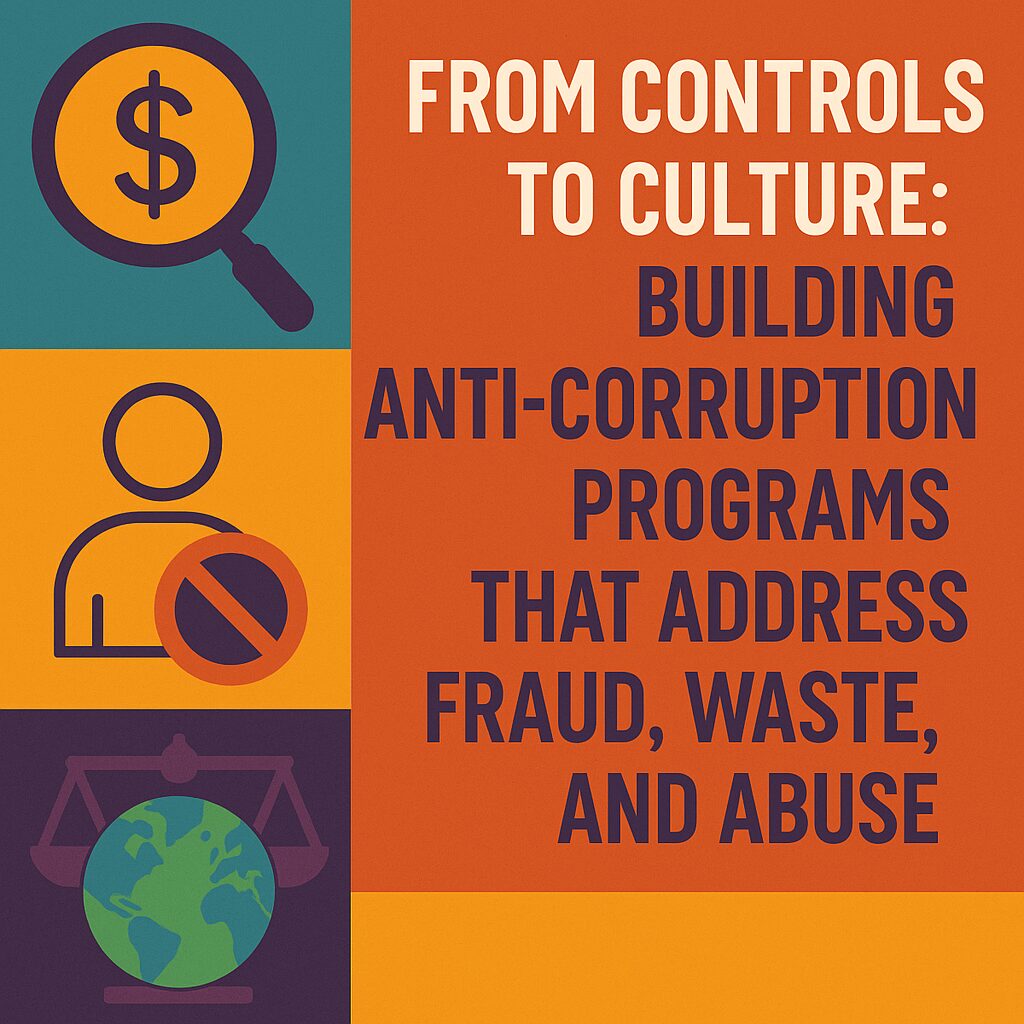
Fraud, waste, and abuse are not just buzzwords in the government sector. They represent a real continuum of risk that every private sector company must confront. In fact, when designing or refreshing an anti-corruption compliance program, these three categories should not be seen as separate from bribery and corruption risks; they are integral to them. Bribery schemes thrive in environments where fraud is unchecked, where waste is tolerated, and where abuse of authority is normalized.
A truly effective anti-corruption compliance program, therefore, must address fraud, waste, and abuse head-on. Each requires different tools, but all rest on the same foundation: clear expectations, adequate controls, data-driven monitoring, and a culture of accountability. Yesterday, we took a deep dive into the three concepts behind fraud, waste, and abuse. Today, we continue our primer on fraud, waste, and abuse for the compliance professional by exploring how compliance professionals can operationalize their ABC framework to help fight these corporate scourges.
1. Fraud Prevention: Strengthening the Control Environment
Fraud sits at the heart of most corruption schemes. Bribery rarely occurs without the use of falsified invoices, fraudulent expense reports, or deceptive third-party contracts. That’s why fraud prevention measures must be embedded directly into your anti-corruption compliance program.
Practical steps include:
- Segregation of duties. No single employee should have the authority to control both vendor approval and invoice payment. Splitting responsibilities closes off avenues for concealment.
- Mandatory rotations or vacations. Employees in high-risk positions, such as procurement or finance, should be required to take periodic breaks. This not only reduces burnout but also increases the chance of uncovering irregularities.
- Third-party due diligence. Vendors, distributors, and consultants are often used as conduits for corrupt payments. Screening them for red flags of fraud and corruption is essential.
- Hotlines and reporting mechanisms. Anonymous channels encourage employees to report fraudulent or corrupt activity before it escalates.
Finally, modern fraud prevention is inseparable from data analytics. Reviewing transactions for anomalies in billing, procurement, or travel can help compliance officers identify both fraudulent activity and corruption red flags early.
2. Waste Reduction: Linking Efficiency to Integrity
Waste may not sound like a corruption risk at first, but it often creates the environment in which corrupt practices thrive. When organizations tolerate careless spending or redundant processes, they signal that accountability is optional. Waste becomes the fertile soil in which corruption can take root.
Practical steps include:
- Cross-functional accountability. Compliance should collaborate with finance, procurement, and operations to ensure efficient allocation of resources.
- Tracking key waste indicators. Duplicate software licenses, unnecessary travel expenses, or high energy consumption may not be fraudulent, but they represent vulnerabilities that can be exploited. Left unchecked, they normalize sloppy practices that corrupt employees can exploit.
- Integrating waste metrics into compliance dashboards. If a business unit consistently demonstrates waste, it may also be vulnerable to bribery risks, particularly in operations that are heavily reliant on procurement.
By spotlighting waste, compliance leaders not only save the company money but also reinforce a culture of stewardship and integrity, two qualities that reduce the likelihood of corruption.
3. Abuse Control: Guarding Against the Gray Areas
Abuse often serves as the gateway to corruption. It thrives in gray zones, where managers stretch policies, exploit loopholes, or turn a blind eye to questionable behavior. Abuse may not always cross a legal line, but it corrodes culture and opens the door to bribery and unethical decision-making.
Practical steps include:
- Tone from the top and middle. Executives and line managers alike must model integrity. If leaders exploit perks or bend rules, employees will assume similar behavior is acceptable in dealing with third parties.
- Policy clarity. Abusive practices often hide in vague policies. For example, a travel policy that allows “reasonable upgrades” without definition invites abuse. Aligning policies with anti-corruption standards closes these loopholes.
- Incentive structures. Embedding transparency and fairness into performance reviews and rewards ensures managers do not cut ethical corners to hit financial targets.
By shrinking the space in which abuse can thrive, companies make it more difficult for corrupt practices to become normalized.
4. Leverage Data Analytics: Uncovering Patterns Across Risk Categories
Corruption schemes are rarely isolated. They often weave together fraud, waste, and abuse. That’s why analytics should not be siloed. A robust anti-corruption program integrates monitoring across multiple risk vectors.
Practical applications include:
- Travel and entertainment analytics. Reviewing expense reports can uncover fraudulent receipts, wasteful spending, or abusive upgrades. These same reports may also reveal bribery risks if entertainment involves government officials or high-risk clients.
- Procurement analytics. Comparing vendor pricing across regions may reveal fraudulent invoicing, excessive costs (resulting in wasteful spending), or favoritism (abuse of power). It can also reveal third parties that may be used as conduits for corruption.
- Cross-data integration. Linking procurement, HR, and finance data highlights unusual patterns. For example, a sudden spike in overtime in a high-risk market may flag both payroll abuse and potential red flags for corruption.
Data analytics transforms compliance from a reactive to a proactive discipline, catching issues before they metastasize into a full-blown corruption scandal.
5. Whistleblower Empowerment: The Human Early Warning System
Even the most advanced controls and analytics cannot replace human intelligence. Employees are the first to notice when fraud, waste, or abuse is occurring. But unless they feel safe speaking up, those observations remain hidden.
Practical steps include:
- Robust reporting channels. Multiple options, including hotlines, digital portals, or direct reporting to compliance, all make it easier for employees to raise concerns.
- Protection against retaliation. Employees must trust that speaking up won’t cost them their careers. Policies must be clear, and enforcement consistent.
- Timely follow-up. When employees report fraud, waste, or abuse, prompt investigation and feedback demonstrate that the company takes reports seriously.
In the context of anti-corruption compliance, whistleblowers are invaluable. They can flag bribery schemes before external regulators or auditors uncover them.
Building Resilience by Tackling All Three
An anti-corruption compliance program that focuses only on bribery risks but ignores fraud, waste, and abuse is incomplete. Fraud fuels corruption, waste fosters the conditions where it flourishes, and abuse normalizes the behavior that enables it.
By embedding fraud prevention, waste reduction, abuse control, data analytics, and whistleblower empowerment into your anti-corruption framework, you create a resilient program that goes beyond compliance checklists. You demonstrate stewardship to shareholders, accountability to employees, and integrity to regulators.
The fight against corruption is not won by policing bribery alone. It is won by creating a culture where fraud, waste, and abuse cannot survive and where transparency, efficiency, and fairness are the norm. That is the true mandate for today’s compliance professional.