

Categories
GSK in China: 13 Years Later

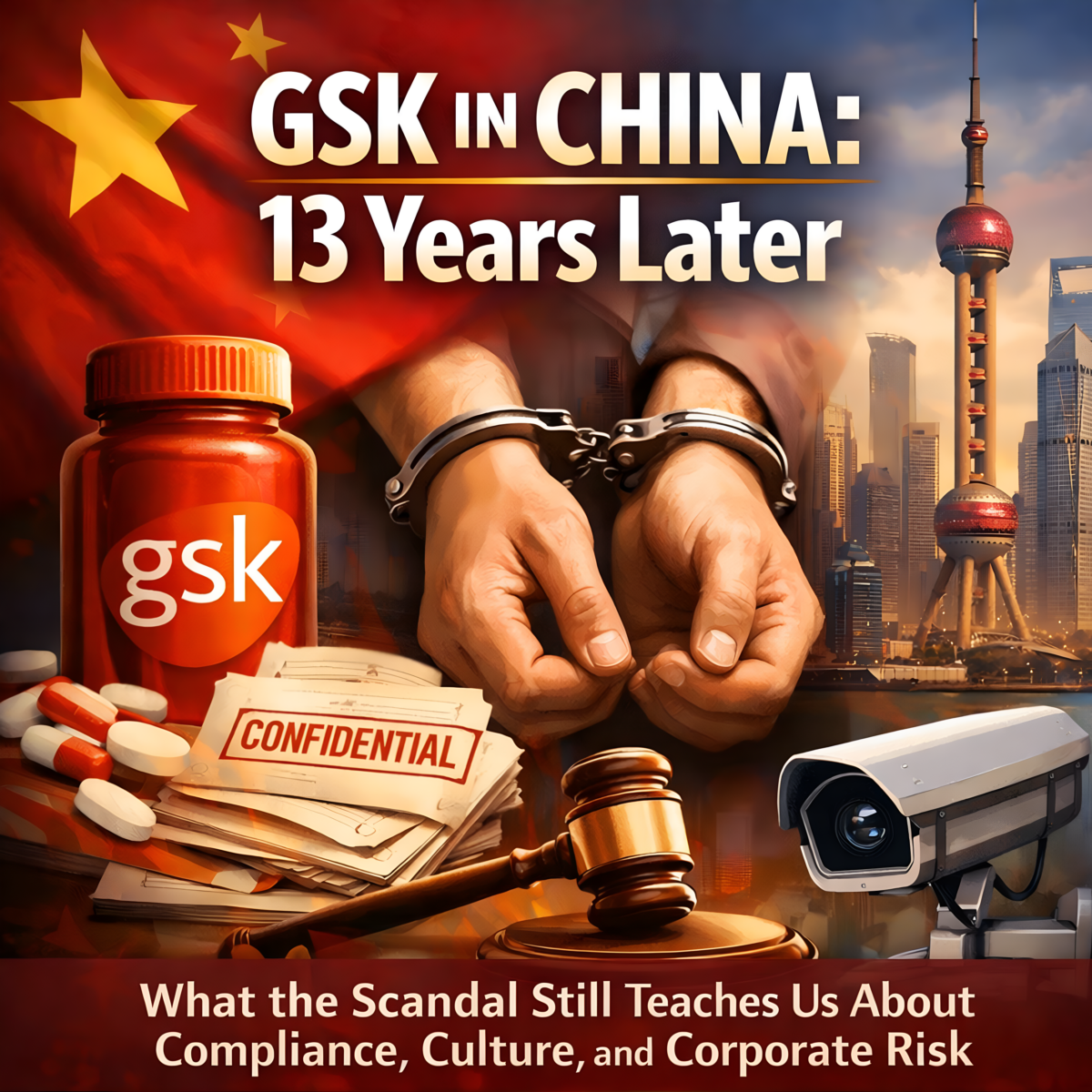
GSK In China: 13 Years Later – After the Humphreys Verdict: Managing Third-Party Risk When You Can’t Verify

Thirteen years after the GSK China scandal exploded onto the global stage, its lessons remain as urgent as ever for compliance professionals and business leaders. In this podcast series, we revisit the case not simply as corporate history, but as a living cautionary tale about culture, incentives, third parties, investigations, and governance. Each episode explores what went wrong, why it went wrong, and how those failures still echo in today’s compliance and ethics landscape. Join me as we unpack the scandal and draw practical lessons for building stronger, more resilient organizations. In this episode, we take a deep dive into the 2013 GSK China bribery scandal and examine why it remains one of the most important case studies in corporate compliance, governance, and culture. Our hosts are Timothy and Fiona.

The episode examines how multinational companies should manage third-party relationships and compliance in opaque markets like China when traditional intelligence-gathering is curtailed by privacy laws, using the case of corporate investigators Peter Humphreys and his wife Ying Zeng, who were hired by GSK to investigate a sex-tape scandal but were convicted and imprisoned for purchasing Chinese citizens’ personal data. The discussion highlights how the verdict created operational uncertainty for due diligence, M&A, supplier vetting, and anti-bribery efforts, and notes Humphrey’s claim that GSK withheld the fact that it faced internal whistleblower allegations of corruption. Drawing on DOJ expectations and an SCCE framework, it argues for shifting from “vet and forget” to continuous third-party management across five steps, reinforcing business justification, questionnaires, contracts, and ongoing oversight with mitigations like capped commissions, detailed invoice review, early audits, and use of public records and in-person interviews.

Key highlights:

  • Why Verification Matters
  • Privacy Laws Change Everything
  • When Partners Refuse Disclosure
  • Build Your Own Intelligence
  • Contract Controls and Oversight

Resources:

GSK in China: A Game Changer for Compliance on Amazon.com

GSK in China: Anti-Bribery Enforcement Goes Global on Amazon.com

Tom Fox

Instagram

Facebook

YouTube

Twitter

LinkedIn

Ed. Note: the voices of the hosts, Timothy and Fiona, were created by Notebook LM based upon text written by Tom Fox
Categories
GSK in China: 13 Years Later

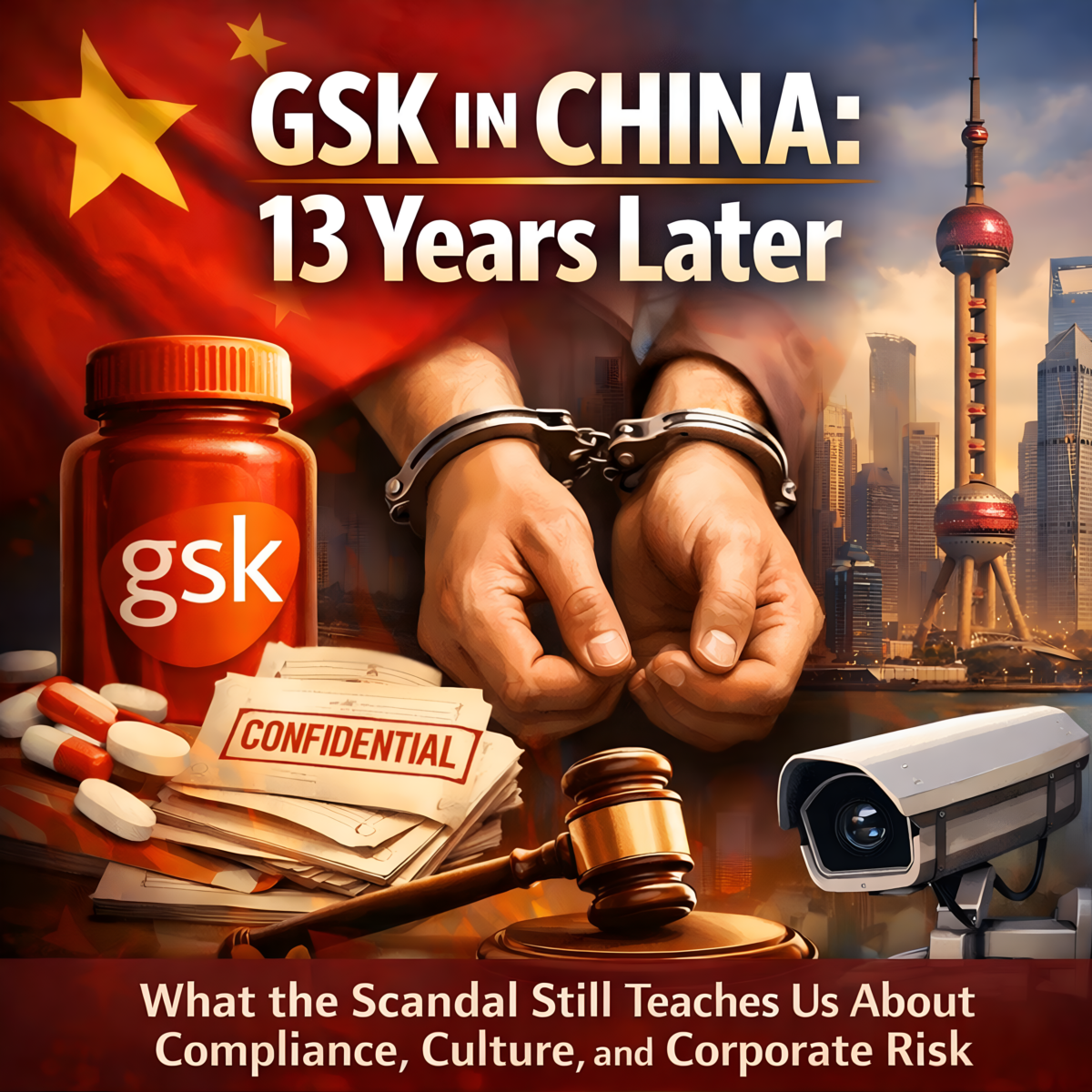
GSK In China: 13 Years Later – The Verdicts

Thirteen years after the GSK China scandal exploded onto the global stage, its lessons remain as urgent as ever for compliance professionals and business leaders. In this podcast series, we revisit the case not simply as corporate history, but as a living cautionary tale about culture, incentives, third parties, investigations, and governance. Each episode explores what went wrong, why it went wrong, and how those failures still echo in today’s compliance and ethics landscape. Join me as we unpack the scandal and draw practical lessons for building stronger, more resilient organizations.

This episode analyzes the GSK China scandal and its compliance implications, beginning with the 2014 Shanghai trial of private investigators Peter Humphrey and Yu Yingzeng, convicted under a vague 2009 privacy law for illegally purchasing sensitive personal data (IDs, travel, and phone records) using hidden cameras and data brokers, resulting in prison terms and fines. Their arrest overlapped with a GSK-commissioned probe into a sex tape involving China chief Mark Reilly, as China separately convicted GSK in a secret Hunan trial, imposing a record 3 billion RMB (~$491M) fine tied to bribes routed through travel agencies via inflated conference budgets and kickbacks to doctors. Executives gave televised confessions yet received suspended sentences, reflecting a strategy of corporate submission and public exposure over incarceration. The market reaction was muted, but GSK responded by ending payments to doctors and replacing volume-based sales commissions with qualitative metrics, creating a modern compliance blueprint while highlighting ongoing UK Bribery Act and FCPA exposure. Our hosts are Timothy and Fiona.

Key highlights:

  • Investigators on Trial
  • GSK Secret Verdict
  • Executives Sentenced
  • Judicial Strategy Explained
  • Global Compliance Blueprint

Resources:

GSK in China: A Game Changer for Compliance on Amazon.com

GSK in China: Anti-Bribery Enforcement Goes Global on Amazon.com

Tom Fox

Instagram

Facebook

YouTube

Twitter

LinkedIn

Ed. Note: the voices of the hosts, Timothy and Fiona, were created by Notebook LM based upon text written by Tom Fox

Categories
GSK in China: 13 Years Later

GSK In China: 13 Years Later – Where Was the Board? Director Oversight and Doing Business in China

Thirteen years after the GSK China scandal exploded onto the global stage, its lessons remain as urgent as ever for compliance professionals and business leaders. In this podcast series, we revisit the case not simply as corporate history, but as a living cautionary tale about culture, incentives, third parties, investigations, and governance. Each episode explores what went wrong, why it went wrong, and how those failures still echo in today’s compliance and ethics landscape. Join me as we unpack the scandal and draw practical lessons for building stronger, more resilient organizations. This episode examines why major bribery scandals occur “under the board’s nose,” using GSK as a launching point to explain directors’ legal and practical compliance responsibilities.

It traces oversight duties under Delaware law, highlighting Caremark’s good-faith duty to ensure information and reporting systems, Stone v. Ritter’s standard for liability for sustained or systematic oversight failure, and the business judgment rule. It contrasts “check-the-box” programs with risk-based oversight via the Piat case, where formal compliance masked illegal conduct embedded in business plans. The discussion ties board expectations to FCPA guidance hallmarks, emphasizing tone at the top, empowered compliance functions with direct board access, DOJ/SEC scrutiny, and SEC Reg. S-K 407 risk-oversight disclosures, and potential disgorgement. It then focuses on China as a high-risk environment, third-party intermediary exposure, and M&A “deal-breaker” dilemmas requiring rigorous pre- and post-acquisition diligence, concluding with the paradox that boards may be incentivized toward plausible deniability. Our hosts are Timothy and Fiona.

Key highlights:

  • Compliance Starts at the Top
  • Caremark Duty Explained
  • FCPA Hallmarks for Boards
  • Passive Board Era Ends
  • Plausible Deniability Paradox

Resources:

GSK in China: A Game Changer for Compliance on Amazon.com

GSK in China: Anti-Bribery Enforcement Goes Global on Amazon.com

Tom Fox

Instagram

Facebook

YouTube

Twitter

LinkedIn

Ed. Note: Notebook LM created the voices of the hosts, Timothy and Fiona, based on text written by Tom Fox

Categories
GSK in China: 13 Years Later

GSK In China: 13 Years Later – How “Good Fraud” Bypassed Audits, Compliance, and IT Controls

Thirteen years after the GSK China scandal exploded onto the global stage, its lessons remain as urgent as ever for compliance professionals and business leaders. In this podcast series, we revisit the case not simply as corporate history, but as a living cautionary tale about culture, incentives, third parties, investigations, and governance. Each episode explores what went wrong, why it went wrong, and how those failures still echo in today’s compliance and ethics landscape. Join me as we unpack the scandal and draw practical lessons for building stronger, more resilient organizations. In this powerful second episode, we unpack one of the most defining corporate scandals of the past decade—the 2013 GSK China bribery case. More than a headline-making event, it’s a masterclass in how sophisticated “good fraud” can slip past audits, evade compliance safeguards, and outmaneuver IT controls.

The episode examines allegations that GSK faced a bribery and corruption scheme in China involving sums reported up to $500 million, despite extensive compliance resources, including more compliance officers in China than anywhere outside the US, up to 20 internal audits annually, and external auditing by PwC. Drawing on Reuters, the Financial Times, the Wall Street Journal, and analysis from The Texas Lawyer, it explains how bribery was described as rampant in China’s healthcare system and how payments were structured through direct cash and vouchers and, more commonly, indirect channels such as travel agencies, hospital “sponsorships,” and conference trips. It outlines “good fraud” enabled by collusion and flawless paperwork, audit materiality thresholds that miss fragmented FCPA-risk payments, China’s data-export restrictions that limit oversight, and a WSJ-reported Botox example where managers directed staff to use personal email to coordinate rewards for prescriptions, concluding with compliance program directives emphasizing IT-compliance coordination, data mapping, enforceable policies, employee reporting, and stress testing.

Key highlights:

  • How Bribes Were Paid
  • Good Fraud and Audit Failure
  • Materiality Trap and Fragmentation
  • Data Blockade and External Audits
  • Five Compliance Fixes

Resources:

GSK in China: A Game Changer for Compliance on Amazon.com

GSK in China: Anti-Bribery Enforcement Goes Global on Amazon.com

Tom Fox

Instagram

Facebook

YouTube

Twitter

LinkedIn

Ed. Note: The Notebook LM created notes, the voices of the hosts, Timothy and Fiona, based upon text written by Tom Fox

Categories
GSK in China: 13 Years Later

GSK In China: 13 Years Later – GSK in China: The Compliance Breakdown That Still Echoes 13 Years Later

Thirteen years after the GSK China scandal exploded onto the global stage, its lessons remain as urgent as ever for compliance professionals and business leaders. In this podcast series, we revisit the case not simply as corporate history, but as a living cautionary tale about culture, incentives, third parties, investigations, and governance. Each episode explores what went wrong, why it went wrong, and how those failures still echo in today’s compliance and ethics landscape. Join me as we unpack the scandal and draw practical lessons for building stronger, more resilient organizations. In this inaugural episode, we take a deep dive into the 2013 GSK China bribery scandal and examine why it remains one of the most important case studies in corporate compliance, governance, and culture. Our hosts are Timothy and Fiona.

We unpack how a global pharmaceutical giant was alleged to have used travel agencies, fake conferences, false VAT receipts, and targeted marketing programs to channel illicit payments to doctors, officials, and other intermediaries, all while an internal whistleblower warning and a four-month internal investigation failed to detect the misconduct. The episode also explores the tension between polished global compliance structures and compromised local execution, showing how incentives, third-party relationships, and regional sales pressure can overwhelm formal controls. Most importantly, it asks a question that remains urgent today: are corporate compliance systems truly designed to find the truth, or can they create a false sense of security that allows misconduct to flourish undetected?

Key highlights:

  • The scale of the alleged misconduct was enormous.
  • Third parties were central to the scheme.
  • Internal controls failed when they were needed most.
  • Corporate culture and incentives drove the risk.
  • Why the lessons are still highly relevant today.

Resources:

GSK in China: A Game Changer for Compliance on Amazon.com

GSK in China: Anti-Bribery Enforcement Goes Global on Amazon.com

Tom Fox

Instagram

Facebook

YouTube

Twitter

LinkedIn

Ed. Note: The Notebook LM created notes, the voices of the hosts, Timothy and Fiona, based upon text written by Tom Fox