


Categories
Blog

The Future of Continuous Monitoring: AI-Driven Compliance is Here to Stay

The compliance function has officially crossed the Rubicon. Artificial intelligence is no longer an experimental technology on the compliance periphery; it is at the center of forward-thinking compliance programs. We are witnessing a seismic shift in managing risk, detecting misconduct, and maintaining corporate integrity. AI enables real-time monitoring, uncovering subtle anomalies, and delivering the kind of automated oversight previously confined to PowerPoint dreams. As we enter 2025, the question is not whether your compliance function should adopt AI but how quickly you can make it central to your operations.

This blog post explores how compliance professionals can use AI to power a future-ready, continuously monitored compliance program. Today, we will explore five powerful lessons supported by real-world case examples and framed within current regulatory expectations. As Andrew McBride described, we are entering the “Holy Grail” era of compliance, where due diligence, internal and external data, and communications can be monitored holistically through AI agents trained to detect abnormalities and investigate unethical behavior.

Lesson 1: AI Enhances Risk Detection

AI doesn’t just speed up compliance; it sharpens it. Traditional compliance teams have long struggled to keep up with massive amounts of structured and unstructured data. From financial transactions to email threads, vendor records, and chat logs, there are risk indicators that no human team could feasibly monitor in real-time. Enter AI and machine learning.

With natural language processing (NLP), AI systems can read between the lines. They detect shifts in sentiment, keyword patterns, and coded language that may indicate bribery, fraud, or circumvented controls. Matt Galvan emphasizes this as a game-changer, especially when GenAI tools synthesize background due diligence with transactional anomalies to flag red flags early before misconduct manifests.

Better still, AI eliminates the “needle in a haystack” problem. It builds outliers into profiles, detects slush fund behavior, and creates actionable summaries with supporting documentation. You are not simply faster, and you are smarter. But here’s the kicker: the quality of AI outputs depends on the quality of your inputs—poor data = poor detection. AI must be trained on clean, complete, and bias-aware datasets. And AI should never operate in a vacuum. Human judgment remains essential to interpret findings and assess the business context.

The bottom line is that AI transforms compliance from reactive to proactive. It is no longer about catching up; it is about staying ahead.

Lesson 2: Regulators Expect AI-Driven Compliance

If you need a business case for AI, start with the Department of Justice (DOJ) and its 2024 Evaluation of Corporate Compliance Programs (2024 ECCP). The DOJ has moved beyond encouragement and now expects companies to adopt real-time, AI-powered compliance monitoring. Failing to implement these tools could soon be seen as a failure to meet basic compliance standards.

This isn’t just about the DOJ. The SEC, FinCEN, OCC, Federal Reserve Board, and the Financial Action Task Force (FATF) are pushing toward a future where real-time compliance tools are a baseline requirement, not a nice-to-have. What’s more, regulators are now asking companies to explain their AI. What data powers your algorithms? How are decisions made? Can you justify why one transaction was flagged and another was not? Transparency and audibility are no longer optional; they are regulatory imperatives.

Regulators understand that AI can reduce legal risk and enhance oversight. They expect you to understand it, too.

Lesson 3: AI Identifies Emerging Geopolitical Risks

Welcome to the volatility vortex of 2025. What was a low-risk jurisdiction on Friday can be a sanctioned country by Monday. Supply chains bend and sometimes break under the weight of sanctions, tariffs, and political upheaval.

Traditional compliance programs cannot react fast enough. This is where AI earns its keep. AI flags emerging geopolitical risks before they bite by ingesting thousands of data points from news, regulatory alerts, trade databases, and internal procurement systems. Andrew McBride’s example of a virtual bill of materials is especially prescient: imagine knowing exactly where a conflict mineral is buried in your supply chain and being alerted when a regulatory status changes.

AI makes it possible. Galvan pointed out that the same data sets used to optimize supply chains can be re-leveraged for compliance risk analysis. In other words, compliance teams should not operate with less information than procurement or logistics. If you are waiting for geopolitical risk to reach your front door, sadly, you are already behind. AI enables a proactive posture to protect your business from international surprises.

Lesson 4: Automating Compliance Reduces Costs and Increases Efficiency

Efficiency is often an underappreciated outcome of effective compliance. But let’s be clear: automation isn’t just about doing things faster; it is about doing them better and cheaper. AI automates transaction monitoring, scans for real-time anomalies, and triages cases for deeper review. No more relying on random audits or static checklists. AI helps compliance programs scale, especially for global companies managing thousands of vendors and counterparties.

Consider regulatory reporting: AI can automate data collection and reporting preparation, ensuring timely submissions and reducing the burden on internal teams. These efficiencies translate directly into cost savings while improving quality.

McBride’s point about AI-driven NLP catching potential bribery schemes in real-time is a glimpse into what’s already possible. Emails, Teams messages, and Slack conversations are goldmines of risk insight when monitored responsibly and legally. Just-in-time risk flags make compliance not only real-time but also real-impact.

AI is your accelerator if you want a leaner, faster, and smarter compliance function.

Lesson 5: Early Adoption of AI Is a Competitive and Ethical Advantage

Finally, we come to the business case. Early adopters of AI-driven compliance are already reaping the rewards. Not just in regulatory peace of mind but in market leadership.

AI enables transparency, consistency, and accountability. It allows organizations to demonstrate good governance, not just say they care about it. That builds trust with investors, customers, and regulators alike. It also helps embed a culture of integrity. By quickly catching issues and addressing them, AI empowers ethics to be lived, not laminated on a wall. And companies that bake ethics into their business model outperform over the long term.

The inverse is also true: those who delay AI adoption will soon find themselves scrambling to catch up, facing increased regulatory scrutiny and higher costs. The future of compliance is not five years away. It’s now. Organizations that embrace AI today will be tomorrow’s industry leaders in ethics, governance, and profitability.

AI is not simply a tool; rather, it is transformational. It allows compliance professionals to do more, do it faster, and do it better. But success requires more than just buying technology. It requires thoughtful integration, rigorous oversight, and a strategic mindset. Continuous monitoring is the future, and the future has arrived. Together, let us build compliance programs that are not only compliant but also resilient, efficient, and ethical.

The above is from my latest book, Upping Your Game: How Compliance and Risk Management Move to 2030 and Beyond, available from Amazon.com.
Categories
Blog

Creating a Compliance Monitoring Plan

Compliance professionals recognize that robust compliance programs do not simply happen; they require meticulous planning, thoughtful execution, and continual enhancement. Central to any thriving compliance framework is a solid compliance monitoring plan. Even seasoned compliance practitioners occasionally encounter challenges when constructing a monitoring strategy capable of effectively identifying, assessing, and mitigating compliance risks. In this guide explicitly tailored for corporate compliance professionals, we will explore key steps toward creating an effective compliance monitoring plan, drawing on the foundational principles outlined in the Hallmarks of an Effective Compliance Program from the FCPA Resource Guide, 2nd edition.

Compliance monitoring is the ongoing process of assessing and verifying a company’s adherence to applicable laws, regulations, and internal policies. Unlike reactive investigations, compliance monitoring proactively identifies potential issues before they evolve into significant problems or compliance violations.

Step 1: Define Objectives and Scope

Once you have identified your organization’s primary compliance risks through a comprehensive risk assessment, you must define clear and measurable objectives for your compliance monitoring activities. These objectives align directly with your broader compliance strategy, corporate mission, and risk appetite. Begin by establishing what success looks like for your compliance monitoring initiative. Is your primary goal to prevent regulatory breaches, detect internal misconduct promptly, or validate the effectiveness of internal controls? Articulated objectives enable your compliance function to measure progress accurately and demonstrate accountability to stakeholders.

Objectives should be SMART, specific, measurable, achievable, relevant, and time-bound to facilitate clear monitoring and reporting. Next, explicitly outline the scope of your monitoring activities. Determine whether you will monitor all compliance areas equally or strategically prioritize areas of heightened risk, such as international operations, third-party relationships, or high-risk transactions. Defining scope effectively helps allocate your finite compliance resources to the highest impact areas, thus maximizing your monitoring effectiveness. Incorporate feedback from cross-functional teams and relevant business units to ensure your defined scope aligns closely with organizational realities and practical constraints. Regularly revisiting and refining these objectives and scope based on evolving risks and business circumstances keeps your compliance monitoring plan relevant, flexible, and responsive. According to the Hallmarks, clear policies, procedures, and thorough risk assessment underpin a successful compliance program. Thus, ensure your objectives remain tightly integrated with identified risks and documented compliance standards.

Step 2: Develop Monitoring Procedures

With objectives and scope set, the next step is crafting detailed compliance monitoring procedures. Effective procedures must specify the methods, frequency, and tools you’ll use to assess compliance adherence systematically. Procedures should integrate various manual and automated methods to create comprehensive oversight. Regular audits, randomized sampling, targeted employee interviews, and comprehensive documentation reviews form the procedural baseline. It is crucial to identify precisely how each monitoring activity will be executed, who will perform these tasks, and how frequently they will occur. Additionally, incorporating continuous monitoring technologies provides proactive, real-time insights, enhancing the immediacy of your responses to potential compliance breaches.

Documenting these monitoring procedures meticulously ensures consistency, transparency, and accountability, aligning directly with the emphasis on rigorous oversight and robust internal controls. Incorporating clear documentation standards into these procedures provides evidence of compliance activity during internal and external reviews, establishing credibility and trust with stakeholders and regulators. Regularly review and update your monitoring procedures to reflect evolving regulatory requirements, emerging risks, and insights gained from previous monitoring activities. Such periodic reassessments are vital to maintaining effective monitoring practices that meet industry best practices and regulatory expectations, preparing your organization to respond confidently to regulatory scrutiny and internal audits.

Step 3: Assign Roles and Responsibilities

Clearly defining roles and responsibilities within your compliance monitoring plan is fundamental for seamless execution. Compliance team members must understand their duties, expectations, and associated deadlines. Designate who will conduct monitoring activities, evaluate monitoring results, and initiate necessary corrective actions. Assigning these roles based on individual expertise, experience, and authority helps ensure tasks are completed effectively and efficiently. Explicitly document these roles within your compliance governance framework, ensuring clarity and transparency.

The FCPA Resource Guide underscores the importance of adequate autonomy, authority, and resources allocated to compliance functions. Ensuring compliance personnel have delineated responsibilities enhances accountability, promotes clear communication, and supports rapid decision-making. Regular training and communication sessions reinforce these responsibilities, helping compliance team members remain informed and prepared to execute their roles effectively. Furthermore, clearly defined roles and responsibilities empower compliance personnel to act decisively, enhancing responsiveness and ensuring effective intervention when issues arise. Continually reassess and refine these roles as your compliance program evolves, ensuring they remain relevant, efficient, and aligned with organizational goals and regulatory requirements.

Step 4: Implement Continuous Monitoring and Reporting

Effective compliance monitoring must be continuous rather than episodic. Continuous monitoring provides regular, real-time insights into compliance performance, significantly improving your ability to identify and address issues promptly. Implementing technological tools such as data analytics software, automated alerts, and compliance dashboards can greatly enhance continuous monitoring efforts. These technologies provide real-time data, facilitating immediate recognition of compliance deviations and swift corrective action. Establish clear, comprehensive reporting frameworks to communicate monitoring results effectively across all organizational levels, from operational managers to senior executives and board members.

Reporting frameworks must include clearly defined frequency, format, and content, ensuring consistent and relevant information distribution. Transparent reporting aligns directly with the FCPA Resource Guide’s emphasis on adequate internal controls, fostering organizational transparency and accountability. Effective reporting frameworks facilitate informed decision-making, enable quick interventions, and promote organizational trust. Regularly revising reporting protocols based on feedback and evolving compliance needs ensures ongoing effectiveness and relevance.

Step 5: Follow-Up and Remediation

The final crucial step in your compliance monitoring plan involves structured processes for follow-up and remediation. When non-compliance is identified through monitoring efforts, promptly implement a clearly defined process for addressing such issues. The first action is to perform a thorough root cause analysis to comprehend the underlying factors contributing to the compliance violation fully. This analytical step is vital because addressing only superficial symptoms may allow systemic issues to persist, increasing the likelihood of recurrence. After identifying the root cause, develop targeted remediation plans to rectify these foundational weaknesses. These plans should detail precise actions, timelines, responsible parties, and required resources. Communicate these remediation actions throughout the organization, ensuring transparency and clarity among all stakeholders.

Verification processes must be robust and systematic, designed to rigorously assess the effectiveness of implemented remedial actions. Monitoring the outcomes of remediation activities is essential in demonstrating that the organization takes compliance failures seriously and is committed to continuous improvement. Regularly scheduled follow-up evaluations should be conducted, and the results communicated to compliance and senior management. Transparency during this phase is critical, as it builds credibility with regulators and stakeholders by clearly demonstrating that the organization learns from its mistakes and proactively takes corrective action.

Additionally, documenting every step of the follow-up and remediation process provides valuable evidence during external audits and reviews, showcasing organizational accountability. Adopting a disciplined approach to follow-up and remediation aligns directly with the FCPA Resource Guide’s emphasis on ensuring effective responses to compliance risks and issues. This structured approach mitigates risks and cultivates a culture of integrity, accountability, and continuous improvement within your organization, significantly enhancing the resilience and credibility of your compliance program.

Lessons for Compliance Professionals

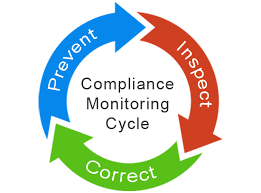
If all of this sounds like a continuous improvement loop, there is a reason. Developing a comprehensive compliance monitoring plan is foundational in cultivating and sustaining an effective compliance program. Compliance professionals must ensure monitoring is proactive, continuous, and aligned with broader organizational objectives and compliance strategies. Documented procedures, defined roles, continuous monitoring technology, transparent reporting, and rigorous follow-up constitute essential pillars supporting ongoing compliance effectiveness. Aligning these strategies with the Hallmarks of an Effective Compliance Program from the FCPA Resource Guide further solidifies your compliance initiatives, positioning your organization for long-term success, resilience, and integrity.