Categories
Trekking Through Compliance

Trekking Through Compliance: Episode 25 – Cross-Cultural Lessons from Devil in the Dark

Show Summary

The classic episode, “Devil in the Dark,” is a compelling exploration of misunderstandings, communication breakdowns, and reconciliation between drastically different cultures—lessons that resonate strongly for corporate compliance officers navigating today’s global marketplace.

In “Devil in the Dark,” the USS Enterprise is dispatched to investigate mysterious deaths in a mining colony. What initially seems like straightforward monster attacks turns out to be a profound misunderstanding between humans and an alien creature called the Horta. Today, we will examine five key compliance lessons that corporate professionals can learn from the iconic Star Trek episode.

Lesson 1: Recognize and Challenge Your Own Biases

Illustrated By: When the Enterprise crew arrives, the miners describe a monstrous creature attacking and killing miners, labeling it simply as a dangerous beast to be eliminated. Their preconceived notions blinded them to the possibility of understanding the creature.

Compliance Lesson: Compliance professionals must actively recognize and challenge their assumptions and biases.

Lesson 2: Effective Communication Requires Genuine Effort and Empathy

Illustrated By: The turning point of the episode comes when Spock mind-melds with the Horta. Through genuine empathy and effort, he discovers that the Horta is not malevolent but is protecting its offspring, the silicon nodules that the miners had inadvertently been destroying.

Compliance Lesson: Corporate compliance teams operating in multinational contexts must make a genuine effort to communicate effectively with global partners, subsidiaries, and stakeholders.

Lesson 3: Cultural Awareness as a Risk Mitigation Strategy

Illustrated By: The miners’ failure to recognize the silicon nodules as living offspring stems from ignorance about the Horta’s culture and biology. This ignorance creates hostility and unnecessary conflict.

Compliance Lesson: Understanding local cultural norms, regulatory landscapes, and business ethics is vital for operating ethically and legally across jurisdictions.

Lesson 4: Embrace Diversity to Foster Innovation and Solutions

Illustrated By: The Enterprise crew’s diverse backgrounds and experiences enable them to devise innovative solutions. Spock’s unique Vulcan abilities allow communication with the Horta, transforming a volatile situation into a collaborative one.

Compliance Lesson: Diverse compliance teams bring varied experiences, perspectives, and problem-solving approaches essential for effectively managing complex compliance challenges.

Lesson 5: Seek Win-Win Solutions through Collaboration

Illustrated By: Ultimately, Captain Kirk brokers a cooperative agreement between the miners and the Horta, allowing peaceful coexistence and mutual benefit. The miners extracting resources and the Horta species continue unharmed.

Compliance Lesson: Compliance professionals should adopt a win-win mindset, working collaboratively with regulatory authorities, local communities, employees, and third-party partners to align compliance objectives with mutual benefits.

Final ComplianceLog Reflections

Star Trek’s “Devil in the Dark” vividly illustrates the consequences of cross-cultural misunderstandings and the immense benefits of cultural empathy, clear communication, diversity, and collaborative problem-solving. For corporate compliance professionals, this episode serves as a powerful reminder that effective compliance programs necessitate intentional cross-cultural engagement, ongoing education, and empathy-driven interactions.

Resources:
Excruciatingly Detailed Plot Summary by Eric W. Weisstein

MissionLogPodcast.com

Memory Alpha

Categories
Blog

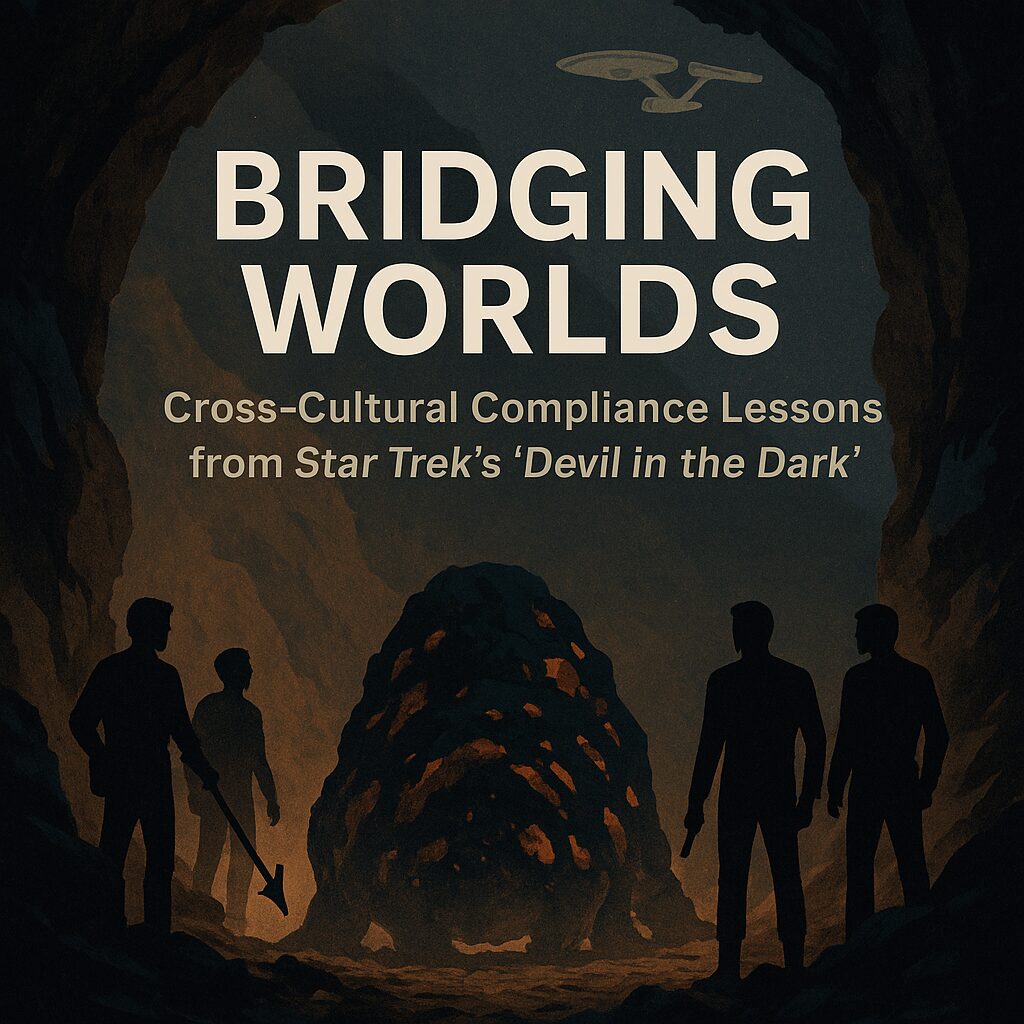
Bridging Worlds: Cross-Cultural Compliance Lessons from Devil in the Dark

Show Summary

Star Trek has always served as a powerful lens through which to view not just the potential future of humanity but the contemporary complexities we face today. The classic episode, “Devil in the Dark,” is a compelling exploration of misunderstandings, communication breakdowns, and reconciliation between drastically different cultures—lessons that resonate strongly for corporate compliance officers navigating today’s global marketplace.

In “Devil in the Dark,” the USS Enterprise is dispatched to investigate mysterious deaths in a mining colony. What initially seems like straightforward monster attacks turns out to be a profound misunderstanding between humans and an alien creature called the Horta. Today, we will examine five key compliance lessons that corporate professionals can learn from the iconic Star Trek episode.

Lesson 1: Recognize and Challenge Your Own Biases

Illustrated By: When the Enterprise crew arrives, the miners describe a monstrous creature attacking and killing miners, labeling it simply as a dangerous beast to be eliminated. Their preconceived notions blinded them to the possibility of understanding the creature.

Compliance Lesson: Like the miners’ initial response, corporate biases can obscure critical perspectives and valuable information. Compliance professionals must actively recognize and challenge their assumptions and biases. It’s critical to maintain impartiality, especially during investigations, risk assessments, or due diligence processes involving diverse international markets. Conducting training sessions on unconscious bias and regularly revisiting corporate procedures helps organizations maintain objectivity and fairness.

Lesson 2: Effective Communication Requires Genuine Effort and Empathy

Illustrated By: The turning point of the episode comes when Spock mind-melds with the Horta. Through genuine empathy and effort, he discovers that the Horta is not malevolent but is protecting its offspring, the silicon nodules that the miners had inadvertently been destroying.

Compliance Lesson: Effective communication across cultural boundaries requires empathy, openness, and genuine effort. Corporate compliance teams operating in multinational contexts must make sincere efforts to communicate effectively with global partners, subsidiaries, and stakeholders. Language barriers, differing business practices, and cultural nuances can lead to costly misunderstandings. Investing in cross-cultural training, employing bilingual staff, and engaging empathetically with diverse perspectives strengthens communication and helps prevent costly compliance failures.

Lesson 3: Cultural Awareness as a Risk Mitigation Strategy

Illustrated by: The miners’ failure to recognize the silicon nodules as living offspring stems from ignorance about the Horta’s culture and biology. This ignorance creates hostility and unnecessary conflict.

Compliance Lesson: Cultural ignorance significantly increases compliance risk, especially in international operations. Understanding local cultural norms, regulatory landscapes, and business ethics is vital for operating ethically and legally across jurisdictions. Companies must integrate cultural intelligence training into their compliance programs, conduct thorough risk assessments, and cultivate local relationships to enhance awareness and understanding. This proactive approach mitigates misunderstandings and ethical lapses, fostering respectful and legally compliant international operations.

Lesson 4: Embrace Diversity to Foster Innovation and Solutions

Illustrated By: The Enterprise crew’s diverse backgrounds and experiences enable them to devise innovative solutions. Spock’s unique Vulcan abilities allow communication with the Horta, transforming a volatile situation into a collaborative one.

Compliance Lesson: Diversity is not only ethically commendable but also strategically vital. Diverse compliance teams bring a range of varied experiences, perspectives, and problem-solving approaches, which are essential for effectively managing complex compliance challenges. Organizations should proactively recruit and empower diverse talent in compliance roles, ensuring comprehensive perspectives in assessing risks and solving compliance-related issues. Embracing diversity fosters innovation and resilience in managing compliance across various markets.

Lesson 5: Seek Win-Win Solutions through Collaboration

Illustrated By: Ultimately, Captain Kirk brokers a cooperative agreement between the miners and the Horta, allowing peaceful coexistence and mutual benefit. The miners extracting resources and the Horta species continue unharmed.

Compliance Lesson: Effective compliance strategies often involve creative, collaborative solutions that benefit multiple stakeholders. Compliance professionals should adopt a win-win mindset, working collaboratively with regulatory authorities, local communities, employees, and third-party partners to align compliance objectives with mutual benefits. Encouraging collaborative dialogues rather than adversarial stances with stakeholders reduces friction, ensures sustainability, and promotes ethical business practices that benefit everyone involved.

Final ComplianceLog Reflections

Star Trek’s “Devil in the Dark” vividly illustrates the consequences of cross-cultural misunderstandings and the immense benefits of cultural empathy, clear communication, diversity, and collaborative problem-solving. For corporate compliance professionals, this episode serves as a powerful reminder that effective compliance programs necessitate intentional cross-cultural engagement, ongoing education, and empathy-driven interactions.

Navigating the global compliance landscape involves bridging cultural divides with sensitivity, understanding, and respect. Companies that prioritize cultural intelligence, diversity, and collaborative solutions not only minimize compliance risks—they also cultivate resilient, ethical, and respected global brands. Like the Enterprise crew, compliance professionals must boldly reach across cultural divides, ensuring business integrity thrives on mutual respect, innovation, and cooperative achievement.

Resources:

Excruciatingly Detailed Plot Summary by Eric W. Weisstein

MissionLogPodcast.com

Memory Alpha

Categories
Blog

Setting the Tone at the Top in Star Trek: Devil in the Dark

In the world of compliance, the tone at the top is paramount. It sets the stage for the organizational culture, influencing every business layer. As an award-winning compliance blogger, I often seek examples from popular media to illustrate key compliance principles. One compelling example comes from Star Trek: The Original Series (TOS). The episode “The Devil in the Dark” demonstrates effective leadership and ethical decision-making, embodying the first Hallmark of an Effective Compliance Program: tone at the top.

Summary of The Devil in the Dark

In this episode, Captain Kirk and his crew are summoned to a mining colony on the planet Janus VI, where a mysterious creature has been killing miners and sabotaging equipment. The miners are desperate and demand the creature’s destruction. However, as the Enterprise crew investigates, they uncover that the creature, known as the Horta, is intelligent and acting out of self-defense to protect its eggs, which the miners have unknowingly destroyed.

Kirk, guided by his moral compass and influenced by Spock’s logical counsel, chooses to communicate with the Horta instead of destroying it. This decision leads to a peaceful resolution, saving the miners and the Horta and establishing a cooperative relationship between the two species.

Leadership and Ethical Decision-Making

Captain Kirk’s handling of the situation is a textbook example of setting the right tone at the top. His leadership in “The Devil in the Dark” highlights several critical aspects of effective compliance leadership:

1. Setting an Ethical Example. From the outset, Kirk exemplifies ethical leadership. Kirk remains open-minded and cautious despite the miners’ insistence on killing the creature. He refuses to jump to conclusions, instead opting to gather all necessary information before deciding. This approach mirrors the importance of due diligence in compliance practices, where leaders must ensure they have a comprehensive understanding of situations before acting.

  1. Encouraging a Culture of Integrity. Kirk’s decision to explore non-violent solutions fosters a culture of integrity among his crew. By valuing life and seeking understanding over immediate destruction, he sets a precedent for ethical behavior. This decision demonstrates that ethical considerations should be paramount, even when facing significant pressure. In a corporate context, this translates to promoting a culture where employees feel empowered to act ethically and report misconduct without fear of retribution.
  2. Transparent Communication. Throughout the episode, Kirk maintains open and transparent communication with his team. He discusses options, seeks input from his officers, and explains his reasoning behind decisions. This transparency fosters trust and ensures all team members align with the organization’s mission and values. This underscores the importance of clear and honest communication for compliance leaders in promoting a compliant and ethical workplace.
  3. Empathy and Understanding. Kirk’s empathy towards the Horta is a defining moment in the episode. Instead of viewing the creature as a threat, he considers its perspective and motivations. This empathy leads to a peaceful resolution and mutual understanding. In the corporate world, leaders who demonstrate empathy can better understand the concerns of their employees and stakeholders, fostering a more inclusive and supportive work environment.
  4. Decision-Making Under Pressure. Kirk’s ability to make ethical decisions under pressure is another critical aspect of his leadership. Faced with the miners’ demands and the immediate threat the Horta poses, he remains composed and focused on finding a solution that upholds the Enterprise’s values. This mirrors the challenges compliance leaders face, who must often navigate complex situations and make difficult decisions that align with ethical standards and regulatory requirements.

Lessons for Compliance Leaders

The Devil in the Dark offers several valuable lessons for compliance leaders seeking to establish and maintain a strong tone at the top.

  1. Lead by Example. Leaders must consistently demonstrate ethical behavior and decision-making. This sets a standard for the entire organization and encourages employees to follow suit. As seen with Captain Kirk, leading by example can inspire confidence and trust among team members.
  2. Foster a Culture of Integrity. Creating a culture where integrity is valued and ethical behavior is rewarded is crucial. This involves setting expectations and providing the necessary support and resources for employees to act ethically. Compliance leaders should encourage open dialogue and create an environment where employees feel safe reporting concerns.
  3. Prioritize Transparency. Clear and transparent communication is key to building trust and ensuring alignment within the organization. Leaders should be open about their decisions and reasoning, fostering an environment of honesty and accountability.
  4. Demonstrate Empathy. Understanding and considering the perspectives of others can lead to more effective and ethical decision-making. Leaders who show empathy are better equipped to address concerns and build strong, collaborative relationships.
  5. Make Ethical Decisions Under Pressure. Compliance leaders often face high-pressure situations where the right course of action may not be immediately clear. Maintaining composure and staying true to ethical principles is essential. As demonstrated by Captain Kirk, ethical decision-making can lead to positive outcomes, even in the most challenging circumstances.

Captain Kirk exemplifies the core principles of effective leadership and ethical decision-making in The Devil in the Dark, setting a strong tone at the top. His actions demonstrate the importance of leading by example, fostering a culture of integrity, prioritizing transparency, demonstrating empathy, and making ethical decisions under pressure. For compliance leaders, these lessons are invaluable. By embracing these principles, leaders can create a compliant and ethical organizational culture that meets regulatory requirements and promotes long-term success and trust.

As we navigate the complexities of the modern business world, let us remember the timeless lessons from Captain Kirk and the crew of the Enterprise, boldly going where few compliance programs have gone before.

Categories
Trekking Through Compliance

Trekking Through Compliance – Episode 25 – Ethical Lessons from Devil in the Dark

In this episode of Trekking Through Compliance, we consider the compliance lessons from the episode ‘Devil in the Dark’, which occurred on Star Date 3196.1.

The Enterprise arrives at the pergium mining colony with an unknown creature that has killed 50 miners and engineers and destroyed equipment with a strong corrosive substance. Kirk and his security team search for the creature. Spock suspects it may be a silicon-based lifeform. They encounter the creature and fire upon it, breaking a piece of it off. The creature flees by burrowing through a rock wall. Spock adjusts his tricorder to scan for silicon-based life and confirms that the creature is the only lifeform for miles.

They find the creature, and Spock’s mind melds with it. The miners arrive and attempt to attack the creature. Kirk and Spock stop them, explaining that it only protected its eggs when it killed humans. Kirk convinces them that the Horta are peaceful and could collaborate by tunneling for the miners.

Kirk, Spock, and McCoy return to the Enterprise, prepare to leave orbit, and learn from Vanderberg that the eggs have hatched and that the new Horta have already uncovered rich veins of pergium and other valuable metals.

Commentary

The Enterprise crew investigates murders on Janus VI and discovers the Horta, a misunderstood silicon-based life form. The episode offers valuable lessons for compliance professionals on promoting cross-cultural understanding, ethical considerations beyond humans, avoiding rushed judgments, fostering transparent communication, balancing objectives, and cultivating adaptability.

Key Highlights

  • Episode Overview
  • The Mysterious Sabotages and Murders
  • Investigating the Creature
  • The Horta’s True Nature Revealed
  • Fun Facts and Behind the Scenes
  • Ethical Lessons from Devil in the Dark

Resources

Excruciatingly Detailed Plot Summary by Eric W. Weisstein

MissionLogPodcast.com

Memory Alpha