Categories
Daily Compliance News

Daily Compliance News: May 15, 2024 – The PCAOB Edition

Welcome to the Daily Compliance News. Each day, Tom Fox, the Voice of Compliance, brings you compliance-related stories to start your day. Sit back, enjoy a cup of morning coffee and listen to the Daily Compliance News. All from the Compliance Podcast Network.

Each day, we consider four stories from the business world: compliance, ethics, risk management, leadership, or general interest for the compliance professional.

In today’s edition of Daily Compliance News:

  • PCAOB adopts tighter rules on auditor quality.   (WSJ)
  • Did DOJ steal Unaoil prosecution from SFO.  (Economist)
  • Is the NLRB unconstitutional?  (Reuters)
  • The US needs more accountants. (FT)

For more information on the Ethico ROI Calculator and a free White Paper on the ROI of Compliance, click here.

Categories
10 For 10

10 For 10: Top Compliance Stories For The Week Ending May 4, 2024

Welcome to 10 For 10, the podcast that brings you the week’s Top 10 compliance stories in one podcast each week.

Tom Fox, the Voice of Compliance, brings to you, the compliance professional, the compliance stories you need to be aware of to end your busy week.

Sit back, and in 10 minutes, hear about the stories every compliance professional should be aware of from the prior week.

Every Saturday, 10 For 10 highlights the most important news, insights, and analysis for the compliance professional, all curated by the Voice of Compliance, Tom Fox.

Get your weekly filling of compliance stories with 10 for 10, a podcast produced by the Compliance Podcast Network.

1. The Exxon Pioneer merger was approved (with a caveat).  (NYT)

2. The US sanctions Chinese companies for supplying the Russian Army.  (NYT)

3. An ex-McKinsey partner says he was scapegoated. (Reuters)

4. TikTok parent discloses internal investigations of bribery and corruption. (South China Morning Post)

5. CFTC names its first AI chief. (WSJ)

6. CZ gets 4 months. (WSJ)

7. FCPA violator Ericsson bemoans ‘over-regulation’. (FT)

8. Corporate investigations are under scrutiny.  (FT)

9. The US Supreme Court will not hear Musk’s appeal of the SEC order. (Reuters)

10. India to look into bribery allegations against Cognizant Technologies. (Deccan Herald)


For more information on the Ethico ROI Calculator and a free White Paper on the ROI of Compliance, click here.

You can check out the Daily Compliance News for four curated compliance and ethics-related stories each day here.

Connect with Tom 

Instagram

Facebook

YouTube

Twitter

LinkedIn

Categories
10 For 10

10 For 10: Top Compliance Stories For The Week Ending April 27, 2024

Welcome to 10 For 10, the podcast that brings you the week’s top 10 compliance stories in one podcast each week. Tom Fox, the Voice of Compliance, brings to you, the compliance professional, the compliance stories you need to be aware of to end your busy week. Sit back, and in 10 minutes, hear about the stories every compliance professional should be aware of from the prior week.

Every Saturday, 10 For 10 highlights the most important news, insights, and analysis for the compliance professional, all curated by the Voice of Compliance, Tom Fox. Get your weekly filling of compliance stories with 10 for 10, a podcast produced by the Compliance Podcast Network.

  • A former SNC Lavalin exec sentenced to 3 years on corruption charges. (Financial Post)
  • Trade sanctions in PdVSA-related case. (WSJ)
  • McKinsey is under criminal investigation for opioid work. (NYT)
  • A Deputy Russian Defense Minister was arrested on corruption charges. (CNN)
  • South Africa ups pressure on the UAE to extradite Guptas.  (Bloomberg)
  • DOJ wants a 3-year prison term for the former Binance CEO.  (Bloomberg)
  • SFO to review cases after software problems. (FT)
  • FTC bans non-competes.  (FTC Press Release)
  • Real-Estate Agents, Investment Advisers Chafe at the New Anti-Money-Laundering Rules. (WSJ)
  • Boeing families want criminal charges filed. (France24)

For more information on the Ethico ROI Calculator and a free White Paper on the ROI of Compliance, click here.

You can check out the Daily Compliance News for four curated compliance and ethics-related stories each day, here.

Connect with Tom 

Instagram

Facebook

YouTube

Twitter

LinkedIn

Categories
2 Gurus Talk Compliance

2 Gurus Talk Compliance: Episode 27 – The Too Nice Edition

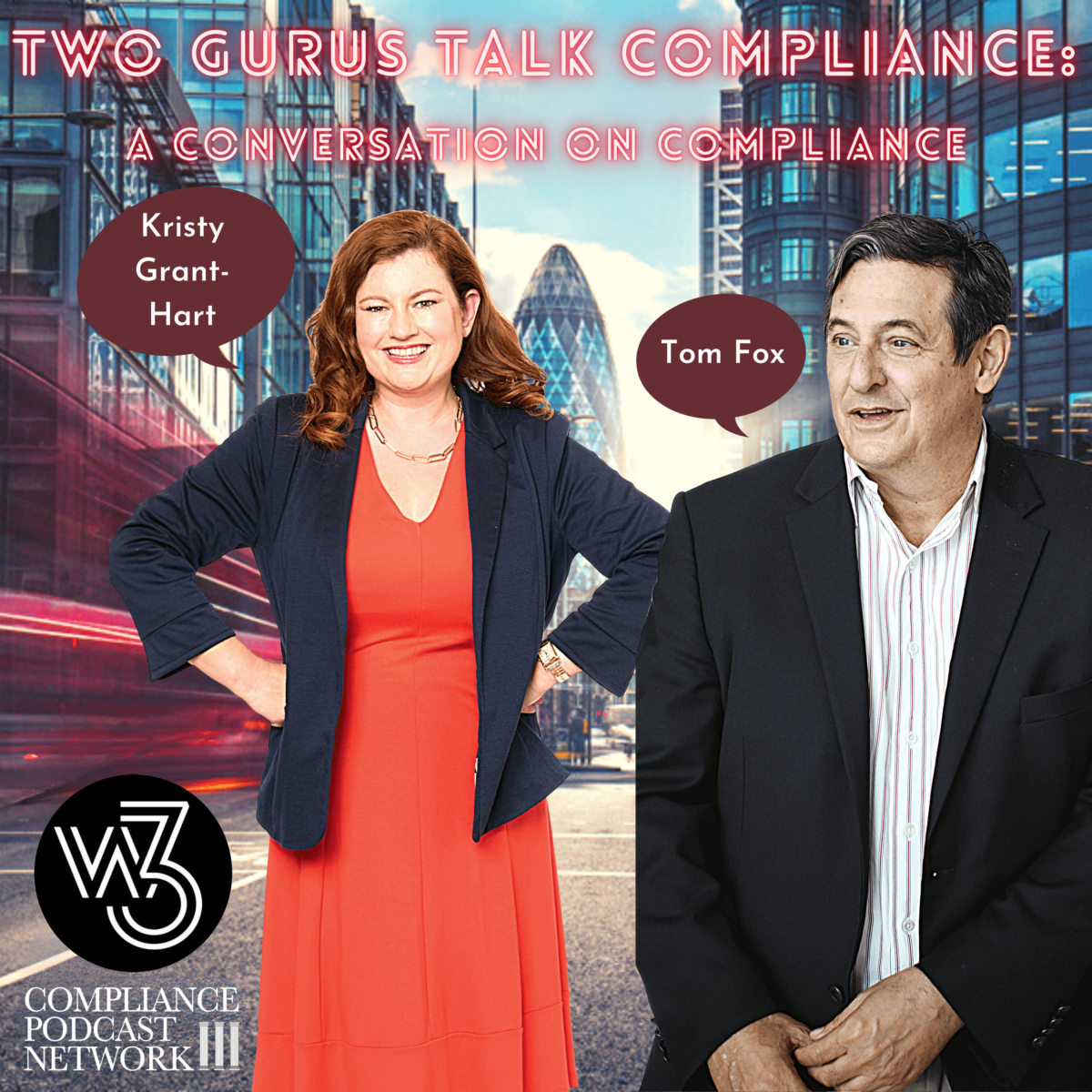
What happens when two top compliance commentators get together? They talk about compliance, of course. Join Tom Fox and Kristy Grant-Hart in 2 Gurus Talk Compliance as they discuss the latest compliance issues in this week’s episode!

In this episode, we discuss how far the US should push Europe when it comes to banning goods produced with forced labor, whether Canadians are just too darn nice when it comes to bribery, the Supreme Court’s review of when cash given to a US politician crosses from a thank-you gift to a bribe, and a Florida man’s notice to arresting officers that he’d be drinking his beer before being arrested because it’s cold.

The issue of forced labor, particularly in China, and its resultant goods has triggered a significant discourse between the US and Europe, highlighting the intricate connection between international trade and human rights. Tom argues for Europe to adopt stringent measures against forced labor like the US and credits his stand to his profound understanding of the extensive impact such a practice has on modern society. He advocates for a broad ban on goods linked to forced labor and is enthusiastic about the potential of a joint EU, US, and UK task force addressing the issue.

Kristy, with her focused view on the contrasting approaches of the US and Europe, agrees with the necessity of a robust response. She acknowledges the US’s advanced position in tackling forced labor challenges, appreciates the EU’s efforts to enact a similar ban, and supports the idea of a joint task force. She underlines the importance of preventing goods made from forced labor from entering the US via Europe.

 Highlights Include:

  • The fight against climate change reporting. (Harvard Law School Forum on Corporate Governance)
  • Are Canadians too nice to fight ABC? (GAB)
  • What is the opposite of right for compliance? (COI Blog)
  • Between a rock and a hard place. (China Law Blog)
  • Are you shadow trading? (NYU Corporate and Enforcement Blog)
  • Europe Should Be Pushed to Take On Chinese Forced Labor, U.S. Lawmakers Say (WSJ)
  • Corruption or Just Politics? Supreme Court Weighs New Bribery Case as More Clashes Are Brewing (WSJ)
  • The Department of Justice Unveils Groundbreaking Pilot Program: Incentivizing Whistleblowers with Immunity (JDSUPRA)
  • From Gen Z to boomers: How to give critical feedback at work (Washington Post)
  • Florida man pops open beer during police encounter because it was ‘cold’ and he wanted to drink it (FOX 35 Orlando) 

Resources:

Kristy Grant-Hart on LinkedIn

Spark Consulting

Tom

Instagram

Facebook

YouTube

Twitter

LinkedIn

Categories
Daily Compliance News

Daily Compliance News: April 25, 2024 – The In Bad Faith Edition

Welcome to the Daily Compliance News. Each day, Tom Fox, the Voice of Compliance, brings you compliance-related stories to start your day. Sit back, enjoy a cup of morning coffee and listen to the Daily Compliance News. All from the Compliance Podcast Network.

Each day, we consider four stories from the business world: compliance, ethics, risk management, leadership, or general interest for the compliance professional.

In today’s edition of Daily Compliance News:

  • The NPR chief says criticism was brought ‘in bad faith’. (WSJ)
  • The DOJ wants a 3-year prison term for the former Binance CEO.  (Bloomberg)
  • A Deputy Russian Defense Minister was arrested on corruption charges. (CNN)
  • Boeing families want criminal charges filed. (Reuters)

For more information on the Ethico ROI Calculator and a free White Paper on the ROI of Compliance, click here.

Categories
Compliance Tip of the Day

Compliance Tip of the Day: Monitor Selection, Is it Still a Thing

Welcome to “Compliance Tip of the Day,” the podcast where we bring you daily insights and practical advice on navigating the ever-evolving landscape of compliance and regulatory requirements.

Whether you’re a seasoned compliance professional or just starting your journey, our aim is to provide you with bite-sized, actionable tips to help you stay on top of your compliance game.

Join us as we explore the latest industry trends, share best practices, and demystify complex compliance issues to keep your organization on the right side of the law.

Tune in daily for your dose of compliance wisdom, and let’s make compliance a little less daunting, one tip at a time.

In this episode, we ask the question of whether monitor selection is still something an organization needs to consider.

For more information on the Ethico ROI Calculator and a free White Paper on the ROI of Compliance, click here.

Categories
FCPA Compliance Report

FCPA Compliance Report: DOJ on AI and Data/Intellectual Property Protection

Welcome to the award-winning FCPA Compliance Report, the longest-running podcast in compliance. In this special edition, Tom welcomes Jessica Nall, a partner at Baker McKenzie who leads the firm’s West Coast investigations and compliance practice, and Maria Piontkovska, a Senior Associate in the same practice group.

We deeply dive into their article about the recent speeches by Department of Justice representatives at the ABA White Collar Conference on the new DOJ whistleblower program, AI, data protection, and intellectual property protection.

Jessica Nall and Maria Piontkovska are prominent legal professionals specializing in white-collar defense and corporate investigations. Jessica, a seasoned attorney with over 20 years of experience, leads Baker McKenzie’s white-collar practice in California, and Maria is a skilled US white-collar attorney originally from Ukraine.

Both regard the ABA White Collar Conference as an essential platform for the defense bar, government investigators, and compliance leaders to gather for discussions and networking. Nall sees the conference as vital for disseminating new compliance expectations and enforcement trends announced by government officials. At the same time, Piontkovska highlights the importance of the direct line of communication with these officials, providing insights straight from the source.

Their perspectives on the conference are shaped by their extensive experiences in the field and drive their contributions to the discussions and policies related to white-collar defense and compliance.

Topics Covered in This Episode:

  • Key Figures Discussing Trends in Compliance
  • Corporate Transparency Incentive Initiative
  • Financial Incentives for Anti-Corruption Self-Disclosure
  • Navigating Risks: AI in Corporate Compliance
  • Data Mapping for International Data Security

Resources:

Jessica Nall on LinkedIn

Maria Piontkovska on LinkedIn

Compliance Steps After ABA White Collar Crime Conference

United States: Department of Justice announces new corporate compliance directives for AI along with increased penalties for AI-related misconduct

Baker McKenzie

Tom Fox

Instagram

Facebook

YouTube

Twitter

LinkedIn


For more information on the Ethico ROI Calculator and a free White Paper on the ROI of Compliance, click here.

Categories
Blog

Changing Sales Models

Over the past 12 months or so, there have been a series of Foreign Corrupt Practices Act (FCPA) enforcement actions in which the respondents have changed and/or modified their sales models to move away from external third parties and toward direct sales and business generation models. This portends a change in the way the Department of Justice (DOJ) may think about sales models, their inherent risk, and risk management going forward. These FCPA enforcement actions involved Albemarle, SAP, Gunvor, and Trafigura.

Albemarle

The Albemarle Non-Prosecution Agreement (NPA) cited several remedial actions by the company that helped Albemarle obtain a superior result in terms of the discounted fine and penalty. These steps were taken during the pendency of the DOJ investigation so that when the parties were ready to resolve the matter, Albemarle had built out and tested an effective compliance program. The company shifted to a direct sales business model.

This change was relatively new and undoubtedly noteworthy for FCPA enforcement actions, which were changes in a company’s approach to sales and their sales teams. Obviously, corrupt third-party agents brought the company to such FCPA grief. Many of the quotes in the NPA make it clear that Albemarle executives had an aversion to paying bribes but had greater moral flexibility when a third-party agent was involved. This led to the company moving away from third-party agents to a direct sales force.

SAP

While most of the remediation reported in this matter was standard, the one item that every compliance professional should consider is that SAP proactively discontinued using third-party agents for business origination. The point is perhaps the most significant, as the DOJ called out SAP for discontinuing their use of third-party agents. The DOJ information sets out the following: Change in sales models. On the external sales side, SAP eliminated its third-party sales commission model globally, prohibited all sales commissions for public sector contracts in high-risk markets, and enhanced compliance monitoring and audit programs, including creating a well-resourced team devoted to audits of third-party partners and suppliers.

Gunvor

As I noted in my review of the Albemarle and SAP enforcement actions, SAP eliminated its third-party sales commission model globally and prohibited all sales commissions for public sector contracts in high-risk markets. It also enhanced compliance monitoring and audit programs, including the creation of a well-resourced team devoted to audits of third-party partners and suppliers. Albemarle changed its approach to sales and its sales teams. Guvnor also moved away from third-party agents to a direct sales force.

Trafigura

Trafigura eliminated the use of third-party business origination agents. Matt Kelly noted in Radical Compliance, “This is the latest in a string of FCPA enforcement cases where we’ve seen a big, structural change to the sale function. Albemarle eliminated its use of third-party sales agents as part of its FCPA settlement last year; SAP eliminated its third-party sales commission model globally as part of its own FCPA settlement announced in January. Now we have a third global enterprise going that same route, reducing its FCPA risk in a deep, permanent way by restructuring its sales operations.” Here, Trafigura did away with third-party representatives for business generation.

In these four recent enforcement actions, the companies changed their approach to sales and their sales teams and did away with third parties generating new business. All of this points to these companies moving away from third-party agents to a direct sales force.

Moving to a direct sales force does have its risks, which must be managed, but those risks can certainly be managed with an appropriate risk management strategy, monitoring of the strategy, and improvement; those risks can be managed. Yet there is another reason, and more importantly, a significant business reason, to move towards a direct sales business model. Every time you have third-party agent or anyone else between you and your customer, you risk losing that customer because your organization does not have a direct relationship with the customer. A direct sales business model will give your organization more direct access to your customers.

The fact that the 2020 FCPA Resource Guide, 2nd edition, and the 2023 Evaluation of Corporate Compliance Programs do not outline this strategy is another intriguing aspect of how Albemarle, SAP, Gunvor, and Trafigura use it. These are all approaches developed by the companies based upon their own analysis and risk models. It may have come from a realization that the risk involved with third-party sales models was simply too significant, that the companies wanted more control over their sales or some other reason. Whatever the reason for the change, the DOJ took note of each organization and viewed it affirmatively.

Every compliance professional should understand that this is how new ideas are developed by the DOJ and in compliance. Companies assess their own risks and then move forward to manage or change their risk profiles. Expect to start seeing and hearing more about the direct sales model for the DOJ. This is where the DOJ’s comments on compensation incentives and consequence management will come into play.

Categories
10 For 10

10 For 10: Top Compliance Stories For The Week Ending April 6, 2024

Welcome to 10 For 10, the podcast which brings you the week’s Top 10 compliance stories in one podcast each week.

Tom Fox, the Voice of Compliance, brings to you, the compliance professional, the compliance stories you need to be aware of to end your busy week.

Sit back, and in 10 minutes, hear about the stories every compliance professional should be aware of from the prior week.

Every Saturday, 10 For 10 highlights the most important news, insights, and analysis for compliance professionals, all curated by the Voice of Compliance, Tom Fox.

Get your weekly filling of compliance stories with 10 for 10, a podcast produced by the Compliance Podcast Network.

  • Trafigura pleads guilty. (The Maritime Executive)
  • Ericsson released from DPA.  (WSJ)
  • Autonomy paid whistleblower for wrongful termination.  (Law360) sub-req’d
  • More 1MDB-Swiss bankers are on trial. (Bloomberg)
  • 20 convictions and $1.7bn in penalties.  (Financial Regulation News)
  • The South African Speaker resigns.  (Reuters)
  • The former head of the Spanish football federation was arrested on corruption charges. (ESPN)
  • The SEC says self-reporting is critical. (WSJ)
  • Corruption with JFK taxi dispatchers.  (NYPost)
  • No more late-night messages from your boss—the Right to Disconnect. (WaPo)

For more information on the Ethico ROI Calculator and a free White Paper on the ROI of Compliance, click here.

You can check out the Daily Compliance News for four curated compliance and ethics-related stories each day, here.

Connect with Tom 

Instagram

Facebook

YouTube

Twitter

LinkedIn

Categories
Blog

The Trafigura FCPA Enforcement Action – Part 4 – Lessons Learned

We conclude our exploration of the resolution of the FCPA enforcement action involving the Swiss trading firm G Trafigura Beheer B.V. (Trafigura), an international commodity trading company with its primary operations in Switzerland. The company pleaded guilty and will pay over $126 million to resolve an investigation stemming from the company’s corrupt scheme to pay bribes to Brazilian government officials to secure business with Brazil’s state-owned and state-controlled oil company, Petróleo Brasileiro S.A. – Petrobras (Petrobras). The matter was resolved via a Plea Agreement. Information detailing the company’s conduct was also issued.

Despite substantial violations of the FCPA and its extension into the corporate offices, Trafigura received the 10% discount noted above. The message from this enforcement action is the cost of failing to self-disclose, creating liability under the FCPA and creating jurisdiction for the DOJ to bring an enforcement action, denial that you have done anything wrong, failure to cooperate (at least initially), and not sanctioning any of the culpable company actors. In other words, there is a bit of reverse logic and analysis in this case. However, as noted several times, the DOJ rewarded Trafigura with some credit and gave them a discount. Most importantly, and perhaps inexorably, Trafigura was not required to retain a monitor.

Remediation 

While most of the remediation is reported as standard, the one item that every compliance professional should consider is that the company proactively discontinued using third-party agents for business origination. This point is perhaps the most significant, as we have now seen the DOJ call out Albemarle and SAP for discontinuing their use of third-party agents.

As Matt Kelly noted in Radical Compliance, in his discussion of Guvnor FCPA enforcement action, “This is the latest in a string of FCPA enforcement cases where we’ve seen a big, structural change to the sale function. Albemarle eliminated its use of third-party sales agents as part of its FCPA settlement last year; SAP eliminated its third-party sales commission model globally as part of its own FCPA settlement announced in January. Now we have a third global enterprise going that same route, reducing its FCPA risk in a deep, permanent way by restructuring its sales operations.” With Trafigura, we now have a fourth.”

As I noted in my review of the Albemarle and SAP enforcement actions, SAP eliminated its third-party sales commission model globally, prohibited all sales commissions for public sector contracts in high-risk markets, and enhanced compliance monitoring and audit programs, including the creation of a well-resourced team devoted to audits of third-party partners and suppliers. Albemarle changed its approach to sales and its sales teams. Guvnor also moved from being a third-party agent to a direct sales force.

Moving to a direct sales force does have its risks, which must be managed, but those risks can certainly be managed with an appropriate risk management strategy, monitoring of the strategy, and improvement; those risks can be managed. Yet there is another reason, and more importantly, a significant business reason, to move towards a direct sales business model. Whenever you have a third-party agent or anyone else between you and your customer, you risk losing that customer because your organization does not have a direct relationship with the customer. A direct sales business model will give your organization more direct access to your customers.

Another exciting aspect of this approach used by Albemarle, SAP, and Trafigura is that it is not an approach laid out in either the 2020 FCPA Resource Guide, 2nd edition, or the 2023 Evaluation of Corporate Compliance Programs. The companies developed all of these strategies based on their own analysis and risk models. It may have come from a realization that the risk involved with 3rd party sales models was too great, that the companies wanted more control over their sales, or another reason. Whatever the reason for the change, the DOJ clearly noted each organization and viewed it affirmatively.

Bribery Schemes

This area is essential for all compliance professionals to take note of. The bribes were initially funded with a $ 0.20 surcharge or uplift for every barrel of oil traded. With the price of oil fluctuating wildly at the time in question, between $60 to $100 per barrel, I am not sure such a small amount would even seem anomalous. It would not rise to a rounding error but generate $19 million in bribes. While I am not sure that the bribery scheme was designed to be so hard to detect, the reality is that no compliance professional could look at the trades and determine if a bribe was baked into the pricing.

Yet there was even a deeper part of the bribery scheme. Executives at Trafigura and corrupt traders at Petrobras prearranged the oil trading prices rather than letting the market determine them. The information noted, “The Trafigura Executive 2 and Brazilian Official 1 agreed to prices for trades of oil products and bribe amounts for each trade. After determining the price, Trafigura Executive 2 instructed Trafigura traders to negotiate with Petrobras, which Trafigura Executive 2 knew to be a sham, to arrive at the pre-agreed price.” [emphasis supplied]

Finally, another set of bribes was funded through an unrelated business unit. This occurred when one of the two corrupt Trafigura executives involved in the bribery scheme was transferred to run the company’s Singapore business unit. From there, this corrupt executive had a corrupt third party in Hong Kong bill the Singapore business unit for non-existent consulting services related to the Chinese market for $500,000. This money funded additional bribes to corrupt Petrobras employees. This extra step would require someone in compliance to connect the dots between a corrupt third-party bribery scheme in Singapore and China and the corruption at Petrobras in Brazil.

Lack of a Monitor

The following DOJ Memo governs the decision of whether a company needs a monitor: Revised Memorandum on Selection of Monitors in Criminal Division Matters, released in March 2023. The memo has 10 factors a prosecutor must consider.

  1. Did the corporation voluntarily self-disclose?
  2. At the time of the resolution and after a thorough risk assessment, has the company implemented an effective compliance program and sufficient internal controls to detect and prevent similar misconduct in the future?
  3. At the time of the resolution, the company had adequately tested its compliance program and internal controls to demonstrate that they would likely detect and prevent similar misconduct.
  4. Whether the underlying criminal conduct was long-lasting or pervasive across the business organization or was approved, facilitated, or ignored by senior management, executives, or directors (including through a corporate culture that tolerated risky behavior or misconduct or did not encourage open discussion and reporting of possible risks and concerns),.
  5. Whether the underlying criminal conduct involved exploiting an inadequate compliance program or system of internal controls.
  6. Did the conduct involve the active participation of compliance personnel?
  7. Did the company take adequate investigative or remedial measures to address the underlying criminal conduct, including terminating business relationships and practices that contributed to it?
  1. At the time of the resolution, the company’s risk profile had substantially changed.
  2. Whether the corporation faces any unique risks or compliance challenges.
  3. Is the company subject to other oversight?

A review of the Information and Plea Agreement reveals no self-disclosure. Equally significantly, there is no information about whether the company has implemented an effective compliance program or sufficient controls, let alone tested them. According to the data, the conduct was long-lasting across multiple business units. If there were internal controls in place, they were undoubtedly inadequate. There does not appear to be involvement in the compliance function. The only positive factor from the resolution documents is that Trafigura did terminate its use of third parties to initiate and foster business development, but that appears to be the only factor they have met.

Writing again in Radical Compliance, Matt Kelly said, “Either way, these cases send mixed messages to the compliance community. It looks like you can get away with not self-disclosing misconduct and perhaps even slow-rolling your cooperation if you’re prepared to invest lots in a newly invigorated compliance program and tolerate the Fraud Section as your new BFFs for the next three years of a settlement agreement.”

If the DOJ has discontinued its monitoring program or changed the requirements, it is undoubtedly its prerogative to do so. It would be helpful if they communicated that change to the compliance community.