Categories
Blog

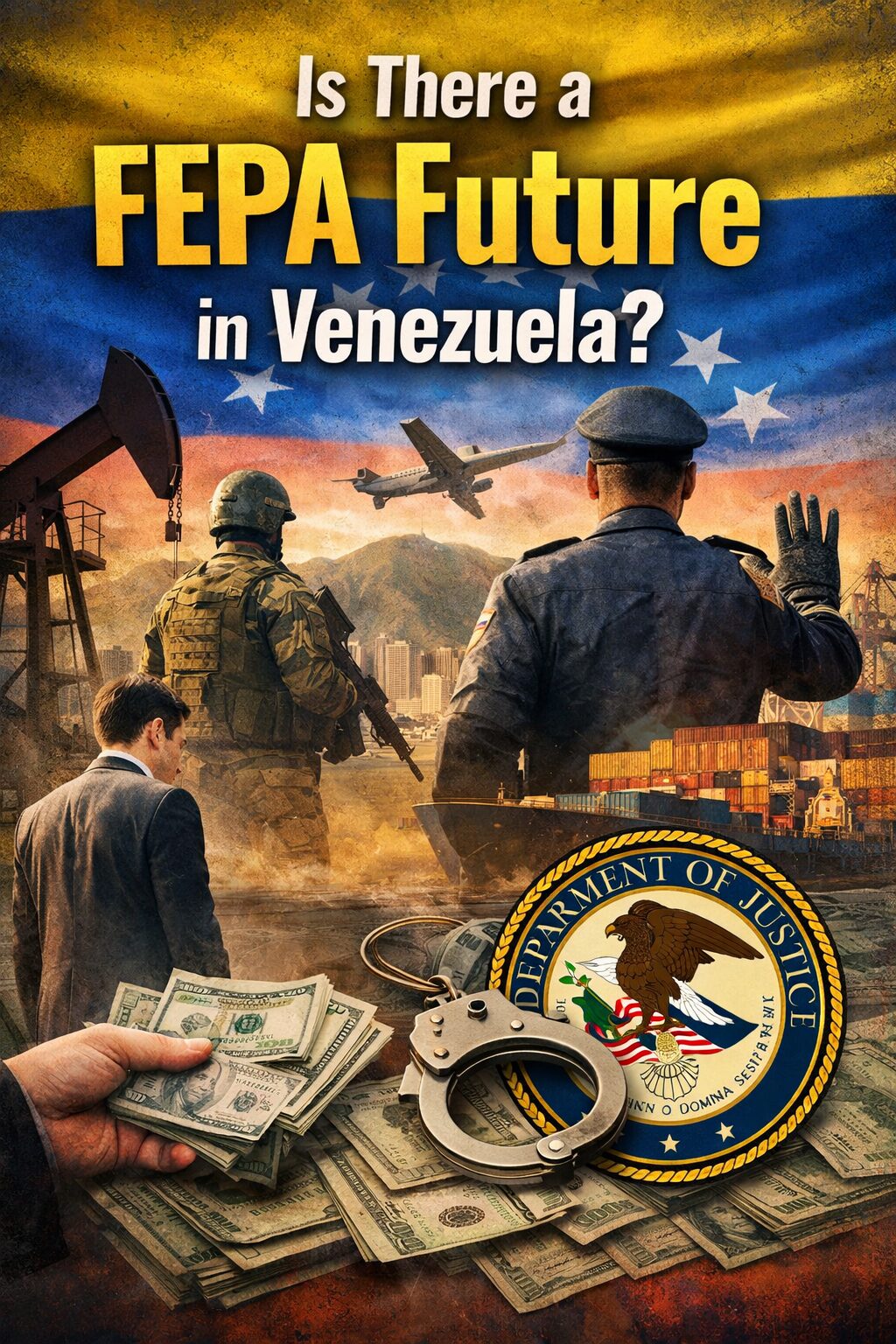
Is there a FEPA Future in Venezuela?

For U.S. compliance professionals, few jurisdictions raise as many red flags as Venezuela. Decades of entrenched corruption, state capture of key industries, economic collapse, weak rule of law, and the legacy of PdVSA have made the country a case study in what happens when corruption becomes systemic rather than episodic. Now that geopolitical and energy realities are shifting, some U.S. companies are again evaluating whether and how to reenter the Venezuelan market.

Against that backdrop, the passage of the Foreign Extortion Prevention Act (FEPA) represents one of the most significant developments in anti-corruption enforcement in nearly half a century. The question compliance officers are now asking is a practical one: can FEPA actually be used to prevent bribery and corruption for U.S. companies returning to Venezuela, or is it merely a symbolic addition to an already strained enforcement framework?

The answer, as with most compliance questions, is nuanced. FEPA is not a silver bullet. But when properly understood and operationalized, it can meaningfully change the risk calculus for companies operating in high-extortion environments like Venezuela.

The Historic Gap in the FCPA

For decades, the compliance community has lived with a fundamental asymmetry in U.S. anti-corruption law. The Foreign Corrupt Practices Act is a supply-side statute. It criminalizes the offering or payment of bribes by U.S. companies and individuals, but it does not criminalize the demand for those bribes by foreign officials. This gap has long distorted incentives on the ground.

In jurisdictions such as Venezuela, bribery is rarely framed as a voluntary transaction. It is far more often presented as a demand, a condition of doing business, or even a threat, as in the case of extortion. Officials do not ask politely. They delay permits, block shipments, threaten arrests, or endanger employee safety. Until FEPA, U.S. law largely treated this as background noise rather than a prosecutable offense.

FEPA directly addresses that gap by criminalizing the solicitation or acceptance of bribes by foreign officials from U.S. persons or companies. In doing so, it finally targets the demand side of corruption and aligns U.S. law more closely with how bribery actually operates in high-risk countries.

Why Venezuela Is the Ultimate Test Case

If FEPA can work anywhere, it should work in Venezuela. The country’s corruption ecosystem is characterized by pervasive extortion across customs, energy, transportation, security, immigration, and tax authorities. Payments are often demanded not to gain an advantage but to avoid harm. This distinction matters. In Venezuela, the compliance challenge is not simply rogue employees paying bribes. It is employees facing credible threats to liberty, safety, or health. FEPA explicitly recognizes this reality by treating extortion by a foreign official as a criminal act rather than merely a compliance failure by the company.

That framing gives compliance officers something they have long lacked: a legal backbone to support a firm refusal posture. Companies can now say, with credibility, that the demand itself is illegal under U.S. law and subject to DOJ enforcement, even if the official is located abroad.

Extortion, Facilitation, and the Compliance Trap

One of the most dangerous compliance traps in Venezuela has always been the mislabeling of extortion payments. Under the FCPA, facilitation payments occupy a narrow and controversial exception. Extortion payments, however, were never facilitation payments. They were survival payments. FEPA eliminates any lingering ambiguity. Extortion payments involving threats to life, liberty, or health are now clearly illegal, not merely discouraged. This forces compliance programs to confront uncomfortable operational realities.

Policies must explicitly distinguish facilitation from extortion. Employees must be trained that the company will support them if they are threatened, but that any such payment must be immediately documented, accurately recorded, and escalated. Book and record accuracy becomes critical. Mischaracterizing extortion as a routine expense is now a standalone risk under FEPA, not merely an FCPA accounting issue.

FEPA as a Deterrent Tool, Not Just an Enforcement Tool

One of the most overlooked aspects of FEPA is its potential deterrent effect. The statute introduces the possibility of DOJ investigations targeting foreign officials, including public naming and reporting requirements. For officials who interact with U.S. companies, this creates reputational and diplomatic risk that did not previously exist. In Venezuela, where many officials rely on international travel, financial access, and political legitimacy, even the threat of U.S. scrutiny can matter. FEPA does not require immediate extradition to have an impact. The mere existence of a credible enforcement pathway can alter behavior at the margins.

For compliance officers, this means FEPA can be used proactively. Risk assessments should explicitly incorporate FEPA exposure. Third-party due diligence should assess patterns of extortion, not just a history of bribery. Contractual language should reference the reporting obligations for extortion. Training should include scenario-based exercises where employees practice refusing demands and escalating threats.

The Limits of FEPA in Venezuela

None of this should be overstated. FEPA will not cleanse Venezuela of corruption. Extradition of Venezuelan officials is unlikely. Local enforcement cooperation will be minimal. Many officials operate with de facto immunity. But compliance effectiveness has never depended on perfect enforcement. It depends on shifting incentives, setting expectations, and protecting employees. FEPA strengthens all three. From a DOJ perspective, FEPA also changes cooperation dynamics. Companies that proactively document extortion demands, preserve evidence, and report credible threats may be viewed very differently from companies that quietly pay and rationalize. In a Venezuela reentry scenario, that distinction could be outcome-determinative.

What Compliance Officers Should Do Now

For companies considering Venezuela, FEPA must be embedded into program design from day one. This includes updating anti-corruption policies, revising travel and security protocols, enhancing incident reporting mechanisms, and briefing boards on the new enforcement landscape. Most importantly, compliance officers must be realistic. FEPA does not eliminate the need for robust internal controls. It heightens the consequences of getting them wrong. Venezuela will remain a high-risk jurisdiction regardless of statutory innovation.

Five Key Takeaways for the Compliance Professional

1. FEPA Changes the Risk Conversation, Not Just the Law

FEPA fundamentally alters how compliance officers should frame corruption risk in high-extortion jurisdictions like Venezuela. It is no longer only about preventing improper employee payments. It is now about recognizing, documenting, and escalating illegal demands by foreign officials. This allows compliance to move from a defensive posture to a principled refusal backed by U.S. law.

2. Extortion Must Be Explicitly Addressed in Policies and Training

Companies can no longer afford vague language that blurs the distinction between facilitation payments and extortion. Compliance programs must clearly define extortion as illegal, explain how it differs from facilitation payments, and provide step-by-step guidance for employees facing threats to health, safety, or liberty. Scenario-based training is no longer optional in Venezuela risk operations.

3. Books and Records Exposure Has Increased Under FEPA

Accurate documentation is now a frontline compliance control. Any payment made under duress must be recorded precisely and transparently. Mischaracterizing extortion payments as routine expenses or facilitation payments creates a separate and serious compliance failure. Accounting controls, escalation protocols, and audit reviews must be aligned accordingly.

4. FEPA Should Be Embedded in Risk Assessments and Third-Party Due Diligence

Venezuela reentry assessments should explicitly evaluate extortion risk, not merely bribery history. Third parties, customs brokers, security providers, and logistics partners are often the point of pressure. FEPA requires compliance officers to assess whether business partners operate in ways that expose the company to extortion demands and reporting failures.

5. FEPA Strengthens Compliance’s Role as a Strategic Advisor

FEPA gives compliance professionals a credible legal framework to advise management and the board on when and how business can be conducted safely. It reinforces the message that walking away from certain transactions is not risk aversion but risk management. In Venezuela, FEPA can help compliance professionals draw clearer red lines and protect both the company and its people.

The Bottom Line

So, could FEPA be used to prevent bribery and corruption for U.S. companies returning to Venezuela? Not entirely. But it can materially reduce risk, empower employees, and change how companies engage with corrupt systems. For the first time, U.S. law squarely acknowledges what compliance professionals have always known: bribery often begins with a demand. By criminalizing that demand, FEPA gives companies a stronger legal and ethical foundation to say no.

In a country like Venezuela, that may be the most important compliance tool of all.

Categories
Blog

Returning to Venezuela: Part 2 – Bribery, Corruption and the Risks You Must Confront Before You Enter

We continue our review of bribery and corruption issues (ABC) that you must address before you travel to Venezuela.  There is another set of problems that every compliance professional will face if their company decides to go into Venezuela. It is systemic corruption. Not episodic corruption. Not bad actors at the margins. Systemic, embedded, institutionalized corruption that touches government agencies, state-owned enterprises, procurement systems, and the judiciary. This is not a theoretical risk. It is the operating environment.

The Department of Justice (DOJ) has made clear in the Evaluation of Corporate Compliance Programs (ECCP) that high-risk jurisdictions require tailored, well-resourced, and empowered compliance programs. Venezuela is the textbook example of why. Over the next several blog posts, we will explore some of the key issues every company and every CCO will face when considering whether to enter (or re-enter) Venezuela. In Part 2, I will consider the second half of the 10 ABC risks a compliance professional will face. Later in this series, we will then consider AML risk, export control and trade sanctions, security risks, and end with operational risks.

In Part 1, we described the corruption environment. In Part 2, we consider what happens when companies actually try to operate inside it. This is where theory meets pressure. We begin our numbers with 6, picking up where we left off yesterday.

6. Extortion Is Not a Defense

In Venezuela, companies are often told, “You have no choice.” Payments are demanded to release cargo, protect personnel, or continue operations, sometimes thinly veiled as “fees” for expedited treatment. Venezuelan law itself recognizes extortion as a corruption offense, in which a public official abuses their position to demand an undue benefit. Under Venezuelan anti-corruption law, extortion (called concussion) carries criminal penalties and fines.

At the same time, U.S. enforcement views participation in extortion as a compliance red flag. While coercion can be a mitigating factor in narrow circumstances under the Foreign Corrupt Practices Act (FCPA) or the Foreign Extortion Prevention Act (FEPA), repeated payments, disguised invoices, or third-party routing create evidence of complicity. Deciding to pay from the field without escalation essentially decides for the company, and compliance will struggle to justify it under an ECCP review. Compliance professionals must define escalation paths, refusal protocols, and clear exit points before any signs of extortion arise. Waiting to decide “in the moment” is too late.

Compliance Response

1. Assessment Controls

  • Identify operational choke points where officials or intermediaries can halt operations, including ports, customs, checkpoints, utilities, and inspections.
  • Assess historical incidents involving detentions, delays, threats, or asset seizure tied to payment demands.
  • Map scenarios where employee safety or operational continuity could be leveraged for improper payments.

2. Management Controls

  • Establish a zero-tolerance policy for extortion payments, with narrowly defined emergency exceptions tied to imminent health or safety threats.
  • Implement pre-approved emergency response protocols for detentions, threats, or seizures.
  • Prohibit third-party routing, recharacterization, or retroactive approval of payments in the context of extortion scenarios.
  • Require contemporaneous documentation of all extortion-related incidents and decisions.

3. Monitoring

  • Track frequency, location, and duration of detentions or operational stoppages.
  • Review off-cycle, urgent, or cash payment requests for patterns.
  • Audit expense categories are commonly used to disguise extortion payments.

4. Board Oversight

  • Where are we most exposed to extortion pressure?
  • How often are emergency exceptions invoked, and are they increasing?
  • At what point do we pause or exit operations rather than continue under pressure?

7. Third Parties as the Primary Corruption Vector

In Venezuela, third parties are the everyday vectors through which corruption pressure crystallizes. Agents, customs brokers, logistics providers, security vendors, and even local fixers frequently serve as the conduit for improper value transfers. These intermediaries claim to navigate Venezuela’s opaque systems, but they also create liability if their actions result in bribery or improper advantage.

Pressure points are endemic and include:

  • Customs clearance: Goods may be held pending unofficial “service fees” or clearance bribes.
  • Port operations: Terminal operators or officials may demand payments for priority access.
  • Transportation: Toleration at checkpoints is often predicated on unofficial payments.
  • Security arrangements: Local guards or militia may demand fees for access or protection.
  • Licensing follow-up: Expediency “services” are offered at a premium.

Third parties promise solutions. They also create liability when their conduct crosses legal lines. Under the ECCP, regulators will ask whether the company understands and monitors how these third parties operate in practice, not just whether it has a diligence checklist. Paper diligence alone is insufficient where pressure is constant, and corruption vectors hide in plain sight.

Compliance Response

1. Assessment Controls

  • Classify third parties by function (customs, logistics, security, licensing), not by spend alone.
  • Identify third parties that interact directly with government officials.
  • Assess compensation structures for success fees, urgency premiums, or discretionary payments.

2. Management Controls

  • Apply enhanced due diligence to high-pressure third-party functions.
  • Require detailed, verifiable scopes of work tied to legitimate services.
  • Mandate compliance approval before onboarding or paying high-risk third parties.
  • Prohibit subcontracting or pass-through arrangements without prior written approval.

3. Monitoring

  • Conduct invoice analytics to identify duplications, rounding issues, urgency issues, or vague descriptions.
  • Monitor third-party performance against contractual scope and deliverables.
  • Review third parties involved in repeated government interactions or escalations.

4. Board Oversight

  • Which third-party functions create the greatest corruption pressure?
  • How do we verify what third parties do in practice?
  • When do we terminate a third-party relationship rather than attempt remediation?

8. Organized Crime and the Blurred Line of “Business”

In Venezuela, organized crime intersects with commerce, logistics, and even parts of the formal economy. Corruption and criminal networks often coalesce in sectors like mining, fuel distribution, and transport infrastructure, where armed groups and informal power structures exercise influence. Some of these networks are intertwined with state actors, and corruption and illicit activity can reinforce one another.

For compliance professionals, this means recognizing when business relationships drift into criminal entanglement. That drift is not always obvious at contract signing. Contracts negotiated under duress or through intermediaries with opaque ownership may conceal criminal activity. Continuous monitoring matters precisely because initial signals are subtle. The line between a vendor and a syndicate can be ecosystem-specific and may manifest in patterns of behavior, unexplained payments, or associations with known corrupt actors.

This is also where AML risk begins to dominate. When organized crime is part of the value network, it is present through smuggling rings, illicit fuel markets, or bribery conduits.  The controls for bribery, AML, sanctions, and export compliance must interlock to detect and escalate suspicious patterns.

1. Assessment Controls

  • Screen vendors and partners for criminal exposure, unusual affiliations, and opaque ownership.
  • Assess whether services operate in sectors known for illicit activity, including fuel distribution, logistics, or private security.
  • Review beneficial ownership structures and local power dynamics.

2. Management Controls

  • Integrate anti-bribery, AML, and sanctions screening for high-risk vendors.
  • Require certifications regarding lawful sourcing, operations, and subcontractors.
  • Prohibit informal arrangements, undocumented services, or side agreements.

3. Monitoring

  • Monitor for cash-intensive activity without commercial justification.
  • Track changes in ownership, management, or operational behavior.
  • Escalate associations with known illicit markets, actors, or criminal networks.

4. Board Oversight

  • How do we detect drift from legitimate commerce into criminal entanglement?
  • What triggers an immediate suspension or exit?
  • Are our controls sufficient to identify concealed criminal exposure?

9. Currency, Pricing, and Manipulation Pressure

Venezuela’s economic distortions, including exchange controls, multiple currency rates, and the scarcity of hard currency, create fertile ground for corruption. Access to U.S. dollars through official channels is tightly controlled, which historically has led companies and intermediaries to engage in schemes to secure foreign exchange at preferential rates. A notable U.S. enforcement action involved a major telecommunications subsidiary that allegedly bribed officials to gain access to a currency auction and disguised corrupt commissions through inflated equipment purchases.

These distortions become more than operational headaches. They create incentives for side payments and off-book arrangements on pricing and contracts. These practices are not just bribery issues. They implicate accounting integrity, financial reporting, AML vigilance, and sanctions exposure. Once money flows lose transparency, whether through inflated vendor invoices, opaque currency conversions, or third-party routing, compliance loses line-of-sight and control. This intersection reinforces why a compliance program must integrate transactional monitoring and financial controls alongside anti-bribery controls to detect anomalies that traditional gift/entertainment policies won’t reveal.

Compliance Response

1. Assessment Controls

  • Identify exposure to foreign exchange approvals, currency scarcity, and pricing discretion.
  • Review historical pricing anomalies or currency-related workarounds.
  • Map payment flows involving third-country or non-standard accounts.

2. Management Controls

  • Enforce strict controls over pricing adjustments and currency conversions.
  • Require joint Finance–Compliance approval for non-standard payment terms.
  • Prohibit side agreements, rebates, or off-book arrangements.

3. Monitoring

  • Monitor invoices for inconsistencies with market pricing.
  • Flag requests for alternative currencies or complex payment routing.
  • Conduct periodic reviews of foreign exchange transactions and pricing deviations.

4. Board Oversight

  • Where do currency controls create the strongest corruption incentives?
  • How do we maintain transparency in pricing and payments?
  • When does financial complexity cross into unacceptable risk?

10. Weak Rule of Law Raises the Stakes

Venezuela’s judiciary and law enforcement institutions are widely seen as politicized, under-resourced, and inconsistent in enforcing anti-corruption laws. Although the Venezuelan legal framework criminalizes extortion, passive and active bribery, and related offenses, enforcement is weak and selective. In practice, companies cannot rely on local remedies to resolve disputes or push back against corrupt demands.

This elevates the importance of internal compliance controls and pre-defined exit strategies. When there is no neutral referee, no reliable government adjudicator, and prevention becomes the only viable protection. It also means that compliance must internalize enforcement risk rather than outsource it to local authorities. A robust compliance program must include strict refusal protocols, incident documentation, real-time monitoring, and clear decision-making boundaries. Without these, companies are exposed to both local corruption risk and U.S. enforcement risk under the FCPA and allied statutes.

Compliance Response

1. Assessment Controls

  • Assume limited availability of neutral local legal remedies.
  • Identify areas where officials exercise unchecked discretion.
  • Assess reliance on informal dispute resolution mechanisms.

2. Management Controls

  • Strengthen internal documentation, approval, and escalation requirements.
  • Define clear walk-away criteria when disputes cannot be resolved lawfully.
  • Require Legal and Compliance review of all high-risk disputes and resolutions.

3. Monitoring

  • Track disputes resolved outside formal legal or contractual processes.
  • Review patterns of repeated “local solutions” or informal settlements.
  • Assess escalation timelines and resolution outcomes.

4. Board Oversight

  • Where are we relying on influence rather than process?
  • How quickly do disputes escalate to senior leadership?
  • When do we exit rather than attempt resolution?

Parts 1 and 2 of this series make clear that bribery and corruption are not peripheral risks in Venezuela. They are the entry conditions. From systemic corruption and PDVSA exposure to extortion, third-party involvement, currency manipulation, and a weak rule of law, each risk compounds the next. For compliance professionals, the lesson is not that Venezuela is impossible, but that it is unforgiving of informal controls, delayed escalation, and weak governance. Elevated risk can be managed only through disciplined assessment, operational controls, continuous monitoring, and engaged board oversight. When corruption becomes operational, however, another risk inevitably follows.

Next in Part 3 of this series, we turn to anti-money laundering, where improper value moves, hides, and metastasizes beyond corruption alone. Bribery is how improper value enters the system. Money laundering is how it moves and hides. Once corruption becomes operational, AML risk becomes unavoidable. Join us tomorrow for Part 3 in our series.

Categories
10 For 10

10 For 10: Top Compliance Stories For the Week Ending October 4, 2025

Welcome to 10 For 10, the podcast that brings you the week’s Top 10 compliance stories in one podcast each week. Tom Fox, the Voice of Compliance, brings to you, the compliance professional, the compliance stories you need to be aware of to end your busy week. Sit back, and in 10 minutes, hear about the stories every compliance professional should be aware of from the prior week. Every Saturday, 10 For 10 highlights the most important news, insights, and analysis for the compliance professional, all curated by the Voice of Compliance, Tom Fox. Get your weekly filling of compliance stories with 10 for 10, a podcast produced by the Compliance Podcast Network.

Top stories include:

  • LRN named top compliance training provider. (Yahoo!Finance)
  • State of Texas to end law school oversight. (Reuters)
  • More sanctions on the Chinese tech sector. (WSJ)
  • Will 996 come to compliance? (NYT)
  • Cargo firm to leave India due to government extortion. (India Today)
  • LLMs can play a key role in enhancing compliance. (Engineering at Meta)
  • When corruption kills. (CNN)
  • Exxon seeks security assurances for the Mozambique LNG project. (FT)
  • TXSE gets SEC approval. (Reuters)
  • Charlie Javice gets more than 7 years in prison. (WSJ)

You can check out the Daily Compliance News for four curated compliance and ethics-related stories each day, here.

Connect with Tom 

Instagram

Facebook

YouTube

Twitter

LinkedIn

You can purchase a copy of my new book, Upping Your Game, on Amazon.com

Categories
Daily Compliance News

Daily Compliance News: October 3, 2025, The Dictating Culture Edition

Welcome to the Daily Compliance News. Each day, Tom Fox, the Voice of Compliance, brings you compliance-related stories to start your day. Sit back, enjoy a cup of morning coffee, and listen in to the Daily Compliance News. All, from the Compliance Podcast Network. Each day, we consider four stories from the business world, including compliance, ethics, risk management, leadership, or general interest, relevant to the compliance professional.

Top stories include:

  • Trump wants to dictate US university culture. (Reuters)
  • Cargo firm to leave India due to government extortion. (India Today)
  • LLMs can play a key role in enhancing compliance. (Engineering at Meta)
  • When corruption kills. (CNN)
Categories
Compliance Into the Weeds

Compliance Into The Weeds: Congress Fills a Gap – FEPA

The award-winning Compliance into the Weeds is the only weekly podcast that takes a deep dive into a compliance-related topic, literally going into the weeds to more fully explore a subject. Looking for some hard-hitting insights on sanctions compliance? Look no further than Compliance into the Weeds! In this episode, Tom and Matt take a deep dive into the Foreign Extortion Prevention Act (FEPA), a groundbreaking law that aims to combat corruption by criminalizing foreign government officials who solicit or accept bribes from US entities.

This law complements the Foreign Corrupt Practices Act (FCPA), which penalizes companies for offering bribes, and introduces new challenges and implications for anti-corruption measures. Tom views FEPA as a long-overdue measure that fills a gap in anti-corruption efforts. He agrees with Matt emphasizes that FEPA addresses a long-standing concern of anti-corruption advocates. Both Fox and Kelly anticipate further guidance from the Department of Justice on how this new law will interact with existing measures under the FCPA. Join Tom Fox and Matt Kelly as they delve deeper into this topic in the latest episode of the Compliance into the Weeds podcast.


Key Highlights:

  • Combating Foreign Corruption: FIFA’s Powerful Impact
  • Implications of FIFA Cooperation on FCPA Prosecution
  • Extradition Challenges in FIFA Corruption Cases
  • The Impact of the Name and Shame List

Resources:

Matt Kelly on LinkedIn

Tom

Instagram

Facebook

YouTube

Twitter

LinkedIn

Categories
Blog

Congress Fills a Corruption Hole: The Foreign Extortion Prevention Act (FEPA)

The compliance community has long recognized the gaping hole in the Foreign Corrupt Practices Act (FCPA). As a supply side law, it criminalizes the payment of bribes, not the demand to pay a bribe or extortion. The gap was recently filled by the Foreign Extortion Prevention Act (FEPA) which extended crucial protections to Americans working abroad and provides the Department of Justice (DOJ) with a potent new tool. By criminalizing both the giving and demanding of foreign bribes, FEPA seeks to level the playing field for American workers while fostering ethical business practices globally. FEPA represents a promising solution to protect Americans working overseas, promote fair business competition, and combat corruption on a global scale. With its potential to bring about meaningful change, FEPA is a vital step in safeguarding American values and interests in the international arena. Sam Rubenfeld, cited to Scott Greytak, the director of advocacy for Transparency International US, for the following, “FEPA is a landmark, bipartisan law that holds the potential to help root out foreign corruption at its source. It is arguably the most sweeping and consequential foreign bribery law in nearly half a century.”

This legislation fills a significant gap in anti-corruption measures and raises important questions about its implications for the enforcement of the Foreign Corrupt Practices Act (FCPA) and the cooperation expected from companies involved in bribery schemes. FEPA, part of the National Defense Authorization Act (NDAA), addresses a long-standing concern among anti-corruption advocates. While the FCPA has been effective in penalizing US companies for offering bribes to foreign officials, there has been a lack of legal mechanisms to hold foreign government officials accountable for accepting these bribes. FEPA now provides prosecutors with the means to pursue such officials.

One of the key aspects of FEPA is that it criminalizes the solicitation or acceptance of bribes by foreign government officials from US entities. This complements the FCPA, which focuses on the offering of bribes by US companies. By targeting both sides of the bribery equation, FEPA aims to create a more comprehensive and effective framework for combating corruption.

However, the implementation of FEPA is not without its challenges. One of the main challenges is the extradition of foreign officials for prosecution, particularly from countries like Russia or China. Extradition processes can be complex and time-consuming, and cooperation from foreign governments may not always be forthcoming. This poses a significant hurdle in holding foreign officials accountable under FEPA.

Another notable feature of FEPA is the introduction of a “name and shame” list. This list is intended to publicly identify, and shame foreign government officials involved in bribery schemes. While this may serve as a deterrent, it could also have unintended consequences. For instance, it may impact Transparency International’s corruption perception indexes, potentially affecting the rankings of countries and their relations with the US. Additionally, it could have implications for US companies operating in those countries, potentially straining foreign relations.

The passage of FEPA raises important considerations for compliance officers and companies. They need to assess how this new law may impact their existing controls and policies. The arrival of FEPA as a tool to combat corruption is undoubtedly a positive development. However, it is crucial to carefully evaluate the potential implications for FCPA prosecutions and the cooperation expected from companies involved in bribery cases.

Compliance officers should also consider the potential changes in the calculus for prosecutors. With FEPA in place, prosecutors may now have the legal means to pursue foreign government officials complicit in bribery schemes. This raises questions about the extent to which companies will be required to assist the DOJ in pursuing FEPA cases alongside FCPA cases. Companies may need to provide testimony and cooperate in the prosecution of foreign officials, potentially impacting the resolution of FCPA violations.

Looking ahead, it is essential for the DOJ to provide clarity on how FEPA will be utilized and what expectations companies should have when caught up in FEPA-related investigations. Transparency and guidance from the Department of Justice will help companies navigate the potential challenges and ensure compliance with the law.

The bottom line is that FEPA represents a significant step in the fight against corruption. By criminalizing the solicitation or acceptance of bribes by foreign government officials from US entities, FEPA fills a crucial gap in anti-corruption measures. However, challenges remain in extraditing foreign officials for prosecution and managing the potential consequences of the “name and shame” list. Compliance officers and companies must carefully consider the implications of FEPA on their operations and update their controls and policies accordingly. With proper guidance and cooperation, FEPA can be a powerful tool in combating corruption and promoting ethical business practices.

Penalties under FEPA include (from Transparency International)

  1. Expanding Legal Protections: FEPA amendment U.S. bribery law (18 U.S.C. § 201) to make it illegal for foreign officials to corruptly demand, seek, receive, or accept bribes under two crucial circumstances:
  • From U.S. individuals or companies.
  • From any person while within the United States, in connection with obtaining or retaining business.
  1. Stringent Penalties: Those found guilty of violating FEPA could face severe consequences, including:
  • Criminal fines of up to $250,000 or three times the value of the bribe, whichever is greater.
  • Prison sentences of up to 15 years.
  1. Transparency and Accountability: FEPA introduces a vital accountability mechanism by requiring the DOJ to publish an annual report. It will include the following:
  • It examines the scale and nature of foreign bribe demands against American companies, shedding light on the extent of the issue.
  • It evaluates the effectiveness of U.S. diplomatic efforts aimed at safeguarding American businesses from foreign bribe demands.
  • It assesses the efforts of foreign governments to prosecute individuals involved in corrupt practices against American interests.

Matt Kelly and I take a deep dive into FEPA on this week’s Compliance into the Weeds. To listen, click here.

Categories
Blog

Extortion Payments, Opinion Release 22-01 and the FCPA

Last week I wrote about the first Opinion Release for 2022, appropriately named Opinion Release 22-01. Several persons emailed me about my analysis and discussion, concluding with the point that there was no need for an Opinion Release on this issue. Jon May made that same argument publicly. Their collective thoughts were that this was a straight extortion claim made against the shipping company (Relator in 22-01) and as both the liberty and health of the ship captain were in immediate danger, there was no need to obtain an Opinion Release from the Department of Justice (DOJ) as this matter fell precisely within extortion and therefore outside the Foreign Corrupt Practices Act (FCPA).
I agree with all those who contacted me or put such an opinion in print. The shipping company could have made the payment without the DOJ Opinion Release and in my opinion not run afoul of the FCPA. There is certainly nothing wrong in being cautious and obtaining an Opinion Release on this issue, particularly given the expediency of the DOJ response to the company which sought the Opinion Release, which was literally given in the time span of a few days. However, such a need for cautiousness is not mandated under the FCPA.
If your company or client is facing a situation where its employees are being held and no charges are forthcoming, their liberty is at risk, if your employees are threatened at gun point or in some other manner where the physical safety is at risk, or if your employee’s health is put at risk, and money is demanded to relieve any of these situations; then the FCPA does not apply and your organization or the employees themselves can make the payment and not face FCPA risk.
It is incumbent to remember extortion payments are not illegal under the FCPA. Extortion payments are made for any action which threatens or demands payment for life, liberty, or health. These should be exempted out from your facilitation payments and your compliance program through specific language. You need to do this for a variety of reasons. First and foremost, your employees must understand that the company will support them if they are in any way threatened with harm, arrest or physical detention and/or their health/safety is threatened. As a compliance professional, you need to make sure they understand they need to do whatever they have to do to get themselves out of such a situation.
Some of the situations your employees might face are along the lines of the following:

  • Employees are stopped by police, military or paramilitary personnel, or militia (uniformed or not) at designated or other checkpoints or other places and a payment is demanded as a condition of passage of persons or property.
  • Employees are stopped at the airport by customs or passport control personnel or military personnel and a payment is demanded for entry or exit of persons or property.
  • Employees are asked by persons claiming to be security personnel, immigration control, or health inspectors to pay for an allegedly required inoculation or other similar procedure.

I once had a situation in which an employee was threatened with receiving a vaccination for yellow fever when he was departing a west African country. The employee paid some $85 to get out of that situation. I instructed him to submit it as a travel expense, writing out in a four-sentence paragraph, attached to his expense report. The documentation proved that payment was not a facilitation payment. It was clearly an extortion payment.
In Opinion Release 22-01, the ship captain of the Relator in question was detained by the un-named Country A with no written documentation of the charges. Moreover, according to the Opinion Release 22-01, “Requestor has provided information and documentation showing that the captain was at that time suffering from serious medical conditions that would be significantly exacerbated by the circumstances and conditions of his detention and created a significant risk to his life and well-being.”
If your employees pull up to a roadblock and government authorities pull guns, there is a clear threat of physical safety for those employees. They should pay whatever amount they can to extricate themselves from the situation as quickly as possible.
The key though in each of these situations is that it be properly documented, even if under the first and third scenario above, such documentation could be a handwritten statement by your employees who were a part of the extortion attempt. But more than simply the documentation is that you must specifically list extortion payments in your books and records, so you will not be suspected with hiding them by describing them as something else. It is crucial to train your employees specifically on the actions to take. In your policy, you should clearly state that if there is a threat to health, safety or liberty, it is not a facilitation payment but an extortion payment. Make sure that they understand what their rights are and what their obligations are to report it when they return to their office. Always remember, an extortion payment is not a FCPA violation.
In Opinion Release 22-01, the DOJ stated, “The facts presented by Requestor demonstrate that the proposed payment would not be made with corrupt intent. Based on the information from Requestor, the primary reason for the payment was to avoid imminent and potentially serious harm to the captain and the crew of the Requestor vessel. Under the FCPA, “[a] person acts corruptly if he acts voluntarily and intentionally, with an improper motive of accomplishing either an unlawful result or a lawful result by some unlawful method or means. The term ‘corruptly’ is intended to connote that the offer, payment, and promise was intended to influence an official to misuse his official position.”” This is a correct statement of the FCPA. But it is also a correct statement to say that extortion payments are not made illegal under the FCPA.

Categories
Blog

Creative Lawyerin’ and Opinion Release 22-01

Yesterday, I ended my blog post with a few words about what we call in Texas Creative Lawyerin in the context of a Securities and Exchange Commission (SEC) enforcement action where there was zero fine and penalty due to the extraordinary remediation engaged in by the recalcitrant company whose Chief Executive Officer (CEO) allegedly engaged in fraudulent and illegal behavior. While the rest of the world calls this ‘Creative Lawyering’; whether you say it with a Texas drawl or not, what it means is that lawyers are at times called upon to find creative ways of working within a legal framework. According to Summize, this means, “The outcome often relies upon a lawyer’s storytelling ability – how they package an argument or a party’s point of view in a suitable and meaningful way. These abilities, in addition to critical thinking, social skills, listening and reasoning, can be particularly useful in commercial law when working with multiple stakeholders.” Another way to say it is one of my most favorite phrases about lawyering which is as a lawyer, “you are only limited by your imagination.”
Background
We saw yet another example of such creativity in the first Opinion Release of 2022, 22-01. The Opinion Release procedure allows companies (Requestor) to submit questions to the Department of Justice (DOJ) to determine if they would see any potential Foreign Corrupt Practices Act (FCPA) violations from the actions the Requestor took or anticipates taking. The facts of the matter are quite unique however the discussion and analysis provide significant guidance for FCPA aficionados and compliance practitioners going forward. Additionally, and yet again, the matter does provide a clear example of how a lawyer can be creative and achieve a superior result for their client.
Requestor was required to anchor its ship to await repairs, refit and unloading in Country B. It was directed to a location to do so. However, the location was in the territorial waters of Country A, which promptly arrested the ship’s captain and held the crew aboard the ship. The captain had a medical condition which required treatment. Country B sent a third-party intermediary (intermediary) to demand a monetary payment in the amount of $175,000 for release of the captain. Requestor brought in its own third-party representative (representative) to negotiate the release of the captain with the intermediary, requesting the “formal basis for the payment — such as an invoice or other documentation setting forth charges or an enumerated fine amount — to ensure that the payment would be made pursuant to a fine or other penalty resulting from a legal or regulatory violation, if any.” The intermediary refused to provide any such documentation.
The Requestor also sought the assistance of Country B, US embassy representatives and “sought the assistance from other agencies within the U.S. government to end the captain’s detention and permit the Requestor vessel and its crew to leave Country A expeditiously. Requestor also requested that those agencies notify relevant Country A authorities of the detention of the captain and crew, and the confiscation of the Requestor vessel.” All such avenues were unsuccessful to obtain the release of the captain.
Analysis
The DOJ analysis reminded us all that the FCPA does not prevent payment of all bribes. A predicate for FCPA liability is that the bribe must be made with corrupt intent and used to ‘obtain or retain business.’ The DOJ found neither requirement was present under this fact pattern. First, “the primary reason for the payment was to avoid imminent and potentially serious harm to the captain and the crew of the Requestor vessel.” In fact, the payment was made under duress, and that “an individual who is forced to make payment on threat of injury or death would not be liable under the FCPA.”
Significantly, the payment was not made with an eye towards ‘obtaining or retaining business.’ Requestor was trying to do business in Country B and not Country A and inadvertently strayed into the territorial waters of Country A. The Opinion Release stated, “Requestor has no ongoing or anticipated business with Country A, and the entire episode appears to be the result of an error, emanating from the incorrect advice Requestor received about where to anchor its ship while waiting for the port of Country B to carry out mandatory repairs.” Moreover, the Requestor was transparent in its request for assistance from various US government agencies and representative. The DOJ concluded, “Put simply, under the specific facts presented by Requestor, there does not appear to be a sufficient business purpose associated with the payment — and relatedly, there is a lack of a corrupt intent under the FCPA.”
Discussion

  1. Corrupt Intent in Obtaining and Retaining Business

First and foremost is the requirement for corrupt intent in the obtaining and retaining of business. As noted, neither was present here. It certainly helped that the Requestor had no commercial business with or in Country A. If not for the delay in getting into port in Country B, the Requestor would never have been in Country A. The Requestor had no “historical, pending, ongoing, anticipated, or sought after business relationships with government actors” in Country A.
        2.    Extortion Payments Not Prohibited Under the FCPA
Under the FCPA, an  “individual who is forced to make payment on threat of injury or death would not be liable under the FCPA. Federal criminal law provides that actions taken under duress do not ordinarily constitute crimes.” Indeed, this was noted in the FCPA Resource Guide, 2nd edition, which was cited in this Opinion Release for the following, “Situations involving extortion or duress will not give rise to FCPA liability because a payment made in response to true extortionate demands under imminent threat of physical harm cannot be said to have been made with corrupt intent or for the purpose of obtaining or retaining business.”
          3.   Speed of Decision
A separate note must be made and frankly kudos to the DOJ for the speed in which it handled this most unusual request. As stated in the footnotes, the DOJ received the request on October 19 and 20, 2021. Due to the highly unusual and exigent circumstances, including the risk of imminent harm to the health and well-being of the persons involved, the DOJ provided to the Requestor a preliminary response. Additional information was provided which led to this full Opinion Release.
It is this final piece which caps off the importance of Opinion Release 22-01. Every compliance practitioner should understand that this resource is available to them. I have counseled several companies over the years to use this process and they all declined, not wanting to “open the kimono” and disclose the facts to the DOJ for fear it would result in a FCPA enforcement action. Opinion Release 22-01 shows how being creative as a lawyer can lead to a superior result for your client, especially under the FCPA.

Categories
Daily Compliance News

October 21, 2020-the Extortion edition


In today’s edition of Daily Compliance News:

  • Exxon says it did not pay bribes to President Trump. (NYT)
  • Goldman to settle for $2.8bn. (WSJ)
  • US sues Google for antitrust violations. (WSJ)
  • Berkshire Hathaway to pay fines for Iran sanctions violations. (YaHooFinance)