Categories
Trekking Through Compliance

Trekking Through Compliance: Episode 40 – Prime Directive Decisions: Ethics in Action from Star Trek’s “Friday’s Child”

Star Trek has always been about more than adventure. It is often a mirror for our ethical challenges, especially for those tasked with steering organizations through the tricky space of corporate compliance. The original series episode “Friday’s Child” offers a compelling look at negotiation, trust, and ethics under fire. While set on the distant planet Capella IV, the dilemmas faced by Captain Kirk and his crew echo those in today’s boardrooms and compliance departments. Today, we set our phasers to “learn” and beam down five ethical lessons for compliance professionals, each tied to a defining scene from this classic episode.

Lesson 1: Respect Local Customs—Even When They Conflict With Your Own Values

Illustrated By: Upon arrival on Capella IV, Kirk and his landing party encounter the fiercely traditional Capellan society. The Capellans’ customs, particularly their views on leadership and the role of women, are in stark contrast to those of the Federation. Kirk and Dr. McCoy are forced to tread carefully, knowing that any misstep could lead to violence or destroy negotiations.

Compliance Lesson: Operating globally means working in environments where local laws and customs may clash with your organization’s values or home-country regulations. Compliance professionals must develop cultural intelligence and adapt without compromising core ethical standards. Kirk’s diplomacy demonstrates the importance of engaging with local practices respectfully, seeking understanding before judgment.

Provide training for teams working abroad, focusing on cultural sensitivity and practical ways to address conflicts between local customs and organizational policies. Create protocols for escalating issues when legal or ethical lines are at risk of being crossed.

Lesson 2: Integrity in Negotiation Is Non-Negotiable

Illustrated By: As the Federation seeks mining rights on Capella IV, the Klingons arrive to negotiate with the Capellans, bringing duplicity and manipulation. The Klingon emissary, Kras, offers bribes and deceit, but Kirk insists on transparency—even when it puts the mission at risk.

Compliance Lesson: Negotiations, whether with third parties or regulators, test ethical boundaries. While competitors may take shortcuts or resort to unethical tactics, a compliance-driven organization must prioritize integrity. Kirk’s refusal to engage in deception sets a tone of ethical leadership that earns the grudging respect of the Capellans.

Embed ethics in your negotiation strategy. Establish clear boundaries and a code of conduct for employees and third parties, making it clear that winning at any cost is not acceptable. Regularly audit negotiations for compliance with both law and company values.

Lesson 3: Protect the Vulnerable—Even When It’s Not Easy

Illustrated By: After the assassination of Akaar, the Capellan leader, his pregnant widow, Eleen, becomes the target of violence. Federation protocol would have Kirk and his team withdraw, but McCoy and Kirk insist on protecting Eleen and her unborn child, risking their safety and the mission.

Compliance Lesson: Organizations must safeguard those in vulnerable positions—whether whistleblowers, employees facing retaliation, or communities impacted by business decisions. The true ethical test is what you do when protecting the vulnerable is inconvenient, costly, or unpopular.

Establish robust whistleblower protection programs, anti-retaliation measures, and processes for identifying at-risk individuals or groups. Make it clear that ethical obligations to protect the vulnerable are not optional, but a core part of your compliance mission.

Lesson 4: Ethical Courage Means Making Unpopular Decisions

Illustrated By: When Eleen, following Capellan law, insists that she does not want her child, McCoy faces a stark ethical dilemma. He risks offending her and violating local tradition by insisting on the child’s birth, believing it to be in her and the child’s best interests. Ultimately, his actions save both Eleen and her child, who becomes the new heir.

Compliance Lesson: There are moments when ethical behavior demands standing alone, challenging consensus, or confronting deeply ingrained practices. McCoy’s “tough love” illustrates the courage required to make the right decision, even when it’s not the popular one.

Lesson 5: Transparency and Communication Build Trust in Crisis

Illustrated By: As Kirk, Spock, McCoy, and Eleen flee from the Capellans and Klingons, success depends on clear, honest communication. Kirk keeps his crew and even Eleen informed at every stage, which allows them to adapt quickly and survive the dangers they face together.

Compliance Lesson: During crises, be it a compliance investigation, regulatory challenge, or public scandal, transparency and timely communication are critical. Hiding information, even with good intentions, breeds suspicion and undermines trust. Kirk’s example shows that open communication is not a luxury but a necessity, especially under pressure.

Prepare crisis communication protocols in advance. Train leaders to communicate openly, honestly, and quickly during emergencies. Ensure employees know how, when, and where to report issues, and how updates will be provided as matters evolve.

Final ComplianceLog Reflections

“Friday’s Child” may be set on a planet of warriors, but its ethical lessons are universal. For compliance professionals, the episode is a case study in what it means to lead ethically when stakes are high, the rules are unclear, and the path is fraught with danger.

From respecting local customs to standing up for the vulnerable, even at great personal or professional cost, the crew of the Enterprise demonstrates that ethics is not a luxury, but the core of mission success. The compliance officer’s role is not unlike Kirk’s: to navigate complexity, negotiate with integrity, protect those at risk, summon courage in the face of unpopularity, and build trust through transparency.

In a world where every new market brings new challenges and every crisis tests our character, “Friday’s Child” offers this timeless guidance: set your course by your values, and let ethical leadership be your prime directive.

Resources:
Excruciatingly Detailed Plot Summary by Eric W. Weisstein

MissionLogPodcast.com

Memory Alpha

Categories
Trekking Through Compliance

Trekking Through Compliance: Episode 38 – Professionalism in the Unknown: Compliance Leadership Lessons from “Metamorphosis”

In the universe of corporate compliance, pressure is a constant. Whether facing a sudden investigation, navigating a crisis, or mediating high-stakes negotiations, the capacity to remain professional and ethically grounded is what separates a merely good compliance officer from a great one. Few pop culture references embody this principle more vividly than the classic Star Trek: The Original Series episode, “Metamorphosis.” Today, we dive into critical lessons for compliance professionals, each illustrated by a pivotal scene from “Metamorphosis.”

Lesson 1: Maintain Calm Objectivity—Even When You’re Under Fire

Illustrated By: Upon realizing that the Companion has hijacked their shuttle and they’re trapped on the planetoid, tensions run high.

Compliance Lesson: Professionalism in such situations demands composure and objectivity. A compliance officer’s ability to remain unflappable, not just for their own sake, but to reassure and stabilize others, is essential for effective problem-solving and ethical decision-making.

Lesson 2: Empathy and Respect Are Critical—Even for Those You Don’t Understand

Illustrated By: The crew quickly learns the Companion is an alien being beyond their understanding, communicating in ways that defy their usual protocols.

Compliance Lesson:

Professionalism requires empathy, respect, and a genuine effort to understand all perspectives, not just those that align with our own.

Lesson 3: Uphold Procedural Fairness—Even When Expediency Tempts You

Illustrated By: Desperate to return Commissioner Hedford to the Enterprise for urgent medical care, Kirk considers using force against the Companion.

Compliance Lesson: Compliance professionalism means adhering to investigative protocols, ensuring fairness for all parties, even if it slows down the process or complicates things.

Lesson 4: Ethical Decision-Making Requires Teamwork and Diverse Perspectives

Illustrated By: When initial attempts to reason with the Companion fail, Kirk doesn’t go it alone. Solution: merging Hedford’s consciousness with the Companion, which saves her life and resolves the impasse.

Compliance Lesson: Compliance professionalism is reinforced by seeking out diverse viewpoints, including legal, operational, cultural, and human.

Lesson 5: Never Lose Sight of Humanity—The “Why” Behind Compliance

Illustrated By: As the Companion merges with Commissioner Hedford, she is given a second chance at life but must remain on the planetoid.

Compliance Lesson: True professionalism and ethical compliance leadership mean never losing sight of the human element. The best compliance professionals serve not just the organization but also the individuals whose lives are impacted by their actions.

Final ComplianceLog Reflections

“Metamorphosis” stands as one of Star Trek’s most poignant explorations of transformation, not just of an alien being, but of the attitudes and perspectives of everyone involved. For compliance professionals, it serves as a powerful reminder: professionalism is not merely a matter of following procedures but of embodying the best of our values under pressure.

Maintaining objectivity, empathy, fairness, teamwork, and humanity, even in the face of the unknown, are the true hallmarks of ethical leadership in compliance. Every investigation, every high-stress moment, is an opportunity to transform not only the situation but also ourselves and our organizations.

Resources:

Excruciatingly Detailed Plot Summary by Eric W. Weisstein

MissionLogPodcast.com

Memory Alpha

Categories
Blog

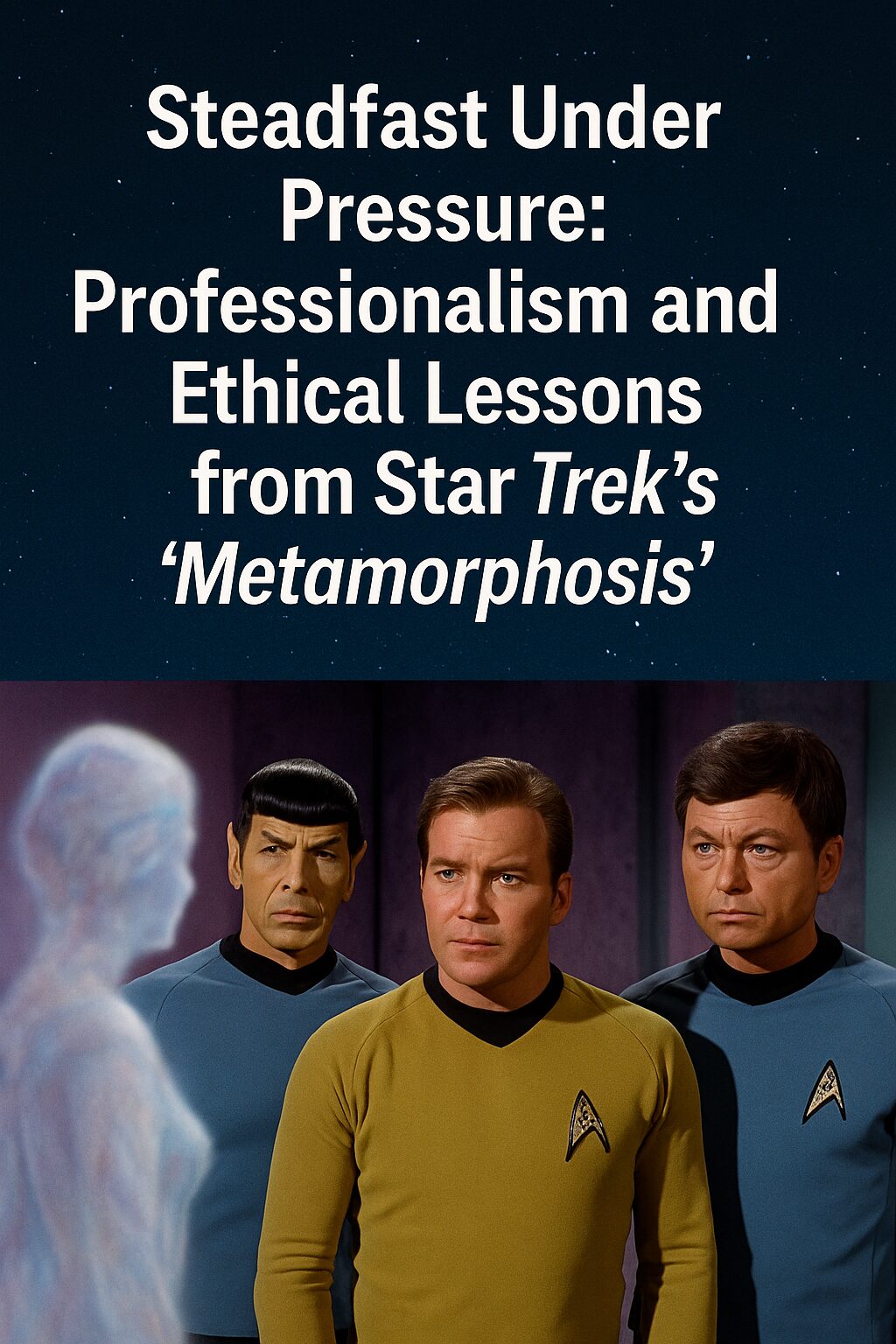
Steadfast Under Pressure: Professionalism and Ethical Lessons from Star Trek’s “Metamorphosis”

In the universe of corporate compliance, pressure is a constant. Whether facing a sudden investigation, navigating a crisis, or mediating high-stakes negotiations, the capacity to remain professional and ethically grounded is what separates a merely good compliance officer from a great one. Few pop culture references embody this principle more vividly than the classic Star Trek: The Original Series episode, “Metamorphosis.”

Set against the backdrop of a forced landing on a remote asteroid, “Metamorphosis” finds Captain Kirk, Spock, Dr. McCoy, and Commissioner Nancy Hedford stranded by an enigmatic alien entity known as the Companion. Their struggle to survive and mediate a clash of perspectives. It provides a near-perfect parallel to the kinds of professional and ethical challenges compliance professionals routinely face during investigations and stressful situations. Today, we dive into critical lessons for compliance professionals, each illustrated by a pivotal scene from “Metamorphosis.”

Lesson 1: Maintain Calm Objectivity—Even When You’re Under Fire

Illustrated By: Upon realizing that the Companion has hijacked their shuttle and they’re trapped on the planetoid, tensions run high. Commissioner Hedford, suffering from a life-threatening illness and a rapidly fading hope for rescue, becomes increasingly distraught. Yet Kirk and Spock methodically assess their environment and resources, refusing to let panic cloud their decision-making.

Compliance Lesson:

Investigations and crises often produce high-stress, high-stakes environments where anxiety and emotion run rampant. Professionalism in such situations demands composure and objectivity. A compliance officer’s ability to remain unflappable, not just for their own sake, but to reassure and stabilize others, is essential for effective problem-solving and ethical decision-making.

Train teams in stress management and crisis communication. Develop checklists and playbooks for investigative response to minimize decision-making under duress—model calm behavior to set the tone for the entire team.

Lesson 2: Empathy and Respect Are Critical—Even for Those You Don’t Understand

Illustrated By: The crew quickly learns the Companion is an alien being beyond their understanding, communicating in ways that defy their usual protocols. Instead of responding with hostility or frustration, Kirk and Spock seek to understand the Companion’s motives, with Spock even attempting a technological “translation” to bridge the communication gap.

Compliance Lesson: During investigations or stressful encounters, it’s easy to become impatient with those who seem uncooperative or “different,” whether they’re interview subjects, whistleblowers, or business partners from unfamiliar cultures. Professionalism requires empathy, respect, and a genuine effort to understand all perspectives, not just those that align with our own.

Integrate empathy training into your compliance curriculum. Remind investigators and managers that cultural, emotional, and even technological barriers are not obstacles to ignore but invitations to connect.

Lesson 3: Uphold Procedural Fairness—Even When Expediency Tempts You

Illustrated By: Desperate to return Commissioner Hedford to the Enterprise for urgent medical care, Kirk considers using force against the Companion. However, both Spock and McCoy caution against a hasty, confrontational approach. The crew ultimately respects due process, attempting diplomacy and dialogue before resorting to more drastic measures.

Compliance Lesson: Under pressure, shortcuts can seem tempting, such as skipping interviews, overlooking evidence, or rushing conclusions for the sake of expediency. However, professionalism in compliance means adhering to investigative protocols, ensuring fairness for all parties, even if it slows down the process or complicates things.

Institute clear, step-by-step protocols for investigations, and hold teams accountable for following them. Empower compliance personnel to speak up when they see due process being sidestepped.

Lesson 4: Ethical Decision-Making Requires Teamwork and Diverse Perspectives

Illustrated By: When initial attempts to reason with the Companion fail, Kirk doesn’t go it alone. He gathers input from Spock, McCoy, and even Commissioner Hedford, blending logic, medicine, diplomacy, and personal perspective. This collective approach yields a creative solution: merging Hedford’s consciousness with the Companion, which saves her life and resolves the impasse.

Compliance Lesson: Complex investigations rarely have easy answers. Ethical professionalism is reinforced by seeking out diverse viewpoints—legal, operational, cultural, and human—ensuring a comprehensive understanding of the issues at hand. The best compliance outcomes emerge from teams that respect each member’s expertise and encourage candid dialogue.

Promote cross-functional collaboration in every investigation. Debrief as a team after each case, capturing different perspectives and lessons learned for future improvement.

Lesson 5: Never Lose Sight of Humanity—The “Why” Behind Compliance

Illustrated By: As the Companion merges with Commissioner Hedford, she is given a second chance at life but must remain on the planetoid. Kirk and his crew, despite their desire to return to the Enterprise, recognize the profound importance of personal dignity and happiness in their resolution. They leave Hedford/Companion with Cochrane, honoring the choice made for love and fulfillment.

Compliance Lesson: In the rush to resolve crises or complete investigations, it’s easy to focus on policy, rules, and process at the expense of people. But true professionalism and ethical compliance leadership mean never losing sight of the human element. The best compliance professionals serve not just the organization but also the individuals whose lives are impacted by their actions.

Balance every investigative and crisis response protocol with compassion. Regularly revisit the organization’s values and “why” behind the compliance program. Use stories and real-life examples to remind teams of the human cost and benefit of ethical professionalism.

Final ComplianceLog Reflections

“Metamorphosis” stands as one of Star Trek’s most poignant explorations of transformation, not just of an alien being, but of the attitudes and perspectives of everyone involved. For compliance professionals, it serves as a powerful reminder: professionalism is not merely a matter of following procedures but of embodying the best of our values under pressure.

Maintaining objectivity, empathy, fairness, teamwork, and humanity, even in the face of the unknown, are the true hallmarks of ethical leadership in compliance. Every investigation, every high-stress moment, is an opportunity to transform not only the situation but also ourselves and our organizations.

As you lead your team through the next compliance challenge, remember the example set by Kirk, Spock, and McCoy. Stay calm. Seek to understand. Uphold fairness. Embrace teamwork. And above all, never forget the people at the heart of every compliance story.

Resources:

Excruciatingly Detailed Plot Summary by Eric W. Weisstein

MissionLogPodcast.com

Memory Alpha

Categories
Trekking Through Compliance

Trekking Through Compliance – Episode 38 – Ethical Lessons from Metamorphosis

In this episode of Trekking Through Compliance, we consider the episode Metamorphosis, which aired on November 10, 1967, and occurred on Star Date 3219.4.

Commissioner Nancy Hedford, who had been on a diplomatic mission to stop a war, is ill with Sicuro’s disease and needs treatment aboard the Enterprise. The shuttlecraft is forced down on a small planetoid, and Kirk cannot contact the Enterprise despite the communications equipment functioning perfectly. On the planet, they find a man named Cochrane, who claims he has been marooned but has a being known as the Companion.

Cochrane is greatly disturbed by the knowledge that the Companion is in love with him and storms out, saying he doesn’t want to be “fodder for any inhuman monster.” Hedford, in a feverish daze, remarks that it is strange that Cochrane runs from love while she has never had the opportunity to be loved. But the Companion occupies and cures the body of Commissioner Hedford, who had been on the verge of death and restores the shuttlecraft and communication devices to working order. However, the Companion cannot leave the planet without dying, and Cochrane decides to remain with her. As they prepare to depart, Kirk agrees not to mention his adventure with Cochrane.

Commentary

The episode features Zephryn Cochran, the discoverer of the Space Warp, who is kept alive by a sentient alien entity known as the Companion. Key ethical issues discussed include the dangers of absolute power, the importance of consent, respecting diversity and self-determination, the balance between duty of care and paternalism, and the need for transparency and accountability. Cochran’s interactions with the Companion serve as a backdrop to highlight these important ethical principles for compliance professionals.

Key Highlights

  • Plot Summary of ‘Metamorphosis’
  • The Companion’s True Nature
  • Ethical Analysis of the Episode
  • Ethical Lessons for Compliance Professionals

Resources

Excruciatingly Detailed Plot Summary by Eric W. Weisstein

MissionLogPodcast.com

Memory Alpha

Categories
Trekking Through Compliance

Trekking Through Compliance-Episode 38 – Metamorphosis


In this episode of Trekking Through Compliance, we consider the episode Metamorphosis which aired on November 13, 1967, Star Date 4513.3.
Compliance Takeaways:

  1. As a CCO you may have a lawyer background but you must act as a compliance professional.
  2. Prejudice has no place in today’s corporate culture
  3. How do you evaluate your senior leadership from the business perspective?