


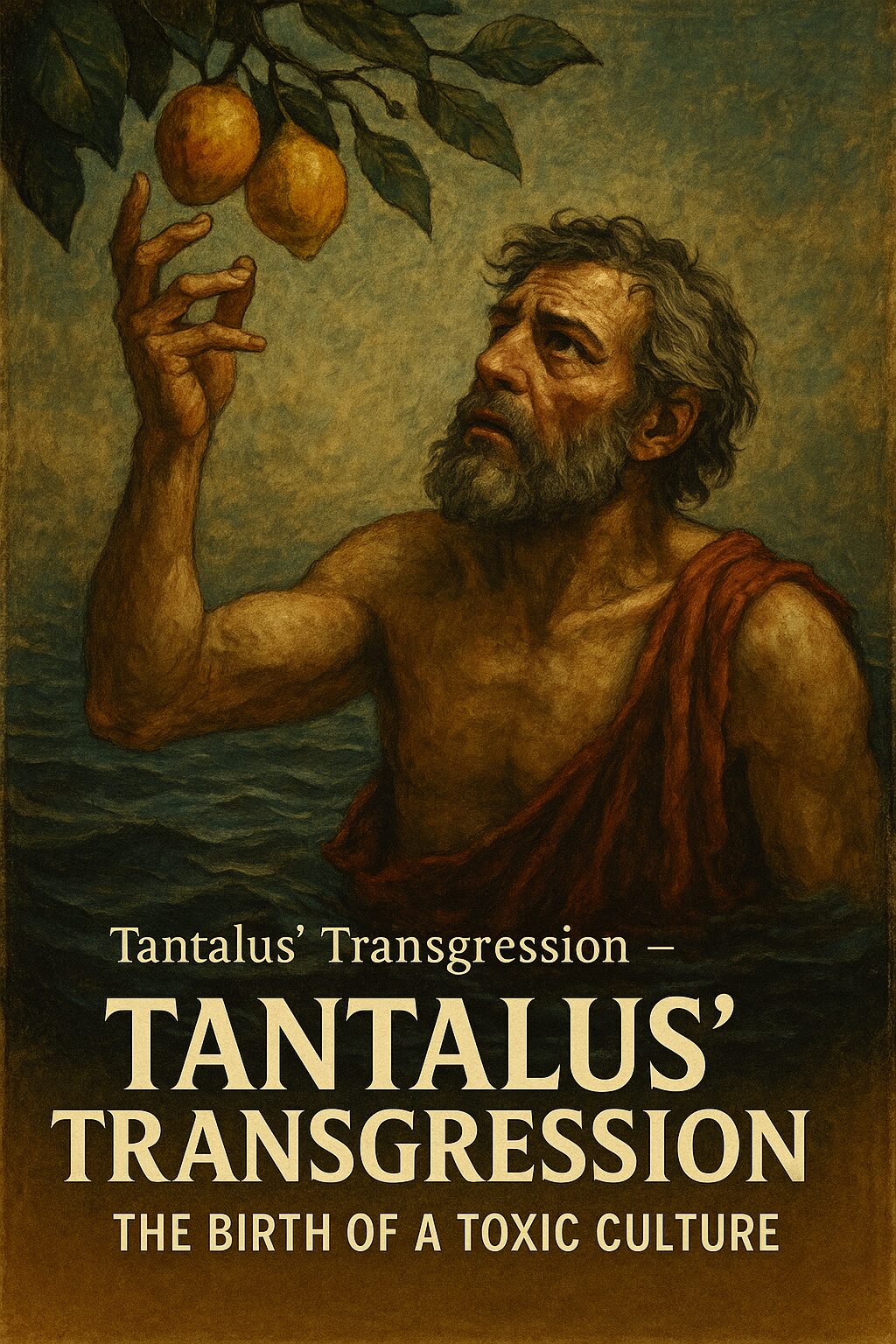
I have long been fascinated by the Greek myths around the House of Atreus. It is the most cursed House in all Greek myth. I have also long wanted to blog post series on the compliance lessons for the modern-day compliance professional. This week, I am going to take a deep dive into the most doomed House and explore some of the key stories to mine them for lessons learned for the 21st-century compliance professional. We begin our series with the founder of the House of Atreus, Tantalus, and how one leader’s moral failure can poison the entire culture of an organization. His story is a cautionary tale about hubris, accountability, and the long shadow of tone from the top.
Every great compliance failure begins somewhere. Sometimes it is a single decision, a moment of arrogance, or the quiet belief that the rules apply to everyone else but not to you. In the myths of ancient Greece, that moment came with Tantalus, patriarch of the cursed House of Atreus. His name lives on in infamy, not because of power lost, but because of ethics abandoned.
The Feast of Deception
Tantalus was a favorite of the gods. He dined with them on Mount Olympus, enjoying privileges no mortal ever had. But instead of gratitude, he showed contempt. To test their omniscience, Tantalus served the gods a horrific meal, the cooked flesh of his own son, Pelops. The gods recoiled in horror, restored Pelops to life, and condemned Tantalus to eternal punishment: forever hungry and thirsty, standing in a pool of water beneath fruit-laden branches that receded whenever he reached for them.
This is where we get the word tantalize to tempt with what is always just out of reach. But for compliance professionals, the story isn’t about temptation; it’s about transgression.
Tantalus’ sin was not merely moral or criminal. It was cultural. It revealed a belief that he was above consequence, that his proximity to power made him immune to accountability. Sound familiar? It’s the same psychology that drives corporate misconduct today: the executive who hides risk, manipulates reporting lines, or treats compliance as a box to check rather than a value to live.
Hubris at the Top: When Leaders Believe They Are Untouchable
The core of Tantalus’ failure is hubris, excessive pride that blinds leaders to ethical limits. He thought himself equal to the gods, just as modern executives sometimes see themselves as beyond internal controls, policies, or oversight.
We have seen it in corporate scandals from Enron to Theranos: charismatic leaders who create cultures where questioning authority is punished, transparency is discouraged, and the pursuit of results justifies every means. These leaders often start with good intentions —innovation, performance, growth — but end in disaster because no one dares to tell them “no.” When a CEO, department head, or even a team manager sends the message that rules are flexible for those who produce, that’s the modern equivalent of dining at Olympus. It’s the moment when culture begins to rot from the inside.
Tone from the Top: What Tantalus Forgot
In compliance, we often say “tone from the top” sets the ethical compass of the organization. Tantalus was the top, and his tone was deceitful. Instead of modeling integrity, he modeled arrogance and disrespect. His actions communicated that power excused anything.
Modern organizations are no different. Employees don’t take their ethical cues from the code of conduct on the intranet. They take them from leadership behavior, from what’s rewarded, ignored, or punished.
If Tantalus had shown humility or accountability, his descendants might have inherited a culture of honor. Instead, they inherited corruption, vengeance, and betrayal. It’s no coincidence that every generation of the House of Atreus, including Pelops, Atreus, Thyestes, Agamemnon, Clytemnestra, Orestes, repeats the cycle of wrongdoing and retaliation. The family’s downfall wasn’t fate; it was culture. A toxic tone from the top doesn’t just corrupt a moment; it defines a legacy.
Culture of Consequences: What Happens When Misconduct Goes Unpunished
One of the most striking aspects of the Tantalus myth is how long the effects last. His descendants commit crimes generations later, yet all trace back to his original transgression.
That’s what happens in modern corporations when ethical breaches are not addressed. Once misconduct is tolerated, it becomes precedent. Once precedent hardens, it becomes culture. Think of organizations where sexual harassment was covered up “to protect the company,” or where accounting irregularities were ignored “to meet quarterly targets.” Each decision not to act creates a silent permission structure. And before long, you have what we see in so many enforcement cases: a pattern of misconduct spanning years, sometimes decades.
Tantalus’ punishment, forever reaching but never attaining satisfaction, mirrors what happens in these companies. They chase success endlessly, but integrity is always out of reach because they’ve traded ethics for expedience. A culture of consequences, by contrast, does the opposite. It makes accountability tangible. It shows employees that integrity is the expectation, not the exception.
The Modern Mirror: When Hubris Meets Compliance Failure
The story of Tantalus echoes across modern boardrooms and compliance case studies. Consider:
- The FCPA case against Siemens (2008): A culture of “business at any cost” led to systematic bribery across divisions, because leadership prioritized results over integrity.
- The Wells Fargo scandal: Unrealistic sales goals, driven by executives insulated from consequence, encouraged widespread fraud at the branch level.
- Theranos: A founder’s belief in her infallibility silenced dissent, distorted reporting, and destroyed trust both internally and externally.
Each of these stories began like Tantalus’ dinner with one decision to deceive, rationalized as necessary, even brilliant. Each became a legend of ethical collapse.
The compliance lesson is simple: arrogance without accountability creates catastrophe.
Rebuilding What is Broken: Lessons from Tantalus’ Fall
So how do we avoid the curse of Tantalus in modern organizations? Three principles stand out:
1. Make Ethics the Core of Leadership Identity
Ethical leadership isn’t a function of compliance checklists. It’s the lived demonstration of integrity. Leaders must see compliance not as a constraint but as an enabler of trust and sustainability. When executives model ethical decision-making, it cascades downward.
Compliance Lesson: Integrate ethical leadership into performance reviews and succession planning. Reward transparency as much as performance.
2. Institutionalize Accountability
Accountability must be structured, not situational. That means ensuring robust internal investigations, consistent discipline, and a compliance function with real independence. The moment compliance must “ask permission” to act, the organization has lost its compass.
Compliance Lesson: Empower compliance officers with direct access to the board and audit committee. Build transparency into reporting lines.
3. Preserve Psychological Safety
Tantalus’ court, like many modern workplaces, thrived on fear. When employees can’t question leaders or raise concerns, misconduct flourishes. Psychological safety is the soil in which ethical cultures grow.
Compliance Lesson: Implement anonymous reporting, protect whistleblowers, and make public examples of non-retaliation.
Breaking the Curse: The Compliance Evangelist’s View
The curse of Tantalus was not divine punishment; instead, it was a predictable outcome of leadership failure. Every compliance professional knows that culture is destiny. If leaders are deceitful, employees will be cynical. If leaders are accountable, employees will be engaged.
Tantalus’ name survives as a warning to those who confuse privilege with power, and authority with exemption. His eternal hunger reflects what happens when organizations try to feed success on a diet of deception; they are never satisfied because trust, once lost, cannot nourish growth.
The modern compliance officer stands at the intersection of myth and management, tasked with ensuring that our organizations don’t repeat Tantalus’ mistake. We cannot test the gods of regulation or ethics without consequence. Instead, we must build cultures where doing right isn’t exceptional; it is expected.
Because in the end, every compliance program has a mythic choice: become Olympus or become Tantalus.
Join us tomorrow for Part 2 — Pelops and Myrtilus: Corruption in the Bidding Process. We will explore how bribery, betrayal, and broken promises tainted Pelops’ victory and what it teaches us about third-party risk and ethical procurement.
