

Categories
Trekking Through Compliance

Trekking Through Compliance – Episode 13 – The Conscience of the King

In this episode of Trekking Through Compliance, we consider the episode The Conscience of the King, which aired on December 8, 1966, with a Star Date of 2817.6.

In this episode of Trekking Through Compliance, we turn our attention to The Conscience of the King, a Shakespeare-infused Star Trek story that challenges Captain Kirk—and us—to grapple with the ethics of justice, mercy, and leadership responsibility. When Kirk suspects that the famed actor Anton Karidian is Kodos the Executioner—a governor responsible for ordering the deaths of 4,000 colonists years earlier—he must weigh vengeance, truth, and the costs of reopening old wounds.

As we unpack this episode, we connect Kirk’s internal struggle and ethical decision-making to the real-world challenges compliance professionals face when confronting legacy misconduct, institutional cover-ups, and questions of redemption in corporate culture.

Story Synopsis

Dr. Thomas Leighton calls the Enterprise Planet Q. Leighton suspects Anton Karidian, the leader of a Shakespearean acting troupe currently on the planet, is Kodos the Executioner, the former governor of the Earth colony of Tarsus IV. Kodos ordered that half the population of 8,000 be put to death during a food shortage. Both Leighton and Kirk were eyewitnesses.

Kirk arranges to ferry the acting troupe to its next destination. Spock learns the history of the massacre, Kirk’s connection to it, and that seven of the nine witnesses had died in each case when Karidian’s troupe was nearby. Kirk confronts Karidian with his suspicions. Karidian does not admit to being Kodos.

Karidian, overhearing, is disturbed, and Lenore tries to reassure him by revealing that she has been killing the witnesses to his crimes. Kirk moves to arrest them both. Lenore snatches a phaser and accidentally kills Karidian.

Key highlights:

1. The Weight of Past Decisions—Leadership Never Forgets

🖖Illustrated by: Kirk’s memory of witnessing the atrocities of Tarsus IV as a young man.

Great leaders never leave their past behind—they carry it forward as context and compass. When legacy issues, such as old FCPA violations or dormant discrimination claims, resurface, leaders must face them directly rather than bury them under corporate amnesia.

2. Silent Complicity and Ethical Courage—Speak Up, Even Years Later

🖖Illustrated by: Dr. Leighton’s insistence that Karidian is Kodos, despite the passage of time.

Leighton models the whistleblower’s dilemma: does the pursuit of truth justify disrupting someone’s life decades later? The answer, in compliance, is yes; when lives are harmed or injustice is committed, silence is complicity.

3. Leadership and Doubt—Action Without Certainty

🖖Illustrated by: Kirk’s internal struggle over whether Karidian is truly Kodos and whether justice still matters.

Kirk wrestles with doubt, a hallmark of responsible leadership. Unlike the rigid commander stereotype, Kirk shows us that great leaders pause, reflect, and sometimes hesitate before acting.

4. When the Next Generation Fails—Managing Succession and Oversight

🖖Illustrated by: Lenore Karidian’s vigilante campaign to eliminate witnesses to her father’s past.

Lenore’s misguided sense of loyalty and justice highlights the risks of leadership failure in succession. In a corporate setting, this highlights the importance of mentoring future leaders, integrating ethics into the culture, and establishing oversight during transitions.

5. Justice vs. Mercy—Leadership Must Balance the Two

🖖Illustrated by: Kirk’s decision not to kill Karidian but to hold him accountable through due process.

Ultimately, Kirk refuses to exact revenge. He chooses lawful action over vigilante justice. This restraint is perhaps the greatest leadership lesson of the episode: compliance is not about punishment; it is about principled action.

Final Starlog Reflections

The Conscience of the King is more than a mystery; it is a meditation on the responsibilities of leadership and the ethics of remembrance. Compliance professionals often find themselves at the intersection of institutional memory and moral action. Whether addressing legacy misconduct, evaluating redemptive narratives, or confronting cover-ups, we must carry the same conscience Kirk bears: one rooted in justice, tempered by mercy, and guided by truth.

As we say in the world of compliance, investigate when others ignore the issue. Act when others hesitate. Lead when others bury the past.

Resources:

Excruciatingly Detailed Plot Summary by Eric W. Weisstein
MissionLogPodcast.com

Memory Alpha

Categories
Blog

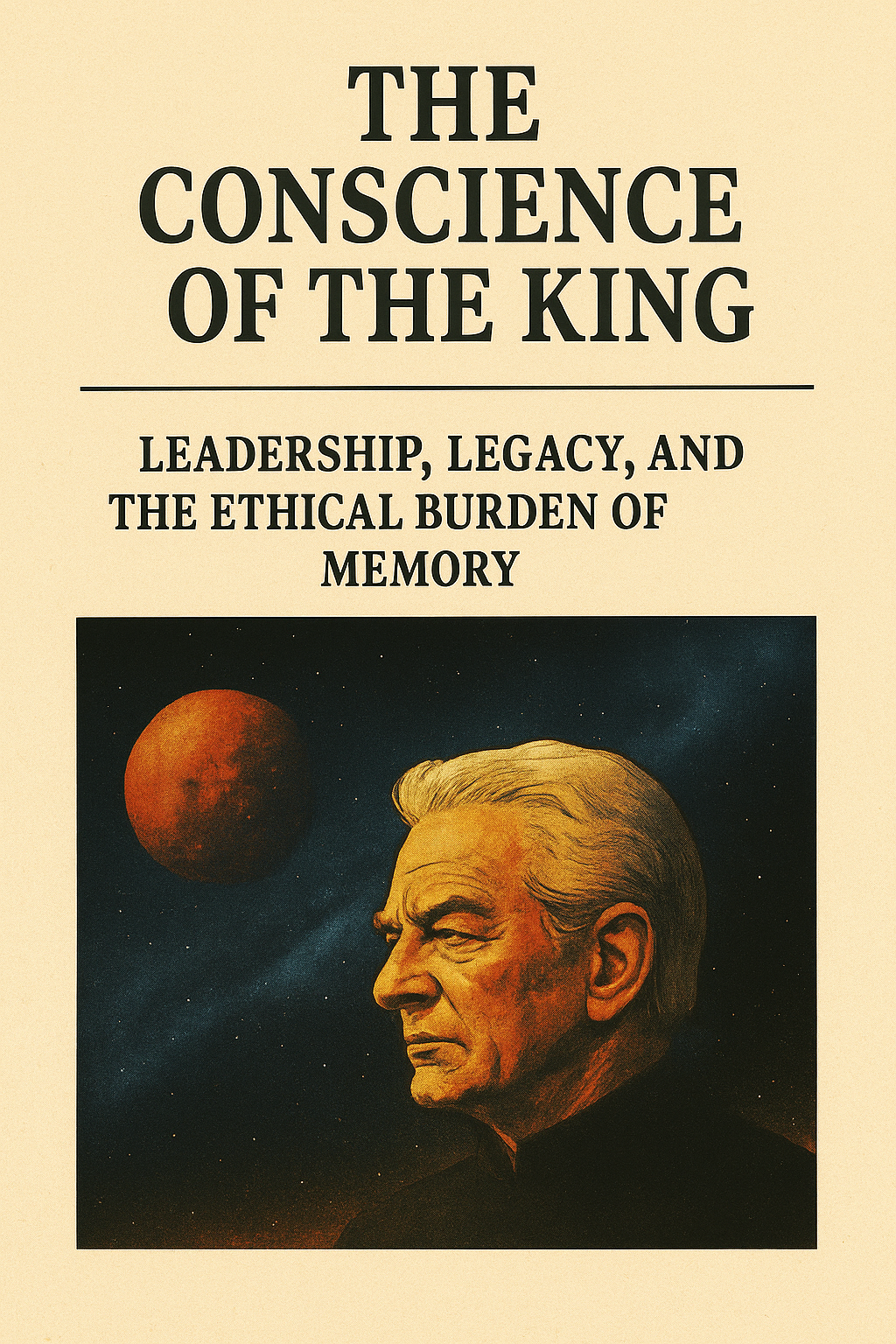
The Conscience of the King: Leadership, Legacy, and the Ethical Burden of Memory

Show Summary

Today, we turn our attention to The Conscience of the King. This Shakespeare-infused Star Trek story challenges Captain Kirk to grapple with the ethics of justice, mercy, and leadership responsibility. When Kirk suspects that the famed actor Anton Karidian is Kodos the Executioner, a governor responsible for ordering the deaths of 4,000 colonists years earlier, he must weigh vengeance, truth, and the costs of reopening old wounds.

As we unpack this story, we connect Kirk’s internal struggle and ethical decision-making to the real-world challenges compliance professionals face when confronting legacy misconduct, institutional cover-ups, and questions of redemption in corporate culture. We provide five key highlights for the compliance professional.

1. The Weight of Past Decisions—Leadership Never Forgets

Illustrated by: Kirk’s memory of witnessing the atrocities of Tarsus IV as a young man.

Leaders are shaped by what they have seen and experienced, as well as what they may have survived. Kirk’s commitment to uncovering the truth about Karidian isn’t about revenge; it’s about moral closure and honoring the memory of those lost. For compliance professionals, this serves as a reminder that legacy issues—whether they’re unresolved FCPA violations, historical human rights abuses, or systemic failures—do not simply fade with time. If anything, they cast a longer shadow. Ethical leadership requires confronting past wrongdoing with transparency and resolve. A failure to address yesterday’s misconduct risks undermining today’s culture. Institutional memory is not a burden, and it is a compass that should guide future ethical decisions.

2. Silent Complicity and Ethical Courage—Speak Up, Even Years Later

Illustrated by: Dr. Leighton’s insistence that Karidian is Kodos, despite the passage of time.

Dr. Leighton embodies the ethical courage it takes to speak the truth, especially when public interest has waned over time. His determination underscores a core compliance truth: there is no statute of limitations on accountability. When misconduct has caused real harm, silence becomes complicity. Leaders must create compliance cultures where reporting long-dormant concerns is viewed as a moral responsibility, not disloyalty or disruption. Whistleblower protections shouldn’t only apply to active employees but also encourage former employees, partners, or community stakeholders to come forward. Organizations must foster environments where the pursuit of truth is always welcome, regardless of how inconvenient or uncomfortable that truth may be.

3. Leadership and Doubt—Action Without Certainty

Illustrated byKirk’s internal struggle over whether Karidian is truly Kodos and whether justice still matters.

Kirk’s doubt is not a sign of weakness; it is a sign of leadership maturity. He could act rashly, but chooses restraint and investigation. This reminds compliance professionals that ethical decision-making often requires grappling with uncertainty. There won’t always be a perfect set of facts or unanimous agreement. However, delaying action indefinitely out of fear of being wrong can allow misconduct to persist. Effective compliance officers must learn to manage ambiguity, gather facts diligently, and still move forward with measured integrity. Courage lies not in having every answer but in taking ethical steps toward resolution, even when the path is unclear.

4. When the Next Generation Fails—Managing Succession and Oversight

Illustrated by: Lenore Karidian’s vigilante campaign to eliminate witnesses to her father’s past.

Lenore’s actions reflect a failure of ethical inheritance. Her misplaced loyalty to her father led her to believe that protecting his reputation, even through murder, was justified. This is what happens when leadership fails to instill ethical values in successors. For compliance leaders, it’s a cautionary tale: legacy is not only what you accomplish but also what you teach others to carry forward. Ethics must be embedded through mentoring, continuous training, and a succession plan that prizes transparency and accountability. Without intentional cultural transmission, the next generation may feel entitled to protect the institution’s image at the cost of truth and justice.

5. Justice vs. Mercy—Leadership Must Balance the Two

Illustrated by: Kirk’s decision not to kill Karidian but to hold him accountable through due process.

Kirk is presented with the opportunity to exact personal vengeance, but chooses institutional justice instead. His restraint highlights a critical ethical principle: leadership is not about indulging emotion but about modeling fairness and integrity. In the compliance world, it’s tempting to punish harshly to “make an example,” but true justice lies in proportionality and process. Compliance officers must strike a balance between the need for deterrence and the values of fairness, remediation, and restorative opportunity. Mercy is not weakness. It is a disciplined response rooted in ethical clarity. By refusing to be judge and executioner, Kirk upholds not just justice but the integrity of his leadership.

Final ComplianceLog Reflections

The Conscience of the King is more than a mystery; it is a meditation on the responsibilities of leadership and the ethics of remembrance. Compliance professionals often find themselves at the intersection of institutional memory and moral action. Whether addressing legacy misconduct, evaluating redemptive narratives, or confronting cover-ups, we must carry the same conscience Kirk bears: one rooted in justice, tempered by mercy, and guided by truth.

As we say in the world of compliance, investigate when others ignore the issue. Act when others hesitate. Lead when others bury the past.

Categories
Because That's What Heroes Do

Deep Space 9: Episode 3 – Duet

Get ready for an exciting new season of Because That’s What Heroes Do. In this season, they take a deep dive into their favorite 15 episodes of Deep Space 9.

In this exploration, they are joined by DS9 maven, Alex Murphy, who lives in Montreal, Quebec, where he’s been a cook, baker, and general kitchen grunt for twenty-some odd years. Off duty, he is a local historian, cinema, and TV fan with a love for weird foreign films, all things horror, and obscure media. He has been watching Trek since he was a tiny punk, and it’s been a lifelong love.

Don’t miss out on the exciting new season of Because That’s What Heroes Do! We continue our exploration of DS9 with a review of the 17th show from the first season, Duet.

This episode is lauded for its emotionally charged content and complex character development. They highlight its successful handling of heavy, relevant issues and its ranking as possibly one of the best in the Star Trek series for tackling such themes through a sci-fi lens. Consider its writing, acting, and thoughtful portrayal of a wide range of emotions and ethical dilemmas.

The discussion touches on character arcs, especially that of Kira Nerys, and her emotional journey dealing with past actions and the realization of her desires for vengeance versus justice. Themes of accountability, reconciliation, and the transformation from violence to peace are explored, paralleling real-world issues such as the Holocaust, apartheid, and various forms of political and social reconciliation processes.

The conversation also delves into the Star Trek universe’s broader scope, contemplating the franchise’s handling of multifaceted characters and societies with diverse, sometimes conflicting, motivations.

Key Highlights and Themes:

  • Synopsis and Episode Selection Discussion
  • Deep Dive into ‘Duet’ Episode Analysis
  • The Impact of Acting and Writing on Storytelling
  • Exploring Kira’s Emotional Arc and Character Development
  • Drawing Parallels: Historical and Political Contexts
  • The Power of Dialogue in Unveiling Complex Narratives
  • Concluding Thoughts on ‘Duet’ and Its Place in Star Trek Legacy

 Resources:

Megan Dougherty 

LinkedIn

One Stone Creative

Twitter

Tom 

Instagram

Facebook

YouTube

Twitter

LinkedIn

Categories
Trekking Through Compliance

Trekking Through Compliance-Episode 13- The Conscience of the King

In this episode of Trekking Through Compliance, we consider the episode The Conscience of the King which aired on December 8, 1966, Star Date 2817.6.
Compliance Takeaways:
  1. When does a leader step over the line from business to personal?
  2. Can you ever be sure in an investigation absent a confession?
  3. What is the difference between an investigation and a root cause analysis?
Resources
Excruciatingly Detailed Plot Summary by Eric W. Weisstein for The Conscience of the King
MissionLogPodcast.com-The Conscience of the King