Categories
Adventures in Compliance

Adventures in Compliance: The Sign of Four – Holmes Revealed: Communication and Training Insights

In this new season of Adventures in Compliance, we take a deep dive into the Sherlock Holmes novels. Today, we conclude our four-part exploration of the novel The Sign of Four with a deep dive into communication and training lessons for the compliance professional. Timothy and Fiona dissect Holmes’ meticulous methods of deduction, uncovering essential strategies for clear, effective, and engaging communication. Key topics include forensic clarity, varied reinforcement, tailored messaging, the importance of transparency, setting clear expectations, interactive training techniques, and crisis communication preparedness. Learn how these principles can enhance your professional interactions and build a more resilient, informed culture within your organization.

Highlights include:

  • Exploring Sherlock Holmes’ Communication Lessons
  • Forensic Clarity in Communication
  • The Power of Repetition and Reinforcement
  • Tailoring Messages for Different Audiences
  • Building Trust Through Transparency
  • Setting Clear Expectations

Resources:

The New Annotated Sherlock Holmes

Sherlock Holmes FAQ by Dave Thompson

Connect with Tom Fox

Instagram

Facebook

YouTube

Twitter

LinkedIn

Categories
Blog

Elementary, My Dear Compliance Officer: Communication and Training Insights from Sherlock Holmes’ ‘The Sign of Four’

One of my great pleasures is exploring the fascinating intersection of classic literature and corporate compliance. Sir Arthur Conan Doyle’s Sherlock Holmes stories, with their rich narrative and keen insights into human nature, consistently offer valuable lessons for compliance professionals. As we conclude our review of “The Sign of Four” in this month’s series on Adventures in Compliance, I aim to demonstrate how the novel offers valuable insights into the pivotal compliance domains of communication and training.

Lesson 1: Clarity and Precision in Communication

Early in “The Sign of Four,” Holmes remarks, “When you have eliminated the impossible, whatever remains, however improbable, must be the truth.” This oft-quoted maxim emphasizes the importance of clear and precise communication in compliance training and operations. Compliance professionals must eliminate ambiguity and confusion in their policies, procedures, and communications to ensure that employees understand exactly what is expected of them.

Consider Holmes’s meticulous questioning of Mary Morstan and the careful recording of details concerning the mysterious pearls. Similarly, compliance professionals must ask precise questions when developing training materials or internal communications to ensure accuracy and effectiveness. By doing so, they provide the accuracy and relevance of their messaging, ultimately aiding employees in distinguishing right from wrong and prohibiting prohibited actions.

Lesson 2: Effective Training Through Repetition and Reinforcement

In solving the mystery, Holmes revisits clues repeatedly, reinforcing their significance. Similarly, compliance training is most effective when key messages and ethical principles are regularly repeated and reinforced through multiple channels and formats. A single annual training session is inadequate in today’s fast-paced regulatory environment.

Continuous reinforcement helps embed compliance in the organizational culture, much like Holmes continually revisits facts until they form a coherent whole. Consider periodic refreshers, interactive quizzes, and regular reminders in newsletters or meetings to reinforce core compliance messages. Employees should consistently hear, see, and engage with compliance principles, transforming them from abstract guidelines into habitual behaviors.

Lesson 3: Tailored Communication to Diverse Audiences

Holmes is famously adaptable, shifting his communication style to suit the needs of his audience. His interactions vary considerably, from the sensitive approach to the distressed Mary Morstan to the precise, professional exchanges with Inspector Atheney Jones. Compliance officers must similarly tailor their messages to resonate with different employee groups, from frontline workers to senior executives.

Recognizing that one size does not fit all is crucial. Training programs and compliance communications should consider the employees’ roles, departments, and specific responsibilities. Just as Holmes intuitively adapts his investigative approach, compliance professionals must adjust the tone, style, and complexity of their communications to effectively engage diverse audiences, ensuring that everyone receives a clear and understandable message tailored to their needs.

Lesson 4: Transparency Builds Trust

“The Sign of Four” revolves significantly around the themes of honesty and transparency. The hidden treasure and clandestine actions create a web of mistrust and conflict. Conversely, Holmes’s straightforward and transparent investigative style engenders trust and cooperation among his allies.

Transparency is equally fundamental in compliance. Openness in communicating compliance objectives, procedures, and the rationale behind them fosters a culture of trust and transparency. Employees who understand why specific policies are necessary and the benefits of compliance to the organization are far more likely to adhere willingly and enthusiastically. Regular, transparent updates on compliance matters, including mistakes and lessons learned, strengthen organizational trust, promoting compliance as a positive value rather than a restrictive burden.

Lesson 5: Communication of Expectations Clearly and Early

When engaging with clients and associates, Holmes clarifies his investigative process and sets clear expectations from the outset. This approach ensures mutual understanding and alignment, which is crucial for a successful partnership.

Similarly, compliance professionals must communicate expectations as early as possible. New hires should immediately understand the importance of compliance and the standards they are expected to uphold. Regular reinforcement of these expectations at milestones and through ongoing communications ensures alignment and reduces ambiguity, minimizing the risk of inadvertent non-compliance.

Lesson 6: Interactive Training Enhances Retention

Throughout the novel, Holmes engages actively with Dr. Watson, using interactive dialogue to sharpen Watson’s observational and deductive skills. This interactive method greatly enhances Watson’s ability to absorb and retain information.

Compliance training should similarly be interactive rather than merely didactic. Interactive scenarios, case studies, role-playing exercises, and gamification of training modules can significantly improve engagement and retention. Employees actively participating in compliance training are more likely to internalize the lessons and apply them in real-world scenarios.

Lesson 7: Crisis Communication Preparedness

Holmes adeptly manages crises by remaining calm and methodically communicating his deductions and plans clearly and concisely. His approach minimizes panic and maximizes efficiency during critical moments.

Compliance professionals must adopt a similar methodical approach to crisis communication. Preparing clear, concise crisis communication protocols in advance helps organizations respond swiftly and effectively when faced with compliance issues. Training staff to remain calm, follow established communication channels, and clearly articulate necessary actions ensures organizational resilience during crises.

Conclusion

Sherlock Holmes continues to offer timeless lessons for compliance professionals, particularly in the areas of effective communication and training practices. “The Sign of Four” exemplifies these lessons vividly. Clarity, repetition, tailored messaging, transparency, early communication of expectations, interactive engagement, and preparedness for crisis communication are all critical for creating and sustaining a strong compliance culture.

By emulating Holmes’s meticulous attention to detail, adaptability, and clarity in our communications and training strategies, compliance professionals can significantly enhance their effectiveness. Ultimately, this approach not only ensures regulatory compliance but also builds stronger, more ethical organizational cultures, much as Holmes builds clarity and trust in his cases, one meticulous observation at a time.

Categories
Adventures in Compliance

Adventures in Compliance: The Novels: Data Analytics from The Sign of Four

In this new season of Adventures in Compliance, host Tom Fox takes a deep dive into the Sherlock Holmes novels. Throughout this season, Tom will explore each novel in a four-part series. The four novels we will consider from the ethics and compliance perspective are A Study in Scarlet, The Sign of Four, The Hound of the Baskervilles, and The Valley of Fear. We continue our four-episode series on the second novel, The Sign of Four, by reviewing how Holmes uses data analytics and pattern recognition in this story.

Timothy and Fiona had so much fun last week that they are back to explore how the methods of the fictional detective Sherlock Holmes can be applied to modern compliance work. By examining the principles from ‘The Sign of Four,’ they take a deep dive into five key lessons that can sharpen the skills of compliance professionals today: the art of discernment, establishing baselines, contextual analysis of data, leveraging technology, and continuous refinement and learning. Their discussion highlights how these timeless analytical approaches, when amplified by modern technology, provide a robust framework for dealing with complex and rapidly changing compliance landscapes.

Highlights include:

  • Applying Holmes’ Methods to Compliance Analytics
  • Lesson 1: The Art of Discernment
  • Lesson 2: Establishing Baselines
  • Lesson 3: Contextual Analysis of Data
  • Lesson 4: Leveraging Technology and Tools
  • Lesson 5: Continuous Refinement and Learning
  • Conclusion: Balancing Timeless Principles with Modern Adaptability

Resources:

The New Annotated Sherlock Holmes

Sherlock Holmes FAQ by Dave Thompson

Connect with Tom Fox

Instagram

Facebook

YouTube

Twitter

LinkedIn

Categories
Blog

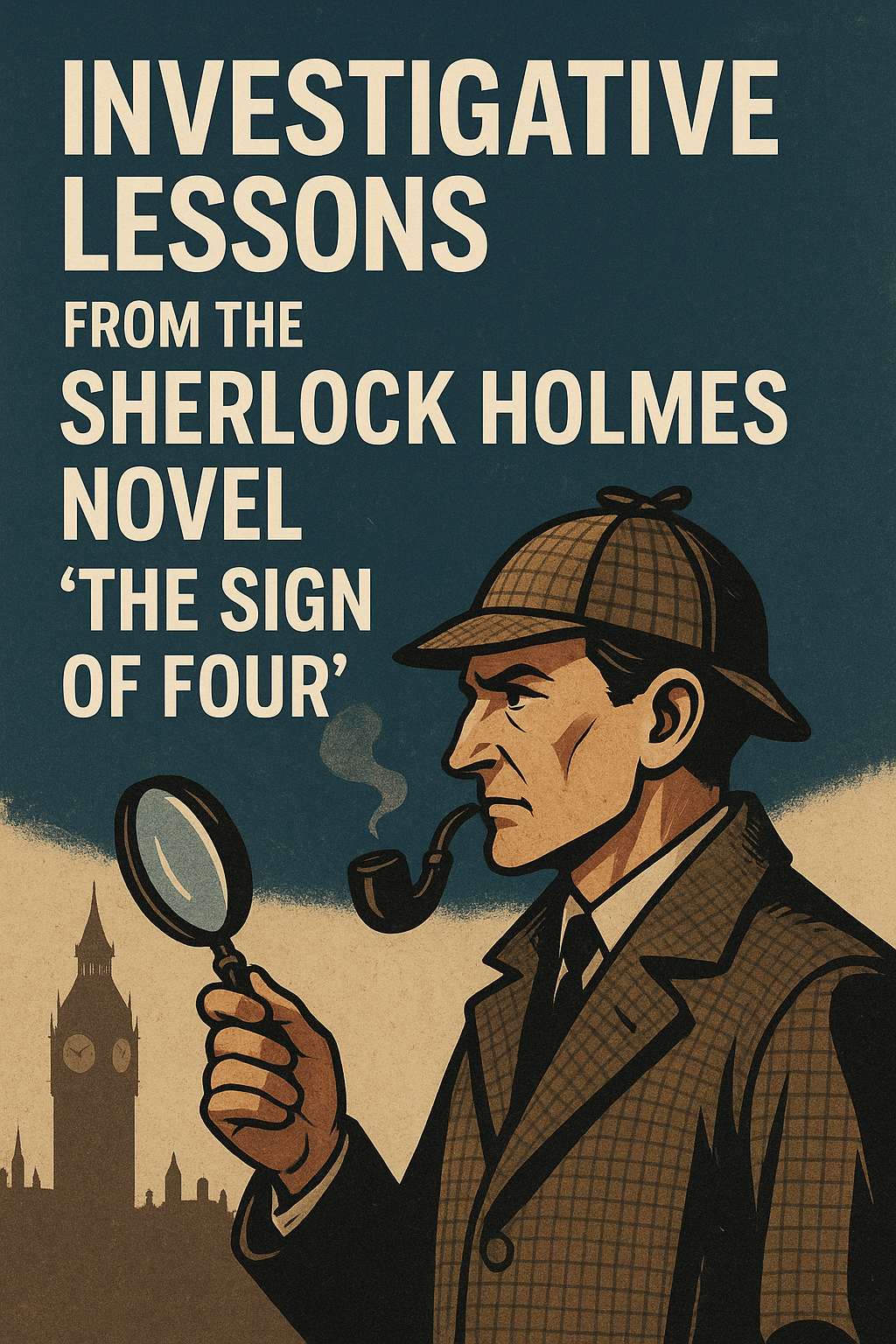
Investigative Lessons from Sherlock Holmes: The Sign of Four

Corporate compliance and Sherlock Holmes may seem worlds apart, but compliance professionals and Sir Arthur Conan Doyle’s legendary detective share a core responsibility: uncovering truths hidden behind complex webs of evidence. “The Sign of Four,” one of Doyle’s most gripping Sherlock Holmes tales, offers powerful investigative insights directly applicable to the realm of compliance. Here are five key lessons compliance professionals can draw from Holmes’s investigative methods in this classic novel.

1. Precise Documentation: “Methodical Observation”

In The Sign of Four, Sherlock Holmes emphasizes the importance of methodical and precise documentation as crucial to solving complex mysteries. Early in the narrative, Holmes carefully examines a mysterious note received by Miss Mary Morstan. His meticulous observation of handwriting, paper quality, and ink composition enables him to deduce the note’s origin and purpose, thereby setting the course of the investigation.

Compliance professionals should emulate Holmes by rigorously documenting every aspect of an investigation to ensure thoroughness and accuracy. Precise records of evidence, witness statements, and procedures ensure accuracy, accountability, and transparency, significantly reducing risks of oversight or misinterpretation. Proper documentation also strengthens the organization’s ability to respond effectively during audits or regulatory inquiries.

2. Logical Analysis: “Eliminating the Impossible”

Holmes famously asserts in The Sign of Four, “When you have eliminated the impossible, whatever remains, however improbable, must be the truth.” This principle guides his pursuit of justice throughout the novel. Holmes methodically rules out improbable scenarios in investigating the disappearance of Captain Morstan and the subsequent quest for hidden treasure, ultimately unveiling Jonathan Small’s elaborate revenge-driven plot.

Compliance officers should similarly use structured analytical frameworks to eliminate false assumptions and unsubstantiated theories during investigations. Adopting logical, disciplined analysis reduces biases, prevents costly mistakes, and fosters more accurate and actionable outcomes. Holmes’s deductive approach encourages compliance professionals to remain vigilant against assumptions that may cloud judgment.

3. Embrace Collaboration: “Leveraging Complementary Strengths”

In The Sign of Four, Sherlock Holmes frequently relies on Dr. Watson’s support and complementary skills. Watson’s medical knowledge and practical insights greatly assisted Holmes during the investigation, notably during examinations of crime scenes and understanding the emotional motivations of suspects and victims.

For compliance professionals, this illustrates the importance of multidisciplinary collaboration. Effective compliance investigations often require collaboration with professionals from diverse specialties, including auditors, forensic accountants, legal advisors, human resources specialists, and IT experts. Embracing a collaborative approach ensures a comprehensive investigation, as each discipline brings unique insights that enhance the overall effectiveness and credibility of the compliance function.

4. Attention to Subtle Indicators: “Noticing Small Clues”

Holmes’s brilliance often lies in noticing seemingly insignificant details overlooked by others. In The Sign of Four, Holmes carefully notes tiny footprints, peculiar scents, and minor discrepancies in testimonies, each subtly directing the investigation toward its resolution. For instance, Holmes’s keen attention to Toby, the trained bloodhound, and his reaction to specific scents help locate key evidence pivotal to unraveling the mystery.

Compliance professionals must likewise sharpen their observational skills to detect subtle indicators of wrongdoing, such as minor financial discrepancies, slight variations in employee behaviors, or seemingly inconsequential procedural anomalies. Often, the most significant compliance breaches initially manifest as minor irregularities. Developing Holmes-like attentiveness can significantly enhance the detection and early resolution of compliance issues.

5. Managing Bias and Assumptions: “Maintaining Objective Judgment”

Throughout, Holmes maintains rigorous objectivity, avoiding emotional biases or ungrounded assumptions. Even when emotionally involved characters, including Watson and Miss Mary Morstan, draw emotional or intuitive conclusions, Holmes insists on relying exclusively on factual evidence and logic. His disciplined approach ensures accuracy and fairness in the investigation’s outcome.

Compliance officers frequently confront emotionally charged scenarios or influential stakeholders, which can pressure outcomes. Maintaining an objective and unbiased judgment is crucial to upholding fairness and integrity during compliance investigations. Holmes’s unwavering dedication to evidence-based analysis exemplifies the importance of unbiased fact-finding in safeguarding organizational ethics and compliance integrity.

Final Thoughts: Integrating Sherlock Holmes’s Methods into Compliance

The Sign of Four offers rich investigative wisdom that is directly applicable to corporate compliance. Sherlock Holmes’s meticulous documentation, disciplined logical reasoning, strategic collaboration, precise attention to detail, and uncompromising objectivity represent invaluable investigative methodologies for today’s compliance professionals.

As compliance continues evolving in complexity and significance, adopting Holmesian investigative rigor enhances our ability to protect organizational integrity, mitigate risks, and ensure regulatory compliance. Compliance professionals who master these investigative practices not only improve their effectiveness but also significantly contribute to their organization’s overall resilience and ethical standing.

In the dynamic landscape of corporate compliance, Sherlock Holmes’s timeless investigative lessons remain as relevant today as in Victorian London, reminding us that excellence in investigation demands continual refinement, unwavering diligence, and precise analytical clarity.

Categories
Adventures in Compliance

Adventures in Compliance: The Novels: The Sign of Four – Applying Sherlock Holmes’ Methods to Modern Corporate Compliance

In this new season of Adventures in Compliance, host Tom Fox takes a deep dive into the Sherlock Holmes novels. Over the course of this season, Tom Fox will take a deep dive into each novel in a four-part series. The four novels we will consider from the ethics and compliance perspective are A Study in Scarlet, The Sign of Four, The Hound of the Baskervilles, and The Valley of Fear. We continue our four-episode series on the second novel, The Sign of Four, by reviewing how Holmes’ investigative techniques can be applied to enhance corporate compliance efforts.

We unpack five key lessons, including methodical investigation, clear communication, understanding human behavior, constant vigilance, and unwavering integrity. By adopting these principles, organizations can enhance transparency and proactive risk management, ultimately safeguarding their reputation and ethical standing.

Highlights include:

  • Lesson 1: Methodical Investigation and Attention to Detail
  • Lesson 2: The Importance of Clear Communication
  • Lesson 3: Understanding Human Behavior
  • Lesson 4: Vigilance Against Complacency
  • Lesson 5: Integrity and Ethical Fortitude
  • Conclusion: Applying Holmes’ Principles to Modern Compliance

Resources:

The New Annotated Sherlock Holmes

Sherlock Holmes FAQ by Dave Thompson

Connect with Tom Fox

Instagram

Facebook

YouTube

Twitter

LinkedIn

Categories
Blog

Compliance Lessons From The Sign of Four

The master detective Sherlock Holmes continues to inspire many, including corporate compliance professionals, with his relentless pursuit of truth, meticulous attention to detail, and unyielding ethical stance. In Sir Arthur Conan Doyle’s classic tale The Sign of Four, Holmes demonstrates how systematic inquiry and rigorous ethical standards ultimately unveil truth and justice. Compliance professionals can also greatly benefit from applying these Holmesian techniques to their daily practices. This month, in the award-winning podcast series Adventures in Compliance, we will take a deep dive into the Holmes novel, The Sign of Four. Today, we consider the five key compliance lessons from The Sign of Four for the compliance professional:

1. Methodical Investigation and Attention to Detail

Sherlock Holmes famously notes, “When you have eliminated the impossible, whatever remains, however improbable, must be the truth.” This systematic approach, prominently featured in “The Sign of Four,” is crucial for compliance professionals conducting internal investigations. Holmes’s method of observation, documentation, and logical deduction underscores the importance of meticulous attention to detail in compliance audits and investigations. By systematically eliminating irrelevant or impossible scenarios, compliance professionals can pinpoint the root cause of issues, identify gaps in controls, and implement effective remedial steps.

Compliance Lesson Learned: Foster a methodical investigative process that emphasizes documentation, evidence collection, and rigorous analysis to pinpoint accurate conclusions and drive compliance effectiveness. Sherlock Holmes demonstrates through meticulous examination that every small detail can have a significant impact on a case’s resolution. Compliance professionals must similarly maintain rigorous discipline in their investigations. This involves thorough documentation, the systematic collection of evidence, and careful analysis to clearly distinguish facts from assumptions. In corporate compliance, overlooking minor details could allow critical issues to go unnoticed, escalating into larger organizational risks. By consistently applying a structured and disciplined investigative methodology, compliance officers can confidently identify root causes, validate the integrity of their findings, and implement practical solutions, thereby safeguarding their organizations against financial, reputational, and regulatory threats.

2. Clear and Open Communication

Throughout The Sign of Four, the relationship between Holmes and Watson highlights the necessity of clear communication and transparency. Watson’s careful documentation and Holmes’s candid explanations demonstrate that open communication is vital in unraveling complex situations. In corporate compliance, transparency is equally crucial. Clear, effective communication channels must be established between compliance officers, management, and employees to ensure that issues are reported promptly and accurately. Fostering a culture of transparency reduces risk, facilitates early detection of problems, and promotes trust throughout the organization.

Compliance Lesson Learned: Establish clear and effective communication channels within the organization to ensure transparency and facilitate the early detection and resolution of compliance issues. In The Sign of Four, Holmes and Watson emphasize the importance of clarity and transparency, qualities essential in unraveling complex problems. Compliance professionals must likewise advocate and foster clear communication channels within their organizations. This transparency encourages employees to voice concerns promptly, enhancing the detection and management of risks before they escalate into more serious incidents. Clear and open dialogue between compliance teams, leadership, and the broader workforce not only helps address issues swiftly but also fosters organizational trust and strengthens the culture of compliance. Ultimately, effective communication ensures that compliance objectives and expectations are understood and consistently met across all organizational levels.

3. Understanding Human Behavior

Sherlock Holmes’s success often stems from his deep understanding of human behavior and motivations, as showcased in The Sign of Four. Holmes meticulously analyzes the characters’ backgrounds, behaviors, and potential motivations to piece together the puzzle. Similarly, compliance professionals must understand the human element within their organizations. By recognizing what drives employee behavior — whether it is financial incentives, personal pressures, or corporate culture — compliance teams can more effectively identify and mitigate risks associated with unethical behavior and fraud.

Compliance Lesson Learned: Compliance professionals should invest time in understanding human motivations and organizational behavior to more effectively predict, identify, and prevent compliance issues. Holmes achieves success partly because he profoundly understands human motivations and actions, recognizing how personal incentives drive behaviors. Compliance professionals must similarly deepen their understanding of employee psychology and organizational dynamics. Recognizing motivations, whether driven by ambition, fear, greed, or a desire to conform to corporate expectations, enables compliance officers to proactively manage and mitigate risk. By cultivating this empathetic awareness, compliance professionals become better equipped to design targeted training programs, refine policies to influence behavior, and identify subtle red flags more effectively. Ultimately, understanding human behavior facilitates more effective compliance interventions, which help prevent misconduct and foster a resilient, ethical culture.

4. Vigilance Against Complacency

In The Sign of Four, Holmes repeatedly emphasizes vigilance. His awareness of even minor details and inconsistencies prevents complacency and ensures constant preparedness. Likewise, compliance professionals must maintain vigilance, avoiding the trap of complacency, even when processes seem effective and issues appear scarce. Risks evolve continuously, and compliance practices must proactively adapt to emerging threats, regulatory changes, and shifting business landscapes. Ongoing training, regular audits, and continuous improvement strategies are essential to staying ahead of compliance threats.

Compliance Lesson Learned: Maintain constant vigilance and proactively adapt compliance measures to meet evolving risks and regulatory landscapes. Holmes’s sharp vigilance throughout The Sign of Four is instrumental in solving the case, underscoring the detrimental effects of complacency. Compliance professionals, similarly, must never allow successful past outcomes or a lull in incidents to diminish their alertness. The landscape of compliance continually evolves, with new regulations, threats, and business risks emerging constantly. Compliance officers must regularly review processes, maintain ongoing training initiatives, and perform frequent, proactive audits to anticipate and effectively manage emerging challenges. Maintaining this vigilant approach protects organizations from hidden risks and ensures preparedness, thereby preserving integrity, trust, and regulatory compliance in the long term.

5. Integrity and Ethical Fortitude

Sherlock Holmes is defined by his unwavering ethical stance and commitment to justice, clearly demonstrated in The Sign of Four. Despite personal danger or pressure, Holmes remains steadfast in his pursuit of truth and fairness. For compliance professionals, integrity and ethical courage are equally critical. Ethical fortitude ensures compliance officers hold firm to their principles, advocating for transparency, accountability, and ethical practices, even when facing resistance from higher-ups or challenging organizational cultures. Upholding these ethical standards sets a powerful example and reinforces a robust ethical culture within the organization.

Compliance Lesson Learned: Cultivate and embody unwavering ethical integrity, setting clear expectations and standards for ethical behavior within the organization. Throughout “The Sign of Four,” Sherlock Holmes embodies an uncompromising ethical stance, steadfastly seeking truth and justice irrespective of personal risk or inconvenience. Compliance professionals similarly must exhibit unwavering ethical fortitude, often standing firm against organizational pressures or ethical dilemmas. Integrity serves as the foundation of effective compliance practice, enabling compliance officers to advocate strongly for transparency, accountability, and ethical decision-making within their companies. By consistently demonstrating ethical leadership, compliance professionals not only reinforce expectations but also establish a powerful model for all employees, thereby nurturing a robust organizational culture where integrity and ethical conduct are paramount values respected by all.

In conclusion, Sherlock Holmes’s The Sign of Four offers valuable lessons for today’s corporate compliance professionals. By adopting Holmes’s rigorous investigative methods, clear communication practices, deep understanding of human behavior, vigilance against complacency, and ethical fortitude, compliance teams can enhance their organizations’ resilience against misconduct and regulatory risk. Just as Holmes relentlessly pursued truth and justice, compliance professionals must continuously strive for excellence, integrity, and transparency to protect and advance their organizational values and reputation.

Lastly, Holmes emphasizes the importance of integrity and ethical fortitude, which are essential for fostering a robust ethical culture. Adopting these Holmesian principles can significantly strengthen organizational compliance frameworks, ensuring transparency, accountability, and proactive risk management, ultimately protecting and enhancing the organization’s reputation and ethical standards.


Categories
Adventures in Compliance

Adventures in Compliance: The Novels – The Sign of Four, Introduction and Compliance Lessons Learned

In this new season of Adventures in Compliance, host Tom Fox takes a deep dive into the Sherlock Holmes novels. Throughout this season, Tom will explore each novel in a four-part series. The four novels we will consider from the ethics and compliance perspective are A Study in Scarlet, The Sign of Four, The Hound of the Baskervilles, and The Valley of Fear. 

For our second offering this season, we begin with The Sign of Four. In this Part 1 of our four-part exploration, we dive into the synopsis of the story and extract five key compliance lessons: (1) Methodical investigation and attention to detail, (2) The importance of clear and open communication, (3) Understanding human behavior, (4) Vigilance against complacency, and (5) Integrity and ethical fortitude. These lessons underline the timeless relevance of Sherlock Holmes’ methods for modern compliance professionals. Tune in for an engaging blend of classic literature and practical compliance insights. 

Highlights include:

  • Deep Dive into ‘The Sign of Four’
  • Key Compliance Lessons from ‘The Sign of Four’
  • Methodical Investigation and Attention to Detail
  • Clear and Open Communication
  • Understanding Human Behavior
  • Vigilance Against Complacency
  • Integrity and Ethical Fortitude

Resources:

The New Annotated Sherlock Holmes

Sherlock Holmes FAQ by Dave Thompson

Connect with Tom Fox

Instagram

Facebook

YouTube

Twitter

LinkedIn