Categories
Red Flags Rising

Red Flags Rising: S01 E16 – The Israel-Iran Conflict’s Implications for U.S. Export Controls

Mike and Brent follow up on Mike’s being quoted in the Dow Jones Risk Journal regarding the unexpected export control consequences of the Israel-Iran conflict. They discuss the geopolitical context (00:39), the article by Richard Vanderford and Mengqi Sun (01:22), the risk that Iran tries to evade U.S. export controls (and sanctions) by procuring replacement parts and equipment through third-party intermediaries (02:12), the cautionary tale of an Alabama resident sentenced to five years in U.S. federal prison for diverting items to Iran (03:29), the need to be cognizant of “catch-all” U.S. export controls related to ballistic missiles and WMD programs (including nuclear) and those controls reliance on the full definition of “knowledge” to include “an awareness of a high probability” (04:42), increased tracking and investigative activity by the U.S. government (06:19), how companies need to think about responding to “red flags” (06:45), the likely impact of forensic review of battlefield recoveries on requests by Israel and NGOs to companies for assistance in tracing item or component flows to Iran (07:44), and the likelihood of increased, rather than decreased, activity by U.S. agencies as a result of the conflict (09:52). They conclude with another segment of Brent Carlson’s “Managing Up” (12:26).

Resources:

The Dow Jones Risk Journal article (June 13, 2025) (subscription req.)

The Wall Street Journal Morning Risk Report (June 16, 2025)

Brent LinkedIn

Mike LinkedIn

Mike & Brent’s “Fresh Looks” Series

Categories
Blog

What Gets Measured AI Will Automate: Compliance Lessons in the Age of AI

“What gets measured gets managed” is a long-standing business adage attributed to management guru Peter Drucker. Today, in the age of artificial intelligence (AI), we can adapt this adage into a new compliance paradigm: “What gets measured gets automated.” Compliance professionals must grasp this shift, anticipate its impacts, and leverage AI strategically to enhance their compliance programs.

Automation is no longer confined to repetitive, mundane tasks. As highlighted by Christian Catalini, Jane Wu, and Kevin Zhang in their recent HBR article, What Gets Measured, AI Will Automate, AI’s capabilities now encompass complex cognitive tasks such as analysis, design, and even creative writing. This transformation is facilitated by powerful models that can rapidly absorb, analyze, and act upon extensive data sets. For compliance professionals, this signifies that areas heavily reliant on data, such as financial analysis, audits, regulatory monitoring, and reporting, are prime candidates for automation.

Understanding AI’s Automation Potential in Compliance

To effectively leverage AI, compliance professionals must first understand the scope of its potential. The article underscores that any task definable by data, a measurable outcome, and sufficient computational power is ripe for AI-driven automation. Compliance activities, such as monitoring transaction data for suspicious activities, continuously tracking regulatory updates, and managing compliance audits, fit neatly into this framework.

Consider transaction monitoring under anti-money laundering (AML) regulations. AI systems, once trained on vast historical transaction data, can instantly identify anomalies far beyond human capability, significantly enhancing detection accuracy and reducing false positives. Similarly, AI tools can autonomously track regulatory changes across jurisdictions, interpret updates, and swiftly integrate them into compliance frameworks, ensuring continuous alignment with legal mandates.

Embracing the Automation Imperative

Catalini, Wu, and Zhang note the increasing trend toward automation, citing statistics from AI firm Anthropic, which indicate that 43% of interactions with AI involve automated tasks rather than human-augmented activities. This trend underscores the need for compliance departments to adopt automation proactively.

Organizations must actively identify and prioritize measurable compliance processes for automation, thereby reallocating human resources to areas that require complex judgment and strategic decision-making. Automation in compliance does not imply reducing the significance of the workforce; instead, it empowers compliance professionals to focus on higher-order tasks that require nuanced understanding and contextual judgment.

Navigating the Human-AI Collaboration

A crucial takeaway from the authors is the delineation between tasks suited for automation and those demanding inherent human judgment, such as ethical decision-making, nuanced risk assessments, and novel compliance strategies. Tasks involving uncertainty or requiring a human touch, like ethical deliberations and whistleblower investigations, remain less suited for full automation.

Incorporating AI, therefore, should not be an all-or-nothing strategy. Compliance professionals must strive for a harmonious partnership between humans and AI, leveraging the strengths of each. For instance, AI can efficiently manage regulatory changes while compliance teams interpret these insights and apply them strategically within their organizational context.

Strategic Implementation of AI in Compliance

The authors advocate for a strategic approach that identifies tasks that AI can readily automate based on three foundational components: data availability, measurable objectives, and computational feasibility. Compliance teams should systematically catalog compliance processes against these criteria to identify opportunities for automation and optimization.

For example, continuous monitoring systems can integrate AI to streamline monitoring and enhance predictive capabilities, proactively flagging emerging compliance risks before they manifest. AI-driven platforms can analyze extensive datasets from past compliance breaches to identify patterns and predict potential future risks, thereby enabling compliance teams to act preemptively.

Leveraging AI for Continuous Improvement

One significant advantage emphasized by the authors is AI’s ability to improve through iterative learning cycles continually. Compliance automation, supported by machine learning algorithms, continuously refines itself, becoming increasingly accurate and responsive. This capability is particularly critical in compliance, where the risk landscape constantly evolves.

By integrating AI-driven continuous improvement into their compliance monitoring systems, companies can achieve significant efficiency gains. For instance, iterative improvements in anomaly detection algorithms reduce false positives over time, enabling more precise resource allocation in compliance investigations.

Confronting Challenges and Risks

Despite AI’s potential, compliance professionals must remain vigilant regarding inherent challenges and risks, such as algorithmic bias, data privacy concerns, and model transparency. Effective governance structures must oversee the implementation of AI, ensuring its ethical deployment is aligned with regulatory expectations and organizational values.

Transparency and explainability of AI-driven compliance decisions will increasingly become regulatory imperatives, underscoring the need for models that clearly articulate their decision-making processes. Compliance professionals must advocate for model interpretability, working closely with data scientists to develop explainable AI solutions that withstand regulatory scrutiny.

Preparing for the Future

The authors emphasize a clear message: in the future landscape of compliance, tasks amenable to measurement and automation will swiftly transition into the AI domain. Compliance leaders must proactively identify these tasks, implementing robust automation strategies while simultaneously focusing human effort on navigating uncertainty, making strategic decisions, and addressing ethical considerations.

Compliance professionals can draw inspiration from innovators like Amar Bose, mentioned by the authors, who succeeded by prioritizing qualitative human experiences over quantitative metrics alone. Similarly, compliance programs must strike a balance between measurable automation efficiencies and qualitative human judgment, thereby fostering resilience and adaptability.

The future of compliance lies not in resisting automation but in embracing it strategically. Compliance professionals equipped to leverage AI’s capabilities proactively will find themselves better positioned to manage evolving risks effectively. By automating measurable tasks, compliance teams can reallocate resources to address complex uncertainties, enhancing their strategic impact and ultimately strengthening organizational integrity.

In the age of AI, compliance professionals who effectively combine automated precision with nuanced human judgment will set new benchmarks in compliance excellence.


Categories
Compliance Tip of the Day

Compliance Tip of the Day – AI, Behavioral Analytics and Cyber Security

Welcome to “Compliance Tip of the Day,” the podcast that brings you daily insights and practical advice on navigating the ever-evolving landscape of compliance and regulatory requirements. Whether you’re a seasoned compliance professional or just starting your journey, our goal is to provide you with bite-sized, actionable tips to help you stay ahead in your compliance efforts. Join us as we explore the latest industry trends, share best practices, and demystify complex compliance issues to keep your organization on the right side of the law. Tune in daily for your dose of compliance wisdom, and let’s make compliance a little less daunting, one tip at a time.

Today, we explore how pairing AI with behavioral analytics can enhance your cybersecurity.

For more information on this topic, refer to The Compliance Handbook: A Guide to Operationalizing Your Compliance Program, 6th edition, recently released by LexisNexis. It is available here.

Categories
Daily Compliance News

Daily Compliance News: June 19, 2025, The Corruption in Spain Edition

Welcome to the Daily Compliance News. Each day, Tom Fox, the Voice of Compliance, brings you compliance-related stories to start your day. Sit back, enjoy a cup of morning coffee, and listen in to the Daily Compliance News. All from the Compliance Podcast Network. Each day, we consider four stories from the business world: compliance, ethics, risk management, leadership, and general interest, all of which are relevant to the compliance professional.

Top compliance stories.

  • Will the corruption scandal bring down Spain’s government? (Politico)
  • How the Culture War Is Remaking Advertising. (FT)
  • Who will run US Steel? (WSJ)
  • Families of Boeing victims file formal objections. (Reuters)
Categories
Hill Country Hustlers

Hill Country Hustlers – Real Estate Journeys with David and Jayden Hughes

In this episode of the Hill Country Hustlers Podcast, host Zachary Green speaks with guests David and Jayden Hughes about their extensive experience in the real estate industry. The Hughes discuss their journey from animal capturing to pioneering website development in their region and eventually to their thriving real estate business, specializing in ranch properties and probate real estate. They emphasize the importance of empathy in their dealings, the impact of technological advancements, such as AI and drones, on their work, and the value of effective mentorship. They share their strategies for success, including time management and continual learning, and reflect on the unique beauty and relationships that their line of work affords them.

Key highlights:

  • David and Jayden Hughes’s Journey into Real Estate
  • Challenges and Changes in the Real Estate Market
  • Community Impact and Specialization in Probate Real Estate
  • Technological Advancements in Real Estate
  • Advice for Aspiring Real Estate Agents

Resources:

Zachary Green

Tom Fox on LinkedIn

Andrew Gay on LinkedIn

Texas Hill Country Podcast Network

Broken Arrow Realty Group

Categories
Trekking Through Compliance

Trekking Through Compliance: Arena and Lessons in Cross-Cultural Compliance

Show Summary

One of the most potent aspects of compliance leadership is its profound connection with broader lessons drawn from seemingly unrelated sources. Few are as richly instructive as the original Star Trek series. Today, let’s boldly explore an insightful compliance case study from the iconic episode “Arena.” This episode illustrates the immense value of cross-cultural understanding and effective intercultural compliance strategies. Here are the cross-cultural compliance lessons that corporate compliance professionals can derive from this gripping tale.

Key highlights:

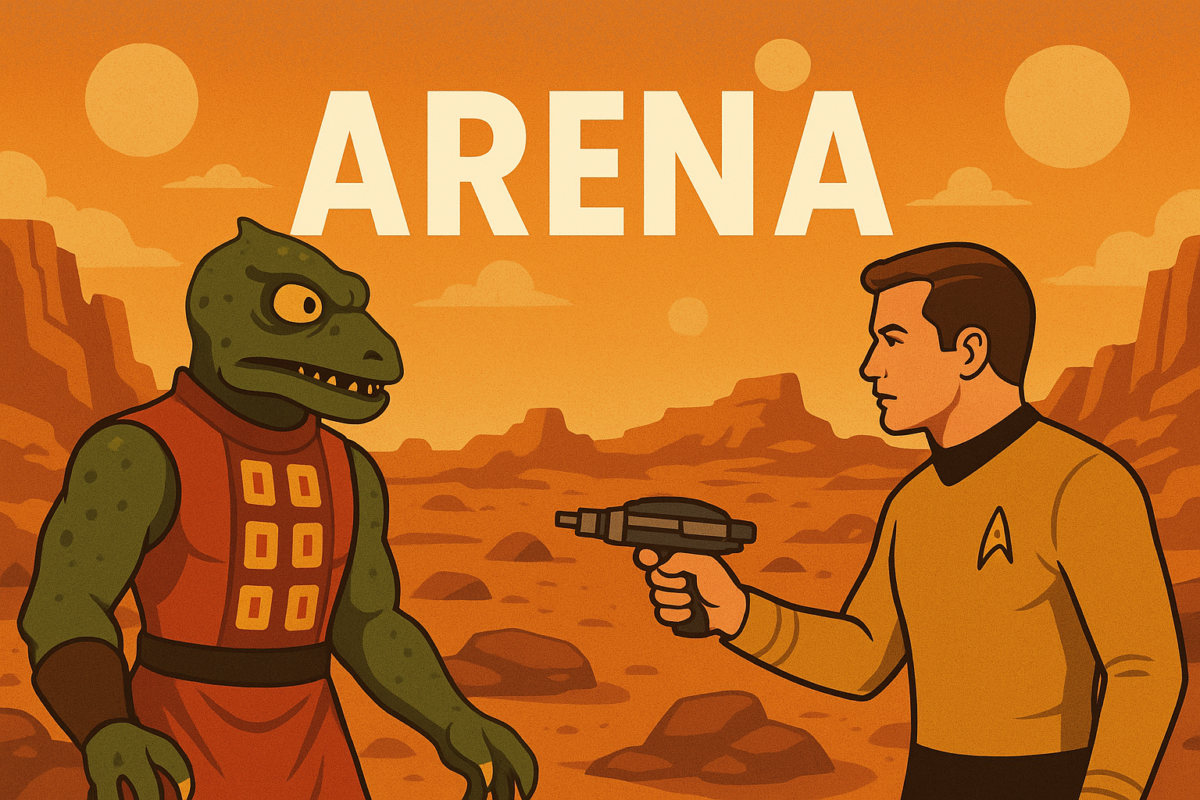
1. Avoiding Misinterpretation through Cultural Empathy Scene from “Arena”

Illustrated by Captain Kirk, consumed by the destruction of the Federation outpost at Cestus III, immediately assumes malevolent intent.

Compliance professionals must recognize their inherent biases and strive for deeper cultural understanding, particularly when operating internationally. Rather than jumping to conclusions, compliance leaders should rigorously question their assumptions, investigate thoroughly, and engage in respectful dialogues with international counterparts.

2. Communication and Mutual Understanding

Illustrated By: Initially driven by anger and mistrust, Kirk ultimately realizes—through observing and assessing the Gorn’s motivations and behavior—that the Gorn believed they were acting in legitimate self-defense, perceiving the Federation outpost as a threat.

This realization highlights the vital importance of clear and transparent communication in fostering mutual understanding. Compliance officers navigating multinational operations must ensure effective communication channels and explicit clarity in expressing company values, expectations, and regulatory requirements across cultural divides.

3. Respectful Negotiation as a Foundation for Resolution

Illustrated By: In the episode’s finale, rather than taking advantage of a vulnerable and incapacitated Gorn captain, Kirk refuses to deliver a lethal blow.

Compliance leaders should employ collaborative negotiation techniques, prioritize understanding diverse perspectives, and demonstrate respect for local customs and regulatory norms. Such respectful negotiation not only resolves immediate issues but also establishes lasting trust and collaborative relationships that strengthen global compliance initiatives.

4. Continuous Learning and Adaptability in Cultural Contexts

Illustrated By: Throughout the battle, Kirk learns from his environment, adapting his strategies to the unique circumstances imposed by the Metrons’ forced confrontation. His ability to adapt and learn continuously becomes his greatest asset.

Compliance professionals must also embrace continuous learning and adaptability, particularly in diverse cultural contexts. Successful compliance officers cultivate adaptability by actively engaging with local teams to gain nuanced insights.

5. Leveraging Cultural Differences as Opportunities

Illustrated by the fact that, although initially viewed as monstrous and hostile, the Gorn prove to be strategic, thoughtful, and capable.

Compliance officers who leverage cultural differences constructively build stronger, more resilient, and truly global compliance frameworks.

6. Cross-Cultural Leadership Drives Ethical Behavior

Illustrated by Kirk’s ultimate refusal to kill the defenseless Gorn, ethical leadership inspires respect even among the observing Metrons.

Visible ethical leadership encourages teams worldwide to adopt and maintain compliance and moral behaviors consistently.

Final ComplianceLog Reflections

The cross-cultural lessons from Star Trek’s “Arena” vividly illustrate essential compliance principles for the contemporary global organization. Compliance leaders must cultivate cultural empathy, maintain clear communication, negotiate respectfully, demonstrate adaptability, positively capitalize on cultural diversity, and exemplify ethical cross-cultural leadership. Just as Captain Kirk learned to move beyond initial assumptions toward a more profound understanding, compliance professionals can significantly enhance their effectiveness by applying these timeless lessons.

By adopting these culturally intelligent compliance practices, organizations not only ensure regulatory adherence but also significantly enrich their internal culture and ethical stature. Let us commit to boldly going forward, embracing cross-cultural intelligence and empathy as the cornerstones of effective global compliance strategies.

Resources:

Excruciatingly Detailed Plot Summary by Eric W. Weisstein

MissionLogPodcast.com

Memory Alpha

Categories
Blog

Arena and Lessons in Cross – Cultural Compliance

One of the most powerful aspects of compliance leadership is its profound connection with broader lessons drawn from seemingly unrelated sources. Few are as richly instructive as the original Star Trek series. Today, let’s boldly explore an insightful compliance case study from the iconic episode “Arena.” This episode illustrates the immense value of cross-cultural understanding and effective intercultural compliance strategies.

In “Arena,” Captain Kirk and the USS Enterprise respond to an apparent distress call at a Federation outpost. They soon discover that the base has been obliterated by an unknown attacker, the Gorn, a formidable alien species. Kirk chases the Gorn, determined to exact revenge. Yet, through a dramatic series of events orchestrated by the omnipotent entity known as the Metrons, Kirk ultimately learns powerful lessons in cultural empathy, conflict resolution, and mutual understanding. Here are the cross-cultural compliance lessons that corporate compliance professionals can derive from this gripping tale.

1. Avoiding Misinterpretation through Cultural Empathy

Illustrated By: Captain Kirk, consumed by the destruction of the Federation outpost at Cestus III, immediately assumes malevolent intent. He perceives the Gorn’s actions as unprovoked aggression, swiftly deciding retaliation is his only recourse. 

Kirk’s initial response highlights a common mistake in cross-cultural interactions: hasty assumptions based solely on one’s cultural framework. In global compliance, cultural empathy is crucial to avoid similar errors. Compliance professionals must recognize their inherent biases and strive for deeper cultural understanding, particularly when operating internationally. Rather than jumping to conclusions, compliance leaders should rigorously question their assumptions, investigate thoroughly, and engage in respectful dialogues with international counterparts. Only by sincerely seeking to understand different cultural perspectives can compliance officers effectively manage risks and avoid unnecessary conflicts or damaging misunderstandings.

2. Communication and Mutual Understanding

Illustrated By During the climactic confrontation, Kirk and the Gorn captain are forced into single combat. Initially driven by anger and mistrust, Kirk ultimately realizes, through observing and assessing the Gorn’s motivations and behavior, that the Gorn believed they were acting in legitimate self-defense, perceiving the Federation outpost as a threat to their security. 

This realization highlights the vital importance of clear and transparent communication in fostering mutual understanding. Compliance officers navigating multinational operations must ensure effective communication channels and explicit clarity in expressing company values, expectations, and regulatory requirements across cultural divides. Cultural barriers can lead to confusion or misinterpretation of compliance policies. Compliance communications prioritize clarity, cultural sensitivity, and ongoing dialogue, fostering trust and ensuring all parties correctly understand their roles and obligations.

3. Respectful Negotiation as a Foundation for Resolution

Illustrated By: In the episode’s finale, rather than taking advantage of a vulnerable and incapacitated Gorn captain, Kirk refuses to deliver a lethal blow. By choosing mercy and respect over vengeance, Kirk signals a willingness to negotiate peace rather than prolong the conflict.

Respectful negotiation rooted in empathy is vital for resolving conflicts, especially in cross-cultural compliance scenarios. Disagreements or regulatory issues arising from cultural differences require patient negotiation, respectful engagement, and a genuine willingness to find common ground. Compliance leaders should employ collaborative negotiation techniques, prioritize understanding diverse perspectives, and demonstrate respect for local customs and regulatory norms. Such respectful negotiation not only resolves immediate issues but also establishes lasting trust and collaborative relationships that strengthen global compliance initiatives.

4. Continuous Learning and Adaptability in Cultural Contexts

Illustrated throughout the battle, Kirk improvises weapons from minerals found on the planet. He learns from his environment, adapting his strategies to the unique circumstances imposed by the Metrons’ forced confrontation. His ability to adapt and learn continuously becomes his greatest asset.

Compliance professionals must also embrace continuous learning and adaptability, particularly in diverse cultural contexts. Static, inflexible compliance programs fail when imposed universally without considering local customs, business practices, and regulatory landscapes. Successful compliance officers cultivate adaptability by actively engaging with regional teams to gain nuanced insights and perspectives. They continually revise their compliance strategies to reflect the cultural intelligence gained through real-world experience, feedback loops, and active listening. This dynamic approach ensures that compliance policies remain adequate, relevant, and culturally appropriate.

5. Leveraging Cultural Differences as Opportunities

Illustrated By Although initially viewed as monstrous and hostile, the Gorn prove to be strategic, thoughtful, and capable. Kirk eventually recognizes that the differences he initially saw as threatening can also represent strengths, wisdom, and insight if approached in the right way.

In corporate compliance, cultural differences should be viewed not as threats but as opportunities for growth and innovation. Diverse cultural perspectives can enrich compliance strategies, offering fresh approaches to risk mitigation, ethical practices, and the interpretation of regulations. Compliance officers who actively solicit and integrate cultural diversity within compliance teams and leadership structures benefit from varied insights, innovative problem-solving, and enriched ethical decision-making. Leveraging these cultural differences constructively builds stronger, more resilient, and truly global compliance frameworks.

6. Cross-Cultural Leadership Drives Ethical Behavior

Illustrated by Kirk’s ultimate refusal to kill the defenseless Gorn, ethical leadership inspires respect even among the observing Metrons. His cross-cultural leadership sends a powerful message about humanity’s commitment to higher ethical standards and the pursuit of peace.

Cross-cultural ethical leadership is essential for compliance success. Compliance leaders must exemplify unwavering ethical principles across cultural boundaries, clearly communicating standards of conduct and demonstrating personal integrity. Visible ethical leadership encourages teams worldwide to consistently adopt and maintain compliance and ethical behaviors. Leaders who model integrity in cross-cultural interactions significantly strengthen their organization’s compliance culture, creating global cohesion around shared ethical values and compliance objectives.

Final ComplianceLog Reflections

The cross-cultural lessons from Star Trek’s “Arena” vividly illustrate essential compliance principles for the contemporary global organization. Compliance leaders must cultivate cultural empathy, maintain clear communication, negotiate respectfully, demonstrate adaptability, positively capitalize on cultural diversity, and exemplify ethical cross-cultural leadership. Just as Captain Kirk learned to move beyond initial assumptions toward more profound understanding, compliance professionals can greatly enhance their effectiveness by applying these timeless lessons.

By adopting these culturally intelligent compliance practices, organizations not only ensure regulatory adherence but also significantly enrich their internal culture and ethical stature. Let us commit to boldly going forward, embracing cross-cultural intelligence and empathy as the cornerstones of effective global compliance strategies.

Resources:

Excruciatingly Detailed Plot Summary by Eric W. Weisstein

MissionLogPodcast.com

Memory Alpha

Categories
FCPA Compliance Report

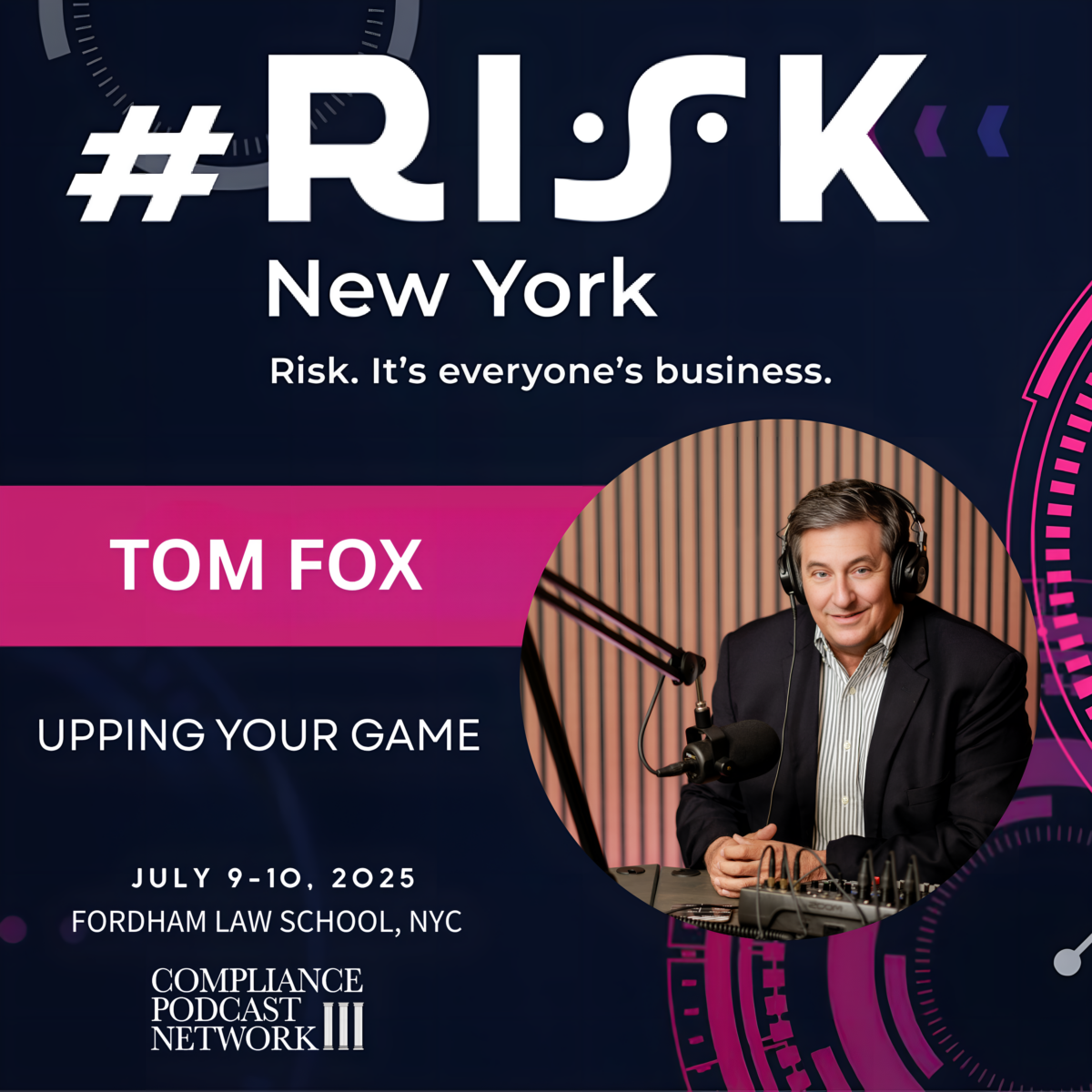
#Risk New York Speaker Series – Upping Your Game with Tom Fox

Join Tom Fox and hundreds of other GRC professionals in the city that never sleeps, New York City, on July 9 & 10 for one of the top conferences around, #Risk New York. The current US landscape, shaped by evolving policies, rapid advancements in AI, and shifting global dynamics, demands adaptive strategies and cross-functional collaboration.

At #RISK New York, you will master the New Regulatory Reality by getting ahead of US regulatory shifts and their impact. Conquer AI and Tech Risk by Safeguarding Your Organization in an AI-Driven World and Understanding the Implications of Major Tech Investments. Navigate Financial and Crypto Volatility by Protecting Your Assets and Exploring Solutions in a Dynamic Market. Strengthen Your GRC Framework by Leveraging Governance, Risk, and Compliance for Strategic Advantage. Protect Digital Trust by addressing challenges in cybersecurity and data privacy and combating misinformation. All while meeting with the country’s top #Risk management professionals.

In this episode of the Risk New York podcast series, Tom Fox introduces the upcoming Risk New York Conference, scheduled for July 9-10 at Fordham Law School. The conference, hosted by GRC World Forums, will focus on various aspects of risk management, including AI, tech risk, financial and crypto risk, and GRC frameworks. Tom discusses his keynote based on his book ‘Upping the Game’ and highlights key speakers and exhibitors, including Robert Clark from Howard University, Bill Coffin and Erica Alburn from Ecosphere, and Michael Rasmussen, known as the father of GRC. The episode highlights the importance of the conference and provides details on discounted tickets, as well as other information available in the show notes.

Resources:

#Risk Conference Series

#RiskNYC—Tickets and Information

Compliance Podcast Network Website

Tom Fox

Instagram

Facebook

YouTube

Twitter

LinkedIn

Categories
Hill Country Authors

Hill Country Authors Podcast – Exploring Writing, Literature, and Texas Coastal Culture with Skip Rhudy

Welcome to a new season of the award-winning Hill Country Authors Podcast, sponsored by Stoney Creek Publishing. In this podcast, Hill Country resident Tom Fox visits with authors who live in and write up the Texas Hill Country. In this episode, Tom Fox visits Skip Rhudy, a writer with deep ties to the Texas Gulf Coast.

Rhudy shares his experiences growing up in Port Aransas and delves into the contrasts of living in a tourist spot. They discuss Rhudy’s two novels, ‘Under the Gulf Coast Sun’ and ‘One Punk Summer,’ touching on themes of setting as character, the punk music scene in Austin, and preserving Texas culture through fiction. Rhudy also discusses his writing process, inspirations from Ernest Hemingway, and future projects, including a novel interwoven with Greek mythology and a nonfiction account of building a kit plane.

Key highlights:

  • Life in Port Aransas
  • Port Aransas Culture and Community
  • Holiday Vibes and Seasonal Contrasts
  • Setting as a Character in Literature
  • Writing Process and Inspirations
  • Texas History and Cultural Preservation
  • Comparing Two Novels
  • Punk Music and Austin’s Scene
  • Publishing Journey and Editorial Insights

Resources:

Skip Rhudy on Stoney Creek Publishing

‘Under the Gulf Coast Sun on Texas A&M University Press

Stoney Creek Publishing Website

 Podcast Cover Art

 Nancy Huffman Fine Art

Tom Fox

Instagram

Facebook

YouTube

Twitter

LinkedIn