Categories
All Things Investigations

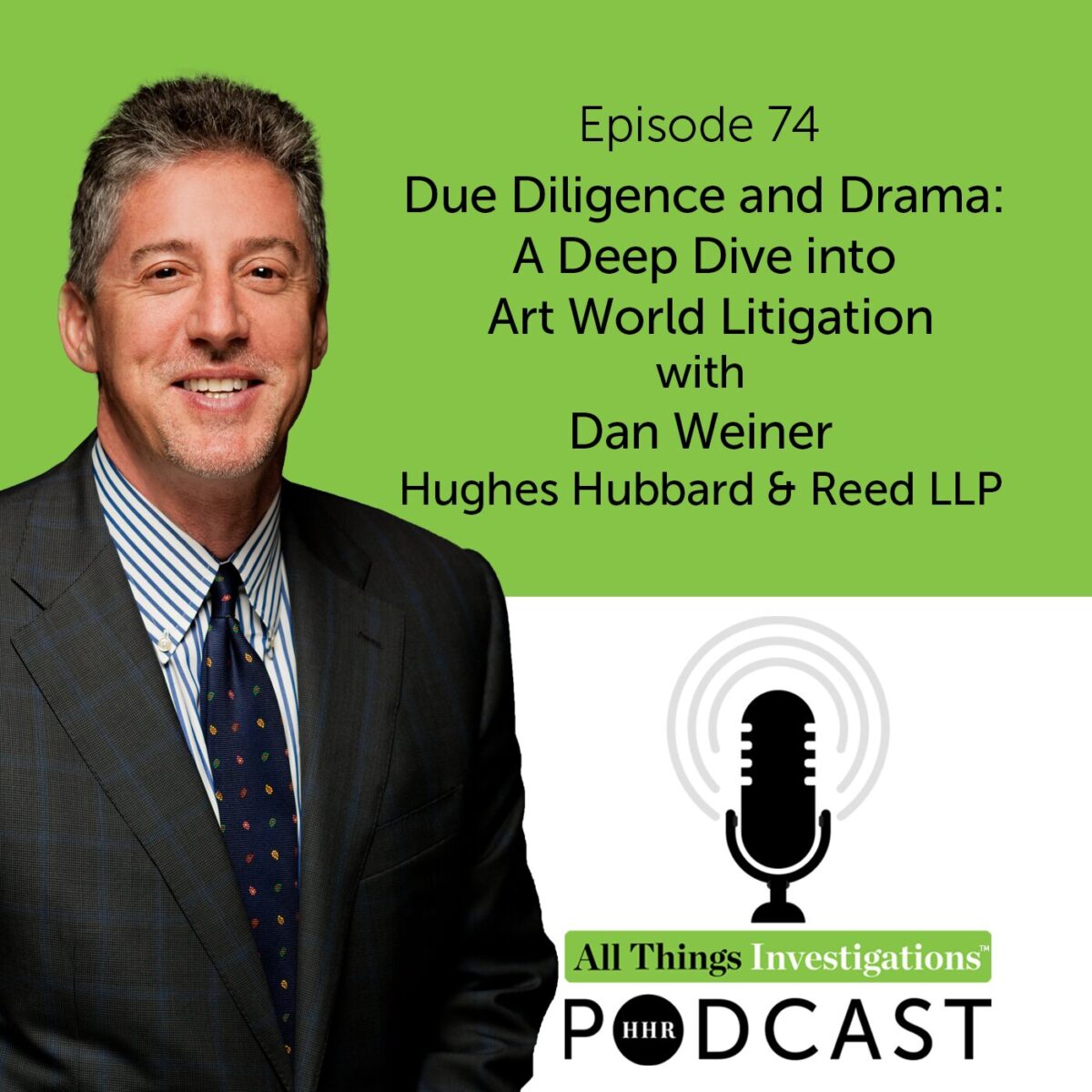
All Things Investigation – Due Diligence and Drama: A Deep Dive into Art World with Daniel Weiner

Welcome to the Hughes Hubbard Anti-Corruption & Internal Investigations Practice Group’s podcast, All Things Investigation. In this podcast, host Tom Fox is joined by Daniel Weiner to discuss a complex legal case involving a valuable Picasso painting.

Weiner is the Chair of Hughes Hubbard & Reed’s Litigation Department, Chair of the Complex Business Disputes practice, and a partner in the International & Domestic Arbitration and Intellectual Property Disputes groups. Daniel and Tom take a deep dive into the intricate details of how a series of fraudulent transactions led to a multimillion-dollar dispute over Picasso’s ‘Le Peintre. The podcast highlights the importance of thorough due diligence in the art world and examines the legal complexities involved in resolving such cases. As they unravel the story, they highlight the crucial role of investigations in preventing art fraud and safeguarding ownership rights.

Key highlights:

  • The Fascinating Picasso Case
  • The Fraud Unveiled
  • Legal Issues and Investigations
  • Discovery Disputes and Court Proceedings
  • Consulting and Due Diligence in Art Law

Resources:

Daniel Weiner

Hughes Hubbard & Reed website

HHR Client Alert: Firm Obtains Discovery Win in Dispute Over Sale of Pablo Picasso Painting

Categories
The Ethics Experts

Episode 222 – Pat Poitevin

In this episode of The Ethics Experts, Nick welcomes Pat Poitevin.

Mr. Pat Poitevin is an internationally recognized expert in anti-corruption, corporate ethics, and compliance. He is the co-founder and executive director of the Canadian Centre of Excellence for Anti-Corruption (CCEAC). He is also co-founder & CEO of the boutique advisory firm Active Compliance and Ethics Group (ACEG). Mr. Poitevin is a 35-year veteran of the Royal Canadian Mounted Police and retired in October 2017, where he was the RCMP’s anti-corruption and compliance expert. He has also been an investigator and expert on drugs, organized crime, and financial crime. He is in demand as a speaker, university lecturer, and trainer at the international level and has extensive experience in program development and capacity building. Mr. Poitevin has been advising and helping public and private organizations to improve their ethics, compliance, and anti-corruption measures. Mr. Poitevin has also worked on research, consultative, and advisory projects with the G20, UNODC, and the IMF. He was a member of the Canadian Project Committee (PC278) involved in the development of the ISO 37001 Anti-bribery and ISO 37002 Whistleblowing Management systems standard, as well as ISO 42001 AI Management systems. He is a member of the Transparency International Expert Network, ACFE, IAFCI, AACI, and several other professional associations. He also has the CACM and TASA professional designations. He is a member of Transparency International Canada and a Certified Anti-Corruption Manager (CMAC-USA).

Connect with Pat on LinkedIn

Categories
Corruption, Crime and Compliance

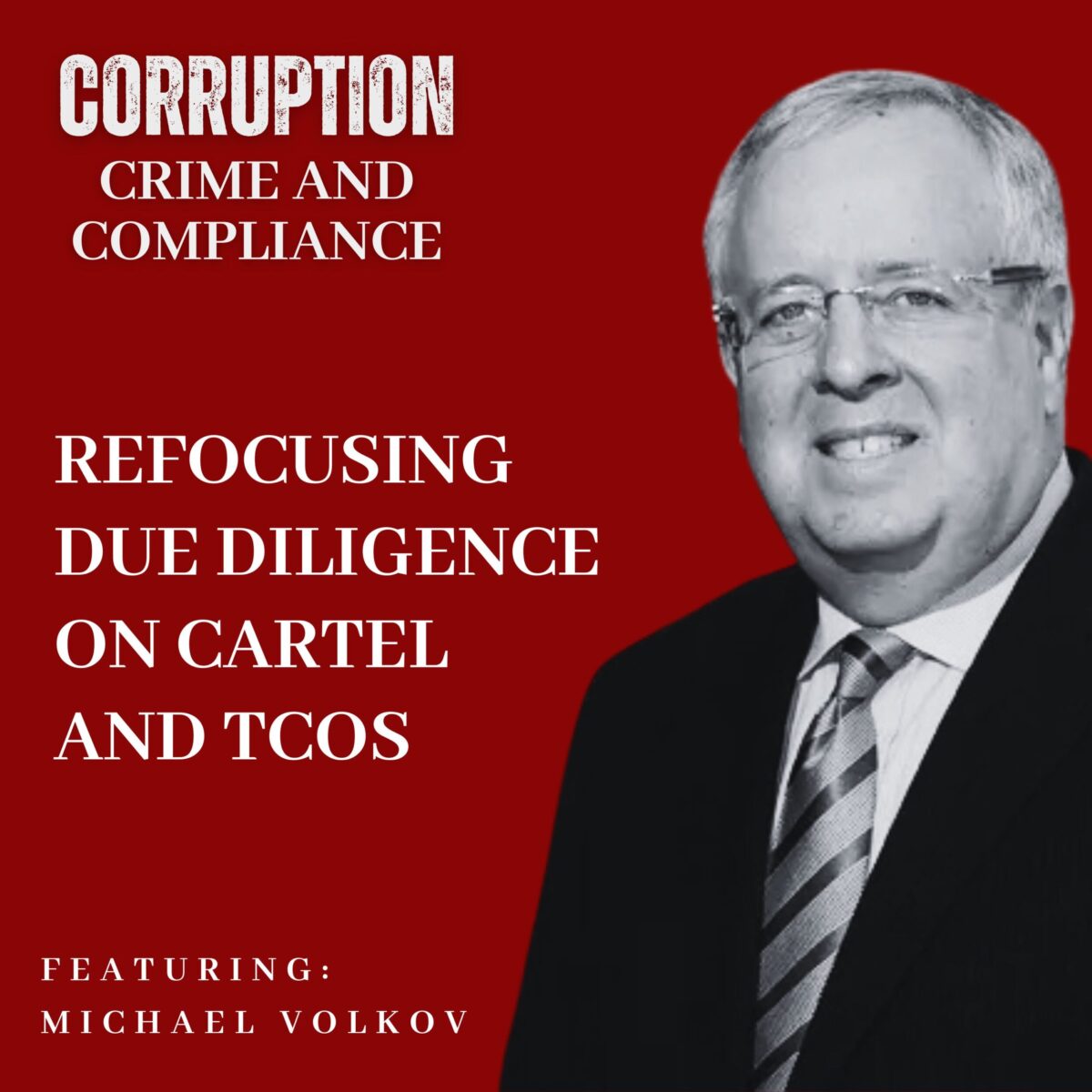
Refocusing Due Diligence on Cartel and TCOs

Could your supply chain be funding cartels without you realizing it? In today’s complex global economy, companies are grappling with a dual challenge – the urgent need to unravel their supply chains and the immediate recalibration of due diligence systems to detect links to cartel and transnational criminal organizations (TCOs). With the Department of Justice sharpening its focus on both direct prosecutions and financial facilitators, global companies must prepare for heightened scrutiny. Michael breaks down the mounting risks, enforcement priorities, and practical steps companies must take to protect themselves from becoming unwitting participants in criminal operations.

You’ll hear him discuss:

  • How DOJ’s new two-pronged enforcement strategy is bringing corporate facilitators of cartels and TCOs into the crosshairs
  • Why traditional due diligence no longer goes far enough, especially with “Nth Party” risks buried deep in supply chains
  • How cartels and TCOs exploit legitimate businesses in sectors like logistics, agriculture, mining, and construction
  • The importance of identifying beneficial ownership and tracing complex corporate structures across jurisdictions
  • Red flags to watch for, from nominee arrangements and shell companies to unexplained wealth and layered financial flows
  • How cartels are adapting with fake websites, fake bios, and cryptocurrency to mask illicit activities
  • What companies must do to modernize their compliance systems with open-source tools and workflow automation
  • Why trade-based money laundering, remittance services, and decentralized platforms are growing areas of concern

Resources

Michael Volkov on LinkedIn | Twitter

The Volkov Law Group

Categories
Compliance Tip of the Day

Compliance Tip of the Day – COSO Governance Framework: Part 1, Introduction

Welcome to “Compliance Tip of the Day,” the podcast where we bring you daily insights and practical advice on navigating the ever-evolving landscape of compliance and regulatory requirements. Whether you’re a seasoned compliance professional or just starting your journey, we aim to provide you with bite-sized, actionable tips to help you stay on top of your compliance game. Join us as we explore the latest industry trends, share best practices, and demystify complex compliance issues to keep your organization on the right side of the law. Tune in daily for your dose of compliance wisdom, and let’s make compliance a little less daunting, one tip at a time.

Today, we introduce a multi-part review of the new COSO Governance Framework (CGF). 

For more on this topic, check out The Compliance Handbook, a Guide to Operationalizing Your Compliance Program, 6th edition, which LexisNexis recently released. It is available here.

Categories
Adventures in Compliance

Adventures in Compliance: The Novels – The Hound of the Baskervilles: Uncovering Compliance – Lessons from The Hound of the Baskervilles

In this new season of Adventures in Compliance, host Tom Fox takes a deep dive into the Sherlock Holmes novels. Over this season Tom will take a deep dive into each novel over a four part series. The four novels we will consider from the ethics and compliance perspective are A Study in Scarlet, The Sign of Four, The Hound of the Baskervilles and The Valley of Fear. For the month of July we are considering lessons from The Hound of the Baskervilles.

Fiona and Timothy are back to extract five key compliance lessons from the story, including combating complacency, effective data use, maintaining objectivity, transparent communication, and ethical culture. These principles, drawn from a Victorian mystery, prove profoundly relevant for modern corporate compliance.

Highlights include:

  • Overview of Compliance Lessons from Sherlock Holmes
  • Lesson 1: Avoiding Complacency
  • Lesson 2: Power of Effective Data and Evidence
  • Lesson 3: Independence and Objectivity
  • Lesson 4: Transparent Communication and Reporting
  • Lesson 5: Importance of Culture and Ethics

Resources:

The New Annotated Sherlock Holmes

Sherlock Holmes FAQ by Dave Thompson

Sherlock Holmes, The Novels, with an introduction by Michael Dirda

Connect with Tom Fox

Instagram

Facebook

YouTube

Twitter

LinkedIn

Categories
FCPA Compliance Report

FCPA Compliance Report – Ethical Challenges in AI, Data Protection, and Sports with André Paris

Welcome to the award-winning FCPA Compliance Report, the longest-running podcast in compliance. Today, Tom Fox welcomes back André Paris for an insightful discussion on various ethical challenges in today’s world. André revisits his role in compliance and ethics and provides updates on his work since the pandemic and delves into the issues of algorithmic bias, transparency, and the ethical ramifications of AI systems, particularly in surveillance and privacy. André also shares his experience as a PhD candidate researching AI’s impact on civil liberties. The episode further explores the ethical challenges in the sports industry, including corruption, doping, and harassment. Lastly, André talks about his book ETHICS & TRANSPARENCY: A Path To Compliance on Amazon and its practical applications in fostering an ethical corporate culture.

Key highlights include:

  • André‘s Role in Compliance and Ethics
  • Ethics and Transparency: André’s Book
  • The Rise of AI and Ethical Challenges
  • AI in Business and Research Applications
  • Data Protection as a Civil Liberty
  • Ethical Challenges in Sports

Resources:

André Paris on LinkedIn

ETHICS & TRANSPARENCY: A Path To Compliance on Amazon

André Paris Website

Tom Fox

Instagram

Facebook

YouTube

Twitter

LinkedIn

For more information on the use of AI in Compliance programs, my new book, Upping Your Game. You can purchase a copy of the book on Amazon.com.

Categories
Daily Compliance News

Daily Compliance News: July 14, 2025, The Secret Business Sauce-Reading Edition

Welcome to the Daily Compliance News. Each day, Tom Fox, the Voice of Compliance, brings you compliance-related stories to start your day. Sit back, enjoy a cup of morning coffee, and listen in to the Daily Compliance News. All, from the Compliance Podcast Network. Each day, we consider four stories from the business world, compliance, ethics, risk management, leadership, or general interest for the compliance professional.

Top compliance stories:

  • BCG paid approximately $1MM for its moving out Gazans project. (FT)
  • Indonesia detains former Trafigura employees in corruption probe. (Bloomberg)
  • Dubai and the offshoring of corruption. (The Conversation)
  • Amazon uses reading as its secret business tool. (Business Insider)

You can donate to flood relief for victims of the Kerr County flooding by going to the Hill Country Flood Relief here.

Categories
Blog

COSO’s Corporate Governance Framework: What It Means for Compliance

For decades, COSO has been the gold standard in internal controls and enterprise risk management. But with the release of its new Corporate Governance Framework (CGF), now open as a Public Exposure Draft, COSO has thrown down the gauntlet to the compliance profession. This isn’t just a governance checklist. It is a call to action: step up, shape governance, and lead your organization into the future.

After exploring each of the six CGF Components in depth, I wanted to conclude this series by bringing it all together. What does the new COSO framework mean for compliance professionals? How should you adjust your strategy, your conversations with the board, and your daily work? Here are the big lessons and the practical next steps.

1. The Big Picture: A New Era for Governance and Compliance

The COSO CGF is a principles-based, integrated system designed to make governance everyone’s business, not just the sole responsibility of a Board of Directors. The six Components—Oversight, Strategy, Culture, People, Communication, and Resilience, each include key Principles with practical Points of Focus and leading-edge considerations. This is not a compliance framework by name, but it is a governance framework that places compliance at the heart of value creation, accountability, and enterprise resilience.

Compliance Takeaway: The CGF is arriving at a moment of regulatory complexity, stakeholder activism, and reputational volatility. Boards and management face evolving risks from AI, cyber, and ESG while being held to standards of transparency and trust by investors, employees, and society itself. If you’re a compliance leader, COSO just handed you the blueprint for embedding compliance deeper than ever before.

2. Oversight: Compliance’s Seat at the Table

Effective governance starts with the board, but it extends through management to every level of the organization. Oversight is about structure, independence, and accountability across board composition, executive delegation, and shareholder engagement. Do not be a bystander in governance; be a builder. Propose committee enhancements, brief leadership on independence and risk, and ensure compliance is on the board’s standing agenda. Your role is to clarify escalation protocols, support board effectiveness, and ensure oversight extends beyond mere numbers to encompass culture and ethical tone.

Compliance Takeaway: Start benchmarking your BOD structure and practices against COSO’s principles. Bring data to governance discussions and push for compliance metrics and risk topics to be regular board agenda items.

3. Strategy: From Afterthought to Co-Pilot

Strategy is no longer a C-suite sandbox. COSO makes clear: the board must oversee strategy, management must align it with purpose, and compliance must be at the table from planning to performance review. Step into the strategic conversation early. Embed compliance considerations into scenario planning, risk assessment, and incentive design. Move beyond being a “fixer” after decisions are made. You are now a co-pilot in shaping resilient, risk-aware, and stakeholder-driven strategy.

Compliance Takeaway: Map your organization’s strategic plan to the four COSO strategy principles: purpose, development, execution, and measurement. Create or enhance compliance dashboards with ethical and cultural KPIs, and ensure the board is briefed on them.

4. Culture: From Soft Topic to Measurable Mandate

Culture is not simply a poster on the wall; rather, it is how people behave when nobody is watching. The CGF calls for boards to own culture oversight, with management embedding values in every business process, from hiring to crisis response. Culture is now measurable, manageable, and mission-critical. Create culture dashboards, integrate ethics into leadership assessments, and bring employee sentiment to the board. Remember, misaligned culture leads to misconduct, and compliance has the data to prove it.

Compliance Takeaway: Launch a culture governance program with clear metrics (hotline use, training engagement, exit interview themes). Schedule regular board updates and recommend third-party culture assessments every few years.

5. People: Talent Is Governance in Action

People make or break both strategy and culture. COSO’s People Component focuses on workforce planning, succession, compensation, and development, with the board responsible for oversight of the front line—partner with HR on leadership development, succession planning, and ethics in incentives. Review onboarding and offboarding for compliance moments of truth, and advocate for ethics questions in performance reviews. Do not simply check the HR box; bring a compliance risk lens to every talent conversation.

Compliance Takeaway: Review how people-related risks (succession gaps, compensation misalignment) are addressed in board and committee agendas. Propose ethics- and compliance-driven enhancements to talent processes, and pilot 360-degree reviews for key leaders.

6. Communication: Governance’s Nervous System

Communication is not simply about reporting; rather, it is the way governance breathes. The CGF emphasizes trustworthy data, technology enablement, escalation protocols, and stakeholder engagement. Ensure your GRC systems provide real-time, accurate insights. If your compliance program runs on spreadsheets, it’s time for an upgrade. Push for integrated platforms, streamlined reporting, and regular “lookback” exercises after incidents.

Compliance Takeaway: Lead a review of your communication tools and escalation pathways. Bring technology-enabled dashboards to executive and board meetings, combining compliance, risk, and culture indicators for holistic governance oversight.

7. Resilience: From Compliance Cost Center to Value Enabler

Resilience is the ability to anticipate, withstand, and adapt to disruption. The Resilience Component weaves together risk, compliance, internal control, and continuous monitoring and positions compliance as a pillar of enterprise stability. Expand your oversight of internal controls beyond financials—leverage technology to automate high-risk monitoring. Lead post-incident reviews that turn mistakes into governance muscle. Compliance is not just about “bouncing back” from crisis; it is about building systems that don’t break in the first place.

Compliance Takeaway: Map compliance risks to strategic objectives and ensure alignment with enterprise risk management (ERM). Use predictive analytics to flag emerging cultural or ethical risks and brief the board on how compliance is driving not just compliance but resilience.

What Makes COSO’s CGF Different—and What You Should Do Now

Cross-functional by design. Each Component connects with others—culture shapes strategy, people enable resilience, and communication powers oversight.

Principle-based, not prescriptive. The framework is adaptable across industries and geographies. It is not about ticking boxes but building a system that fits your organization.

Tech-forward and future-focused. AI, data, and technology are built in from the start, not an afterthought.

Final Takeaways for Compliance Professionals:

  • Engage early and often: Do not wait for the board to call you. Proactively map your program to the CGF’s Components.
  • Benchmark and build: Use the framework as a lens to spot gaps, propose improvements, and advocate for compliance in new domains (talent, tech, ESG).
  • Educate and evangelize: Socialize the CGF across the C-suite, HR, IT, and risk. Make compliance the bridge that connects governance with value creation.

Closing Thoughts: A Call to Action

The new COSO Corporate Governance Framework is a leadership manual for the modern compliance professional. It challenges us to see compliance as more than defense; it is the engine of long-term value, trust, and resilience.

If you are ready to move from risk mitigator to governance architect, COSO just handed you the playbook. Now’s the time to roll up your sleeves, engage with the board, and help build a governance system that will stand the test of disruption, scrutiny, and change.