Categories
The Ethics Experts

Episode 225 – Jacqui Pruet

In this episode of The Ethics Experts, Nick welcomes Jacqui Pruet.

Jacquelyn Pruet—Driving change in challenging environments to achieve desired outcomes. Your solution to corporate content strategy, creation, program implementation, and oversight.

A corporate “McGyver” that gets your organization to the moon with Scotch tape, bubble gum, and a toothpick.

A change management specialist, legal expert, and strategist who helps organizations achieve measurable outcomes for behavioral modification goals by creating award-winning programs that are cost-effective and impactful.

Connect with Jaqcui on LinkedIn.

Categories
Corruption, Crime and Compliance

NAVEX’s 2025 Hotline Benchmark Report

Is your internal reporting program keeping up or falling behind the curve? With over 2.15 million reports analyzed from nearly 70 million employees worldwide, NAVEX’s 2025 Regional Whistleblowing & Incident Management Benchmark Report offers a goldmine of insight into how companies are (and aren’t) managing employee concerns. In this episode, Michael Volkov breaks down the key findings, regional trends, and what they really mean for compliance officers trying to build a stronger speak-up culture.

NAVEX dominates the hotline market, and its annual benchmark report gives compliance professionals an unparalleled look at reporting behaviors across the globe. From rising retaliation concerns to surprising substantiation rates, the numbers speak volumes.

You’ll hear him discuss:

  • Why Europe’s sharp spike in reporting rates is likely tied to the EU Whistleblower Directive
  • How North American companies resolve reports faster and what that says about handling HR-driven complaints
  • Why anonymous reporting is much higher in APAC, Europe, and South America and what it might reveal about employee trust
  • How retaliation claims are being substantiated at drastically different rates depending on geography and legal frameworks
  • What’s behind the higher substantiation rates at privately owned companies compared to public ones
  • How reporting channel preferences are shifting and why phone-based hotlines may be on the way out
  • What “time to report” stats reveal about fear, hesitation, and the need for cultural change in the workplace

Resources

Michael Volkov on LinkedIn | Twitter

The Volkov Law Group

Categories
Trekking Through Compliance

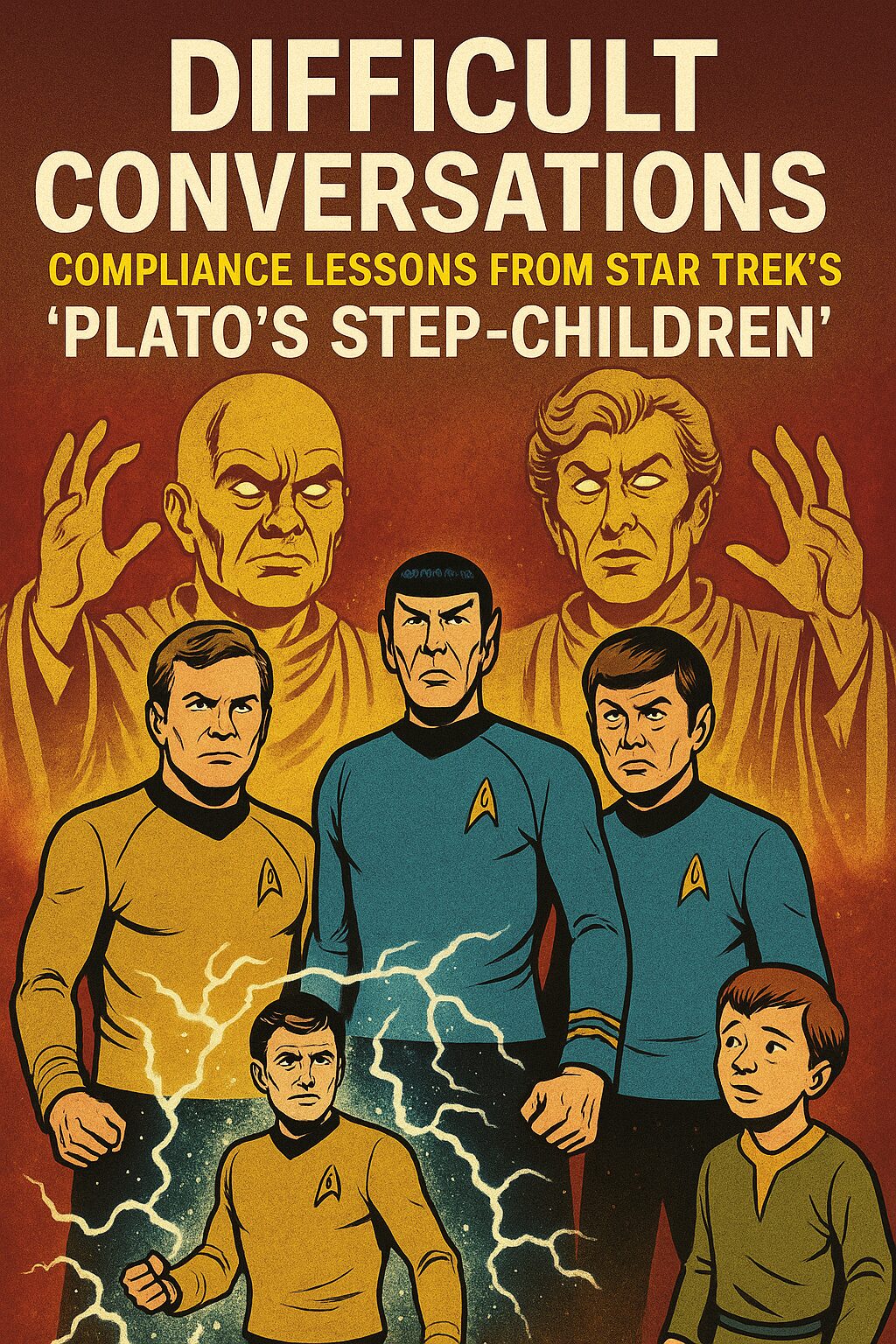
Trekking Through Compliance: Episode 64 – Breaking the Silence: Navigating Difficult Conversations with Wisdom from ‘Plato’s Step-Children’

There is no substitute for courage and candor in the world of corporate compliance. Some of the most vital and uncomfortable moments we encounter come when we must have conversations on difficult topics. It can be about misconduct, bias, bullying, or toxic behavior that threatens our organization’s culture and integrity. Yet, all too often, leaders and compliance professionals look for a way around these tough talks, hoping problems will resolve themselves.

Few television episodes confront the consequences of unchecked power, humiliation, and silence more starkly than Star Trek: The Original Series’ “Plato’s Step-Children.” Let’s draw five critical compliance lessons, grounded in five key scenes, from this infamous episode to guide our approach to conversations on difficult topics.

Lesson 1: Name the Unacceptable—Don’t Look Away

Illustrated By: Alexander, the only member without telekinetic power, is humiliated and abused by his peers and is often forced to grovel or perform for their amusement.

Compliance Lesson: The first, hardest step in any conversation on difficult topics is to acknowledge unacceptable behavior. The compliance professional must name the unacceptable, break the code of silence, and show the courage to call out abuse—even when it makes others uncomfortable.

Lesson 2: Empathize with the Vulnerable—Center Their Voice

Illustrated By: Alexander, the outcast, repeatedly begs Kirk and the crew for help, expressing pain and isolation. His vulnerability is palpable; he has suffered for years, dismissed by his peers and unseen by those in power.

Compliance Lesson: In every organization, there are individuals, often in less powerful positions, who experience harm most acutely. When confronting a difficult subject, the compliance leader’s job is to center the voices and experiences of those most at risk, not the comfort of those in power.

Lesson 3: Address Abuse of Power—Challenge the Bully

Illustrated By: The Platonians, particularly Parmen, take delight in using their power to force Kirk, Spock, and others to perform degrading acts.

Compliance Lesson: One of the most challenging conversations in compliance is confronting those who abuse their authority. Power imbalances often shield perpetrators from scrutiny. “Plato’s Step-Children” is an explicit reminder that leadership’s job is to challenge, not enable, bullying, coercion, or harassment.

Lesson 4: Support Each Other—Build Allies in Conversations on Complex Topics

Illustrated By: Even when stripped of control, Kirk and Spock’s teamwork and solidarity allow them to resist psychological breaking and maintain a sense of dignity.

Compliance Lesson: When addressing complex topics, it’s essential to build a coalition, including HR, legal, or trusted colleagues, to provide the necessary strength, perspective, and support to sustain the effort.

Lesson 5: Restore Dignity—End the Cycle of Harm

Illustrated By: In one of the episode’s most disturbing scenes, Kirk, Spock, Uhura, and Chapel are forced into humiliating, non-consensual acts. The Enterprise crew refuses to retaliate in kind when they gain the upper hand. The episode concludes not with vengeance, but with an insistence on dignity and ethical conduct.

Compliance Lesson: The ultimate goal of any conversation on difficult topics, especially those about harm or misconduct, is restoration and prevention.

Final ComplianceLog Reflections

Conversations on difficult topics are not just a leadership skill; they are the very foundation of a culture of integrity. When we name abuse, center the vulnerable, challenge power, support each other, and restore dignity, we transform moments of pain into turning points for progress.

Resources:

⁠⁠Excruciatingly Detailed Plot Summary by Eric W. Weisstein⁠⁠

⁠⁠MissionLogPodcast.com⁠⁠

⁠⁠Memory Alpha

Categories
FCPA Compliance Report

FCPA Compliance Report – Navigating Corporate Scandals: Insights on Governance, Compliance, and Recovery with Steve Vincze

Welcome to the award-winning FCPA Compliance Report, the longest-running podcast in compliance. In this episode, Tom welcomes Steve Vincze back to discuss the recent corporate scandal involving executives from Astronomer.

Tom and Steve take a deep dive into governance, compliance, and internal controls, drawing parallels with historical cases like Boeing’s 2003 CEO scandal. Vincze shares five critical success factors and three essential elements for establishing an effective ethics and compliance program, emphasizing the importance of transparency, strong leadership, and re-establishing trust. He also discusses how military leadership and open communication can help rebuild a company’s culture post-scandal. The episode closes with practical advice for companies facing similar challenges and how they can recover and thrive.

Key highlights:

  • The Viral Incident and Its Implications
  • Corporate Recovery Strategies
  • Five Critical Success Factors
  • Establishing Trust and Credibility
  • Military Insights on Leadership
  • Addressing Scandals and Rebranding

Resources:

Steve Vincze on LinkedIn

Trestle Compliance

Tom Fox

Instagram

Facebook

YouTube

Twitter

LinkedIn

For more information on the use of AI in Compliance programs, Tom Fox’s new book is Upping Your Game. You can purchase a copy of the book on Amazon.com

Categories
Blog

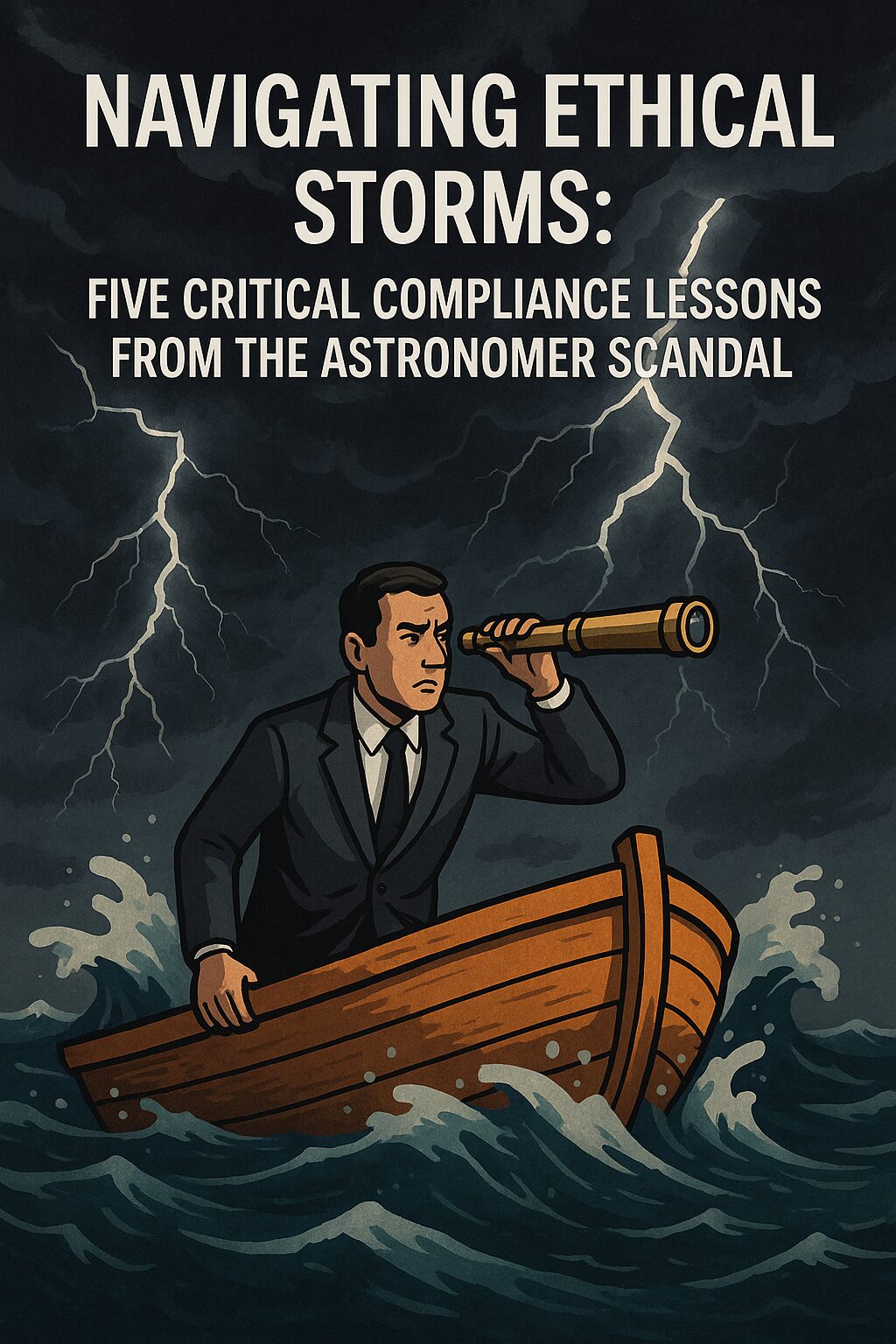
Navigating Ethical Storms: Five Critical Compliance Lessons from the Astronomer Scandal

Recently, we witnessed the Astronomer scandal unfold, making headlines not just for its salacious nature but also for the significant corporate governance and compliance questions it raised. I had the opportunity to sit down with Steve Vincze, founder of Trestle Compliance, for an episode of the FCPA Compliance Report, to consider what a company might do when such an ethics crisis hits. Vincze has extensive experience with just this issue from a similar scandal involving Boeing back in 2003.

Vincze unpacked five critical lessons compliance professionals must heed when confronted with an ethical crisis resembling Astronomer’s.

1. Own the Problem: Transparency Above All

The first, and arguably most important lesson, is the necessity of transparency. Acknowledge the issue unequivocally. Vincze stressed that a corporate crisis is fundamentally a corporate responsibility, regardless of individual faults. Resist the urge to minimize or dismiss the event as merely a lapse in personal judgment. The scandal is yours to manage, and your response will directly impact your organization’s credibility. Owning the problem conveys to stakeholders that your organization prioritizes accountability and transparency, crucial traits for long-term recovery.

2. Leadership Front and Center: Demonstrate Integrity and Commitment

The role of leadership during a crisis cannot be overstated. Vincze’s insights emphasized the need for the highest-ranking executive, especially the new leadership stepping in after a scandal, to be visibly and actively involved in both internal and external communications. Leaders must embody the change they seek, modeling integrity and reinforcing trust. Active, visible leadership sends a strong signal that ethical standards and compliance culture are fundamental and non-negotiable.

3. Establish a Robust Ethics and Compliance Framework

An ethical crisis offers a potent opportunity to recalibrate your corporate culture. As Vincze recommended, clearly define or redefine your organization’s core values through a robust ethics and compliance program. Ensure that these values permeate every policy and procedure. Such a program should go beyond mere regulatory compliance. The company must foster a genuine culture of integrity and trust. This sends a powerful message internally, bolstering employee morale, and externally, enhancing brand reputation.

4. Clarity and Precision: Communicate the Path Forward

Vincze underscored that organizations must communicate their steps to address the crisis, including the rationale behind each decision. Clarity is critical; employees, customers, and stakeholders need to understand not only what actions are being taken but also why. Ambiguity in crisis management breeds distrust and confusion. Conversely, transparent, precise communication builds confidence and illustrates genuine intent to rectify and improve organizational behavior.

5. Courage to Walk Away: Integrity Over Short-term Gains

Compliance often requires difficult choices. Vincze’s fifth lesson highlights the importance of having the courage to walk away from individuals and business relationships that are misaligned with your ethical standards. Not every stakeholder or employee will adapt to new cultural expectations or moral guidelines. It’s essential to prioritize integrity over short-term financial or relational benefits. By demonstrating a strict and uniform enforcement of your compliance policies, you solidify trust and establish a clear ethical boundary.

In addition to these lessons, Vincze shared three essential elements critical for establishing an effective ethics and compliance program post-crisis.

Personal Engagement from Leadership

The Astronomer’s leader(s) and the Chief Compliance Officer must actively participate in every aspect of the program. They should set examples through actions, not just words, exemplifying the standards they wish to instill across the organization. Leaders must engage with employees through regular communication, training sessions, and personal interactions to reinforce the importance of ethical conduct. By visibly aligning their behavior with the organization’s values, leaders inspire trust and confidence among staff. Moreover, their hands-on involvement helps address concerns quickly and effectively, ensuring employees feel heard and valued during the recovery phase.

Right People, Right Roles

Surround yourself with individuals who not only possess technical expertise but also have the interpersonal skills to effectively bridge gaps between legal compliance requirements and practical business operations. Whether building a large team or operating with limited resources, prioritize quality, integrity, and practical expertise. The right individuals should demonstrate strong ethical judgment and possess the ability to communicate compliance standards clearly and persuasively across various organizational levels. Selecting team members who can translate complex regulatory demands into actionable strategies helps facilitate a culture where compliance is not just mandated but embraced as a crucial element of business success.

Balanced Approach to Public Relations

While it is beneficial to maintain a humanizing and approachable image, Vincze advised caution regarding overly humorous or irreverent messaging during a sensitive period. Humor and creativity can indeed facilitate relatability, but they should follow the serious groundwork of rebuilding ethical credibility and trust. PR strategies must carefully balance transparency and accountability with a tone that resonates positively with internal and external stakeholders. Leveraging strategic messaging that acknowledges past issues while clearly outlining proactive measures ensures stakeholders understand your commitment to rectifying mistakes. Ultimately, maintaining an appropriate, thoughtful public image reinforces credibility and supports long-term recovery.

Drawing upon his military experience, Vincze also emphasized the importance of open, respectful dialogue between leadership and employees. Creating safe, transparent channels for communication ensures that employees feel heard and valued. This environment fosters mutual trust and aids in surfacing potential issues proactively, long before they become public crises.

Moreover, an intangible yet crucial consideration emerged from our discussion—talent acquisition and retention. As compliance professionals, we must acknowledge how ethical breaches can significantly damage our organization’s reputation among potential hires and existing employees alike. The fallout from a scandal impacts the very fabric of corporate culture, often more profoundly than immediately quantifiable losses.

Ultimately, the Astronomer scenario underscores that ethical crises, while uncomfortable and challenging, can also serve as critical turning points. They present opportunities to strengthen corporate integrity, enhance transparency, and demonstrate genuine leadership. Compliance officers must be proactive, transparent, and resolute in establishing and upholding ethical standards.

Recovery is always possible; the response is thoughtful, strategic, and aligned with the core values of integrity and transparency. Compliance professionals, armed with these five lessons, can guide their organizations through the storm toward a robust ethical culture and lasting organizational success.

Remember, the road to recovery might be challenging, but as compliance professionals, our commitment to integrity will illuminate the path forward. Let’s keep the conversation going, continue learning, and always strive to elevate the ethical standards of our corporate communities.

Categories
Daily Compliance News

Daily Compliance News: August 4, 2025, The Market-Based Culture Edition

Welcome to the Daily Compliance News. Each day, Tom Fox, the Voice of Compliance, brings you compliance-related stories to start your day. Sit back, enjoy a cup of morning coffee, and listen in to the Daily Compliance News. All, from the Compliance Podcast Network. Each day, we consider four stories from the business world, compliance, ethics, risk management, leadership, or general interest for the compliance professional.

Top stories include:

  • AT&T CEO ditches ethics-based culture for market-based culture. (Business Insider)
  • Ukraine announces arrests for military procurement corruption. (NYT)
  • The first insider trading conviction for NFTs is overturned. (Reuters)
  • Asia’s ‘scamdemic’ problem. (Bloomberg)

You can donate to flood relief for victims of the Kerr County flooding by going to the Hill Country Flood Relief here.

Categories
Adventures in Compliance

Adventures in Compliance: The Novels – The Valley of Fear, Introduction and Compliance Lessons Learned

In this new season of Adventures in Compliance, host Tom Fox takes a deep dive into the Sherlock Holmes novels. Over this season, I will take a deep dive into each novel over a four-part series. The four novels we will consider from the ethics and compliance perspective are A Study in Scarlet, The Sign of Four, The Hound of the Baskervilles, and The Valley of Fear. For the month of August, we conclude this season with a deep dive into the least well-known of the Sherlock Holmes novels, The Valley of Fear.

In this episode, Timothy and Fiona explore unconventional wisdom for modern corporate compliance by examining Sir Arthur Conan Doyle’s classic detective novel, The Valley of Fear. They discuss how Sherlock Holmes’ investigative strategies, like proactive scenario analysis, understanding complex interconnections, and creating robust internal controls, can enhance compliance practices. The episode emphasizes the importance of continuous monitoring, protecting whistleblowers, upholding ethical leadership, and embracing a culture of continuous improvement, drawing parallels between Holmes’ methods and practical compliance management.


Key highlights:

  • Introduction and the Story
  • Sherlock Holmes and Corporate Compliance
  • Holmes’ Proactive Scenario Analysis
  • Continuous Monitoring and Vigilance
  • Ethical Leadership and Corporate Governance

Resources:

The New Annotated Sherlock Holmes

Sherlock Holmes FAQ by Dave Thompson

Connect with Tom Fox

Instagram

Facebook

YouTube

Twitter

LinkedIn

Categories
AI Today in 5

AI Today in 5: August 4, 2025, The Inaugural Episode

Welcome to AI Today in 5, the newest addition to the Compliance Podcast Network. Each day, Tom Fox will bring you 5 stories about AI to start your day. Sit back, enjoy a cup of morning coffee, and listen in to the AI Today In 5. All, from the Compliance Podcast Network. Each day, Tom considers five stories from the business world, compliance, ethics, risk management, leadership, or general interest about AI.

For more information on the use of AI in compliance programs, Tom Fox’s new book is Upping Your Game. You can purchase a copy of the book on Amazon.com.

Categories
Compliance Tip of the Day

Compliance Tip of the Day – M&A Domestic Issues

Welcome to “Compliance Tip of the Day,” the podcast where we bring you daily insights and practical advice on navigating the ever-evolving landscape of compliance and regulatory requirements. Whether you’re a seasoned compliance professional or just starting your journey, we aim to provide you with bite-sized, actionable tips to help you stay on top of your compliance game. Join us as we explore the latest industry trends, share best practices, and demystify complex compliance issues to keep your organization on the right side of the law. Tune in daily for your dose of compliance wisdom, and let’s make compliance a little less daunting, one tip at a time.

Today, we begin a two-part exploration of issues in the realm of mergers and acquisitions. Today, we look at the domestic side of things; tomorrow, the international side.

For more on this topic, check out The Compliance Handbook, a Guide to Operationalizing Your Compliance Program, 6th edition, which LexisNexis recently released. It is available here.

Categories
Blog

Facing the Hard Truth: Conversations on Difficult Topics – Lessons from Star Trek’s “Plato’s Step-Children”

There is no substitute for courage and candor in the world of corporate compliance. Some of the most vital and uncomfortable moments we encounter come when we must have conversations on difficult topics. It can be about misconduct, bias, bullying, or toxic behavior that threatens our organization’s culture and integrity. Yet, all too often, leaders and compliance professionals look for a way around these tough talks, hoping problems will resolve themselves.

Few television episodes confront the consequences of unchecked power, humiliation, and silence more starkly than Star Trek: The Original Series’ “Plato’s Step-Children.” Known for its disturbing content, this episode puts the crew of the Enterprise through psychological and physical abuse at the hands of the Platonians—beings who wield telekinetic power and treat others as playthings. While hard to watch, the episode is a masterclass in why, when, and how we must speak up, even when the topic is profoundly uncomfortable.

Let’s draw five critical compliance lessons, grounded in five key scenes, from this infamous episode to guide our approach to conversations on difficult topics.

Lesson 1: Name the Unacceptable—Don’t Look Away

Illustrated By: Upon beaming down to Platonius, Captain Kirk, Spock, and Dr. McCoy are quickly subjected to the Platonians’ mind control. Alexander, the only member without telekinetic power, is humiliated and abused by his peers and is often forced to grovel or perform for their amusement.

Compliance Lesson: The first, hardest step in any conversation on difficult topics is to acknowledge unacceptable behavior. Like many organizations, the Platonians have built a culture of silence around mistreatment. The compliance professional’s duty is to name the unacceptable, break the code of silence, and show the courage to call out abuse—even when it makes others uncomfortable.

What should you do now? Document and report abusive behavior, no matter how entrenched or overlooked it seems. Use specific, direct language: “This conduct is not appropriate here.” Refuse to let fear of “rocking the boat” keep you silent, for silence only enables further harm.

Lesson 2: Empathize with the Vulnerable—Center Their Voice

Illustrated By: Alexander, the outcast, repeatedly begs Kirk and the crew for help, expressing pain and isolation. His vulnerability is palpable; he has suffered for years, dismissed by his peers and unseen by those in power.

Compliance Lesson: In every organization, there are individuals, often in less powerful positions, who experience harm most acutely. When confronting a difficult subject, the compliance leader’s job is to center the voices and experiences of those most at risk, not the comfort of those in power.

What should you do now? Listen deeply and actively to those who report mistreatment, without minimizing or redirecting. Create safe, confidential channels for reporting. Amplify the voices of the vulnerable, ensuring their stories shape policy and response, not just the narratives of the powerful.

Lesson 3: Address Abuse of Power—Challenge the Bully

Illustrated By: The Platonians, particularly Parmen, take delight in using their power to force Kirk, Spock, and others to perform degrading acts: Kirk is made to bark like a dog; Spock is forced to express emotions he cannot control; and Nurse Chapel and Uhura are compelled to embrace against their will, all for the Platonians’ entertainment.

Compliance Lesson: One of the most challenging conversations in compliance is confronting those who abuse their authority. Power imbalances often shield perpetrators from scrutiny. “Plato’s Step-Children” is an explicit reminder that leadership’s job is to challenge, not enable, bullying, coercion, or harassment.

What should you do now? Do not shy away from confronting senior leaders or high performers who engage in toxic behavior. Apply policies and consequences evenly, regardless of rank. Be prepared to escalate if leadership is complicit or unwilling to address abuse.

Lesson 4: Support Each Other—Build Allies in Conversations on Complex Topics

Illustrated By: As the torment intensifies, Kirk, Spock, and McCoy lean on each other for moral and emotional support. Even when stripped of control, their teamwork and solidarity allow them to resist psychological breaking and maintain a sense of dignity.

Compliance Lesson: Conversations on complex topics should not be approached alone, especially when dealing with entrenched cultures or intimidating figures. Building a coalition, whether HR, legal, or trusted colleagues, can provide the strength, perspective, and backup needed to sustain the effort.

What should you do now? Bring allies into the conversation: co-investigators, HR, or outside experts. Debrief regularly to process emotional stress and strategize next steps. Model support for those who come forward; visibly stand together against toxic behavior.

Lesson 5: Restore Dignity—End the Cycle of Harm

Illustrated By: In one of the episode’s most disturbing scenes, Kirk, Spock, Uhura, and Chapel are forced into humiliating, non-consensual acts as the Platonians laugh. Yet, by the end, the Enterprise crew refuses to retaliate in kind when they gain the upper hand. Instead, Kirk rebukes Parmen and demands Alexander be treated with respect and freedom. The episode concludes not with vengeance, but with an insistence on dignity and ethical conduct.

Compliance Lesson: The ultimate goal of any conversation on difficult topics, especially those about harm or misconduct, is restoration and prevention. Retaliation and blame may feel satisfying in the moment, but the compliance leader’s job is to break the cycle, restore dignity to those harmed, and lay the groundwork for a healthier culture going forward.

What should you do now? Focus on solutions, accountability, and healing, not just punishment. Provide support resources for those affected by misconduct. Reiterate the organization’s commitment to dignity, respect, and safety.

Final ComplianceLog Reflections

“Plato’s Step-Children” remains one of the most controversial and instructive episodes in Star Trek history. It confronts viewers with the ugly realities of unchecked power, silence in the face of abuse, and the moral responsibility to speak and act, even when it is dangerous or uncomfortable. As compliance professionals, we must take these lessons to heart.

Conversations on difficult topics are not just a leadership skill; they are the very foundation of a culture of integrity. When we name abuse, center the vulnerable, challenge power, support each other, and restore dignity, we transform moments of pain into turning points for progress.

May we all have the courage of the Enterprise crew to face uncomfortable truths, advocate for those who cannot, and insist on a culture where everyone’s dignity is protected.

Resources:

⁠⁠Excruciatingly Detailed Plot Summary by Eric W. Weisstein⁠⁠

⁠⁠MissionLogPodcast.com⁠⁠

⁠⁠Memory Alpha