Categories
AI Today in 5

AI Today in 5: August 6, 2025, The Rethinking Compliance Episode

Welcome to AI Today in 5, the newest addition to the Compliance Podcast Network. Each day, Tom Fox will bring you 5 stories about AI to start your day. Sit back, enjoy a cup of morning coffee, and listen in to the AI Today In 5. All, from the Compliance Podcast Network. Each day, we consider four stories from the business world, compliance, ethics, risk management, leadership, or general interest about AI.

  • AI for compliance and contract review. (Nucamp)
  • Will Big Tech comply with EU rules on AI? (RFI)
  • AI for workers’ comp compliance. (Press Release)
  • Redefining finance compliance with AI. (VettaFi)
  • Using AI to rethink compliance. (Ethisphere)

For more information on the use of AI in compliance programs, Tom Fox’s new book is Upping Your Game. You can purchase a copy of the book on Amazon.com

Categories
Compliance Into the Weeds

Compliance into the Weeds: A Deep Dive into Cadence Design Systems’ Export Control Violations

The award-winning Compliance into the Weeds is the only weekly podcast that takes a deep dive into a compliance-related topic, literally going into the weeds to explore a subject more fully. Looking for some hard-hitting insights on compliance? Look no further than Compliance into the Weeds! In this episode of Compliance into the Weeds, Tom Fox and Matt Kelly discuss the recent enforcement action against Cadence Design Systems for export control violations.

They explore the company’s illegal sales of sensitive technology to a Chinese university connected to the Chinese military, resulting in $140 million in penalties and a three-year probation. The conversation delves into topics like weak subsidiary governance, challenges in monitoring Chinese subsidiaries, and the complexities of conducting investigations in China. They also reflect on the broader implications for U.S. companies operating in China and the intractable risks involved.

Key highlights:

  • Cadence Design Systems Case Overview
  • Subsidiary Governance Issues
  • Details of the Misconduct
  • Resolution and Penalties
  • Challenges in Compliance and Monitoring
  • Complexities of Doing Business in China

Resources:

Matt Kelly in Radical Compliance

Tom

Instagram

Facebook

YouTube

Twitter

LinkedIn

A multi-award-winning podcast, Compliance into the Weeds was most recently honored as one of the Top 25 Regulatory Compliance Podcasts, a Top 10 Business Law Podcast, and a Top 12 Risk Management Podcast. Compliance into the Weeds has been conferred a Davey, Communicator, and W3 Awards for podcast excellence.

Categories
Trekking Through Compliance

Trekking Through Compliance: Episode 66 – The Human Element in Compliance: CCO Takeaways from ‘The Empath’

Today we set a course for one of Star Trek: The Original Series’ most underrated yet profound episodes: “The Empath.” As compliance professionals, we know that the heart of any effective compliance program is its leadership. The Hallmarks of an Effective Compliance Program, from the FCPA Resource Guide, 2nd edition, require that the CCO possess the “appropriate expertise” to do the job. But what does that mean, and how does a leader’s expertise transcend mere technical skill to encompass the human, ethical, and cultural challenges inherent to the compliance function?

As we explore five critical lessons for compliance officers from “The Empath,” you will observe that true expertise for a CCO is not simply about credentials or technical know-how; rather, it is about the deeper qualities that empower a leader to guide organizations through pain, ambiguity, and risk.

1. Beyond the Resume: The CCO as Empathic Leader

Illustrated By: Gem learns not through technical means, but by direct connection and deep feeling.

Compliance Lesson. Expertise is more than certifications, legal degrees, or audit experience. The most effective CCOs bring an “empathic intelligence” to their work, a capacity to understand the pressures, fears, and motivations of employees at all levels.

2. Courage Under Pressure: The CCO Must Withstand the Ultimate Test

Illustrated By: The episode asks, who dares to stand up, even when it hurts?

Compliance Lesson. CCO expertise is proven under fire. This means the ability to stand firm when pressured by powerful business leaders, to deliver hard truths to the Board, and to make unpopular recommendations in the face of potential personal or professional blowback.

3. Interdisciplinary Skillset: Bridging Science and Compassion

Illustrated By: The Enterprise officers combine analytical thinking with compassion, helping Gem grow by demonstrating both logic and heart.

Compliance Lesson. A truly effective CCO integrates hard skills with the “soft skills” of persuasion, relationship-building, and cultural sensitivity.

4. The Power of Sacrifice: Prioritizing the Mission Over Personal Gain

Illustrated By: McCoy’s selflessness teaches Gem that true empathy means accepting risk for the sake of others’ well-being.

Compliance Lesson. The CCO role demands a willingness to prioritize the organization’s long-term health, even when it may come at the cost of short-term popularity or personal advancement.

5. Teaching and Transforming: The CCO as Culture Carrier

Illustrated By: By the episode’s conclusion, Gem is transformed by the example set by the Enterprise crew. She learns to act, not just to feel, demonstrating that real change comes from both internalizing values and taking decisive action.

Compliance Lesson. A CCO’s expertise is measured not only in what they know but also in how effectively they teach, mentor, and shape the organization’s culture—the enterprise.

Final ComplianceLog Reflections

The Empath” reminds us that leadership in compliance, like leadership in the Enterprise, requires more than technical skill. It requires empathy, courage, interdisciplinary knowledge, sacrifice, and the ability to teach and inspire. The DOJ’s Hallmarks of an Effective Compliance Program make it clear: a CCO must have the appropriate expertise to do the job, and that expertise is as much about the heart as the head.

In evaluating, supporting, or stepping into the CCO role, remember Gem’s journey. The greatest expertise lies not only in knowing the rules but in living them and in helping others do the same, especially when the path is hard. Empathic leadership is not a luxury; it is a requirement for building compliance programs that endure.

Resources:

⁠⁠Excruciatingly Detailed Plot Summary by Eric W. Weisstein⁠⁠

⁠⁠MissionLogPodcast.com⁠⁠

⁠⁠Memory Alpha

Categories
Compliance Tip of the Day

Compliance Tip of the Day – Key M&A Enforcement Actions

Welcome to “Compliance Tip of the Day,” the podcast where we bring you daily insights and practical advice on navigating the ever-evolving landscape of compliance and regulatory requirements. Whether you’re a seasoned compliance professional or just starting your journey, we aim to provide you with bite-sized, actionable tips to help you stay on top of your compliance game. Join us as we explore the latest industry trends, share best practices, and demystify complex compliance issues to keep your organization on the right side of the law. Tune in daily for your dose of compliance wisdom, and let’s make compliance a little less daunting, one tip at a time.

M&A under the FCPA is well-settled. Today, we consider three seminal enforcement actions.

For more on this topic, check out The Compliance Handbook, a Guide to Operationalizing Your Compliance Program, 6th edition, which LexisNexis recently released. It is available here.

Categories
Blog

Empathy, Expertise, and the CCO: Five Lessons from Star Trek’s “The Empath”

Today, we set a course for one of Star Trek: The Original Series’ most underrated yet profound episodes: “The Empath.” As compliance professionals, we know that the heart of any effective compliance program is its leadership. The Hallmarks of an Effective Compliance Program, from the FCPA Resource Guide, 2nd edition, Justice, require that the Chief Compliance Officer (CCO) possess the “appropriate expertise” to do the job. But what does that mean, and how does a leader’s expertise transcend mere technical skill to encompass the human, ethical, and cultural challenges inherent to the compliance function?

Let’s use “The Empath” as our guide. This visually striking and emotionally powerful episode puts Captain Kirk, Dr. McCoy, and Mr. Spock in the hands of alien scientists who subject them and a mysterious, silent woman named Gem to a series of moral and physical trials. At its core, the episode explores the transformative power of empathy, self-sacrifice, and moral courage.

As we explore five critical lessons for compliance officers from “The Empath,” you will observe that true expertise for a CCO is not simply about credentials or technical know-how; rather, it is about the deeper qualities that empower a leader to guide organizations through pain, ambiguity, and risk.

1. Beyond the Resume: The CCO as Empathic Leader

Illustrated By: Gem, the titular empath, can sense and even absorb the pain of others, experiencing their suffering as if it were her own. She learns not through technical means, but by direct connection and deep feeling.

Compliance Lesson. Expertise is more than certifications, legal degrees, or audit experience. The most effective CCOs bring an “empathic intelligence” to their work, a capacity to understand the pressures, fears, and motivations of employees at all levels. Just as Gem could not help without first connecting to others’ pain, a CCO must be attuned to the human element behind every compliance risk. This empathy allows the CCO to anticipate issues before they become crises, to speak credibly to leadership about real risks, and to create a culture where people feel safe reporting concerns.

What should you do now? When evaluating CCO expertise, look beyond the resume. Ask: Does this person have the emotional intelligence to sense the cultural currents within the organization? Can they “walk the decks” and listen with intention? Empathy is not optional; it is essential.

2. Courage Under Pressure: The CCO Must Withstand the Ultimate Test

Illustrated By: In “The Empath,” Kirk, Spock, and McCoy are subjected to torturous experiments designed to test their moral fiber. Dr. McCoy, in particular, volunteers to endure pain so others may be spared. The episode asks, Who dares to stand up, even when it hurts?

Compliance Lesson. CCO expertise is proven under fire. In practice, this means the ability to stand firm when pressured by powerful business leaders, to deliver hard truths to the Board, and to make unpopular recommendations in the face of potential personal or professional blowback. The DOJ’s 10 Hallmarks require CCOs who can operate with autonomy and independence, not simply as figureheads or “window dressing.” True expertise reveals itself when the stakes are high and the right answer is the hard one.

What should you do now? Your CCO must be someone who will put the organization’s integrity first, even at personal cost. The “ultimate test” for a CCO is not a certification but the ability to hold the line when ethical principles are threatened.

3. Interdisciplinary Skillset: Bridging Science and Compassion

Illustrated By: The Vians, the alien scientists, are coldly rational, treating their subjects as experimental variables. In contrast, the Enterprise officers combine analytical thinking with compassion, helping Gem grow by demonstrating both logic and heart.

Compliance Lesson. A CCO’s expertise must bridge multiple disciplines. Today’s compliance challenges touch on law, accounting, behavioral science, technology, communications, and global business. But technical expertise is only half the equation. A truly effective CCO integrates hard skills with the “soft skills” of persuasion, relationship-building, and cultural sensitivity. Like Kirk and Spock, who blend analysis and empathy to navigate the Vians’ trials, a CCO must translate regulatory requirements into messages that resonate and motivate across the organization.

What should you do now? Evaluate CCO candidates for both their cross-disciplinary knowledge and their ability to synthesize and communicate complex concepts persuasively. Expertise means connecting dots and connecting with people.

4. The Power of Sacrifice: Prioritizing the Mission Over Personal Gain

Illustrated By: McCoy’s willingness to sacrifice himself for Kirk and Spock is a turning point—both for Gem and the Vians. His selflessness teaches Gem that true empathy means accepting risk for the sake of others’ well-being.

Compliance Lesson. The CCO role demands a willingness to prioritize the organization’s long-term health, even when it may come at the cost of short-term popularity or personal advancement. This can mean blowing the whistle on powerful stakeholders, accepting the possibility of career setbacks, or simply shouldering the emotional burden of being the “corporate conscience.” The DOJ expects companies to empower CCOs with the independence to act—because true expertise includes the courage to make sacrifices for the greater good.

What should you do now? Ask not only whether your CCO is capable, but whether they are willing to accept the risks of leadership. Expertise means prioritizing the mission even when the cost is high.

5. Teaching and Transforming: The CCO as Culture Carrier

Illustrated By: By the episode’s conclusion, Gem is transformed by the example set by the Enterprise crew. She learns to act, not just to feel, demonstrating that real change comes from both internalizing values and taking decisive action.

Compliance Lesson. A CCO’s expertise is measured not only in what they know but also in how effectively they teach, mentor, and shape the organization’s culture. Just as Gem evolved through the guidance of Kirk and McCoy, so too must a CCO help others grow, empowering managers, employees, and even Board members to become stewards of compliance. Expertise is contagious: a strong CCO leaves a legacy of ethical leadership throughout the enterprise.

What should you do now?

Does your CCO inspire others to act with integrity? Are they a “culture carrier,” modeling the behaviors and values they wish to see at every level? True expertise is reflected in the transformation of others.

Final ComplianceLog Reflections

The Empath” reminds us that leadership in compliance, like leadership in the enterprise, requires more than technical skill. It requires empathy, courage, interdisciplinary knowledge, sacrifice, and the ability to teach and inspire. The DOJ’s Hallmarks of an Effective Compliance Program make it clear: a CCO must have the appropriate expertise to do the job, and that expertise is as much about the heart as the head.

In evaluating, supporting, or stepping into the CCO role, remember Gem’s journey. The greatest expertise lies not only in knowing the rules but in living them and in helping others do the same, especially when the path is hard. Empathic leadership is not a luxury; it is a requirement for building compliance programs that endure.

Resources:

⁠⁠Excruciatingly Detailed Plot Summary by Eric W. Weisstein⁠⁠

⁠⁠MissionLogPodcast.com⁠⁠

⁠⁠Memory Alpha

Categories
Daily Compliance News

Daily Compliance News: August 6, 2025, The Spanking Banks Edition

Welcome to the Daily Compliance News. Each day, Tom Fox, the Voice of Compliance, brings you compliance-related stories to start your day. Sit back, enjoy a cup of morning coffee, and listen in to the Daily Compliance News. All, from the Compliance Podcast Network. Each day, we consider four stories from the business world, compliance, ethics, risk management, leadership, or general interest for the compliance professional.

Stories include:

  • Trump wants to punish banks. (WSJ)
  • When ABC becomes corrupted. (FT)
  • Is the Comic Sans font evil? (FT)
  • Microsoft is going RTO. (Business Insider)

You can donate to flood relief for victims of the Kerr County flooding by going to the Hill Country Flood Relief here.

Categories
Great Women in Compliance

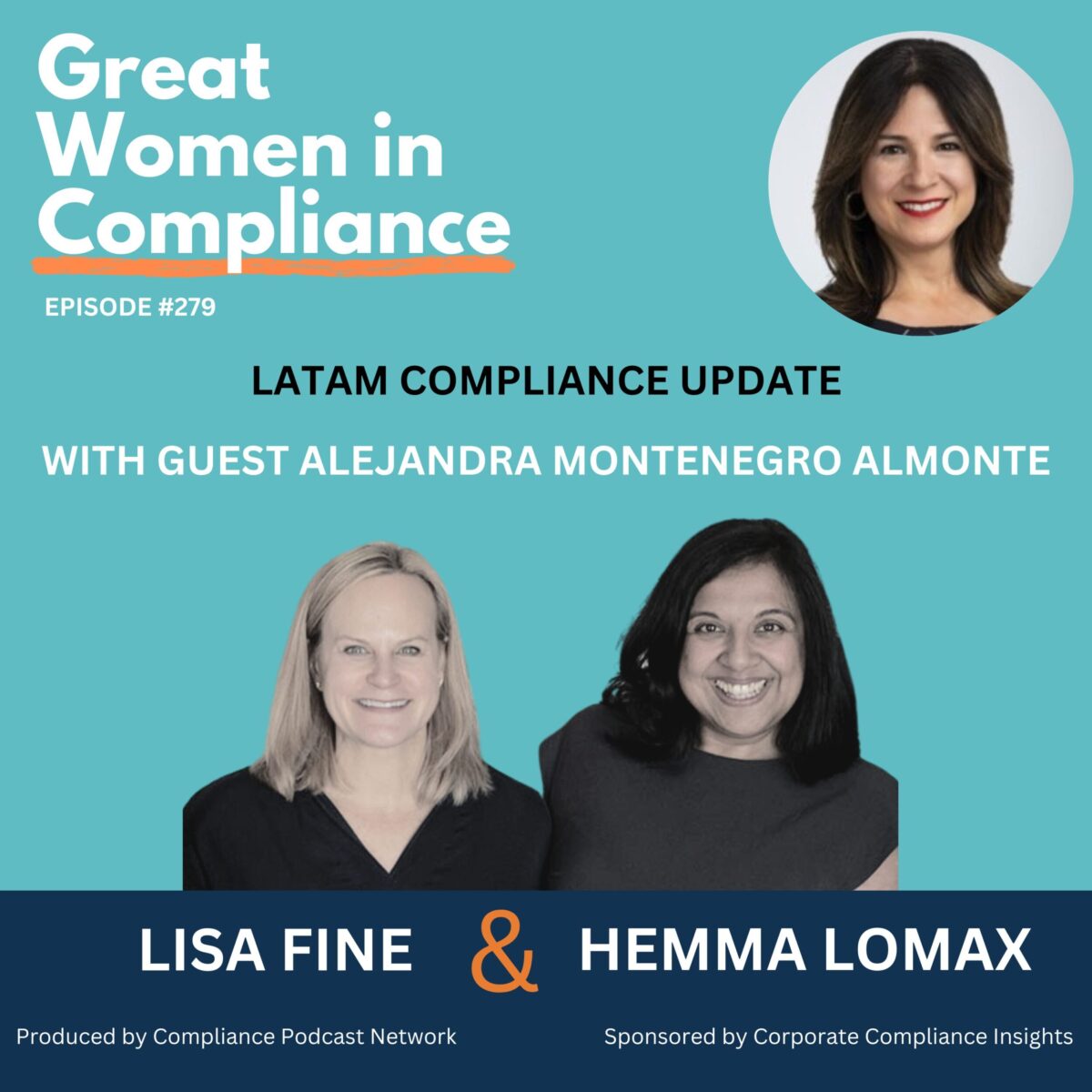
Great Women in Compliance – LATAM Compliance Update with Alejandra Montenegro Almonte

In this episode of Great Women in Compliance, Lisa speaks with Alejandra Montenegro Almonte, a member at Miller Chevalier. Alejandra is the Chair of their International Practice and Practice Co-Lead, Workplace Culture.

They discuss recent regulatory trends, workplace culture, and the evolving compliance landscape in Latin America and the United States, including the increased focus on Foreign Terrorist Organizations, False Claims Act enforcement, and the importance of addressing these changes and others proactively, including the DEI Executive Order requirements.

Alejandra also shares her insights about the shift towards addressing workplace culture and conduct issues proactively, and how this has evolved past looking just at litigation risk. She discusses employee engagement and the increasing use of ethical assessments.

Alejandra and Lisa reflect on the challenges of building authentic professional relationships in a predominantly remote work environment. They emphasize the need for intentionality, such as scheduling regular virtual coffees and employer-facilitated opportunities for connection, to foster networking and mentorship.

Alejandra and Lisa have known each other for a long time, and they discuss the value of the early career friendships that become a peer network. This is harder in a virtual age, and Alejandra shares some of her strategies to build networks.

Categories
Blog

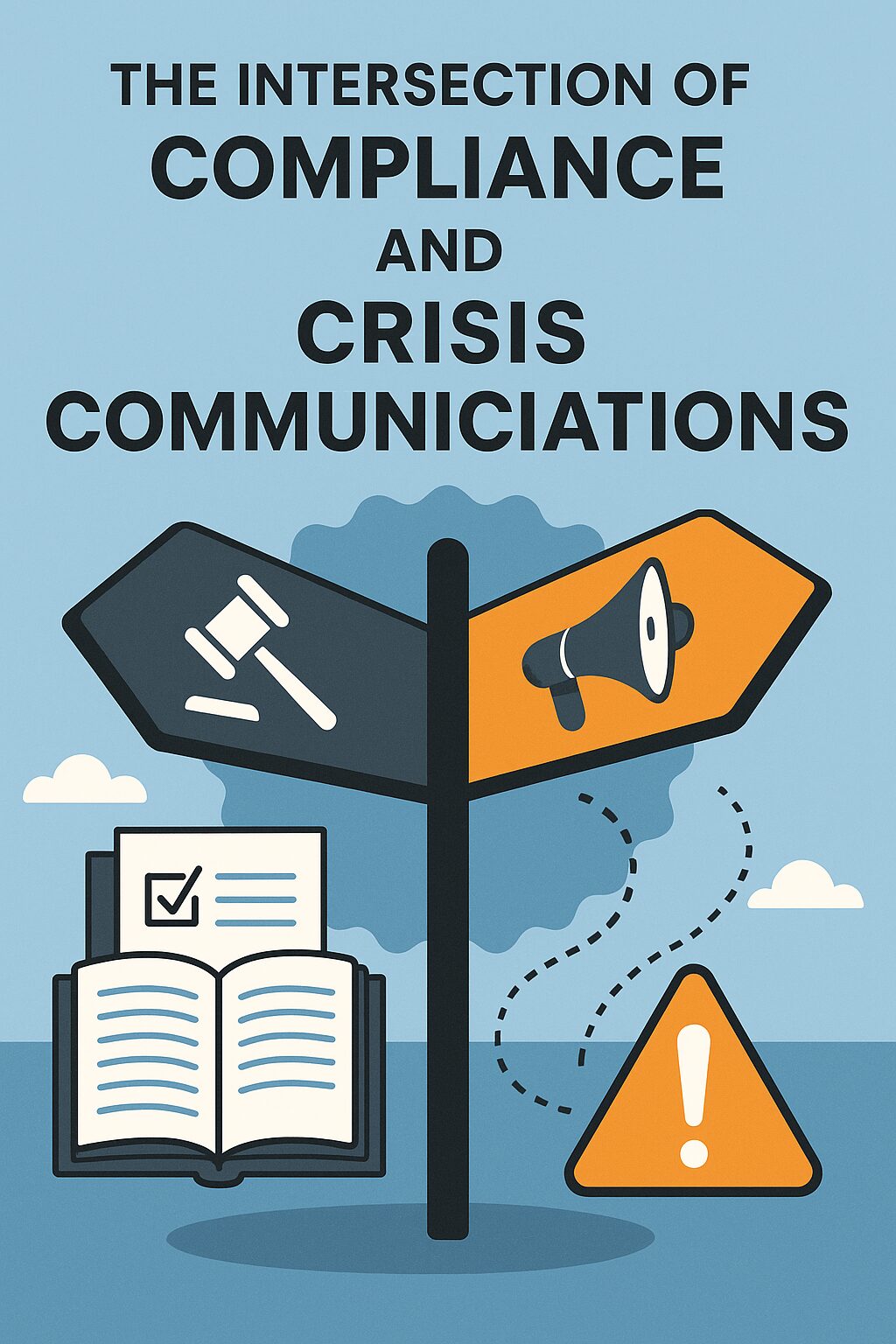
The Intersection of Compliance and Crisis Communications

Earlier this week, I posted a podcast with Steve Vincze regarding his thoughts about responding to a corporate crisis similar to the recent one seen at a Coldplay concert, where a Kiss Cam caught two individuals canoodling and it sparked a viral frenzy. The incident serves as a timely reminder that the adage of having 24 hours to respond is long gone. Vincze spoke about how the company can begin to record from such a compliance and ethics miasma, as when your CEO is openly having an affair with the head of your Human Resources Department. Yet there are other considerations a company needs to consider, as in today’s hyper-connected digital environment, corporate compliance professionals find themselves navigating crises at unprecedented speed. Today, compliance and communications teams have mere milliseconds to act.

The viral Kiss Cam event during Coldplay’s performance in Boston quickly transcended entertainment, morphing into a crisis for the company involved as speculation, memes, and fake apologies rapidly filled the communication void. Silence became negligence, and by the time the company issued its response over 24 hours later, the damage had intensified. This case isn’t an anomaly; it’s a crystal-clear signal of the evolving nature of crisis communications and its profound implications for corporate compliance teams. I recently came across an article by Gini Dietrich, founder of Spin Sucks, which outlined everything you need to consider to be ready for such a PR crisis (and nightmare). I took her piece and adapted it for the compliance professional. Here are five key lessons compliance professionals must learn from this incident.

1. Speed is Non-Negotiable

The essence of crisis response in 2025 is rapidity. Compliance professionals can no longer wait for every fact or legal review to issue a holding statement. Hesitation allows misinformation to spread unchecked, rapidly escalating manageable issues into existential threats. By preparing pre-approved holding statements and designating empowered response teams ahead of time, compliance can ensure immediate, controlled communication, preventing narrative hijacking.

Speed protects accuracy, as immediate communication positions organizations as transparent and responsive. A prompt, initial statement doesn’t need exhaustive details but should acknowledge awareness and ongoing investigation. Such swift action conveys responsibility, minimizes uncertainty, and curtails speculative narratives before they gain momentum.

2. Internal Communications are Essential

In crises, employees are not just internal stakeholders; they become frontline communicators, responding to inquiries from customers, partners, and personal connections. Compliance professionals must prioritize internal communications, informing employees first, clearly, and quickly. Doing so avoids confusion, curbs misinformation, and positions employees as reliable ambassadors equipped to handle external conversations appropriately.

Effective internal communications demonstrate organizational respect and care for employees, reinforcing loyalty and trust. It empowers them to respond confidently and consistently, reducing the risk of inadvertent misinformation. Early internal updates also foster internal stability, safeguarding productivity and morale during uncertain times, ultimately strengthening organizational resilience and unity during crises.

3. Scenario Planning Must Broaden

Traditional crisis management often focuses on natural disasters and data breaches. However, modern scenarios like executive misconduct, white-collar crime, and viral moments must be integrated into risk matrices. Compliance professionals should proactively collaborate with communications teams to anticipate diverse risks. Regular scenario-based drills ensure preparedness and reveal potential weaknesses in response strategies, enabling continuous improvement.

By embracing a broader spectrum of potential crises, compliance teams can identify vulnerabilities and preemptively design response protocols tailored to each scenario. Continuous assessment and updating of these protocols foster adaptability, ensuring teams remain agile and prepared, significantly reducing reaction times and minimizing the scope of damage.

4. Control Your Owned Channels

Immediate access to and control of your communication channels—such as websites, LinkedIn, Twitter, and internal communications platforms—is critical. In the Coldplay Kiss Cam incident, the initial lack of communication enabled false narratives to dominate. Compliance and communication teams must maintain ready-to-use channels, ensuring the company narrative can be rapidly deployed, preserving control and credibility.

Owning and managing these channels allows companies to issue timely, authoritative messages directly to their audience without relying solely on external media coverage. By proactively maintaining these channels, companies ensure consistent messaging, prevent misinformation, and swiftly address emerging issues, thus safeguarding their reputation and maintaining stakeholder trust.

5. Continuous Monitoring and Readiness

Crises do not follow business hours. Compliance professionals must establish continuous monitoring, leveraging tools such as Google Alerts, Buffer, and structured internal monitoring schedules. Maintaining constant vigilance ensures early detection and rapid response, crucially limiting reputational damage. Regular training and simulations further cement readiness, creating an agile response capability able to manage real-time crises effectively.

Continuous monitoring facilitates early warning signs, enabling compliance teams to act preemptively rather than reactively. Additionally, cultivating readiness through regular drills builds organizational muscle memory, reducing response times and stress during real crises. This proactive stance transforms potential vulnerabilities into managed situations, enhancing overall organizational resilience.

The Coldplay Kiss Cam saga underscores that modern crisis communications are not reactive but proactive. Compliance teams prepared for rapid, effective responses not only survive crises—they shape the narrative. By embracing these five critical lessons, compliance professionals can confidently navigate the lightning-fast world of digital communications, turning potential vulnerabilities into opportunities for integrity and trust-building.

In today’s hyper-connected landscape, waiting is no longer a caution; it may be closer to malpractice. As compliance professionals, our responsibility is not merely reacting to crises but proactively preparing for the inevitable moments when reputations hang by a thread. Your employees, stakeholders, and the public do not expect perfection, but they do expect presence, transparency, and action. By investing now in responsive protocols, clear internal communications, and agile crisis teams, you ensure your voice isn’t drowned out by speculation. Speed is not simply an advantage; it may well be your most critical compliance control. Act swiftly, communicate authentically, and you will not just survive the storm; you and your team will shape the narrative.