Categories
Daily Compliance News

Daily Compliance News: May 8, 2025, The $1MM for a Pardon Edition

Welcome to the Daily Compliance News. Each day, Tom Fox, the Voice of Compliance, brings you compliance-related stories to start your day. Sit back, enjoy a cup of morning coffee, and listen in to the Daily Compliance News—all from the Compliance Podcast Network. Each day, we consider four stories from the business world: compliance, ethics, risk management, leadership, or general interest for the compliance professional.

Top stories include:

  • Malaysia wants Tim Leissner. (WSJ)
  • Aussie regulator goes after Macquarie Bank for corruption. (Reuters)
  • Only $1MM for a Presidential pardon. (Bloomberg)
  • United Health sued over response to exec’s death. (Reuters)
Categories
Blog

Muddle in the Middle Week: Part 4 – Middle Managers as the Eyes and Ears of Compliance

We continue exploring how a corporate compliance function can use middle managers to make compliance more effective. This is perhaps the most dynamic era for business, with sweeping reengineering, digitization, and agile initiatives that have dramatically transformed the job of managers. Change has come in three dimensions: power, skills, and structure. Managers now have to think about making their teams successful rather than being served by them, coaching performance, not overseeing tasks, and leading in rapidly changing, more fluid environments.

No role has shifted more than that of the middle manager, who has undergone significant transformations. Today’s managers are no longer task overseers; they are increasingly expected to serve as vital conduits for compliance, embodying and advocating ethical standards across organizational layers. A recent article from Harvard Business Review, “Managers Can’t Do It All” by Diane Gherson and Lynda Gratton, lays bare the mounting pressures managers face and underscores a compelling necessity: reinventing the middle manager role to navigate contemporary workplace demands effectively.

These shifts have piled more responsibilities onto middle managers, requiring them to demonstrate new capabilities. The authors found that research shows that most middle managers struggle to keep up. More importantly, they posit a crisis is looming, if not already here, for middle managers. Some organizations, however, are heading it off by reimagining the role of middle managers. This article looks at three factors that have helped middle managers develop new skills, rewire systems and processes to support their work better, and even radically redefine the role.

Despite these pressures, the role of middle managers as compliance champions has become even more critical. Compliance officers rely on middle management to uphold standards and monitor and report potential risks. Ensuring these managers understand and embrace their evolving responsibilities is no longer optional; compliance is imperative.

Compliance professionals are uniquely positioned to leverage these insights. Middle managers, after all, play a crucial role in compliance frameworks, acting as frontline observers who detect and escalate potential ethical and compliance risks. Compliance teams must evolve their training methods and operational expectations to equip these pivotal figures better. In part 4, we explain how middle managers can work to be the eyes and ears of compliance.

Training Middle Managers to be the Eyes and Ears of Compliance

Drawing from these organizational examples, compliance leaders can consider several key lessons to empower middle managers effectively:

  • Shift Mindsets from Oversight to Coaching
  • The authors pointed to Standard Chartered’s initiative in developing its middle managers as “people leaders,” which underscores a vital transition: moving from traditional supervisory roles to ones of active coaching. Compliance professionals should train middle managers to adopt a coaching mindset that focuses less on direct oversight and more on empowering and guiding their teams through supportive, ongoing feedback.

When middle managers learn to coach, they naturally cultivate environments where openness and transparency thrive. Employees feel comfortable bringing compliance concerns forward and secure in knowing their managers will support rather than penalize them for raising issues.

  • Invest in Managerial Accreditation and Continuous Development
  • Next, the author looks at IBM’s strategic approach, which highlights the impact of investing in robust accreditation and continuous learning programs for managers. Compliance officers can replicate this model by creating certifications or licenses tied to compliance competencies. Courses in ethical decision-making, risk identification, and fostering psychological safety can empower middle managers to address compliance concerns before they escalate proactively.

A dedicated compliance accreditation signals clearly that your organization prioritizes compliance skills as essential managerial capabilities, helping ensure managers remain attuned to the shifting compliance landscape.

  • Utilize Digital Tools to Streamline Compliance Activities
  • The authors noted that IBM’s use of artificial intelligence to remove administrative burdens from managers serves as a powerful example of compliance functions. By automating routine compliance tasks, such as approvals or routine monitoring, compliance professionals can free managers to focus on more significant compliance issues, including fostering a culture of integrity.

Equipping managers with digital tools for real-time guidance, instant risk assessments, and compliance insights allows them to swiftly spot compliance risks and report potential red flags without getting bogged down in administrative details.

  • Clarify Roles by Splitting Responsibilities
  • The authors found that Telstra’s innovative management structure, clearly dividing “leaders of people” from “leaders of work,” is instructive for compliance. Clearly delineating roles within compliance can relieve managerial overload and sharpen compliance effectiveness. As “leaders of people,” middle managers can concentrate on building ethical cultures, supporting compliance education, and nurturing open communication about ethical concerns.

In contrast, “leaders of work” roles can ensure compliance measures are embedded directly into day-to-day operations and workflows. Clear role definitions help middle managers understand how they contribute to the compliance mission, enhancing accountability and effectiveness.

  • Foster Community and Peer-to-Peer Learning Among Managers
  • One particularly valuable strategy highlighted by Standard Chartered involves creating robust managerial communities. Compliance professionals should replicate this practice by establishing regular forums where managers can share compliance experiences, insights, and best practices. Peer-to-peer discussions can significantly enhance managers’ awareness and responsiveness to compliance issues.

Community-focused approaches to addressing common challenges, such as diversity initiatives or ethical dilemmas, help embed compliance deeply into the organizational culture. Compliance becomes a shared responsibility rather than merely an isolated regulatory function.

Strengthening Compliance through Empowered Middle Management

Once perceived merely as conduits for executive directives, middle managers must now become active facilitators of compliance culture. Compliance professionals face the critical task of equipping these managers to navigate their evolving roles adeptly. The authors’ article provides powerful insights and practical models to guide this transformation.

Organizations that invest wisely in their middle managers, explicitly developing them as proactive compliance champions, will discover they possess invaluable partners positioned perfectly to detect and address compliance risks early. In our digitized, agile, and remote workplace, it’s not enough for compliance professionals alone to manage compliance risks; effective management relies on empowering managers to recognize, respond to, and ultimately embody a culture of compliance.

As the authors suggest, transformative managerial roles are not merely advantageous but essential for thriving in today’s new world of work. Compliance professionals who internalize these lessons and train middle managers to become proactive stewards of compliance will enhance organizational integrity, reduce risks, and strengthen their company’s ethical foundation.

I hope you join me tomorrow when I consider empowering middle managers to drive compliance transformation.

For more on this topic, check out The Compliance Handbook, a Guide to Operationalizing Your Compliance Program, 6th edition, which LexisNexis recently released. It is available here.

Categories
Compliance Tip of the Day

Compliance Tip of the Day – Elevating Compliance Through Connected Middle Managers

Welcome to “Compliance Tip of the Day,” the podcast where we bring you daily insights and practical advice on navigating the ever-evolving landscape of compliance and regulatory requirements. Whether you are an experienced compliance professional or just beginning your journey, our goal is to offer concise, practical advice to keep you at the forefront of compliance. Join us as we explore the latest industry trends, share best practices, and demystify complex compliance issues to ensure your organization remains compliant with the law. Tune in daily for your dose of compliance wisdom, and let’s make compliance a little less daunting, one tip at a time.

Today, we look at how compliance professionals can tap into these connected middle managers to elevate compliance and the strategy of ethical business conduct.

For more on this topic, check out The Compliance Handbook, a Guide to Operationalizing Your Compliance Program, 6th edition, which LexisNexis recently released. It is available here.

Categories
Great Women in Compliance

Great Women in Compliance – Movements, Not Mandates with Amy Wilson

In this episode of Great Women in Compliance, host Dr. Hemma Lomax sits down with strategist, author, and culture designer Amy J. Wilson to explore how compliance professionals can become catalysts for culture change, not just enforcers of rules. Together, they unpack what it really takes to evolve workplace culture from the inside out.

Amy brings 20+ years of cross-sector experience—from serving as a White House Presidential Innovation Fellow to founding Culture Shift Studio and Healing for Work. She’s the author of Empathy for Change: How to Build a More Understanding World, a book that reframes empathy as a practical tool for systems change and leadership.

Listen in as Amy shares:

  • How to shift from “Old Power” mandates to “New Power” movements
  • The real reason why 70% of change initiatives fail (hint: it’s not a policy problem)
  • The four pillars of successful culture movements: Emotional Connection, Grassroots Energy, Influence Over Enforcement, and Authenticity
  • How compliance and culture must work together to build ethical, resilient workplaces
  • Her signature framework, the Thriving Together Method, and how it helps organizations move from Awareness to Accountability

Whether you’re a compliance officer, people leader, or culture champion, this conversation will challenge how you think about influence, leadership, and lasting change.

Highlights from the Episode:

  • A White House Fellow’s view on what makes change stick
  • Why compliance should be participatory, not just punitive
  • How psychological safety fuels ethical behavior
  • Reframing compliance as a shared responsibility across the organization
  • Practical steps to start building a culture movement within your team

Resources:

About Amy J. Wilson

Amy J. Wilson is a nationally recognized leader in organizational transformation, specializing in emotional intelligence, systems strategy, and culture design. Amy is the founder of Culture Shift Studio, a consulting practice that partners with purpose-driven leaders to co-create emotionally intelligent, participatory, and values-aligned organizational cultures. She also leads Healing for Work, a workplace well-being initiative that supports individuals and teams in recovering from burnout, building emotional resilience, and fostering cultures of mutual care. Together, these two offerings form a holistic ecosystem—helping organizations not only evolve their structures and strategies, but also heal the human experience at work.

With over 20 years of cross-sector experience—from federal innovation and startup acceleration to workforce equity and civic design—Amy brings a rare combination of strategic rigor and deep emotional insight to every engagement. Her work blends systems thinking, human-centered design, and narrative strategy to activate meaningful and lasting cultural evolution.

Amy previously served as a White House Presidential Innovation Fellow, where she co-authored the Innovation.gov Toolkit and led the Better Government Movement, engaging thousands of public servants in redesigning institutional culture. She is also the author of Empathy for Change: How to Build a More Understanding World, a guidebook for changemakers committed to leading with care, clarity, and courage.

Her signature model, the Thriving Together Method, guides organizations through a five-stage process—Awareness, Aspiration, Acceptance, Action, and Accountability—to move beyond surface-level initiatives and embed empathy into their core culture.

Amy currently facilitates the Playable Systems the Ethics, Technology & Public Policy for Practitioners program at Stanford University, and serves on the Guiding Council at Either/Org, a research collective challenging legacy business culture and shaping the future of work. She is co-creating Playable Systems, a participatory research and design program that uses game-based simulations to help people explore power, ethics, and institutional change from the inside out.

Categories
The Hill Country Podcast

The Hill Country Podcast – Crisis Preparedness with Coni Meyers

Welcome to the award-winning The Hill Country Podcast. The Texas Hill Country is one of the most beautiful places on earth. In this podcast, Hill Country resident Tom Fox visits with the people and organizations that make his area one of the most unique areas of Texas. This week, Tom Fox sits down with Coni Meyers, an expert in crisis preparedness and sustainability.

Coni discusses her extensive background, including her time as a FEMA inspector and trainer, and how it led her to her current mission of educating communities on disaster resilience through her initiative, Be Prepared Be Ready. The highlight of their conversation is Coni’s Kits4Kids initiative, which empowers young people to become spokespeople for emergency preparedness in their communities, thereby addressing broader concerns, including mental health and sustainability. Throughout the episode, Coni emphasizes the importance of local community involvement and innovative solutions in disaster preparedness and sustainability, making a strong case for proactive measures to mitigate the impacts of increasing climate-related disasters.

Key highlights:

  • The Importance of Crisis Preparedness
  • Kits4Kids Initiative
  • Community and Organizational Collaboration
  • Preparedness and Sustainability in Business
  • Innovative Solutions for Disaster Resilience
  • Kits4Kids: Spokesperson Campaign

Resources

Coni Meyers on LinkedIn

Coni Meyers on Instagram

Coni Meyers on Facebook

Other Hill Country Network Podcasts

Hill Country Authors Podcast

Hill Country Artists Podcast

Texas Hill Country Podcast Network

Artwork

Nancy Huffman Fine Art

Categories
Compliance Into the Weeds

Compliance into the Weeds: USRA Declination Case Study: Self-Disclosure Best Practices

The award-winning Compliance into the Weeds is the only weekly podcast that takes a deep dive into a compliance-related topic, literally going into the weeds to explore a subject more fully. Are you looking for some hard-hitting insights on compliance? Look no further than Compliance into the Weeds! In this Compliance into the Weeds episode, Tom Fox and Matt Kelly take a deep dive into the declination recently given by the DOJ to the Universities Space Research Association (USRA).

In this episode, Tom and Matt dive deeply into a recent decline issued by the Department of Justice (DOJ) to the University Space Research Association (USRA). The discussion focuses on the organization’s exemplary behavior in self-disclosure and cooperation during an investigation into an employee’s misconduct. This misconduct included unauthorized export of software to Beijing University. The hosts highlight the case as a textbook example of effective compliance practices, self-reporting, and cooperation with regulators. They also explore the DOJ’s guidelines on self-disclosure and the importance of internal controls in high-risk areas.

Key highlights:

  • Case Overview: USRA Declination
  • DOJ Press Release Insights
  • Details of the Misconduct
  • USRA’s Response and Cooperation

Resources:

DOJ Press Release on Universities Space Research Association Declination

Tom

Instagram

Facebook

YouTube

Twitter

LinkedIn

Compliance into the Weeds was recently honored as one of a Top 25 Regulatory Compliance Podcast and a Top 10 Business Law Podcast, and a Top 12 Risk Management Podcast.

Categories
Daily Compliance News

Daily Compliance News: May 7, 2025, The Private Lives Edition

Welcome to the Daily Compliance News. Each day, Tom Fox, the Voice of Compliance, brings you compliance-related stories to start your day. Sit back, enjoy a cup of morning coffee, and listen in to the Daily Compliance News—all from the Compliance Podcast Network. Each day, we consider four stories from the business world: compliance, ethics, risk management, leadership, or general interest for the compliance professional.

Top stories include:

  • UBS will pay over $500MM to settle the tax fraud case. (WSJ)
  • Mike Jeffries was found incompetent to stand trial. (BBC)
  • Do CEOs have private lives? (Bloomberg)
  • Fighting Trump’s tariffs. (FT)
Categories
Blog

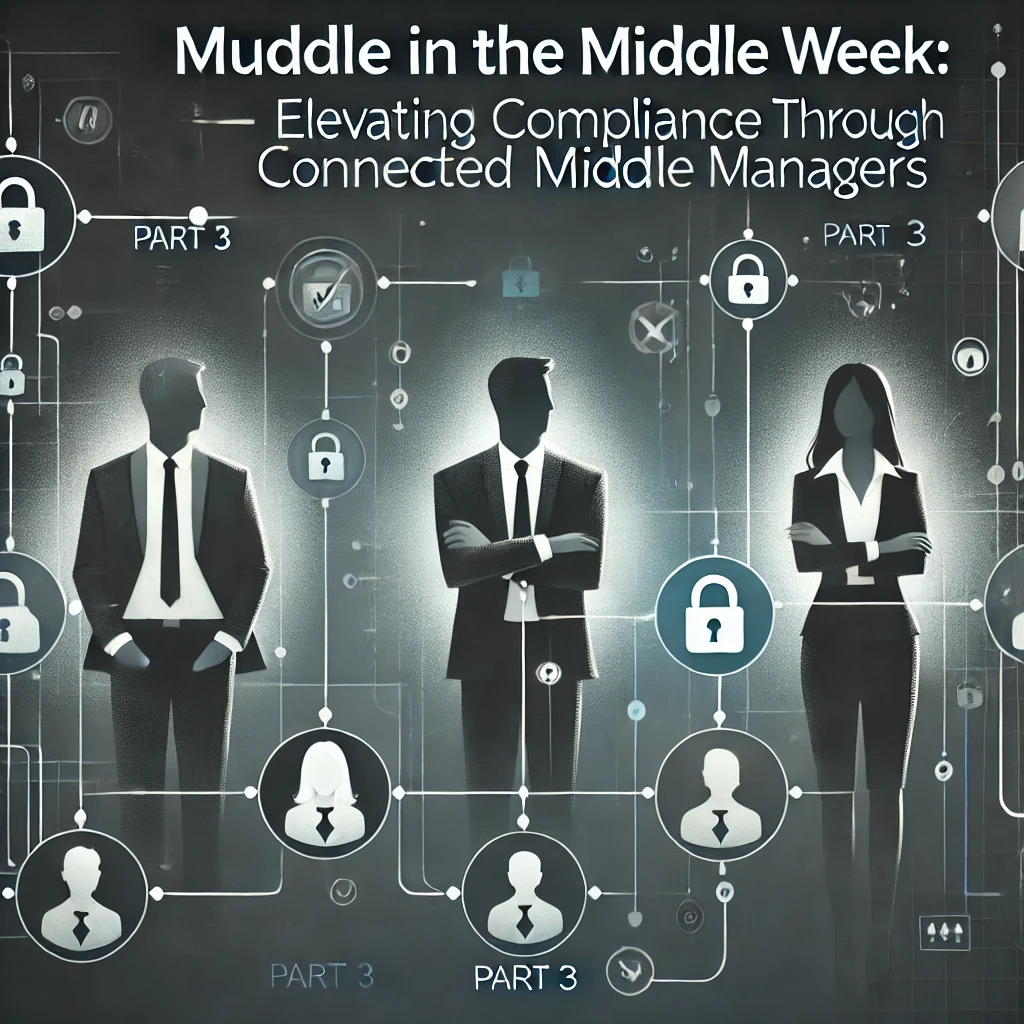
Muddle in the Middle Week: Part 3 – Elevating Compliance Through Connected Middle Managers

We continue our exploration of the role of middle managers in compliance. In compliance, we often focus heavily on top executives’ tone at the top and frontline employees’ behaviors at the bottom, but what about the critical layer in between? Middle managers, often unjustly maligned as mere bureaucratic obstacles or ineffective supervisors, play a crucial compliance role, acting as connectors, communicators, and cultural ambassadors. I was therefore intrigued by an article in the Harvard Business Review by Zahira Jaser entitled The Real Value of Middle Managers, which focused on four key types of connecting leaders and their associated practices. Each has rewards and challenges, but successfully addressing them can help make your business more successful after the pandemic.

Middle managers serve a dual function: leading their teams and effectively communicating with senior executives. Jaser refers to these pivotal roles as “connecting leaders,” vital for maintaining organizational coherence, especially as remote and hybrid work arrangements proliferate. Effective middle managers possess sophisticated communication skills and can adeptly mediate between varying organizational layers, skills invaluable to compliance professionals. In Part 3, we look at how compliance professionals can tap into these connected leaders to help elevate compliance and the strategy of doing business ethically.

Four Key Roles of Middle Managers in Compliance

1. The Janus Leader: Empathizing Across Levels

Named after the Roman god who faced two directions simultaneously, Janus-type leaders maintain continuous empathy with their subordinates and senior executives. In compliance, this duality is essential. Middle managers must understand their teams’ operational pressures and communicate these challenges to ensure realistic compliance expectations and adequate resource allocation. Organizations can support Janus leaders by providing coaching and psychological resources, mitigating the risk of burnout from this continuous emotional labor.

2. The Broker: Negotiating Ethical Solutions

Middle managers often find themselves negotiating between conflicting organizational objectives. They function as brokers, facilitating dialogues that reconcile differing needs and goals. This role is especially critical in ethical compliance scenarios, where business objectives and compliance principles might seem to clash. Effective brokers foster a culture of transparency and humility, creating environments where ethical considerations are openly discussed and valued.

One practical example highlighted by Jaser involved a middle manager named Sumiya, who effectively mediated a disagreement about employee performance ratings, demonstrating transparency and fostering increased loyalty and motivation through direct executive engagement.

3. The Conduit: Advocating Upward

Middle managers in the conduit role courageously amplify their team’s voices, often at personal risk. They are crucial in compliance environments, particularly when ethical issues or potential violations must be escalated to higher management. For compliance teams, conduits are allies who ensure critical frontline insights reach senior leadership. Promoting a culture of psychological safety empowers middle managers to speak up without fear of negative repercussions, enhancing organizational transparency and integrity.

For instance, Simon, a risk manager featured by Jaser, exemplified this role by courageously voicing team concerns to senior executives, significantly improving the implementation of new compliance processes.

4. The Tightrope Walker: Balancing Strategic Compliance Decisions

Compliance professionals understand that organizational decisions often involve complex ethical dilemmas. Middle managers, described as tightrope walkers, navigate these challenging decisions daily, balancing competing demands such as operational efficiency, employee morale, and compliance obligations. Organizations can support these managers by fostering safe environments for critical-thinking discussions, thus preventing cognitive overload and paralysis.

Andrea’s case in Jasper’s research illustrates the Tightrope Walker’s role vividly. As a sales team leader during a transition requiring intensive client communication tracking, Andrea strategically managed her team’s workload and maintained compliance with corporate requirements while safeguarding employee autonomy and morale.

Strengthening Compliance through Middle Managers

To maximize the compliance potential of middle managers, organizations must provide targeted support, recognizing these roles’ intrinsic challenges. This support should include comprehensive development programs, not just in leadership but also in active and engaged followership—empowering managers to effectively influence upwards and downwards.

Organizations should integrate these roles explicitly into their compliance strategies, ensuring that middle managers’ efforts are recognized and appropriately incentivized through performance management systems, training, and corporate communications. This recognition validates middle managers’ crucial compliance roles, enhancing their motivation and effectiveness.

Additionally, investing in emotional and psychological support systems for middle managers is essential, particularly during periods of significant organizational change. Such investments underscore a commitment to a robust compliance culture, recognizing that compliance effectiveness is deeply tied to organizational health and employee well-being.

Middle Managers—Compliance Champions in the Shadows

Jaser’s research underscores a powerful truth: middle managers are not just connectors in an operational sense; they are essential compliance allies who uphold and reinforce ethical standards throughout an organization. For compliance professionals, the implication is clear—by supporting, empowering, and leveraging these vital figures, organizations can build stronger, more responsive, and resilient compliance cultures.

Ultimately, compliance is not solely dictated from the top or performed at the bottom, and it thrives most robustly in organizations where middle managers actively embody and champion ethical values and compliance standards every day. Embracing and amplifying their roles will undoubtedly position organizations for compliance success and sustainable, ethical leadership.

I hope you will join me tomorrow as I explore why middle managers should be seen as compliance’s eyes and ears and how compliance can use this skill to create and maintain a more effective compliance program.

For more on this topic, check out The Compliance Handbook, a Guide to Operationalizing Your Compliance Program, 6th edition, which was recently released by LexisNexis and is available here.


Categories
Compliance Tip of the Day

Compliance Tip of the Day – Middle Managers as Ethical Cornerstones

Welcome to “Compliance Tip of the Day,” the podcast where we bring you daily insights and practical advice on navigating the ever-evolving landscape of compliance and regulatory requirements. Whether you’re a seasoned compliance professional or just starting your journey, we aim to provide bite-sized, actionable tips to help you stay on top of your compliance game. Join us as we explore the latest industry trends, share best practices, and demystify complex compliance issues to ensure your organization remains compliant with the law. Tune in daily for your dose of compliance wisdom, and let’s make compliance a little less daunting, one tip at a time.

What lessons can compliance professionals learn from recognizing and empowering middle managers as vital moral compasses within their organizations?

For more on this topic, check out The Compliance Handbook, a Guide to Operationalizing Your Compliance Program, 6th edition, which LexisNexis recently released. It is available here.

Categories
Word of the Week

Word of the Week with Kenneth O’Neal – The Power of Thinking

Each week, Kenneth O’Neal discusses a word that describes a principle or value of the Qualities of Success. We suggest you use the Word of the Week in your thoughts, deeds, and actions. You might possess the quality and desire to develop it to a higher level. You could replace a bad habit with a good habit. Write an action step and use it daily to improve the quality of your life. In this episode, Kenneth discusses the word – Thinking.

In this episode, Rick and Kenneth look at the significance of the word ‘thinking,’ exploring its historical roots and essential role in shaping human civilization. They discuss notable thinkers like Socrates, Plato, Aristotle, and Confucius, who have profoundly influenced various aspects of life and knowledge. The conversation then shifts to the relevance of critical thinking in today’s fast-paced, information-saturated world. They look at the importance of intentional and active thinking, unbiased evaluation of information, and the necessity of fostering critical thinking skills for personal and professional growth. The hosts conclude by encouraging listeners to engage in deep reflection and continuous learning to navigate better and influence their environments.

Key highlights:

  • The Evolution and Importance of Thinking
  • Great Thinkers in History
  • Modern Day Thinkers and Critical Thinking
  • The Nature of Thoughts and Thinking
  • Encouragement to Become a Critical Thinker

Resources

KRONEAL Consulting