Categories
Daily Compliance News

Daily Compliance News: May 6, 2025, The Made in China Edition

Welcome to the Daily Compliance News. Each day, Tom Fox, the Voice of Compliance, brings you compliance-related stories to start your day. Sit back, enjoy morning coffee, and listen to the Daily Compliance News. All from the Compliance Podcast Network. Each day, we consider four stories from the business world: compliance, ethics, risk management, leadership, or general interest for the compliance professional.

Top stories include:

  • Made in China, gaining traction. (WSJ)
  • The EU Parliament cracks down on lobbyists. (Politico)
  • Adani tries to settle the corruption case. (Bloomberg)
  • Albemarle gets out of NPA early. (ComplianceWeek)
Categories
Everything Compliance - Shout Outs and Rants

Shout Outs and Rants – Episode 153, The CW 25 Edition

Welcome to this edition of Everything Compliance, Shout-Outs, and Rants. This episode features Matt Kelly, Jonathan Armstrong, Karen Woody, Tom Fox, and Karen Moore.

  1. Karen Moore rants at the Department of Education for setting up a 1984-style anonymous reporting line for students to report on their teachers.
  2. Matt Kelly has a shout-out to Microsoft for picking up Jenner & Block as counsel and ranting about the GOP effort to abolish the PCAOB.
  3. Jonathan Armstrong shouts out to the compliance community for their support of Diana Trevley and encourages her continuing recovery now that she is back in the US.
  4. Karen Woody shouts out to the movie Conclave.
  5. Tom Fox shouts out to former San Antonio Spurs coach Gregg Popovich, who announced his retirement on May 1.

The members of Everything Compliance are:

Tom Fox, the Voice of Compliance, is the host, producer, and sometimes panelist of Everything Compliance. He can be reached at tfox@tfoxlaw.com. The award-winning Everything Compliance is part of the Compliance Podcast Network.

Categories
SBR - Authors' Podcast

SBR Author’s Podcast – Understanding Complexity with Dr. Jean Boulton, Part 2: The Power of Simple Principles in Ethics and Compliance

 Welcome to the SBR – Authors Podcast! In this podcast series, host Tom Fox visits with authors in the compliance arena and beyond. Today, Tom’s friend and colleague Earnie Broughton joins him in co-hosting Dr. Jean Boulton, the author of The Dao of Complexity. This concludes Part 2 of a special two-part SBR – Authors Podcast episode.

In episode 2, Tom, Earnie, and Dr. Boulton explore the intricate balance between simple rules and simple principles within corporate compliance and ethics. Their discussion highlights the limitations of relying solely on rigid rule systems, especially in complex and evolving environments. We emphasize the importance of establishing shared principles and values, which serve as a more adaptable foundation for ethical decision-making. Drawing on real-world examples from healthcare and education, we explore how fostering a culture of trust, collaboration, and ethical behavior can lead to more sustainable and effective outcomes. Key takeaways include the significance of a ‘speak up’ culture, the role of leadership in building trust, and the necessity of addressing root causes to drive meaningful change.

Key highlights:

  • Introduction to Simple Rules vs. Simple Principles
  • Exploring the Philosophy of Simple Rules
  • The Role of Principles and Ethics
  • Compliance and Ethics in Organizations
  • The Importance of Trust and Culture

Resources:

Dr. Jean Boulton’s Website

Dr. Jean Boulton  on LinkedIn

The Dao of Complexity on Amazon.com

Earnie Broughton on LinkedIn

Tom Fox

Instagram

Facebook

YouTube

Twitter

LinkedIn

Categories
Blog

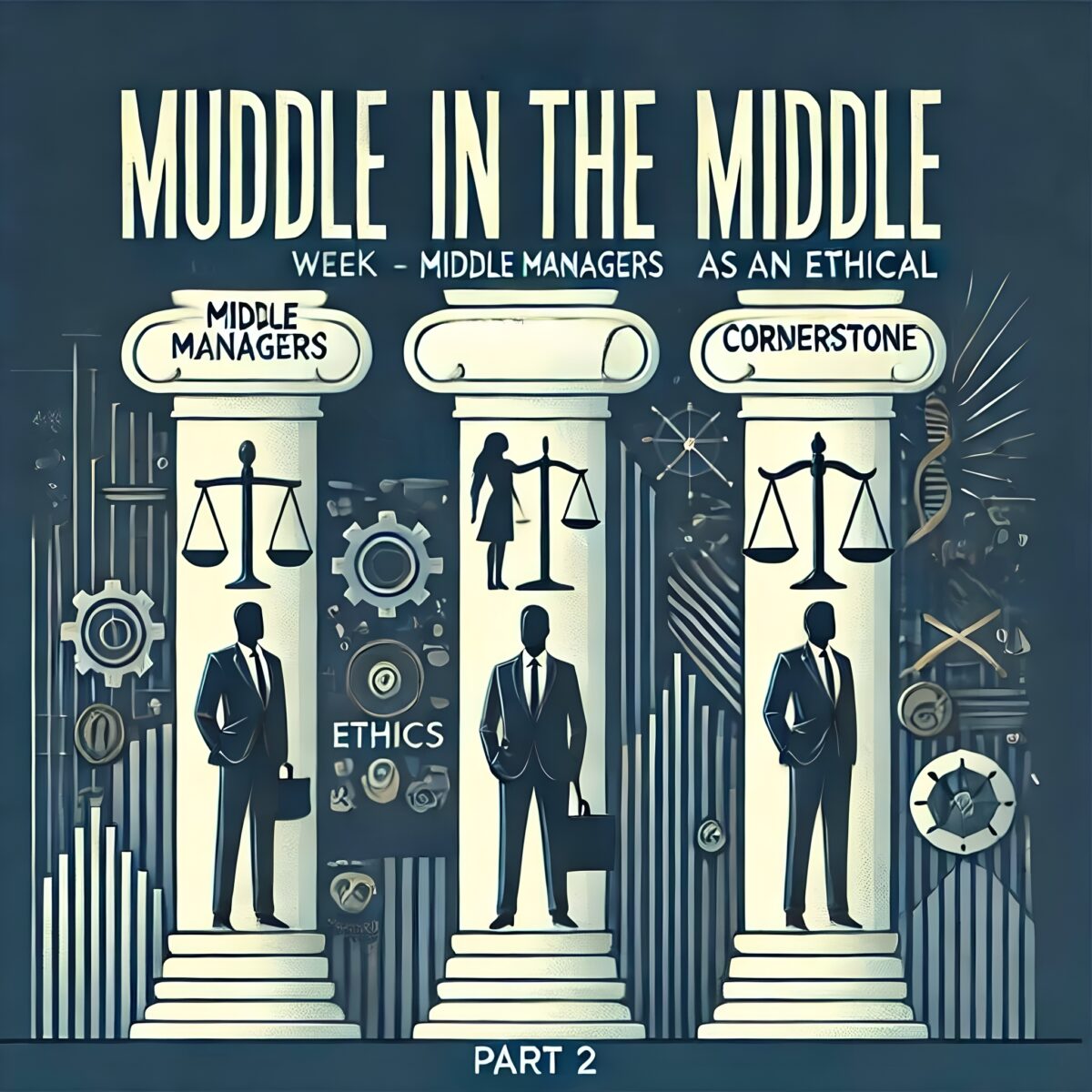
Muddle in the Middle Week: Part 2, Middle Managers as an Ethical Cornerstone

We continue our exploration of middle managers as a key to effective compliance. Middle managers often find themselves unfairly characterized and depicted as bottlenecks or bureaucratic hurdles, and their essential contributions to corporate culture and ethics are frequently overlooked. However, these unsung heroes in corporate compliance are crucial in promoting compliance and upholding ethical business practices. In Brooke Vuckovic’s article “Employees See Middle Managers as an Organization’s Moral Compass,” the author wrote how middle managers made a meaningful difference in their teams’ lives and upheld their organizations’ moral compass. In Part 2, I want to demonstrate that middle managers can be your organization’s ethical cornerstones.

Becoming the middle manager whom others genuinely respect, admire, and recall as a moral role model requires deep work. She noted two areas in particular where middle managers can assist compliance: first, by taking a regular self-inventory to gauge their existing standing and willingly correcting habits and behaviors; second, by monitoring them on an ongoing basis. I wanted to use her article to highlight what lessons compliance professionals can learn from recognizing and empowering middle managers as vital moral compasses within their organizations.

The Quiet Power of Everyday Ethics

When asked about exemplary moral business leaders, MBA students in Vuckovic’s survey commonly referenced high-profile CEOs known for their ethical stances, such as Yvon Chouinard and Ratan Tata. However, far more frequently, they cited their middle managers, whose day-to-day actions and decisions consistently demonstrated integrity and moral leadership. These managers reinforced ethics through small, repeated actions, showing politeness, offering genuine compliments, and consistently supporting their teams.

Lesson 1: Commitment Matters Most

Compliance begins with genuine care and commitment to people. Middle managers earn trust and respect through simple, consistent actions, following promises, actively advocating for their teams, and being genuinely attentive to concerns. When managers demonstrate such commitment, compliance becomes an authentic expression of the organization’s culture rather than merely procedural adherence.

One powerful example from the research illustrates a manager who carefully paced workloads and fairly distributed responsibilities, creating an environment where employees willingly stepped up during urgent situations. “I would have followed her over a cliff,” stated one respondent, reflecting profound respect earned through everyday integrity and empathy.

Lesson 2: Upholding Values Under Pressure

Middle managers frequently face the dual pressures of organizational demands and ethical considerations. Compliance professionals must recognize and empower managers who are willing to stand firm on ethical grounds, even when faced with significant pressure. In Vuckovic’s findings, managers prioritizing integrity over expediency gained the deepest admiration. For example, one manager’s decision not to hurriedly approve complex financial changes without thorough review demonstrated an unwavering commitment to doing the right thing, reinforcing the critical compliance principle of diligence over speed.

Lesson 3: Proactive Protection of Team Culture

Managers who proactively address ethical and behavioral issues before they escalate provide critical protection for their teams and organizations. Effective compliance involves early intervention, and middle managers are ideally positioned to identify and correct behaviors that could undermine conformity. For instance, managers praised by respondents were those who confronted team members withholding crucial information or engaging in behaviors detrimental to organizational integrity. Such proactive stances resolved immediate issues and set lasting expectations for ethical behavior.

Lesson 4: Continuous Ethical Inventory

Compliance professionals can leverage Vuckovic’s recommendation of regular ethical self-inventories to encourage middle managers to consistently reflect on their commitments to their teams and higher ethical standards. This method involves routinely examining instances where managers have demonstrated integrity, fairness, and moral courage. Managers are encouraged to regularly ask themselves critical questions, such as “Have I demonstrated a commitment to integrity under pressure?” This type of assessment can deeply embed ethical considerations into daily managerial practices.

Lesson 5: Learning from Ethical Role Models

Finally, the importance of role modeling in compliance cannot be overstated. Middle managers who actively engage in ethical practices provide practical, observable models for their teams, cultivating an organizational culture where compliance and ethics are deeply valued and proactively pursued. Managers who publicly advocate for clear policies and consistently reinforce ethical priorities, such as data privacy and integrity, set benchmarks that elevate the entire organization. Compliance professionals should celebrate and highlight such ethical exemplars, making their behaviors visible and emulated across the company.

Empowering Middle Management for Stronger Compliance

Compliance professionals have a clear role in reframing how middle management is viewed within their organizations, not as obstacles or bureaucratic necessities, but as indispensable ethical leaders. As Vuckovic compellingly illustrates, middle managers who regularly demonstrate care, integrity, and moral courage form the backbone of an authentic compliance culture.

By championing the ethical contributions of middle managers, organizations reinforce compliance at every level and build a resilient, trustworthy culture that sustains ethical excellence in the face of daily pressures and complex dilemmas. Middle managers not only play a crucial role in corporate compliance, but they also serve as exemplary role models.

I hope you will join me tomorrow when I consider how to elevate your compliance regime by empowering middle managers.

For more on this topic, check out The Compliance Handbook, a Guide to Operationalizing Your Compliance Program, 6th edition, which LexisNexis recently released. It is available here.


Categories
Innovation in Compliance

Understanding Human Trafficking and Modern Slavery: A Business Imperative with Clint Palermo

Innovation comes in many areas, and compliance professionals must be ready for and embrace it. Join Tom Fox, the Voice of Compliance, as he visits with top innovative minds, thinkers, and creators in the award-winning Innovation in Compliance podcast. Today, we begin a 3-part podcast series sponsored by Diligent with Clint Palermo, Kristy Grant-Hart, and Stephanie Font. In part 1, we discuss understanding human trafficking and modern slavery: a business imperative with Clint Palermo, Senior Manager (Due Diligence) at Diligent

Tom and Clint take a deep dive into the pressing issues of human trafficking and modern slavery and their significance to the business community. Palermo highlights his professional journey in compliance, beginning in 2018 at Diligent, and discusses the regulatory landscape across various jurisdictions, including notable laws like Canada’s S-211, the EU’s CS3D Directive, and the US’s Uyghur Forced Labor Prevention Act. The conversation emphasizes the importance of knowing third parties (KY3P), managing reputational risks, and maintaining continuous due diligence to ensure ethical business practices and compliance.

Key highlights:

  • Significance of Human Trafficking and Modern Slavery
  • Global Regulations on Forced Labor
  • Impact of Forced Labor on Businesses
  • Reputational Risks and Moral Imperatives
  • Solutions and Compliance Programs

Resources:

Clint Palermo on LinkedIn

Visit Diligent Website

Tom Fox

Instagram

Facebook

YouTube

Twitter

LinkedIn

Categories
Corruption, Crime and Compliance

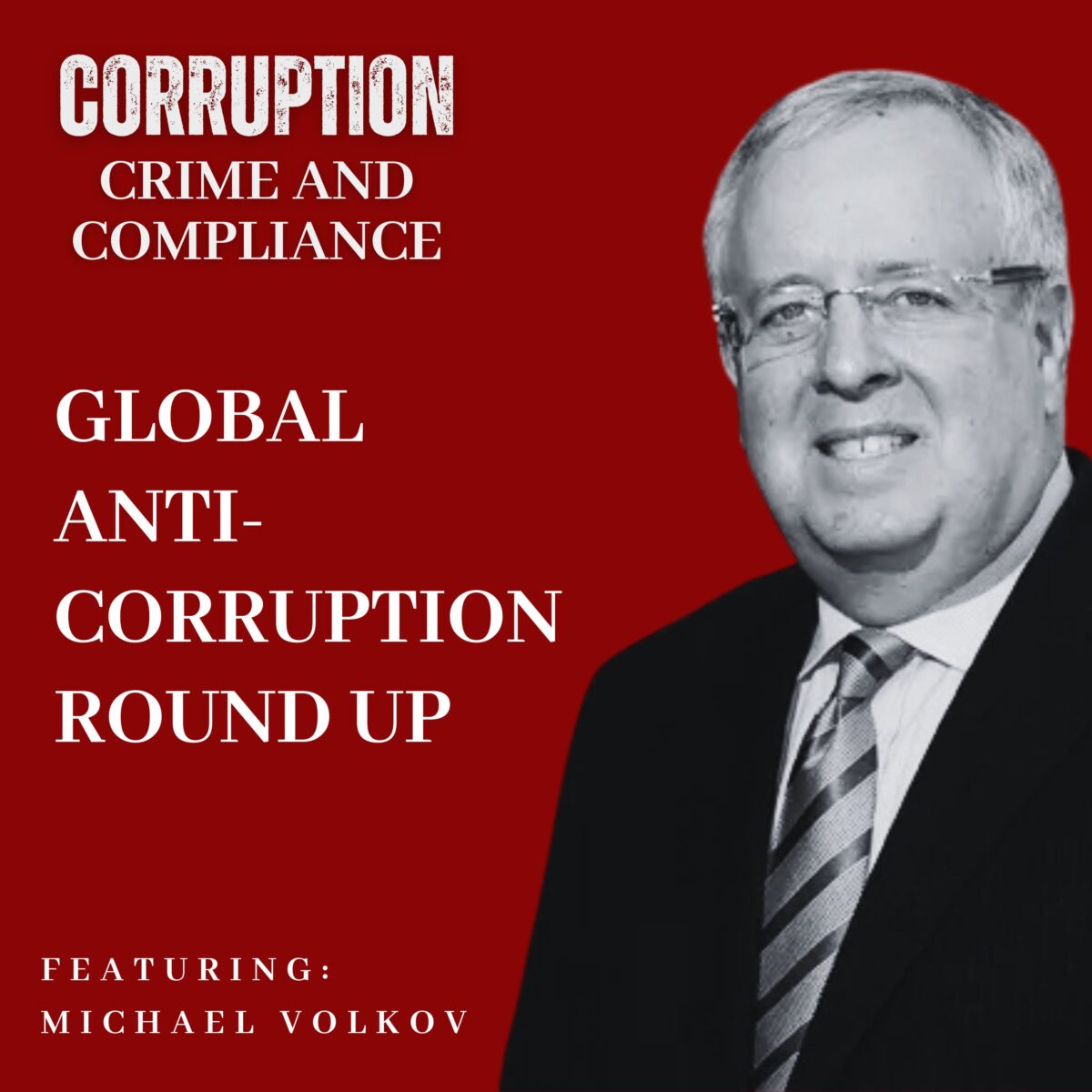
Global Anti-Corruption Round Up

When The United States has hit pause on Foreign Corrupt Practices Act (FCPA) enforcement—it left many asking whether Europe will now be stepping up to lead the global anti-corruption charge. In this episode of Corruption, Crime and Compliance, Michael Volkov explores how European prosecutors are responding to the enforcement gap, why multinational companies can’t afford to slow down their compliance efforts, and how both state-level and international initiatives are reshaping the future of anti-bribery law.

You’ll hear him talk about:

  • The launch of a new International Anti-Corruption Prosecutorial Task Force formed by the UK, France, and Switzerland, designed to intensify cross-border enforcement and cooperation in bribery and corruption cases.
  • The task force’s formation as a direct response to the U.S. enforcement pause, signaling that European agencies are prepared to take a more prominent role in prosecuting international corruption, especially involving multinational corporations.
  • California’s bold move to pursue foreign bribery under its Unfair Competition Law (UCL), reinforcing that FCPA violations remain prosecutable at the state level despite federal hesitation.
  • A continued commitment by global companies to maintain strong compliance programs, reflecting awareness that international and local enforcement can still pose serious legal and financial risks.
  • The unexpected dismissal of the long-running FCPA case against Cognizant executives, contrasted with the DOJ’s decision to move forward with prosecutions in other high-profile cases, suggesting a selective enforcement pattern under current policy shifts.
  • A landmark case by the UK Serious Fraud Office (SFO), charging a company with failure to prevent bribery—a first for the SFO to bring such a case before a jury, potentially setting a new standard for corporate liability in the UK.

Resources

Michael Volkov on LinkedIn | Twitter

The Volkov Law Group

Categories
Daily Compliance News

Daily Compliance News: May 5, 2025, The Washing Edition

Welcome to the Daily Compliance News. Each day, Tom Fox, the Voice of Compliance, brings you compliance-related stories to start your day. Sit back, enjoy morning coffee, and listen to the Daily Compliance News. All from the Compliance Podcast Network. Each day, we consider four stories from the business world: compliance, ethics, risk management, leadership, or general interest for the compliance professional.

Top stories include:

  • China is washing exports through 3rd party countries. (FT)
  • Whistleblower payments coming to the UK? (FT)
  • Amtrak is under corruption scrutiny. (Railway Supply)
  • China likens ABC to preparing for war. (South China Morning Post)
Categories
FCPA Compliance Report

FCPA Compliance Report – Ethical Decision-Making in Times of Change

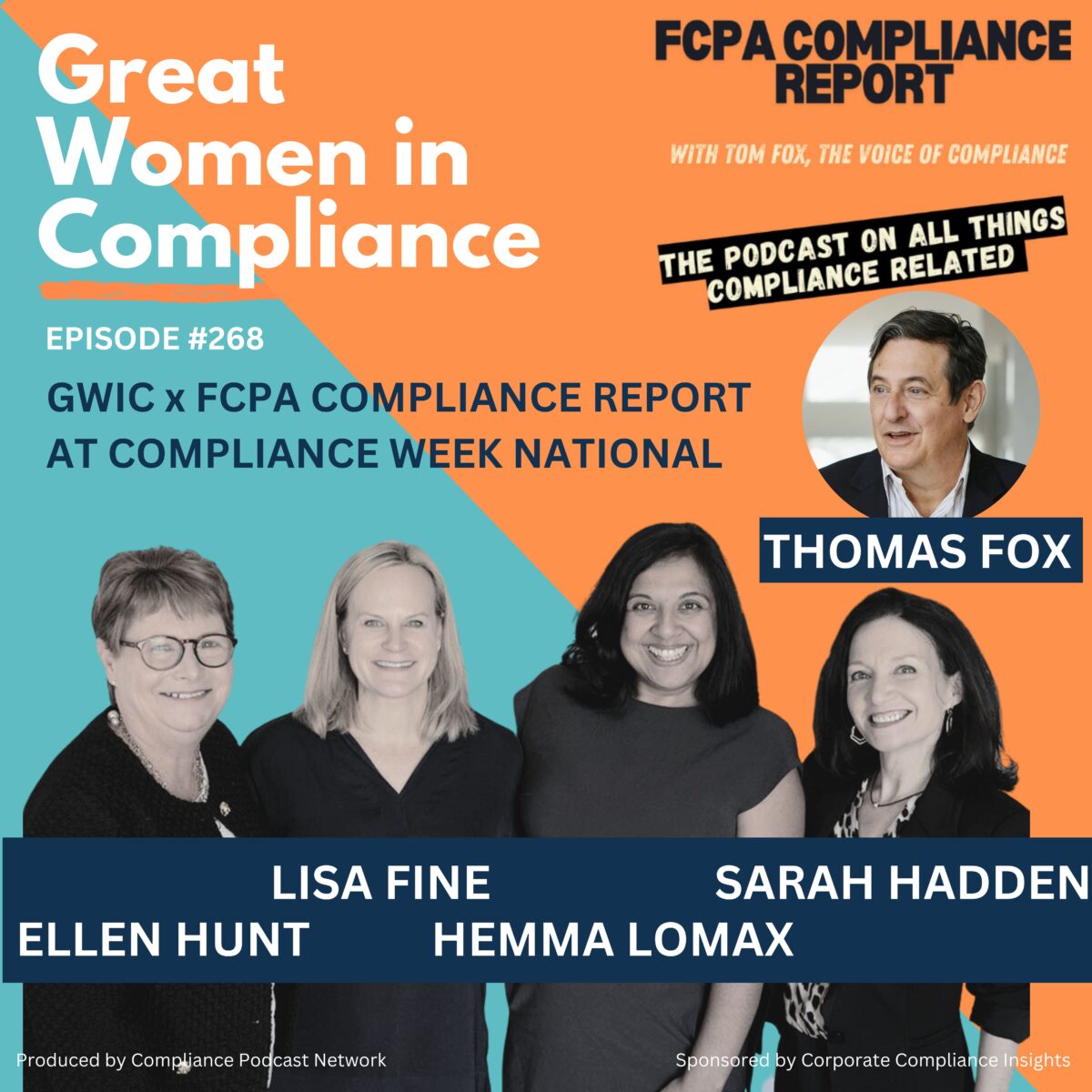
Welcome to the award-winning FCPA Compliance Report, the longest-running podcast in compliance. This is a very special episode. Tom Fox is joined by Lisa Fine, Ellen Hunt, and Hemma Lomax from the Great Women in Compliance podcast for our annual GWIC/FCPA Compliance Report cross-post podcast. We recorded this at Compliance Week 2025.

In this year of uncertainty and change in compliance, we discussed the need to revisit and emphasize foundational ethics amid the evolving compliance landscape, seeing uncertainty as a chance for professional growth and deeper ethical reflection. We also discussed integrating ethics into compliance functions and advocating for a community-oriented approach that respects diverse viewpoints and fosters global perspectives; highlighted the importance of innovative strategies and understanding human behavior, advocating for creative approaches like podcasts to foster a speak-up culture and stressing the use of technology and coaching to enhance ethical decision-making, ultimately contributing to a robust corporate culture capable of navigating international compliance challenges.


Key highlights:

  • Ethical Decision-Making in Times of Change and in a Global Business Arena
  • Global Training Program for Anti-Corruption Enforcement
  • Promoting Ethical Culture and Fair Treatment
  • Harnessing Collective Energy for Compliance Excellence

Resources:

Lisa Fine on LinkedIn

Ellen Hunt on LinkedIn

Hemma Lomax on LinkedIn

Tom Fox

Instagram

Facebook

YouTube

Twitter

LinkedIn

For more information on the use of AI in Compliance programs, see my new book, Upping Your Game. You can purchase a copy of the book on Amazon.com

Categories
Adventures in Compliance

Adventures in Compliance: The Novels – A Study in Scarlet, Dr. Watson

In this new season of Adventures in Compliance, host Tom Fox will dive deep into the Sherlock Holmes novels. Over this season, Tom will do so in a four-part series. The four novels we will consider from the ethics and compliance perspective are A Study in Scarlet, The Sign of Four, The Hound of the Baskervilles, and The Valley of Fear.

We begin with A Study in Scarlet for our first offering this new season. In Part 2, Tom will take a deep dive into Dr. Watson, how he and Holmes met, and Watson’s contributions to their partnership and consider Watson’s professional training as a doctor, his war services and injuries during the Second Anglo-Afghan War, and his return to England, all leading to his initial introduction to Holmes by their mutual acquaintance Stamford. Watson’s involvement in the case helps Holmes move beyond isolated brilliance to true investigative mastery. In compliance, pairing sharp analytic talent with professionals rooted in operational or practical experience often yields the strongest compliance strategies.

Highlights include:

  • Diversified Skill Sets
  • Trust Encourages Innovation
  • Objective Feedback Sharpens Analysis
  • Emotional Intelligence Deepens Understanding
  • Structured Communication Improves Decision-Making

Resources:

The New Annotated Sherlock Holmes

Sherlock Holmes FAQ by Dave Thompson

Connect with Tom Fox

Instagram

Facebook

YouTube

Twitter

LinkedIn

Categories
Blog

Muddle in the Middle Week: Part 1 – Middle Managers as Compliance Change Agents

Is there confusion within your company, especially regarding compliance issues and your SpeakUp/ListenUp culture? As a compliance professional, what tools can you bring to your organization’s middle managers? This week, I will explore several aspects of middle managers and middle management, all from the compliance perspective.

A recent article in the Harvard Business Review entitled What’s the Future of Middle Management?  by authors Gretchen Gavett and Vasundhara Sawhney got me thinking about those questions and several more regarding middle managers.  The authors considered the role of middle management going forward, particularly with the rise of AI and a trend toward flatter organizations. One set of experts they spoke with was Raffaella Sadun, the Charles Edward Wilson Professor of Business Administration at HBS, and Jorge Tamayo, an assistant professor at the Harvard Business School. Their current research examines the pivotal role of middle managers in driving performance disparities within firms. I have taken their article and adapted it for a corporate compliance perspective.

There is a recurring narrative that middle managers are on the brink of obsolescence, destined to disappear into corporate history, replaced by sleek algorithms and streamlined organizational charts. Gartner forecasts that by 2026, AI will flatten organizational structures, eliminating over half of current middle management positions. Korn Ferry intensifies the discussion by highlighting a notable decrease in manager-level roles. Yet, intriguingly, middle managers still represent a significant and even growing proportion of the workforce, now 13% of the U.S. labor force, up from 9.2% four decades ago.

This juxtaposition begs important questions for corporate compliance professionals: Is there a fundamental misunderstanding of the role of middle managers? What lessons can compliance teams draw from evolving middle management trends, particularly regarding regulatory adherence, ethical culture, and organizational agility? I have distilled five crucial lessons for compliance professionals about the pivotal role middle managers can and should play as agents of compliance change.

Lesson 1: Recognize Middle Managers as Compliance Catalysts

Compliance, at its core, involves more than adhering to regulations; it’s about fostering an ethical, responsive, and adaptive organizational culture. Middle managers, positioned between senior leadership and frontline staff, uniquely enable this cultural alignment. They possess direct access to nuanced frontline insights about emerging compliance risks, ethical dilemmas, and policy adherence trends.

As highlighted in recent research, middle managers serve as essential links, providing feedback loops that alert senior leadership to compliance risks early enough to address them proactively. Acknowledging and enhancing this catalytic role of middle managers can significantly strengthen your compliance infrastructure.

Lesson 2: Empower Managers to Drive Ethical Behavior Through Mentorship

In times of rapid technological and regulatory shifts, employees require more than compliance training; they need ongoing mentorship and coaching. Middle managers are ideally situated to fulfill this role. They do not merely translate senior management’s strategic visions; they actively coach employees on ethical decision-making, guide them through regulatory changes, and reinforce organizational values daily.

The article emphasizes middle managers’ critical function in guiding employees through transitions, notably those driven by technological change. This skill is invaluable for compliance professionals; managers who mentor and encourage ethical behavior significantly decrease the likelihood of non-compliance and misconduct incidents.

Lesson 3: Reallocate Administrative Tasks Through Strategic Automation

A significant hurdle identified in the analysis is the misallocation of managerial duties, with middle managers often burdened by routine administrative functions better suited to automation. From a compliance perspective, this inefficient allocation hinders their ability to engage deeply in strategic risk management and ethical coaching.

Compliance professionals should advocate and support the integration of automated tools to handle administrative compliance tasks. Such an approach would free managers to tackle more complex issues, such as facilitating compliance training, monitoring risk culture, and promoting ethical decision-making practices across their teams.

Lesson 4: Provide Comprehensive Skills Training Tailored to Compliance Goals

It is not enough to reassign tasks; middle managers require substantial upskilling in both soft and technical skills to function effectively as compliance change agents. The article emphasizes a gap in consistent, high-quality training, especially concerning the essential soft skills needed for mentoring and coaching. Moreover, with AI increasingly managing lower-order tasks, middle managers must enhance their analytical and strategic capabilities to complement technology.

For compliance teams, this translates into designing and advocating training programs explicitly aimed at enhancing managerial competencies in ethics, risk assessment, regulatory interpretation, and communication—the critical pillars of effective compliance programs.

Lesson 5: Redefine Evaluation Metrics to Incentivize Compliance Leadership

Perhaps most importantly, companies must rethink evaluation criteria and career advancement pathways to fully harness middle managers as compliance allies. The article points to a common pitfall: promoting individuals based solely on unrelated performance metrics, such as sales achievements, rather than their capacity to mentor, coordinate, or promote an ethical culture.

Compliance professionals need to persuade top leaders to change the rewards and evaluation systems so that managers are clearly recognized for being great at mentoring employees, promoting ethical awareness, encouraging teamwork, and participating in compliance-related activities.

Middle Managers—Vital Compliance Partners in an Era of Change

The narrative of middle managers as obsolete bureaucratic layers is fundamentally flawed when viewed through a compliance lens. Instead, middle managers are essential enablers of organizational agility, ethical integrity, and adaptive responsiveness—all crucial compliance objectives.

Compliance teams must champion this transformative vision, advocating for middle managers’ empowerment, targeted skill development, task reallocation, and revised performance metrics. In doing so, they reinforce compliance effectiveness and elevate their organization’s ethical resilience in a rapidly evolving business landscape.

In an era marked by transformative technological and regulatory challenges, middle managers are not barriers to progress; they are the vital linchpins of a proactive compliance culture. Those organizations that invest thoughtfully and strategically in their middle managers today will build stronger, smarter, and more ethically robust enterprises for tomorrow.

By embracing these five lessons, compliance professionals can respond more effectively to regulatory challenges and position their organizations to thrive ethically and competitively in a future defined by rapid change.

I hope you’ll join me tomorrow in Part 2, where I’ll explain why your company should view middle managers as ethical cornerstones.

For more on this topic, check out The Compliance Handbook, a Guide to Operationalizing Your Compliance Program, 6th edition, which LexisNexis recently released. It is available here.