In today’s edition of Daily Compliance News:
Author: admin
This coming Saturday is the 20th anniversary of the attacks upon America on September 11, 2001. Like most Americans, this was the seminal event in the history of our country. I have been thinking a lot about that date and the anniversary; even more so with the fall of Afghanistan and the evacuation from Kabul. I wanted to do something to commemorate this anniversary, so I decided to do a podcast series featuring the personal stories of persons in the compliance field with their thoughts about what the date of 9/11 means to them, how it changed our profession and their thoughts looking back some 20 years later. The lineup for this week is:
- 6 – Gabe Hidalgo
- 7 – Juan Zarate
- 8 – Alex Dill
- 9 – Eric Feldman
- 10 – Scott Moritz
- 11 – John Lee Dumas
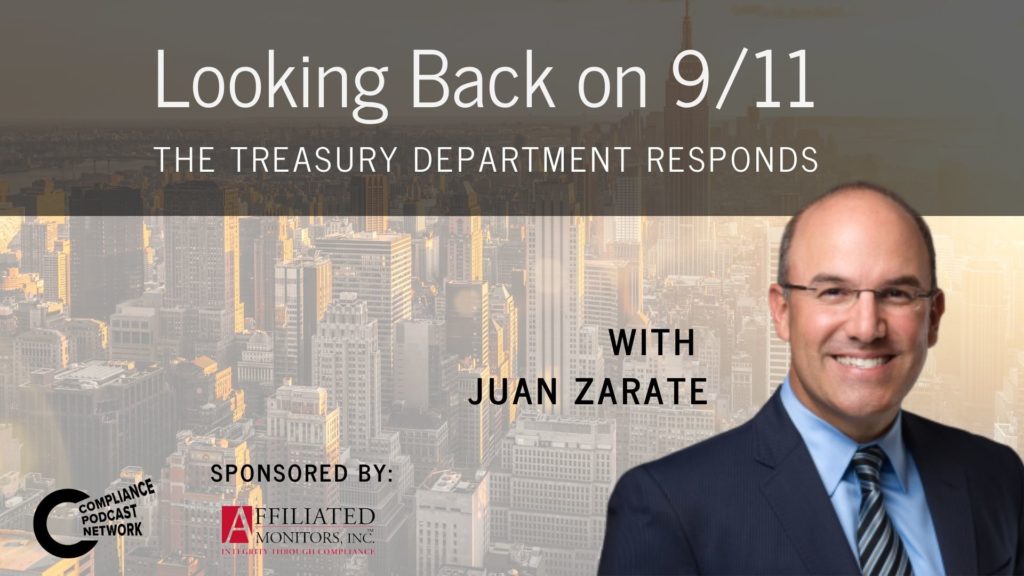
Juan Zarate is the Global Co-Managing Partner and Chief Strategy Officer at K2 integrity. On 9/11 he was at the Treasury Department working on international enforcement issues, anti-money laundering (AML), anti-corruption and anti-terrorist financing. Zarate discussed how his role changed, the Treasury Department response and what the tragic event means for him.
On 9/11, Zarate was in his office, which faced south giving him a view right to the Pentagon. Zarate had a TV in his office, obviously watching with horror as to what was happening in New York. He had been a terrorism prosecutor for a number of years at the Department of Justice (DOJ) so was aware of Al Qaeda. “When I looked south across the windows from the office you could see smoke billowing from the Pentagon. From the fourth floor of the Treasury Department, looking out across the river, you could see smoke rising from the Pentagon.” This affected him emotionally; something very different was happening, he recalled; the country was under attack.
Zarate said there were three categories of changes in fighting terrorism after 9/11. They were at the strategic level, departmental level and then the tactical level. He said, “What happened at that point was the government decided that the president decided very clearly we’re now at war. We can’t sit back. We can’t follow these cases after the fact, right? We are not here to just prosecute people. We now have to prevent these attacks from happening” through more proactive measures. “The attitude and the strategic direction of the government was [that] we now have to prevent terrorist attacks,” he recalled. “We have to disrupt and dismantle terrorist networks. And that led to an entire preventative paradigm for the counter-terrorism approach to the government.”
At the departmental level, the new mission of the Treasury Department was, “How do you use financial information more aggressively? How do we think about the use of tools and authorities that the Treasury has, like sanctions, anti-money laundering rules? How do we think about the relationships internationally with central banks, finance ministries? How do we get the world on board to disrupt terrorist financing, to rip these organizations out of the legitimate financial commercial world?”
At the tactical level, there was the passage of the Patriot Act, which broadened and deepened the AML system, and then enabling the international community. There was the creation of the Financial Action Task Force (FATF), which “created new standards for combating terrorist financing, things like dealing with cash couriers and other elements of the financial system, where we needed to make sure that the international community and in particular, the banks and the banking centers were doing everything possible to prevent terrorists from getting into the system.” This was a “wholesale shift that happened over time, but it was pretty quickly as there was a clear mandate from the President to prevent another attack and to do everything, to disrupt and dismantle terrorist networks.”
There were other areas in this tactical level. Zarate discussed the Executive Orders that came out, the list of terrorists, terrorist organizations, organizations supporting terrorism that came from the US. There were regulations specifying Bank Secrecy Act (BSA) regulations which came from OFAC and later FinCEN. Zarate said the ATF had a role as well as Federal Air Marshalls. He concluded, “there was an entire range of things, we were doing tactically and legally to try to amplify what we were doing from a US government and a Treasury perspective.”
I asked Juan, “What are your reflections now as we come up on the 20th anniversary of the day of 9/11, and really what it meant for America and for you 20 years later?” He responded that he has mixed emotions. He thinks about the victims and their families first of all. That day changed history. “It changed the way that the US government viewed the world. It changed the way that we operated our strategy. And it changed the sense of our vulnerability.” The recent events in Afghanistan make the 20th anniversary even more difficult for Juan. “I have very mixed emotions coming on the 20th anniversary of 9/11,” he concluded, “but I’m very proud of the work that we did. I’m proud of the people I served with, and my sympathies go out to the victims and their families.”
Join us tomorrow when Professor Alexander Dill reflects on being in Manhattan, in the financial district, on 9/11 and the changes brought by the Patriot Act.
Please check out each of the podcasts this week. They will post at 6 AM CT on the Compliance Podcast Network and JDSupra and midnight on Innovation in Compliance, YouTube, iTunes and Spotify.
In this episode, the Kitchen takes a look at a DOJ action against World Mining and Oil Supply company over allegations of violation of Export Control Reform Act and a related conspiracy.

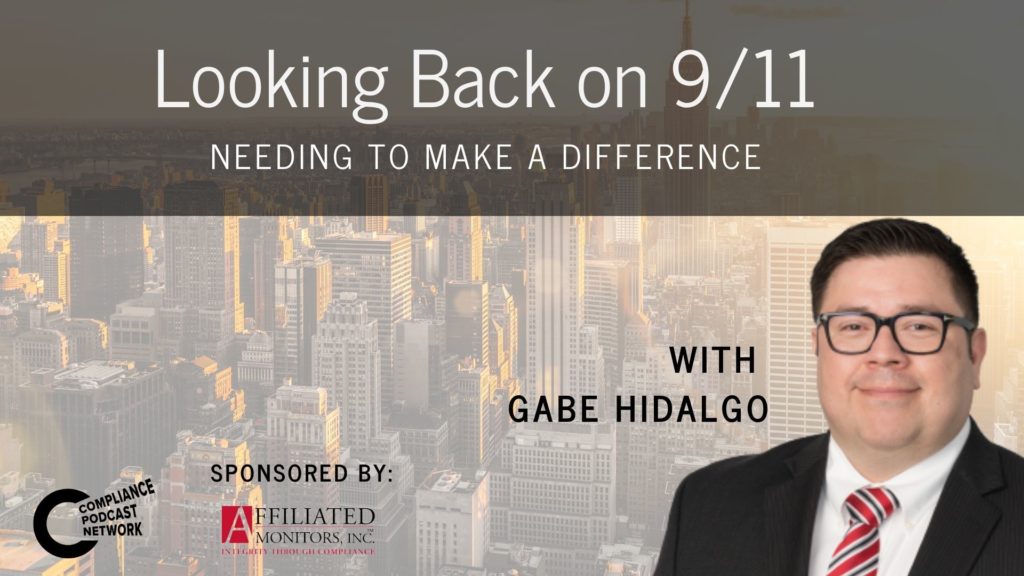
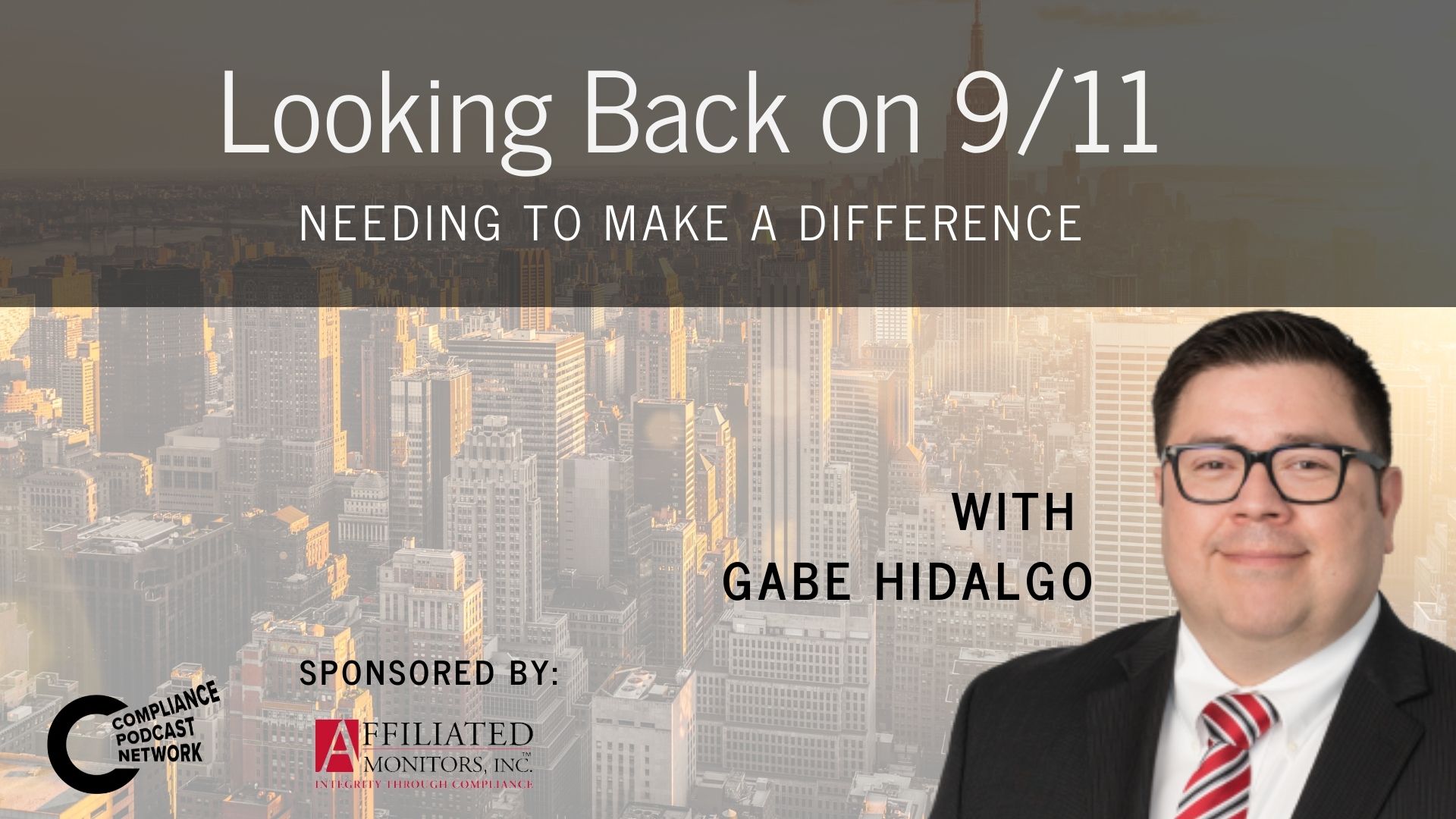
On the 20th anniversary of the 9/11 terrorist attack, Tom Fox and guests look back on the tragic event and what it meant for them personally, as well as how it impacted the world of compliance. Tom’s first guest this week is Gabe Hidalgo, anti money laundering compliance expert, who shares how the events of that fateful day changed the course of his career.
Listen to the Episode Now:
Looking Back
Gabe – who worked as outside counsel for insurance companies at the time – remembers turning on YahooTV as soon as he got to his office on 9/11 and seeing the second plane hit the World Trade Towers. He knew immediately that it was a deliberate attack. “I knew that this was kind of a hallmark moment,” he tells Tom, “that this was not an accident.” He details leaving the office in haste to get to his pregnant wife, and the obstacles and roadblocks he faced on the way. When they finally reunited at home, they were overcome with emotion. He remembers feeling gutted thinking about the unborn children who would grow up never knowing their fathers.
Needing to Do Something
Gabe needed to do something more than just shed tears about 9/11, he tells Tom. He started to think about how he could use his skills as an attorney. “I went down the path of looking in private industry, what I can do, and came across anti money laundering compliance, which I thought was fascinating. And I said to myself, I need a way for me to be able to get into that so that I can start making a difference.” He shares his journey into the field, and that it was exactly the right time and the right fit for him. 9/11 was a wake up call for America, he remarks. It made us realize that we need to do whatever we can to prevent anything similar from happening again.
Evolution of AML Since 9/11
Tom asks Gabe how AML compliance has advanced since 9/11. It’s much more difficult for terrorist financiers to move funds now, he responds. “A lot of institutions have strengthened and hardened their compliance programs to the point where they can monitor individual transactions as they’re moving across the transactional workflow in the United States. They examine each and every transaction that’s coming across from a correspondent banking perspective, which is probably one of the most high-risk channels for money movement.” Gabe and his colleagues have done great work over the past 20 years, which has helped law enforcement stop and apprehend would-be terrorists. However, we can’t be complacent, Gabe says.
Tom asks what 9/11 means for America. The 20th anniversary is a somber one, Gabe replies. 9/11 taught us not to be naive, that we’re not as protected as we think we are. He is proud of the advancements made to keep everyone safe, but the work continues. “It’s a moment of reflection,” he points out. “We need to think about not only the people who have lost their lives, but everyone that was impacted – whether they were directly impacted through a family loss, or they were emotionally impacted by what actually occurred.”
Resources
Gabe Hidalgo on LinkedIn
This coming Saturday is the 20th anniversary of the attacks upon America on September 11, 2001. Like most Americans, this was the seminal event in the history of our country. I have been thinking a lot about that date and the anniversary; even more so with the fall of Afghanistan and the evacuation from Kabul. I wanted to do something to commemorate this anniversary, so I decided to do a podcast series featuring the personal stories of persons in the compliance field with their thoughts about what the date of 9/11 means to them, how it changed our profession and their thoughts looking back some 20 years later. The lineup for this week is:
- 6 – Gabe Hidalgo
- 7 – Juan Zarate
- 8 – Alex Dill
- 9 – Eric Feldman
- 10 – Scott Moritz
- 11 – John Lee Dumas
My guest today is Gabe Hidalgo, anti-money laundering (AML) compliance expert, who shared how the events of that fateful day changed the course of his career. Hidalgo was working as counsel for insurance companies at the time. He recalled turning on YahooTV as soon as he got to his office on 9/11 and seeing the second plane hit the World Trade Towers. He knew immediately that it was a deliberate attack. “I knew that this was kind of a hallmark moment,” and “that this was not an accident.”
He talked about his frantic attempt to reach his wife, who worked in midtown Manhattan at the time. He told about attempts to drive into Manhattan to pick her up and bring her back to their home in Queens. On that day he saw military roadblocks for the first time on the highways going into Manhattan. His wife was finally able to get a bus off the island and they met up at her bus station. When they finally reunited at home, they were overcome with emotion. He said they cried most of that day and they could hear others crying in the adjacent apartments as well.
One of the most poignant moments was when they heard about the wives who lost their husbands and the children who lost their fathers in the NYC attacks. He and his wife were pregnant with their first child and Hidalgo recalled feeling gutted thinking about the unborn children who would grow up never knowing their fathers.
Having understood that America had been attacked, Hidalgo was determined to join the fight against terrorism. As he related, he needed to “do something more than just shed tears”. He immediately ruled out local law enforcement or the FBI as his wife was adamant that she did not want him carrying a gun or going into harms way. So, Hidalgo started to think about how he could use his skills as an attorney. “I went down the path of looking in private industry, what I can do, and came across anti-money laundering compliance, which I thought was fascinating. And I said to myself, I need a way for me to be able to get into that so that I can start making a difference.”
Hidalgo found a local money service business in Queens that had a global footprint and was looking for a director of legal compliance. He applied and in the interview process told the hiring manager “I don’t have any AML experience, I just need about 30 days to get up to speed.” However, he could immediately handle legal works so “within those 30 days I read everything I could. I looked at every single document that I could in regard to AML. To be honest with you, AML felt like the perfect fit for me, given what I wanted to do was to help as much as I could to help to prevent anything like this happening again in our country.”
The company was about to be examined by the State of New York which focused his learning skills in AML. Hidalgo had to “look at their policy and procedures that they had in place, rewrite a lot of those policies, procedures, and basically put into practice everything I read about AML.” As he wryly noted, “luckily for me, the examination went great.”
We explored how AML compliance has advanced since 9/11. Hidalgo said, “I think if you were to examine the sea change of sweeping changes that have occurred in the last 20 years between what compliance programs looked like back then versus what they are now. It’s a magnitude of hundreds and hundreds of times more difficult for those funds to be moved the way they were moved for the 9/11 plot. These changes have made it much more difficult for terrorist financiers to move funds now.”
Hidalgo, who subsequently worked as a regulator Federal Reserve Bank of New York, added while no program is perfect “I’ve seen these programs in place, even when there were opportunities to enhance what they were doing. A lot of institutions have strengthened and hardened their compliance programs to the point where they can monitor individual transactions as they’re moving across the transactional workflow in the United States. They examine each and every transaction that’s coming across from a correspondent banking perspective, which is probably one of the most high-risk channels for money movement.” He concluded by stating that he believes his colleagues in AML compliance “have done great work over the past 20 years, which has helped law enforcement stop and apprehend would-be terrorists. However, we can’t be complacent”.
I concluded by asking Hidalgo for his reflections looking back at 9/11; some 20 years later. Hidalgo began by noting that “the 20th anniversary is a dark moment”. 9/11 taught us not to be naive, that we’re not as protected as we think we are. He said, “We need to think about not only the people who have lost their lives, but everyone that was impacted – whether they were directly impacted through a family loss, or they were emotionally impacted by what actually occurred.” He is proud of the advancements in AML compliance made to keep everyone safe but concluded, “the work continues.”
Please check out each of the podcasts this week. They will post at 6 AM CT on the Compliance Podcast Network and JDSupra and midnight on Innovation in Compliance, YouTube, iTunes and Spotify.
In today’s edition of Sunday Book Review:
- The Looming Tower by Lawrence Wright.
- The 9/11 Commission Report by National Commission on Terrorist Attacks.
- The Dark Side by Jane Mayer.
- Through our Enemies’ Eyes by Michael Scheuer.
- The Longest War by Peter Bergen.
In today’s edition of Daily Compliance News:
- Is your hiring process preventing you from hiring? (WSJ)
- Better apply to MSU. (Bloomberg)
- A new business model? (WaPo)
- You can’t tell the criminals without a script. (NYT)
In this episode, the Kitchen reviews an OFAC license extension, allowing for certain education materials to be exported to Iran.
August in Compliance Week
Welcome to From the Editor’s Desk, a podcast where Tom Fox and Dave Lefort, Editor in Chief at Compliance Week unpack some of the top stories which have appeared in Compliance Week over the past month, look at top compliance stories, talk some sports and generally try to solve the world’s problems. In this month’s episode, we look back at top stories in CW from August including the new Chinese Data Privacy/Data Protection law, the T-Mobile data breach and employee issues around vaccinations. We look at the upcoming CW ESG Summit and conclude with a look at some baseball, football and the Patriots releasing Cam Newton.
Register for the Compliance Week ESG Summit. Use the code ‘Dave100’ for a complimentary ticket.
As Jay returns from an extended road trip, he and Tom look forward to an extended Labor Day weekend and are back to look at some of this week’s top compliance and ethics stories which caught their interest on This Week in FCPA in the Labor Day edition.
Stories
1. Is ESG on your radar? Vince Walden in Fraud Magazine.
2. The intersection of business and compliance. Mike Volkov in Corruption Crime and Compliance.
3. China to set world standard for data privacy? Aaron Nicodemus in Compliance Week (sub req’d)
4. Is Covid-19 the biggest challenge to compliance ever? Calvin Gordon in CCI.
5. UK signals different approach on data transfer from EU. Aaron Nicodemus in Compliance Week (sub req’d)
6. 3 compliance officers get SEC whistleblower award. Matt Kelly in Radical Compliance.
7. Email break-ins sanctionable. Dylan Tokar in WSJ Risk & Compliance Journal.
8. ISO 37002 and EU Whistleblower standard. Kelly Maxwell in Convercent by One Trust blog.
9. Trial of the Century in Mozambique, Part 2. Rick Messick in GAB.
10. Diversity training that fosters acceptance and collaboration. ComplianceLine blog.
Podcasts and Events
11. On Innovation in Compliance this week I interviewed Ethisphere’s Erica Salmon Byrne and Doug Allen on the opening of submissions to the World’s Most Ethical 2022 awards. You can listen to the pod here. You can find out more about the submission process here.
12. On The Compliance Life, in August I visited with Kortney Nordrum CCO at Deluxe. In Episode 1, from Red Wing to Israel. In Episode 2, From Freddie Mac to the law. In Episode 3, how Kortney found her professional passion – Compliance. In Episode 4, Kortney moves into the CCO chair.
13. Breaking News features The Compliance Handbook, 2nd edition. Check out the Breaking News feature here. Purchase The Compliance Handbook, 2nd edition here.
14. Join K2 Integrity September 15 for a round-table discussion as we reflect on the 20th Anniversary of September 11 and consider its impact on countering terrorist financing and illicit financing, and the continuing risks to national security. The roundtable will include members of the team that spearheaded the post-9/11 counter illicit finance regime: Juan Zarate, Chip Poncy, Danny McGlynn, moderated by Dr. Michele L. Malvesti. Information and Registration here.
15. The week of 9/11, Tom will run a 6-part special podcast series on Looking Back on 9/11. In this series he will visit with professionals from a variety of compliance perspectives who will discuss how 9/11 changed our profession, including three who were in NYC during the attacks. Check it out on the Compliance Podcast Network.
Tom Fox is the Voice of Compliance and can be reached at tfox@tfoxlaw.com. Jay Rosen is Mr. Monitor and can be reached at jrosen@affiliatedmonitors.com.