Categories
Blog

Culture Week: Part 5 – A Listening Tour to Improve Culture

We conclude our focus on culture this week by returning to some of our long-time compliance roots for improving culture, such as the listening tour. In 2022, returning Starbucks Chief Executive Officer (CEO) Howard Schultz began engaging in a “listening tour” of Starbucks stores literally across America. In an article by Justin Bariso, he said Schultz told employees, “We are traveling the country, trying to, with great sensitivity, understand from you how can we do better.” What are employees telling him? Bariso wrote, “he listens intently to one Starbucks employee after another; a pained look comes over Schultz’s face. Employees lament the lack of training, increased turnover, and extreme pressure they’ve endured as company profits soared, but worker conditions plummeted.”

This listening tour has several goals for Schultz. The first is that even though the company has sustained record profits, morale at the company is at an all-time low. Witness the unionizing efforts that have been successful. Employees are simply fed up with not being listened to. This has eroded employee trust and management and driven down the once vibrant culture at the iconic institution. To rebuild that trust, Starbucks, as their CEO, “must first listen.” However, it is more than simply listening to rebuild trust; it is rebuilding employee engagement by making them and their ideas part of the solution.

There is still much work for Starbucks and Schultz to do. Yet these initial steps can lead to real change. Schultz is doing more than saying “We Care”; he is modeling that language in his behavior. This is action at the top. It also communicates to other senior management that they must listen to re-engage and build employee trust. What if a Chief Compliance Officer took that same approach to culture? I believe that a Schulz-inspired listening tour can improve your corporate culture. Below are three keys for the compliance officer to conduct a practical listening tour.

A. Engagement

Start by meeting as many compliance stakeholders as possible. You can use town hall settings or go smaller, meeting with key employee leaders, key stakeholders, and employees identified as high-risk who you can meet with individually or in smaller groups. Listen to their compliance concerns and take their compliance ideas back to the home office. After returning to your office, winnow down their ideas and suggestions to form the basis of enhancements to your culture. This employee engagement will lead to greater stakeholder buy-in for your culture.

B. Education

During the town hall meetings and the smaller, more informal group meetings, you can do more than simply listen—you can also train. This training is on ethics and how the employees could use compliance as a business tool. Most business’s ethical standards are not found in an existing compliance program. They are found in the general anti-discrimination guidelines and ethical business practices such as anti-competitiveness and prohibition of using confidential information. Often, these general concepts can be found in a company’s overall Code of Conduct or similar statement of business ethics. Workplace anti-discrimination and anti-harassment guidelines can be found in Human Resource policies and procedures. Concepts such as anti-competitiveness and the use of customers’ and competitors’ illegally obtained confidential information may be found in antitrust or other business practice-focused guidelines.

This gets your employees and other stakeholders thinking about doing business ethically. It is ethical concept-based training, in contrast to a rules-based approach. Moreover, this lays the groundwork for enhancing your culture and the training that will occur as the enhancement is rolled out.

C. Risk Assessment

Now, think about this same approach from the risk assessment perspective. Listen to your employees’ concerns and compliance issues. From there, you can ask questions about what was done and why. This approach is not adversarial or interrogation, but it is ferreting out the employees’ concerns while having the employees educate your compliance team on the actual procedures that are used. By listening and gently questioning, you should garner enough information to create a risk assessment profile that can inform and even become the basis of compliance program enhancements.

Bariso concluded his article by stating, “People lose motivation when they sense you don’t care. But the simple act of listening creates goodwill. When your people feel understood, they’ll be motivated to contribute and can help you discover insights you wouldn’t otherwise. So, when it comes to solving your company’s biggest problems, don’t ignore your most helpful resource: your people.” It all starts with listening. Let your employees and other stakeholders have the “chance to share their problems, as well as to propose solutions. Meetings like these will reveal key insights and transform your people from employees to partners.”

I hope you have enjoyed and, more importantly, found this week’s blog posts on helpful culture. I also hope you will join the conversation by commenting or posting on LinkedIn about your experiences around corporate culture.

Categories
Compliance Tip of the Day

Compliance Tip of the Day: To Improve Culture, Engage More

Welcome to “Compliance Tip of the Day,” the podcast where we bring you daily insights and practical advice on navigating the ever-evolving landscape of compliance and regulatory requirements.

Whether you’re a seasoned compliance professional or just starting your journey, our aim is to provide you with bite-sized, actionable tips to help you stay on top of your compliance game.

Join us as we explore the latest industry trends, share best practices, and demystify complex compliance issues to keep your organization on the right side of the law.

Tune in daily for your dose of compliance wisdom, and let’s make compliance a little less daunting, one tip at a time.

In this episode, we explain why perhaps the key factor in corporate culture is employee engagement.

For more information on the Ethico ROI Calculator and a free White Paper on the ROI of Compliance, click here.

Categories
Fox on Podcasting

Fox on Podcasting: Kimberly Spencer on Podcasters as Historians

Join Tom Fox as he explores the world of podcasting and get ready to be inspired to start your own podcast.

In this episode, Tom visits with Kimberly Spencer, one of the most forward-thinking podcasters I have ever met.

Kimberly Spencer is a versatile professional with a varied background that ranges from Hollywood screenwriting to Pilates studio ownership. Her current focus is Communication Queens, a guest podcasting agency she founded, and she uses this platform to utilize storytelling through podcasting to rewrite narratives and create lead generation opportunities.

Spencer’s perspective on podcasting is shaped by her varied experiences, viewing it as an instrument for personal growth and healing. She believes that sharing personal stories through podcasting can help individuals achieve greater self-awareness and liberate them from restrictive narratives.

From her industry vantage point, Spencer sees podcasting on an exponential growth trajectory, anticipating increases in bilingual podcasts, politicians using the medium to build their platforms, and an overall rise in content and audio quality to meet the demands of a new listener generation. Her experiences and insights underline her belief in the immense potential of podcasting for both personal and professional development.

Key Highlights:

  • Embodying Ownership and Sovereignty in Leadership
  • Transition Coaching for Visionary Entrepreneurs
  • Preserving Society’s Essence Through Long-Form Podcasts
  • Strategic Leadership Communication Through Podcasting
  • Utilizing Podcast Guesting for Brand Expansion
  • The Power of Podcasting in Branding

Resources:

Kimberly Spencer on LinkedIn

Crown Yourself

Communications Queen

Crown Yourself podcast

Tom

Instagram

Facebook

YouTube

Twitter

LinkedIn

Categories
Daily Compliance News

Daily Compliance News: May 2, 2024 – The Apology Edition

Welcome to the Daily Compliance News. Each day, Tom Fox, the Voice of Compliance, brings you compliance-related stories to start your day. Sit back, enjoy a cup of morning coffee and listen to the Daily Compliance News. All from the Compliance Podcast Network.

Each day, we consider four stories from the business world: compliance, ethics, risk management, leadership, or general interest for the compliance professional.

In today’s edition of Daily Compliance News:

  • The CEO of UnitedHealth apologizes for the cyberattack. (FT)
  • Corruption stymies the Colombian Army. (Reuters)
  • The US sanctions Chinese companies for supplying the Russian Army.  (NYT)
  • China’s move forced laborers to avoid US sanctions. (WSJ)

For more information on the Ethico ROI Calculator and a free White Paper on the ROI of Compliance, click here.

Categories
Blog

Culture Week: Part 4 – Employee Engagement to Improve Culture

Suppose there is one thing I have learned from working with Carsten Tams, an ethical business architect and founder and chief executive officer (CEO) of Emagence LLC. In that case, employee engagement is one of the very top keys to a successful compliance program. Tams and I explored this topic in the popular Design Thinking in Compliance podcast series. It also appears that engagement can lead to excellent business resiliency based on an article in the MIT Sloan Management Review, entitled The Top 10 Findings on Resilience and Engagement, by Marcus Buckingham. Covid 19 and the Russian invasion of Ukraine changed business forever, making business resiliency a key trait for any business, corporate function, and especially a Chief Compliance Officer (CCO) or compliance professional. That last arena is where engagement is so critical.

The author defined resilience as “the capacity of an individual to withstand, bounce back from, and work through challenging circumstances or events.” However, it is also a “reactive capacity, describing how people will respond when challenges arise.” Conversely, engagement was seen as a proactive state of mind. The authors defined the criteria by making such inquiries “as how clear their expectations were, whether they got to use their strengths every day, whether they felt they would be recognized for doing excellent work, and whether someone at work was encouraging them to grow.” Yet, the most exciting part is the dichotomy between reactive and proactive. It is a bit like the difference in prevention and detection in a compliance program. The former is preferred to stop illegal or unethical conduct, so you do not have to detect it.

Not surprisingly, trust is the number one factor in both engagement and resilience. Astoundingly, the author found that “employees who said they completely trust their team leader were 14 times more likely to be fully engaged.” Moreover, those employees who completely trusted their colleagues, team leader, and senior leaders “were 42 times more likely to be highly resilient.” The reason should seem obvious as it is undoubtedly “easier to engage in our best work when we don’t have to expend mental resources looking over our shoulders or protecting ourselves against dysfunctional workplace practices that erode trust, like bullying or micromanaging. When it comes to building engagement and resilience, trust is everything.” [emphasis added throughout]

Teamwork is also a key factor. Although this is not something I have experienced over the past 12 years of working alone, the author found, “Those who said they are on a team were 2.6 times more likely to be fully engaged and 2.7 times more likely to be highly resilient than those who didn’t identify as team members. For millennia, humans have experienced psychological well-being only when they feel connected to and supported by a small group of people around them.” When the pandemic hit, working from home (WFH) was not new to me as I had been doing it since 2010, but even in the WFH or Hybrid Work era, most employees need to feel like they are part of a team.

However, being or even feeling like you are a part of a team is a state of mind, not a state of place. I always feel engaged with my blog posts, article readers, podcast listeners, and the greater compliance community. Based on that experience, I agree with the author’s statement that “engagement and resilience are about who you work with, not where you’re working.” Moreover, he noted, “virtual workers are both more engaged and resilient than those physically in an office or shared workspace … In 2020, well into the pandemic, 20% of virtual workers were fully engaged, and 18% were highly resilient—a stark contrast to the 11% of fully engaged and 9% of highly resilient office-based workers during the same period. How the work is done and with whom people work are important, but organizations can stop worrying about whether virtual work is detrimental to teamwork.” Even more than teamwork, it is about having relationships with your co-workers. The author stated, “Relationships boost resilience. Women are not more resilient than men, or vice versa … This data strongly suggests that it is much harder to summon and sustain one’s resilience when going through life alone.”

I can certainly attest that the unknown is more terrifying than change. The author found that employees “who reported five or more changes at work were 13 times more likely to be highly resilient. This suggests that we humans fear the unknown more than we fear change. Company leaders shouldn’t rush employees back to normalcy when so much of the danger inherent in this current ‘normalcy’ remains unknown and unknowable. Instead, leaders should tell their teams specifically what changes they are making to their work and why to increase their overall level of resilience.”

These findings suggest that every CCO and compliance professional must work to lessen or dissolve the disconnect between senior leadership and front-line workers. Your front-line business folks will make or break your compliance program. Getting your senior management more engaged will create and establish the trust that your employees will need to show resilience in the face of the following major business location, whether a pandemic or military invasion. Giving employees needed clarity and specificity from leaders, not sugarcoated enthusiasm, will help drive this trust. The author ended this concept by stating, “Leaders need to see their employees not as ‘labor’ but as the messy, complex, emotional beings they are—dealing with real-world human challenges, just like they are. The more leaders can infuse these findings in their organizations’ policies and practices, the more likely we will all be to flourish, both during these difficult times and beyond.”

Categories
The Hill Country Podcast

The Hill Country Podcast – Ari and Jessi Adler on Juggling Remote Work with Personal Passions

Welcome to award-winning The Hill Country Podcast. The Texas Hill Country is one of the most beautiful places on earth. In this podcast, Hill Country resident Tom Fox visits with the people and organizations that make this the most unique areas of Texas.

This week Tom visits with Ari and Jessi Adler, who travel the country working at State Parks and share their adventures on their YouTube site, Trekers.

Ari Adler and Jessi Adler are seasoned professionals in the world of public and media relations and journalism, with backgrounds in state government. They have channeled their shared passion for travel and hiking into their company, Trekers, and their love for adventure is further demonstrated through their remote work lifestyle living in a trailer.

Ari’s perspective on travel and hiking adventures is centered around inspiring others to explore new places and step out of their comfort zones, a viewpoint influenced by his own experience of visiting all 103 state parks in Michigan. Likewise, Jessi emphasizes seizing life’s opportunities and living in the moment, firmly believing in the transformative power of travel and outdoor experiences.

Their perspectives on travel and hiking stem from their personal experiences, backgrounds in state government, and a shared desire to explore and appreciate the world around them.

Key Highlights:

  • Combining Remote Work with Park Hosting
  • Juggling Remote Work with Personal Passions
  • State Park Exploration and Outdoor Adventures
  • Natural Wonders Across State and National Parks
  • Enhancing Outdoor Experiences Through Camping Gear

 Resources

Trekers

Other Hill Country Focused Podcasts

Hill Country Authors Podcast

Hill Country Artists Podcast

Texas Hill Country Podcast Network

Categories
Career Can D0

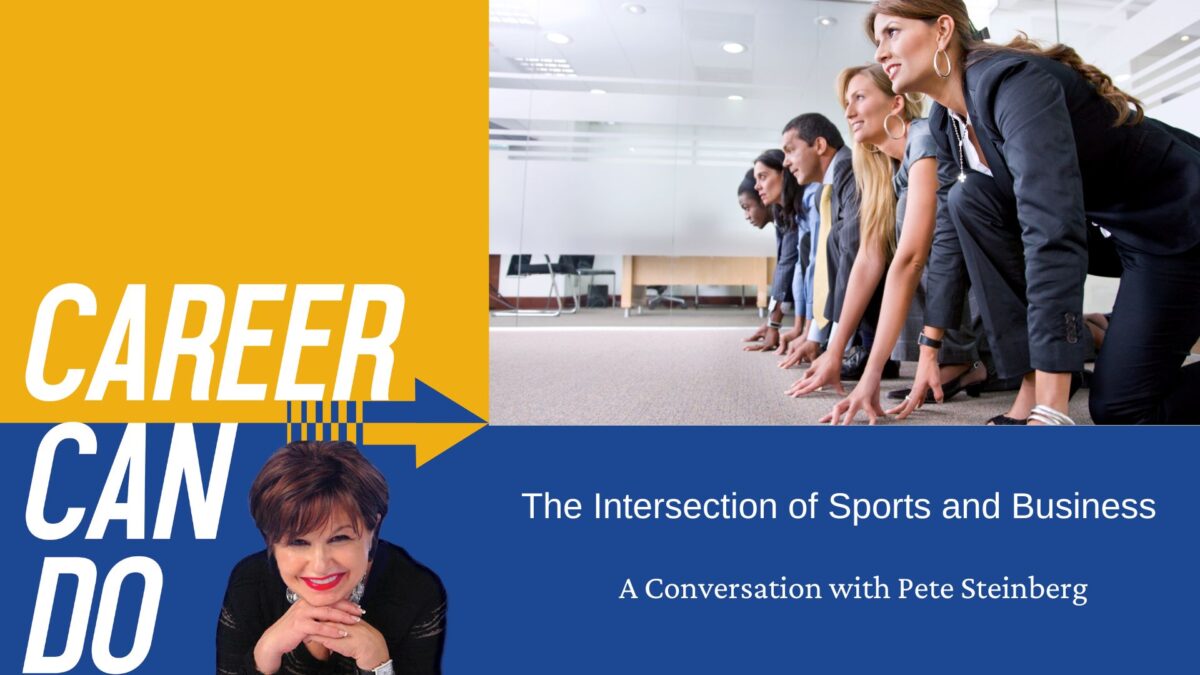
The Intersection of Sports and Business with Pete Steinberg

What can leaders learn from elite athletes, and how can they navigate leadership shock in the ever-changing work world?

In this Career Can Do podcast episode, host Mary Ann Faremouth delves into these questions with leadership and innovation expert Pete Steinberg.

Through their insightful conversation, listeners gain valuable insights on maximizing potential, differentiating between stress and leadership shock, and the importance of building relationships in the workplace.

Join Mary Ann and Pete as they explore the intersection of high performance in sports and business, offering practical advice for individuals seeking to excel in their careers.

Have you heard of leadership shock? Pete and Mary Ann discuss the concepts of leadership shock and stress. Leadership shock occurs when there is a significant change in a leader’s context, such as a new role or organizational shift, leading to feelings of confusion and inefficiency. On the other hand, stress is seen as a temporary pressure that can actually help individuals perform better. By differentiating between the two, leaders can address the root causes of their challenges and work towards more effective leadership strategies.

Traditional hiring practices focus on experience. Pete’s ideas on hiring successfully are rather different. He emphasizes the importance of hiring based on attributes rather than solely focusing on experience. Commitment, passion, attention to detail, and innovation are key qualities to look for in potential candidates. While experience and skills can be developed over time, attributes are inherent traits that can significantly impact an individual’s performance and contribution to the organization.

Relationships are key both at work and in life. Mary Ann and Pete dive into the significance of building relationships in the workplace, especially in the current post-COVID work environment. Pete highlights the value of face-to-face interactions and creating a sense of purpose when employees come into the office. Strong relationships can enhance employee engagement, productivity, and overall satisfaction. Building a culture of meaningful interactions and teamwork can contribute to the success and longevity of the business.

Resources:

Pete Steinberg | Website | LinkedIn

Faremouth.com

Categories
Daily Compliance News

Daily Compliance News: May 1, 2024 – The 4-Month Edition

Welcome to the Daily Compliance News. Each day, Tom Fox, the Voice of Compliance, brings you compliance-related stories to start your day. Sit back, enjoy a cup of morning coffee and listen to the Daily Compliance News. All from the Compliance Podcast Network.

Each day, we consider four stories from the business world: compliance, ethics, risk management, leadership, or general interest for the compliance professional.

In today’s edition of Daily Compliance News:

  • CZ gets 4 months. (WSJ)
  • FCPA violator Ericsson bemoans ‘over-regulation’. (FT)
  • Can’t get a contract? Sue the lawyers. (Reuters)
  • Meta sued the EU over election misinformation.  (NYT)

For more information on the Ethico ROI Calculator and a free White Paper on the ROI of Compliance, click here.

Categories
Compliance Tip of the Day

Compliance Tip of the Day: A Toxic Culture and The Fraud Triangle

Welcome to “Compliance Tip of the Day,” the podcast where we bring you daily insights and practical advice on navigating the ever-evolving landscape of compliance and regulatory requirements.

Whether you’re a seasoned compliance professional or just starting your journey, our aim is to provide you with bite-sized, actionable tips to help you stay on top of your compliance game.

Join us as we explore the latest industry trends, share best practices, and demystify complex compliance issues to keep your organization on the right side of the law.

Tune in daily for your dose of compliance wisdom, and let’s make compliance a little less daunting, one tip at a time.

In this episode, we review the interesting intersection of a toxic corporate culture and the fraud triangle.

For more information on the Ethico ROI Calculator and a free White Paper on the ROI of Compliance, click here.

Categories
Great Women in Compliance

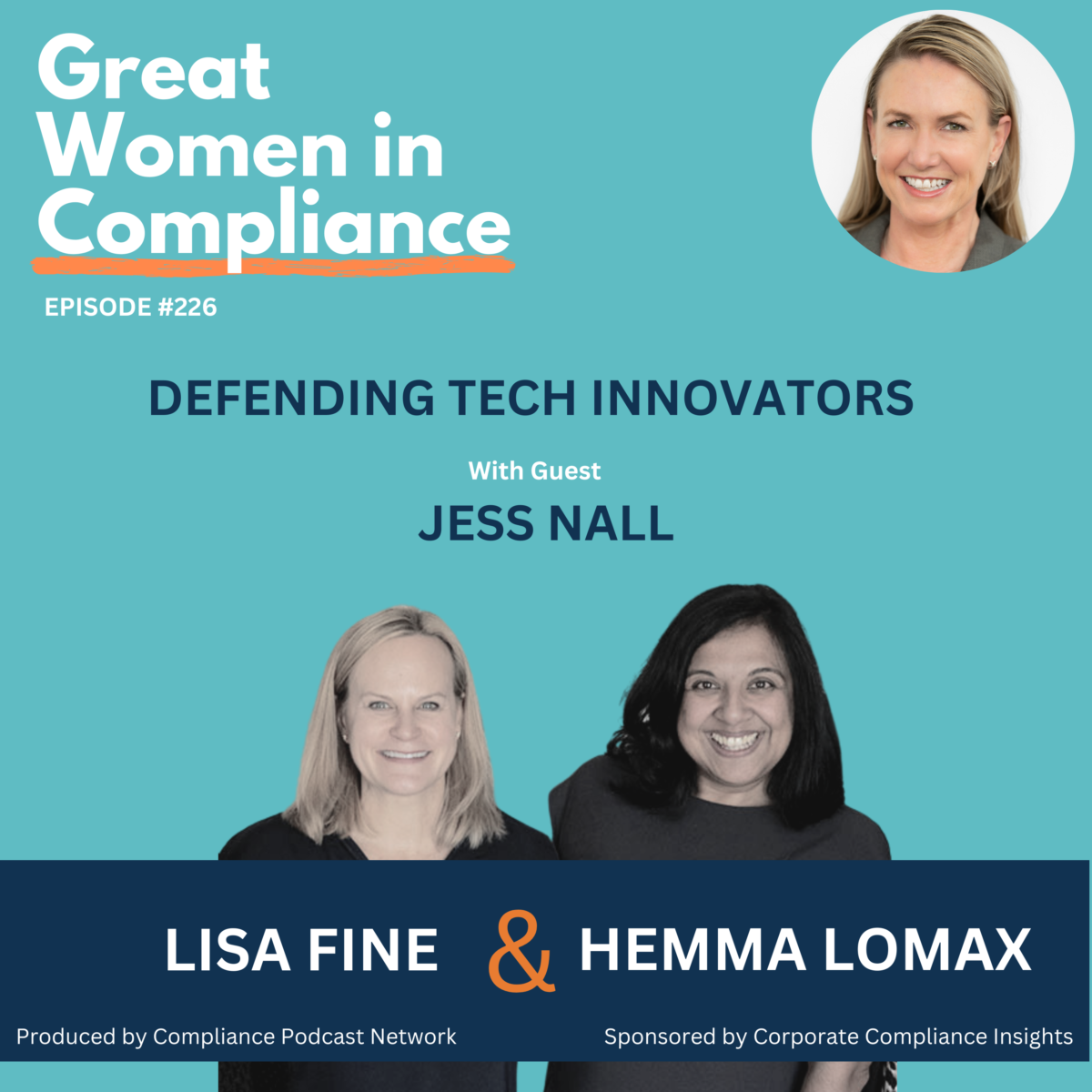
Great Women in Compliance: Jess Nall on Defending Tech Innovators

Welcome to the Great Women in Compliance Podcast. In this episode, Hemma visits with Jess Nall, a partner at Baker McKenzie.

Jess is a leader of Baker McKenzie’s AI and Cyber practice and
leads the Firm’s government defense practice in the US heart of technological innovation, the San Francisco Bay Area. For more than twenty years, Jess has defended technology innovators in high-profile federal and state government enforcement and investigations involving AI, cyber-security, algorithmic price-fixing, economic espionage, and trade sanctions.

With two decades of tech law experience under her belt and playing a pivotal role in various global technology enforcement cases, Jess has a grounded understanding of the complexities surrounding AI compliance and enforcement. She highlights the rapidly evolving global regulation and the increasing pressure it places on compliance professionals.

Jess advocates for a proactive approach to comprehension and readiness for the enforcement and governance aspects of AI, encouraging clients to have robust good faith narratives that illustrate their compliance efforts. This perspective is formed not only from her substantial professional experience but also her deep understanding of the potential risks and malpractices related to the use of AI technology.

Key Highlights:

  • AI Regulations: Impact on Businesses and Compliance
  • Navigating Risks in AI Compliance and Enforcement
  • Deceptive AI Marketing Practices in Industry
  • Fostering Collaboration for AI Compliance Success
  • Enhancing Regulatory Compliance with AI Analytics
  • Enhancing Legal Access with AI Translation

Resources:
Join the Great Women in Compliance community on LinkedIn here.

AI Strategy: The Whole Brain Approach Will Win in forbes.com